
AI and container port operations: Enhancing port operation efficiency
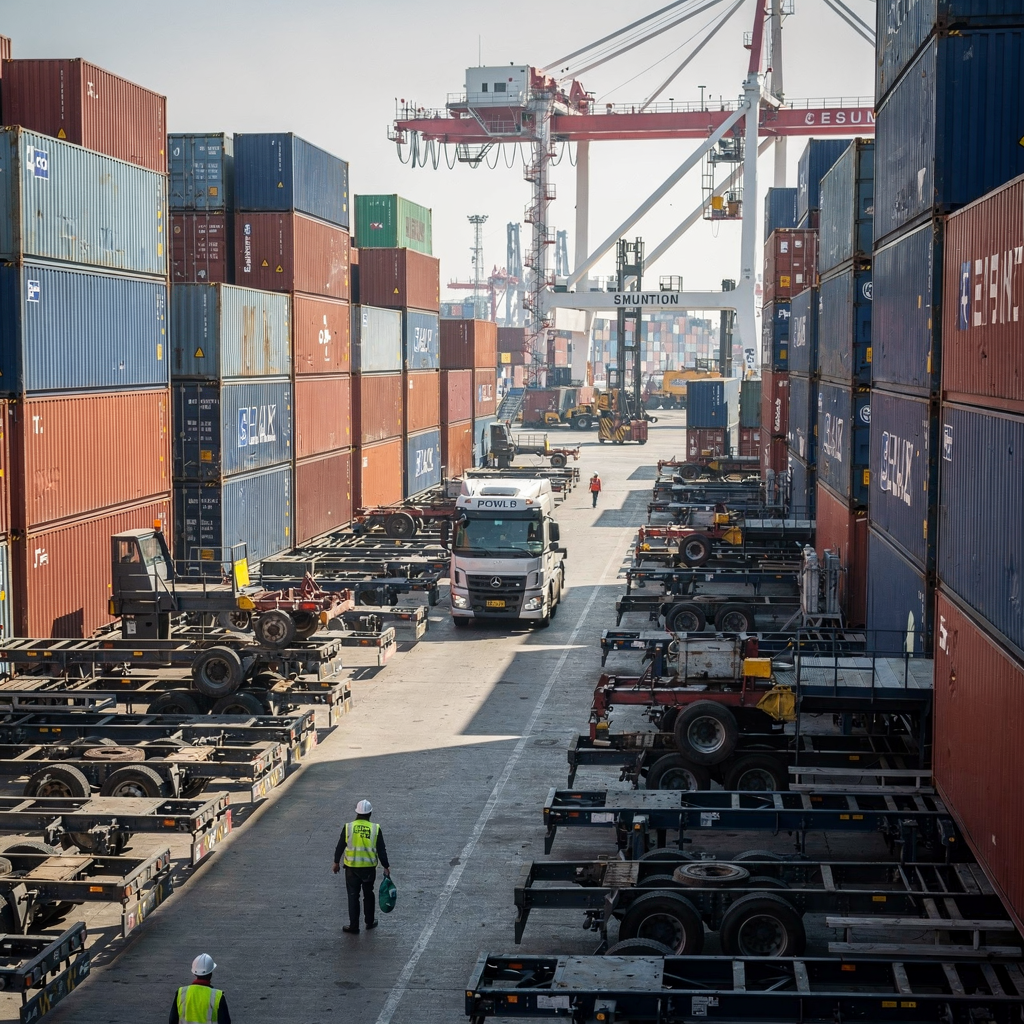
Chassis pools are shared fleets of chassis that support the movement of containers across a port. They sit at the core of container terminal workflows. In brief, the chassis fleet enables trucks to pick up and drop off containers at gates, yards, and berths. As a result, smooth chassis availability reduces idle time, avoids congestion, and speeds up truck turns. However, common issues persist. Idle chassis often cluster in yards while demand shifts to another area. Mis-allocation can leave some operators waiting and others idle. Delays then ripple into yard planning, crane schedules, and the wider logistics network.
AI changes how terminals predict and react to demand. Machine learning models learn from historical container movements, vessel schedules, and truck arrival patterns. Therefore, terminals can forecast peaks and troughs in chassis demand. In practice, predictive models reduce unnecessary repositioning trips and help planners stage chassis where they will be needed. For example, studies show that “AI-driven optimization can reduce chassis repositioning miles by up to 30%, significantly lowering fuel consumption and emissions” (Strategies for chassis dislocation management at container ports).
Additionally, AI helps automate dispatch decisions in real-time. A combination of real-time data feeds and optimization algorithms can assign the closest suitable chassis to incoming truck requests. This reduces search time and lowers idle truck queues at the gate. Also, integrating these AI decisions into a terminal operation dashboard lets terminal managers see predicted shortages before they occur. For further reading on how software supports automation, see a container terminal automation market overview (container terminal automation market overview).
Finally, smarter email and messaging workflows also matter for day-to-day chassis coordination. In turn, teams can respond faster to chassis availability alerts and real-time changes. Thus, AI and data analytics combine to reduce friction across port operation, enhance efficiency, and keep cargo flowing.
Chassis management in modern container terminals
Chassis perform a clear function: they bridge the ship-to-truck movement of containers. Within modern container terminals, pools can be privately managed, leased, or shared across operators. Pooling models vary. Some pools are centrally managed by terminal operators. Others are vendor-run with contractual rules for use and repositioning. Each model affects how terminals manage inventory, plan yard space, and schedule crane lifts. Key inefficiencies emerge when demand patterns change quickly. Empty moves are a frequent problem. Chassis travel without a container to reposition for the next job. These empty container repositioning moves waste fuel and time. As a result, yards face congestion and under-utilization of assets.
Terminals track several important metrics to manage chassis. Availability rate measures the share of time a chassis is ready for use. Turnaround time captures how long a chassis spends between hand-offs. Utilization rate reflects how often a chassis carries a load versus idles. When utilization averages 60–70%, operators often see room to improve. AI can help increase that utilization above 85%, improving return on investment (Strategies for chassis dislocation management at container ports).
Empty moves also raise carbon output and direct costs. Research quantifies reductions from AI-based pooling. For instance, one study reports decreases in empty relocation of roughly 25–35% through optimization methods (Modeling and Optimization of the Inland Container Transportation). Terminal operation teams therefore focus on policies and governance that support shared visibility. They require clear rules for pool access, reposition triggers, and penalty or incentive schemes.
Practical steps include standardizing telemetry on each chassis, tracking container dwell and dwell time, and aligning gate operations with scheduled reposition windows. Sensor and IoT integration let terminals see chassis position and status. Also, linking that data into a terminal operating system reduces manual lookups. For related approaches to reducing truck delays, consult research on reducing truck turnaround time (reducing truck turnaround time).
Drowning in a full terminal with replans, exceptions and last-minute changes?
Discover what AI-driven planning can do for your terminal
Role of AI in container transportation and logistics
AI reshapes how terminals and carriers predict container transportation flows. Predictive models combine vessel schedules, historical pickup profiles, and day-of changes to generate short-term demand forecasts. These models then feed optimization engines that recommend where to position chassis and when to mobilize extra capacity. In practice, terminals that apply AI see reduced dwell time for trucks and lower fuel use across repositioning operations. Indeed, “AI-driven optimization can reduce chassis repositioning miles by up to 30%” which directly cuts emissions and cost (Strategies for chassis dislocation management at container ports).
Moreover, AI helps routing and scheduling. Optimization algorithms consider traffic, crane schedules, and yard congestion to suggest best routes for trucks and for internal transport equipment. Also, machine learning models identify patterns that human planners might miss. For example, seasonal peaks or port community behaviors often repeat with subtle shifts. As a result, AI allows terminals to pre-stage chassis and reduce the number of empty moves. One study measured a 25–35% drop in empty repositioning through modeling and optimization techniques (Modeling and Optimization of the Inland Container Transportation).
The wider logistics and supply chain feel the effects. When terminals reduce delays, carriers maintain schedules more reliably. Consequently, supply chain resilience improves. Fewer idle trucks reduce emissions across the road network. Additionally, AI enables smarter interactions with third-party logistics providers by offering clearer ETAs and chassis availability windows. For deeper reading on predictive modeling and yard capacity, see predictive modeling resources for port operations (predictive modeling for port operations yard capacity).
Finally, AI is not a single tool. It spans forecasting, routing, scheduling, and decision automation. Each piece contributes to an uplift in productivity. Terminals that adopt these technologies often gain measurable reductions in repositioning cost and improvements in container movements. Together, these gains benefit the entire maritime logistics chain.
Integrate real-time data and reinforcement learning in container terminal operations
Real-time data is essential to dynamic chassis allocation. Sources include IoT trackers on chassis, RFID tags on containers, gate sensors, and system feeds from the terminal operating system. Sensor inputs reveal location, load status, and availability windows. Also, weather and traffic feeds add external context. By fusing these feeds, AI models act on current conditions rather than on stale snapshots. This reduces reaction lag and improves alignments between yard activity and crane operations.
Reinforcement learning frameworks bring an adaptive layer. In such frameworks, an agent learns to allocate chassis to requests by trial and error in a simulated environment. Rewards penalize empty travels and long truck waits. Over time, the agent improves by balancing short-term moves against long-term yard balance. For specific research directions, thinkers are exploring reinforcement learning for empty container repositioning and related learning for empty container tasks. One practical result includes a mini case where a ruleset augmented with reinforcement learning cut empty repositioning by about 30% in simulation (Strategies for chassis dislocation management at container ports).
Implementation typically follows a staged path. First, terminals ingest real-time telemetry from iot devices and sensors. Then, they build a digital twin or simulation of yard flows. Next, a reinforcement learning agent trains in that virtual environment. Finally, operators test policies in controlled live scenarios. This approach minimizes risk while improving allocation logic. It also supports advanced innovations such as a deep reinforcement learning method for decision making in complex yards.
Also, these systems must connect to human workflows. AI recommendations need clear explanations and override pathways. That keeps terminal operators confident in the suggested moves. For more on integrating real-time dispatch and automation, see resources on real-time equipment dispatch optimization (real-time equipment dispatch optimization).
Drowning in a full terminal with replans, exceptions and last-minute changes?
Discover what AI-driven planning can do for your terminal
Automation and productivity in terminal operation and freight handling
Automation touches many parts of chassis and container handling. Automated chassis pick-up/drop-off systems speed handovers at gates. Yard cranes with automated features reduce handling time for stacked containers. Automated guided vehicles help move chassis-mounted loads across yards. Each automation instance cuts repetitive work and reduces human error. As a result, productivity grows while safety improves.
Quantifying gains helps justify investments. Terminals that add focused automation see faster truck turn times. On average, improvements in gate processing and internal transport can reduce truck dwell by significant margins. For example, terminal operators report meaningful reductions in average service time when automation and AI scheduling work together. Also, automation lowers labour costs associated with repetitive tasks. Teams can then redirect staff to more complex or supervisory roles.
Automation paired with AI further improves throughput. An AI scheduler can sequence crane workloads to match chassis arrivals. That lowers idle crane time and improves overall crane operation efficiency. Also, by automating routine decision-making, terminals reduce human-induced delays and mistakes. This supports higher volumes without linear increases in headcount. For more on balancing crane workload and automation, see crane workload distribution strategies (crane workload distribution strategies).
By routing or resolving routine emails and drafting grounded replies from ERP and TMS data, such tools let teams act on automation prompts faster. Consequently, terminals close the loop between automated alerts and human escalation. In short, automation and AI together raise terminal productivity, cut errors, and boost throughput for freight flows and carrier operations.
Streamline port operations and chassis utilisation
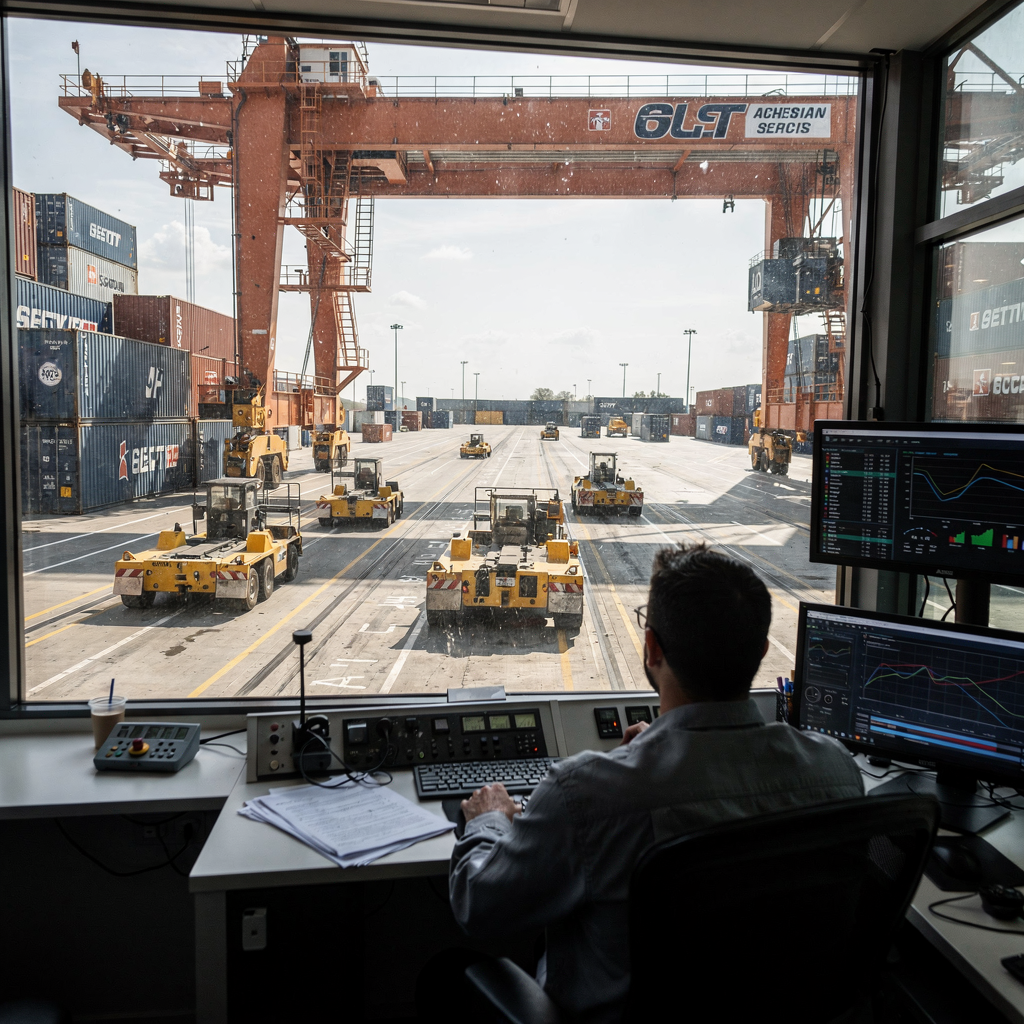
To streamline chassis management, terminals need both governance and technology. Start with clear pooling rules and transparent metrics. Policies should state reposition triggers, shared usage rights, and penalties for misuse. Next, terminals should adopt real-time visibility for chassis status and location. That makes it easier to match demand to supply.
From an environmental perspective, optimized chassis pools reduce empty miles. Studies estimate that optimization can cut empty moves by 25–35%, lowering emissions accordingly (Modeling and Optimization of the Inland Container Transportation). In addition, AI-driven repositioning strategies can reduce repositioning miles by up to 30% (Strategies for chassis dislocation management at container ports). These figures matter for port authorities and terminal operators focused on sustainability targets.
Best practices include integrating an asset-tracking system with a terminal community system. Also, terminals should use optimization algorithms that respect crane operation windows and truck appointment slots. This ensures synergy with loading and unloading schedules. For help with storage and yard logic, see AI modules for yard storage optimization (AI modules for yard storage optimization).
Looking ahead, digital twins and tighter AI integration will improve scenario testing and resilience. Autonomous decision agents will recommend moves and explain trade-offs to planners. Also, ongoing research into reinforcement learning for empty container scenarios will refine policies for repositioning. Finally, terminals that combine governance, sensors, machine learning, and automation will realize improved efficiency, lower costs, and measurable sustainability gains for maritime logistics and the wider supply chain.
FAQ
What is a chassis pool and why does it matter?
A chassis pool is a shared set of chassis used to transport containers within and beyond a port. It matters because proper pooling reduces idle assets, minimizes empty moves, and speeds up truck turnaround. Efficient pools cut costs and lower emissions across terminal logistics.
How does AI predict chassis demand?
AI uses historical container movements, vessel schedules, and gate arrival patterns to forecast demand. Machine learning models analyze these patterns and provide short-term forecasts. These predictions let terminals pre-stage chassis and reduce waiting times.
Can AI reduce empty repositioning miles?
Yes. Research shows AI-driven approaches can reduce repositioning miles significantly. For instance, one study reports reductions of up to 30% in repositioning miles (Strategies for chassis dislocation management at container ports). That yields fuel and emissions savings.
What data sources feed real-time chassis allocation?
Key sources include IoT trackers, RFID tags, gate sensors, and the terminal operating system. Sensor and iot inputs provide live location and status. These feeds let AI systems make adaptive allocation decisions in real-time.
How does reinforcement learning help terminals?
Reinforcement learning trains agents to balance immediate and long-term objectives in chassis allocation. Agents learn policies that minimize empty moves and wait times. Trials in simulation often translate into measurable gains when deployed carefully.
Are there measurable cost savings from AI in chassis pooling?
Yes. Studies estimate that optimized chassis pools can save terminals millions annually through fewer repositioning trips and faster turnarounds. Also, improving utilization from typical rates to over 85% enhances ROI for terminal assets (Strategies for chassis dislocation management at container ports).
How does automation affect productivity in terminals?
Automation shortens repetitive tasks and reduces human error. Automated pick-up/drop-off systems and guided vehicles speed handling. Consequently, productivity rises and labour can focus on higher-value tasks.
What environmental benefits come from optimizing chassis pools?
Optimized pools cut empty container trips and reduce fuel burn. Research shows up to 25–35% fewer empty moves with proper optimization (Modeling and Optimization of the Inland Container Transportation). This reduces CO2 emissions tied to port logistics.
How do email workflows impact terminal efficiency?
Operational email is often the largest unstructured workflow in operations. Slow replies and manual lookups delay actions.
What should terminals prioritize when adopting AI?
Priorities include ensuring high-quality operational data, integrating sensors and terminal systems, and starting with simulation-driven trials. Also, define governance for chassis pools and keep humans in the loop for oversight. These steps increase the chance of successful AI adoption.
our products
 stowAI
 stackAI
 jobAI
jobAI
Innovates vessel planning. Faster rotation time of ships, increased flexibility towards shipping lines and customers.
Build the stack in the most efficient way. Increase moves per hour by reducing shifters and increase crane efficiency.
Get the most out of your equipment. Increase moves per hour by minimising waste and delays.
stowAI
Innovates vessel planning. Faster rotation time of ships, increased flexibility towards shipping lines and customers.
stackAI
Build the stack in the most efficient way. Increase moves per hour by reducing shifters and increase crane efficiency.
jobAI
Get the most out of your equipment. Increase moves per hour by minimising waste and delays.