
Overview of port simulation software
Container terminal simulation software models operations so planners can test changes without stopping live work. In this chapter I define container terminal simulation and explain its role for port management. First, a clear definition. Terminal simulation creates a digital replica of vessel berthing, yard moves, crane cycles, and gate flows. Second, the main uses. Teams use it for capacity planning, staff training, and stress testing in a risk-free environment. Third, market drivers. Traffic growth, automation demands, and higher service expectations push adoption. Also, investment in terminal automation and new berth projects increases the need for modeling.Terminal simulation analysis for container terminals shows over 20 years of experience underpinning many deployments. Furthermore, ports and terminals face more complex traffic mixes, so planners require tools that can simulate multimodal links and rail networks.
Adoption rates vary by region. Large hub ports lead, while smaller ports adopt gradually. For ports and terminals with high container volumes, the business case often rests on reduced idle time and demurrage; operators cite single-digit to double-digit percent gains in cost reduction and throughput after targeted trials. For example, a report from a major simulation vendor highlights potential gains in vessel turnaround time when planners use scenario testing to balance berth allocation and yard layoutPort and Terminal Simulation Software – AnyLogic. In practice, terminal operators combine modelling with TOS tests to validate changes. Also, port authorities use models to benchmark proposals and to justify investment.
In addition to planning, simulation is a powerful tool for port tactical work. It gives visual feedback and helps teams analyse what-if choices. For readers who want examples on yard stack layouts and operational yard density, see research on optimizing yard stack density and related operational-efficiency studies from our library of applied work optimizing yard stack density for export containers. This reduces manual triage and helps teams act faster while keeping control.
Core capabilities of simulation software
Core capabilities define what a port simulator can do. Discrete event methods dominate because they reproduce the stochastic nature of cargo handling and resource contention. The discrete event approach tracks events such as vessel arrival, crane moves, truck arrivals, and container transfers. In short, discrete event lets users view system behaviour over time and identify bottleneck points. Simulation tools also include 3D visualisation and virtual terminal environments. Advanced 3D interfaces let teams test TOS changes while staff train on realistic layouts and workflows. For example, CHESSCON Virtual Terminal offers a 3D risk-free testbed for TOS integration and trainingVirtual Terminal for 3D Simulation and TOS Optimization | CHESSCON. This visual feedback speeds uptake and reduces errors in configuration.
Decision support features appear next. Users create dashboards and automated reports that drive resource allocation and shift patterns. Integration with automation and yard control systems supports analysis of automation pathways, energy use, and sustainability. Some platforms include modules to analyse energy consumption and emissions so teams can assess environmental factors while planning automation investments.A simulation tool for container operations management at seaport demonstrates sustainability-focused analysis. Also, vendors provide interfaces to TOS, ERP, and terminal-level data so planners can sync model inputs with live records.
Finally, flexibility matters. A good model supports scenario creation, such as surge traffic, berth closures, or new rail links. It supports what-if runs for layout changes and for changes in crane productivity. This capability helps terminal operators define objective KPIs and to optimise resource use. For deeper reading on optimizing port equipment and dispatch, see our guide on real-time equipment dispatch optimization.
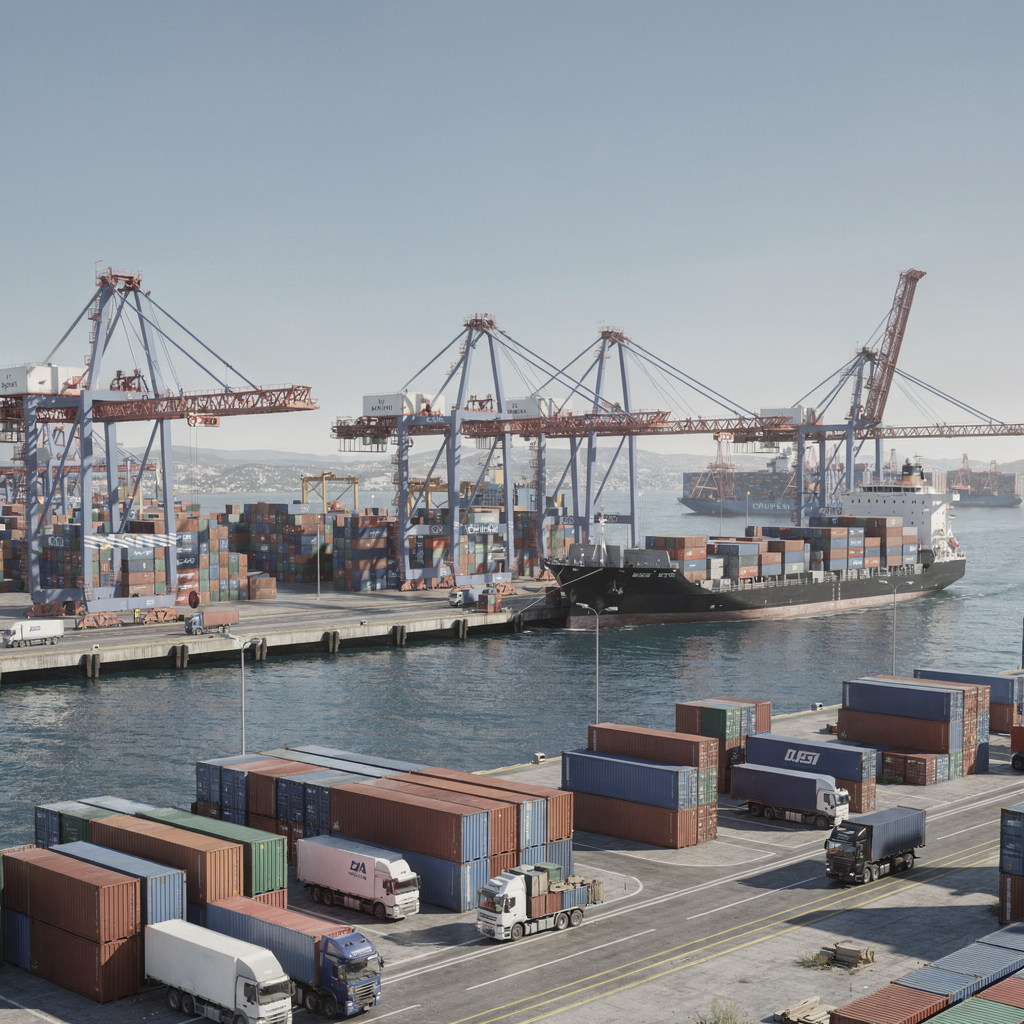
Drowning in a full terminal with replans, exceptions and last-minute changes?
Discover what AI-driven planning can do for your terminal
Designing a simulation model for ports and terminals
Design starts with mapping real processes. A robust simulation model mirrors vessel calls, quay operations, container yard moves, and gate procedures. First, map vessel sequences and quay tasks. Next, map yard flows and container yard stacking logic. Then, include gate check-in, truck turnaround, and intermodal handoffs. In addition, include rail interfaces for multimodal movements so planners can analyse the full freight chain. The mapping step yields a variables in a simulation model checklist and a clear list of system requirements.
Data needs follow. Planners need historical arrival curves, crane productivity, handling times, and truck arrival patterns. They also need container mix by TEU, dwell times, and yard layout details. Calibration then aligns model outputs with observed metrics such as crane productivity and berth occupancy. Validation uses hold-out periods or past disruptions to confirm predictive power. In practice, teams run a series of calibration runs, compare predicted versus actual throughput and adjust distributions. For guidance on capacity and planning, review our article on container terminal capacity optimization using AI-based planning solutions.
Scenario creation gives planners a structured way to stress test objectives. You can create surge scenarios, equipment failure cases, or labour shortages. These stress test runs identify bottleneck locations, quantify utilization, and show trade-offs such as higher yard density versus increased rehandling. Use short, repeatable experiments. For example, one scenario might reduce available quay cranes by one and measure the resulting change in vessel turnaround. Another may introduce peak truck arrivals tied to an inland rail schedule. Both yield measurable outputs that support investment decisions.
Finally, include human factors. User-friendly interfaces and clear visual feedback speed adoption among planners and operator staff. A well-documented model includes assumptions, benchmark results, and a clear objective for each run. This helps port management make repeatable choices and to justify upgrades to infrastructure and systems. Also, digital twin concepts can tie the model to real-world telemetry for ongoing alignment.
Decision support and optimization in terminal operations
Decision support divides into real-time help and strategic planning. Real-time decision support tools offer alerts, dispatch recommendations, and short-horizon schedules. Strategic planning applications explore investment choices, layout changes, and long-term capacity. Both types rely on the same core elements: data, model logic, and optimisation routines. For example, berth planning, resource allocation, and equipment scheduling come from model outputs that optimise crane allocation and truck lane assignments.
Operators use models to reduce idle time and demurrage while improving crane productivity. One vendor study reported up to 15–20% gains in throughput after targeted optimisation runsPort and Terminal Simulation Software – AnyLogic. Another practical study showed operational cost reductions between 10% and 25% following structured planning using a port simulatorContainer Terminal Simulation: Optimize Your Operations. These statistics help justify further investment in automation and layout upgrades. In a tactical sense, the model can optimise resource pools, reduce equipment starvation, and plan shift rotations.
Analytical features support optimisation. Models apply scheduling heuristics and metaheuristics that improve allocation for quay cranes and yard trucks. Decision support also helps risk mitigation by allowing teams to test disruption response options and to simulate alternative vessel sequences. For decision makers who want to reduce truck turnaround time, related work on operational improvements shows how coordinated gate and yard plans lower dwell.Reducing truck turnaround time.
Finally, model outputs feed business cases. They quantify reduced vessel wait, improved utilization, and the likely ROI on new cranes or yard reconfiguration. Use these outputs to benchmark proposals and to align stakeholders on a clear objective for change.
Drowning in a full terminal with replans, exceptions and last-minute changes?
Discover what AI-driven planning can do for your terminal
Case studies using port simulator tools
Case studies provide concrete proof. CHESSCON Virtual Terminal deployments helped teams test TOS logic and worker training in 3D, delivering faster change acceptance and fewer mistakes during rolloutsVirtual Terminal for 3D Simulation and TOS Optimization | CHESSCON. In one implementation, the client reported smoother go-live and measurable reductions in rework. Also, Arena Simulation Software has been used at major global hubs to model complex berth schedules and yard interactionsArena Simulation – Port & Terminal. These port simulator implementations show how discrete modelling blends with operational data to reveal improvement areas.
Measured outcomes often include reduced idle time and increased throughput percentages. A published vendor study described throughput improvements up to 20% after optimisation runs; these gains translated to lower vessel turnaround and improved berth productivityPort and Terminal Simulation Software – AnyLogic. Similarly, port operators reported lower equipment idle time after deploying simulation tools. Here, the numbers translate directly into lower operating expense and higher service reliability. For additional readings on reducing equipment starvation and intelligent pooling, see the operational study on reducing equipment starvation through intelligent pooling.
Case studies also show how simulation enabled risk mitigation. Teams ran stress test scenarios to verify resilience under peak demand or equipment failure. These tests often guided decisions on buffer sizing and yard layout to minimise rehandling. For planners focused on crane workload, one specific case used model runs to rebalance shifts and improve crane productivity. Another case demonstrates how simulation modeling helped a port reconfigure gate lanes to reduce truck dwell and improve throughput. These practical examples make a clear case for including model-driven analysis in any capital or operational plan.
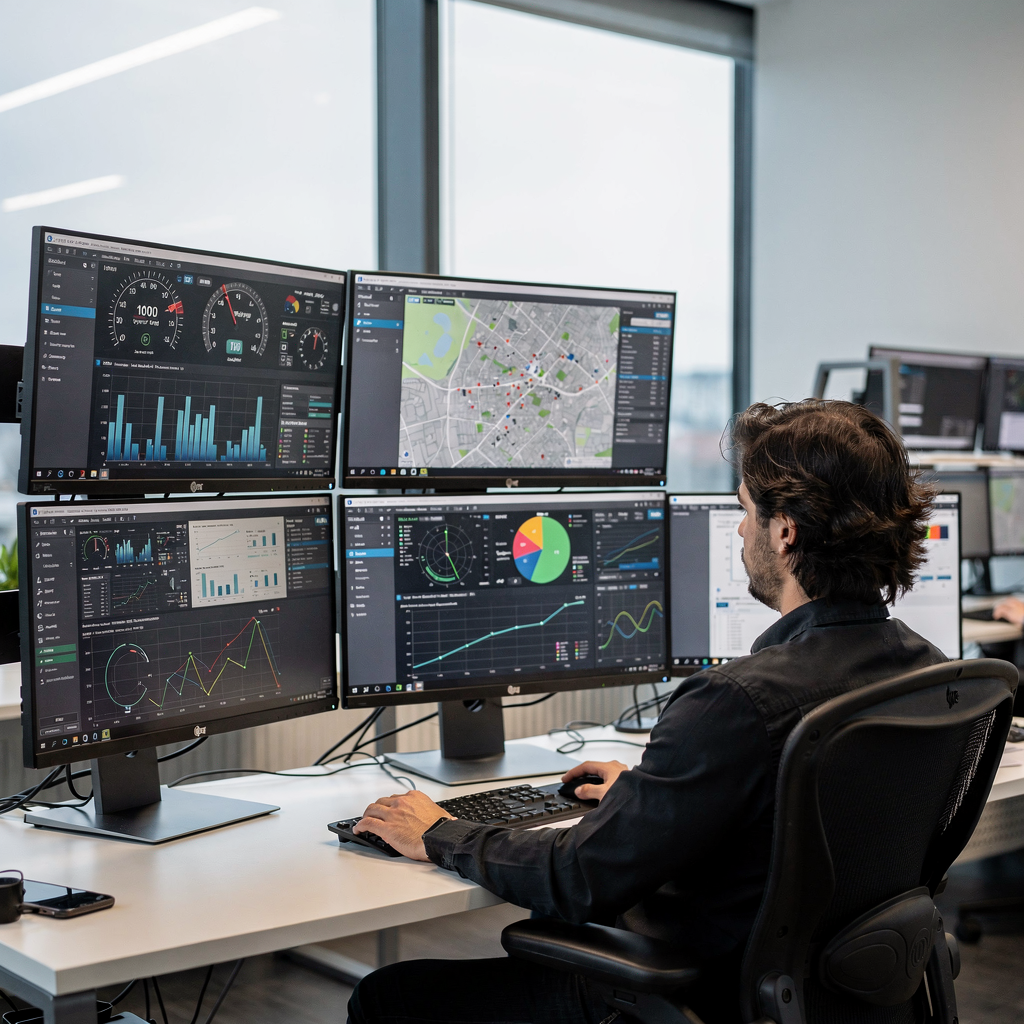
Future software and model trends in container terminals
Future trends focus on digital twin adoption, AI-driven predictive models, and deeper data integration. Digital twin approaches embed live telemetry and let teams run near-real-time what-if analyses. A recent study explores digital twin value for resilience and sustainability assessment in port facilitiesDigital Twin for resilience and sustainability assessment of port facility. In parallel, big data and machine learning improve demand forecasting and predictive maintenance. For example, predictive-modeling work shows clear benefits for yard capacity planning and equipment uptimepredictive modeling for port operations yard capacity.
Another trend is tighter integration across supply chain systems. Models will increasingly pull data from ERP, TMS, and WMS to create a unified view of cargo flows. This integration helps ports plan multimodal handoffs with rail and inland terminals. It also supports intermodal decisions that reduce empty moves and improve freight flows. In addition, planners will see more tools that analyse environmental factors so terminals can meet sustainability KPIs. Tools will report energy use per move and help teams identify low-emission operating modes.
Automation advances continue. Planners will test automation paths and the resulting shifts in utilization and operating speed. They will analyse to what extent automation reduces personnel touchpoints and how to automate routine dispatch while keeping human oversight for exceptions.
Finally, expect more user-friendly modelling suites that let planners create scenarios quickly and share visual results with stakeholders. These tools will support decision support and disruption response, and they will become an accepted part of port management toolkits. For readers interested in automation market context, see our overview of the container terminal automation software market and related approaches to quay-crane scheduling and yard storage optimisation container terminal automation software market overview.
FAQ
What is container terminal simulation and why use it?
Container terminal simulation builds a digital representation of terminal processes so teams can test changes without disrupting live operations. It helps planners measure impacts before committing to investments, improves risk mitigation, and provides a risk-free environment for training and testing.
How does discrete event modelling help port planners?
Discrete event approaches capture sequences of events like vessel arrival and crane moves, so they reproduce the random behaviour of operations. This method supports analysis of resource contention and helps identify bottleneck locations under different assumptions.
Can simulation reduce vessel turnaround time?
Yes. Published studies show that targeted optimisation can yield notable gains in vessel handling and throughputPort and Terminal Simulation Software – AnyLogic. Simulated schedule changes and resource reallocation often translate into real-world time savings.
What data do I need to build a reliable model?
Key inputs include historical arrival patterns, crane productivity, truck arrival curves, container mix, and yard layout. Calibration data and validation runs are also essential to align model outputs with observed metrics.
Are 3D virtual terminals useful?
Yes. 3D virtual terminals provide visual feedback for staff training and TOS integration, which reduces errors at go-liveVirtual Terminal for 3D Simulation and TOS Optimization | CHESSCON. They also help stakeholders understand proposed layout changes.
How do simulation tools support sustainability goals?
Models can include energy and emissions calculations to analyse environmental factors and to test low-emission operating modes. This supports longer-term planning and helps ports meet regulatory or corporate sustainability targets.
Can modelling guide decisions about automation?
Absolutely. Models let teams compare manual, semi-automated, and fully automated configurations and quantify impacts on utilization and operating speed. They also help estimate the ROI of new cranes or automated guided vehicles.
What role do digital twins play in port management?
Digital twins connect live telemetry to a persistent model that aids near-real-time decision-making and predictive analysis. They are useful for ongoing optimisation and for assessing resilience under changing conditionsDigital Twin for resilience and sustainability assessment.
How can small terminals benefit from simulation?
Smaller terminals can use models for targeted improvements, such as reducing truck dwell or improving yard stacking. Scaled scenarios allow teams to justify small investments with clear projected benefits and benchmark results.
Where can I learn more about practical deployments and optimization techniques?
Start with vendor case studies and applied articles on capacity planning and equipment dispatch. Our site includes technical posts on yard density, crane workload distribution, and equipment pooling that provide hands-on guidance and examples operational efficiency in container ports.
our products
 stowAI
 stackAI
 jobAI
jobAI
Innovates vessel planning. Faster rotation time of ships, increased flexibility towards shipping lines and customers.
Build the stack in the most efficient way. Increase moves per hour by reducing shifters and increase crane efficiency.
Get the most out of your equipment. Increase moves per hour by minimising waste and delays.
stowAI
Innovates vessel planning. Faster rotation time of ships, increased flexibility towards shipping lines and customers.
stackAI
Build the stack in the most efficient way. Increase moves per hour by reducing shifters and increase crane efficiency.
jobAI
Get the most out of your equipment. Increase moves per hour by minimising waste and delays.