
understanding container and container terminal operation
First, this chapter defines core processes in a modern container terminal. Import and export flows arrive by ship and truck. Port planners register incoming container vessels and trucks. Next, terminal staff assign storage slots and sequence container loading and unloading. Then, cranes lift containers between quay and yard. Finally, yard movers transfer boxes to storage locations. These steps shape throughput, travel distance and fuel consumption.
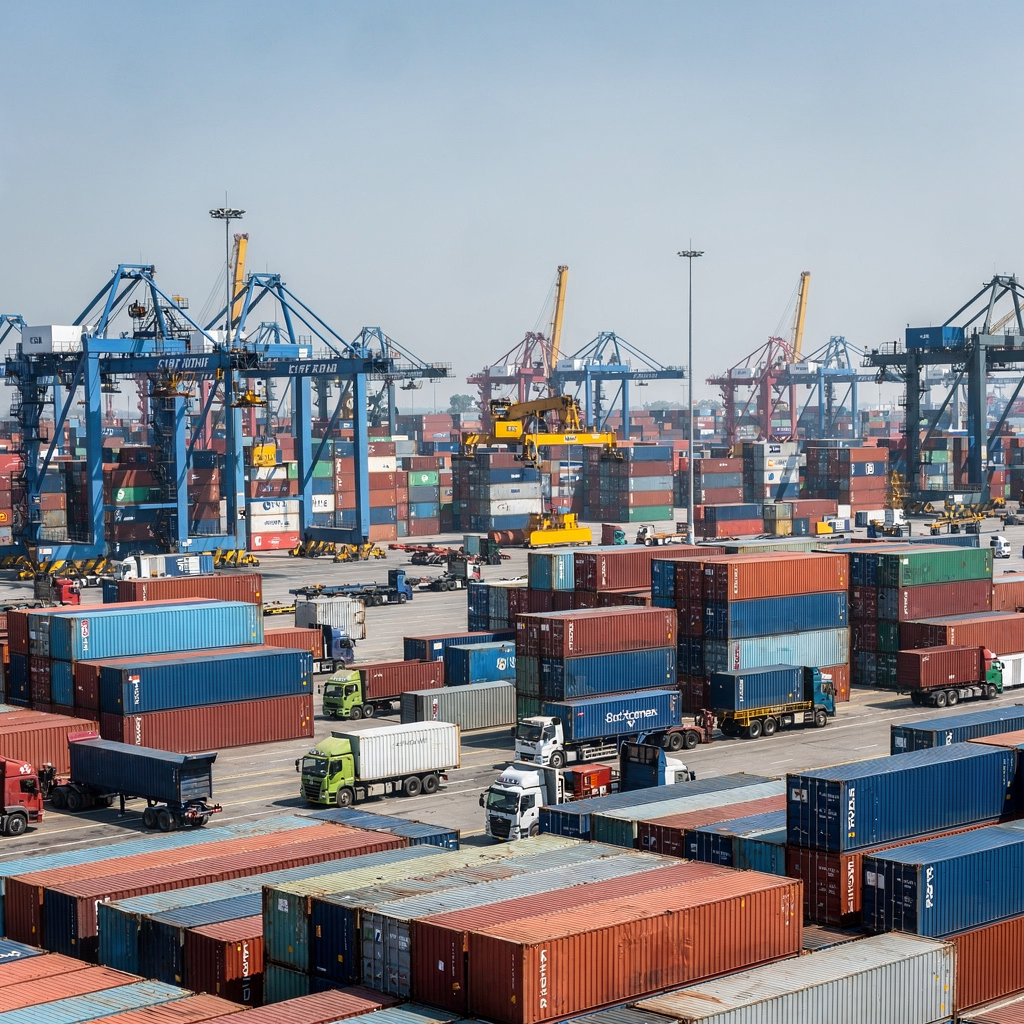
For clarity, the main handling equipment includes the quay crane that works at the berth, the yard crane that stacks and retrieves boxes in the yard, and yard trucks that shuttle containers between points. Additionally, automated guided vehicles and straddle carriers appear at many terminals. Each machine affects terminal performance and the path each container travels. Terminal operators measure productivity in moves per hour and in how far a container travels while inside the facility.
Key performance metrics include throughput, travel distance and fuel consumption. For example, reducing driving distances lowers fuel use and emissions, which supports sustainability in container planning. Consequently, terminals can cut costs while improving service. Terminal operators often monitor average truck-turn times, mean moves per crane hour, and the number of reshuffles per one container. These metrics guide decisions on container placement, container storage and the scheduling of yard cranes.
In practice, operations at container terminals must balance vessel schedules, truck arrivals and the yard layout. Therefore, planners use an optimization model to assign slots and tasks. For example, zone-based layouts reduce cross-yard travel and simplify local dispatch. Meanwhile, terminals adopt software that integrates berth planning, yard planning and dispatch. As a result, planners spend less time on manual triage and more time on higher-value decisions. For further reading on predicting yard congestion, see a focused analysis on predicting yard congestion in terminal operations predicting yard congestion in terminal operations.
scheduling problem for yard crane deployment
First, the scheduling problem for yard crane deployment matches container retrieval tasks to crane availability. The scheduling problem is multi-dimensional. For example, planners must consider task priorities, crane reachability and conflicts between adjacent cranes. As a result, a yard crane may wait while another finishes, which increases driving and handling time. Therefore, reducing idle time and interference improves terminal performance.
Mathematical programming approaches include mixed-integer programming and heuristics. Mixed-integer programming produces optimal assignments under clear constraints. Meanwhile, heuristics scale to large terminals with many tasks. Hybrid approaches combine exact models with rule-based rescheduling to handle real-time changes. In practice, an integrated scheduling optimization model can coordinate quay crane and yard movement to reduce delays. For more on dynamic dispatching and equipment allocation, review work on real-time equipment dispatch real-time equipment dispatch optimization in container terminals.
Constraints shape feasible schedules. For example, crane interference bars two adjacent cranes from operating in overlapping bays. Also, maintenance windows reduce available crane hours. Furthermore, peak arrival periods create bursts of container tasks that require rapid reallocation. Consequently, planners include buffer times and flexible shift patterns to absorb variability. The scheduling optimization problem must also account for yard truck availability, quay crane and yard coordination, and the sequencing of container loading and unloading.
Practically, terminals can combine resource allocation and scheduling with simulation-based optimization to test scenarios. For example, a simulation can show how changing the export container area affects queue lengths. Then, planners can refine rules or apply improved particle swarm optimization or a particle swarm optimization algorithm for large search spaces. Finally, scheduling of quay cranes and scheduling of yard cranes must align with truck windows to reduce the waiting time for trucks. A balanced schedule reduces reshuffles and the number of handling container moves. For additional strategies on quay planning and productivity, see optimizing quay crane productivity in container terminals optimizing quay crane productivity in container terminals.
Drowning in a full terminal with replans, exceptions and last-minute changes?
Discover what AI-driven planning can do for your terminal
route optimization for yard truck routing
First, route optimization for yard truck routing focuses on reducing travel distance and delays. Zone-based assignment algorithms divide the yard into sectors. Then, yard truck drivers or autonomous vehicles operate mostly within their assigned zone. As a result, cross-yard travel falls. Studies report zone-based approaches may cut pathfinding time by up to 30% Traffic Optimization – an overview | ScienceDirect Topics. Consequently, travel distances shorten and fuel use drops.
Dynamic routing methods use real-time data feeds from terminal operating systems. For example, live updates on container positions, truck arrivals and crane status let dispatch systems re-route trucks around congestion. In practice, digital platforms and IoT sensors provide the necessary inputs. Wabtec’s Port Optimizer™ demonstrates how accurate, on-time data supports smarter vehicle routing and reduces unnecessary movement Port Optimizer™ | Wabtec Corporation. Therefore, terminals that invest in data pipelines gain faster recovery from disruptions and smoother day-to-day operations.
Expected benefits from refined routing include up to 20–25% shorter travel distances when tiered placement and smart routing combine. For example, container stacking that aligns with retrieval sequence reduces the need for long transfers. Moreover, even small reductions in average yard truck trip length multiply across thousands of moves each month. Consequently, terminals can achieve cost optimization and lower emissions.
However, routing must consider the problem of container trucks waiting for quay service and the container truck task sequence. To manage this, terminals implement service-level windows for external trucks and internal dispatch priorities. In addition, optimization of container trucks includes pooling strategies to reduce empty trips and to improve utilization. For further details on intelligent pooling and reducing equipment starvation, explore research on reducing equipment starvation through intelligent pooling in port operations reducing equipment starvation through intelligent pooling in port operations.
container stacking in the container yard
First, container stacking optimisation groups containers by expected retrieval sequence to minimise reshuffles. Tiered-stack approaches place containers with similar departure times or destinations together. Then, stack planners reduce the need to move containers that block others. As a result, cranes and yard truck routes shorten. For example, tiered placement paired with dynamic reassignment can reduce handling distances by 15–20% in case studies Types of load planning software & freight optimization software.
Next, compare tiered-stack approaches with nearest-slot assignment. The nearest-slot rule places a container in the closest free slot. This method minimizes immediate travel. However, it often increases future reshuffles. By contrast, tiered stacks anticipate retrieval order and protect high-priority boxes. Consequently, tiered stacks reduce the overall number of relocations and improve terminal performance.
Planners also use programming models for integrated container solutions that combine placement with retrieval sequencing. For example, mixed-integer models and heuristics can suggest container positions that balance crane workload and minimize container movement within the yard. Integrated scheduling optimization model research shows clear trade-offs between immediate travel and future reshuffles. Therefore, simulation-based optimization helps validate choices before live deployment.
In practical terms, a single change to container placement can reduce the distance a yard crane travels for one container and for a set of container moves. Additionally, improved particle swarm optimization has been applied to container placement problems to find near-optimal arrangements at scale. The impact extends to container logistics and to better coordination with the export container area and truck windows. If terminals wish to optimize container placement and stack density, see work on optimizing yard stack density for export containers optimizing yard stack density for export containers. Finally, when terminals pair stacking rules with digital tracking, they reduce empty container repositioning and save fuel.
Drowning in a full terminal with replans, exceptions and last-minute changes?
Discover what AI-driven planning can do for your terminal
dynamic container allocation for efficient container flows
First, dynamic container allocation updates slot assignments as vessel ETAs and truck arrivals change. Dynamic container dispatch keeps containers close to their next handling point. For example, if a truck arrival slips, the system can reassign nearby containers to reduce later travel. Consequently, the terminal reduces idle time and avoids unnecessary reshuffles.
Second, digital infrastructure solutions power these changes. Platforms that combine IoT sensors, TOS feeds and optimization for container placement enable real-time adjustments. Wabtec’s Port Optimizer™ provides a live, reliable data source that supports dynamic decisions and reduces excess movements Port Optimizer™ | Wabtec Corporation. In addition, terminals implement event-driven APIs and connected services to propagate updates quickly. For more on event-driven designs for terminals, see event-driven API architectures for container terminals event-driven API architectures for container terminals.
Third, the benefits are measurable. Dynamic allocation links to reduced idle time, fewer long transfers, and lower CO₂ output. Case studies show integrated container terminal operations that use dynamic allocation and routing models can reduce driving distances by 15–30% and cut fuel use by about 10% Improved transport efficiency through reduced empty positioning of containers. Therefore, adopting digital tracking and responsive rules yields clear returns.
Practically, terminal operators combine dynamic allocation with crew and equipment schedules to balance workload. This approach improves terminal resources utilization. Additionally, using AI to predict short-term demand reduces last-minute reshuffles. Finally, dynamic container allocation supports sustainability in container operations while raising container terminal productivity.
optimization of maritime container for container terminal efficiency
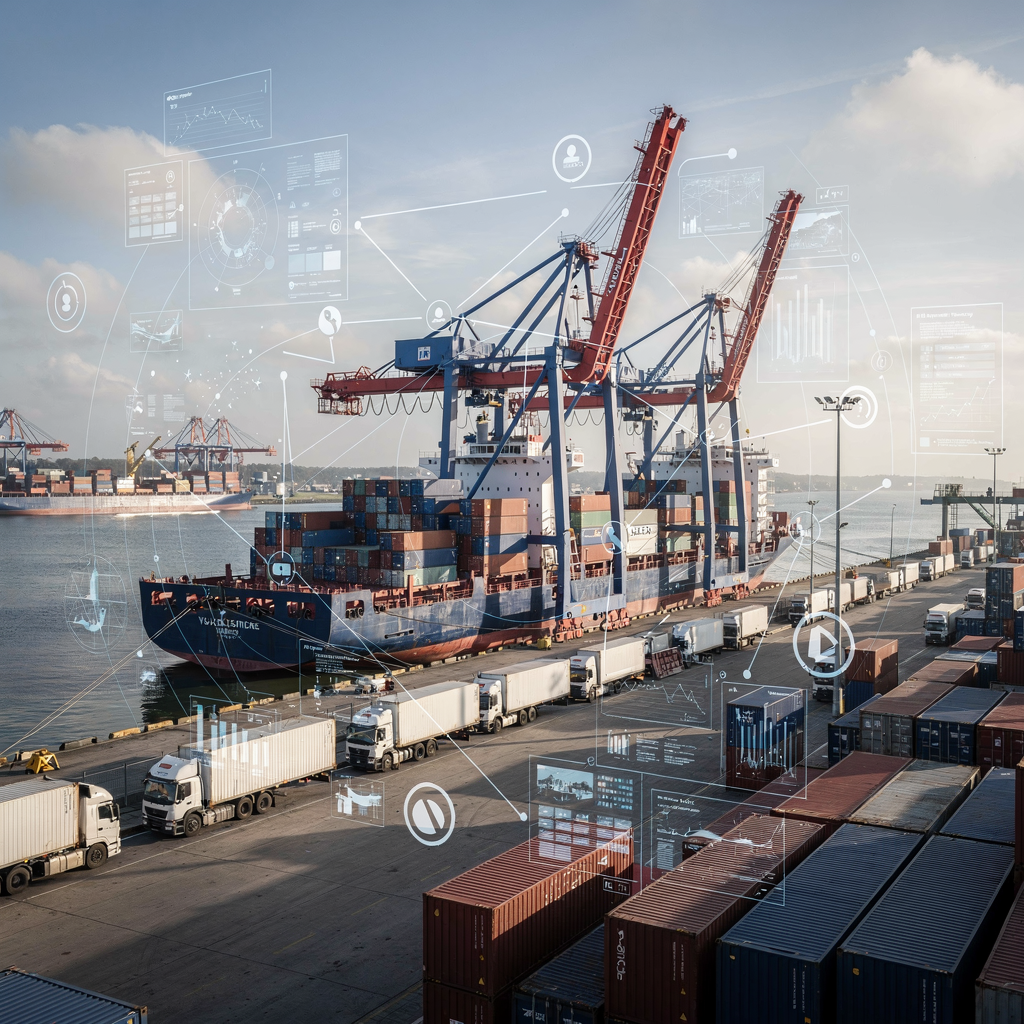
First, this chapter presents a case study of an integrated optimisation deployment at a major European port. The port implemented a combined set of programming models for integrated container terminal functions. Specifically, planners used mixed-integer models, heuristics and dynamic routing. Then, they integrated real-time feeds from vessel AIS, truck booking systems and TOS sensors. As a result, the terminal reduced average travel distances and improved terminal performance.
Second, outcomes included a 15–30% reduction in driving distances, about 10% fuel savings and measurable CO₂ cuts. For instance, zone-based assignment algorithms and container stacking optimisation contributed to shorter vehicle paths and fewer relocations Traffic Optimization – an overview | ScienceDirect Topics. Also, practical software tools that align vessel schedules with yard allocation made the gains persistent. The study echoed broader research that links improved planning to reduced empty container moves and lower operational costs Improved transport efficiency through reduced empty positioning of containers.
Third, the future outlook highlights AI-driven predictive routing and the automated container terminal. AI systems predict short-term demand and suggest container positions that minimize future moves. Meanwhile, full automation of handling container tasks will speed throughput and reduce human error. Integrated optimization and human oversight form the practical path forward. For more on AI approaches to quay scheduling and performance, see ai approaches to quay crane scheduling in container terminals ai approaches to quay crane scheduling in container terminals.
Finally, this case shows how technology, process changes and staff training combine to enhance the efficiency of container operations. Terminals that adopt an integrated optimization approach improve container terminal productivity and make operations more resilient. As global trade grows, these strategies will help ports scale. In turn, they will drive cost optimization and reduce environmental impact while keeping supply chains fluid.
FAQ
What is the best way to reduce driving distances in a container terminal?
The best approach combines smarter stacking, zone-based routing and real-time dispatch. These measures together cut redundant travel and lower fuel use.
How do zone-based assignment algorithms work?
Zone-based algorithms split the yard into sectors and assign vehicles to specific areas. This reduces cross-yard travel and improves localized efficiency.
Can software really reduce handling distances by 20%?
Yes. Case studies show container stacking and tiered placement, combined with routing software, can shorten average travel distances by about 20–25% Types of load planning software & freight optimization software.
What role does dynamic container allocation play?
Dynamic allocation updates slot assignments in real time as ETAs and truck arrivals change. This reduces idle time and avoids unnecessary reshuffles.
How do yard crane schedules affect yard truck routes?
Crane schedules set when containers become available in the yard. If cranes and trucks are not synchronized, trucks wait and travel more. Scheduling alignment reduces the waiting time and driving distances.
Are there environmental benefits to reducing driving distances?
Yes. Shorter trips lead to lower fuel consumption and reduced CO₂ emissions. One study reported about a 10% reduction in fuel use with optimized routing and fewer empty moves Improved transport efficiency through reduced empty positioning of containers.
What is the difference between nearest-slot and tiered-stack placement?
Nearest-slot minimizes immediate travel, but often increases future reshuffles. Tiered-stack groups containers by retrieval sequence to reduce relocations and overall handling distance.
Can AI predict short-term yard congestion?
Yes. AI models can forecast congestion based on vessel ETAs, truck bookings and historical patterns. For details, see predicting yard congestion in terminal operations predicting yard congestion in terminal operations.
How do terminals integrate real-time data into decisions?
Terminals feed TOS, IoT sensors and vessel/truck systems into decision platforms. Tools like Port Optimizer™ show how timely data enables smarter routing Port Optimizer™ | Wabtec Corporation.
This reduces manual triage and speeds communication between planners and operators.
our products
 stowAI
 stackAI
 jobAI
jobAI
Innovates vessel planning. Faster rotation time of ships, increased flexibility towards shipping lines and customers.
Build the stack in the most efficient way. Increase moves per hour by reducing shifters and increase crane efficiency.
Get the most out of your equipment. Increase moves per hour by minimising waste and delays.
stowAI
Innovates vessel planning. Faster rotation time of ships, increased flexibility towards shipping lines and customers.
stackAI
Build the stack in the most efficient way. Increase moves per hour by reducing shifters and increase crane efficiency.
jobAI
Get the most out of your equipment. Increase moves per hour by minimising waste and delays.