
The Scheduling Problem in Maritime Container Terminal
The scheduling problem in a maritime container terminal centers on allocating scarce equipment and time slots to many competing tasks. Terminals must assign quay cranes, yard cranes, and terminal truck moves while respecting constraints. This leads to combinatorial optimization problems that scale fast. As a result, exact solutions become infeasible for busy terminals. The problem is NP-hard and resembles many classic scheduling optimization problems from research and practice. For that reason, terminals rely on heuristics and approximation methods. First, they group tasks. Then, they sequence moves to reduce crane interference and minimize waiting time. Next, they match vessel berth windows with yard availability and truck appointments.
When vessel arrival times, crane assignments and yard operations do not align, bottlenecks appear quickly. Crane idle periods rise. Truck queues grow. Yard blocks become congested. Studies show poor schedules can increase container dwell time by up to 20% Real-Time Supply Chain Visibility. That delay reduces terminal throughput and hurts the port and shipping lines.
A good scheduling in container terminals must coordinate quay crane scheduling, scheduling of yard cranes and the allocation and quay crane scheduling that links berth work to yard stacking. The scheduling optimization problem spans time interval planning, resource allocation and scheduling, and joint optimization of horizontal transportation equipment and quay resources. Terminals often model one container move at a time. However, an integrated scheduling optimization model that treats container positions, container storage, and container movements together produces far better outcomes.
Practically, terminal management must manage equipment resources, anticipate equipment failures and balance workloads. For example, a single late discharge can cascade into longer quay crane waiting time and higher truck turnaround. To optimize, decision makers apply various optimization algorithms and simulation-based optimization. They also test programming models for integrated container to validate rules before deployment. Terminals around the world face the same scheduling problem. Thus, ports and terminals worldwide invest in tools to reduce waiting time and to raise terminal efficiency.
Real-time Operational Data for Dynamic Dispatch
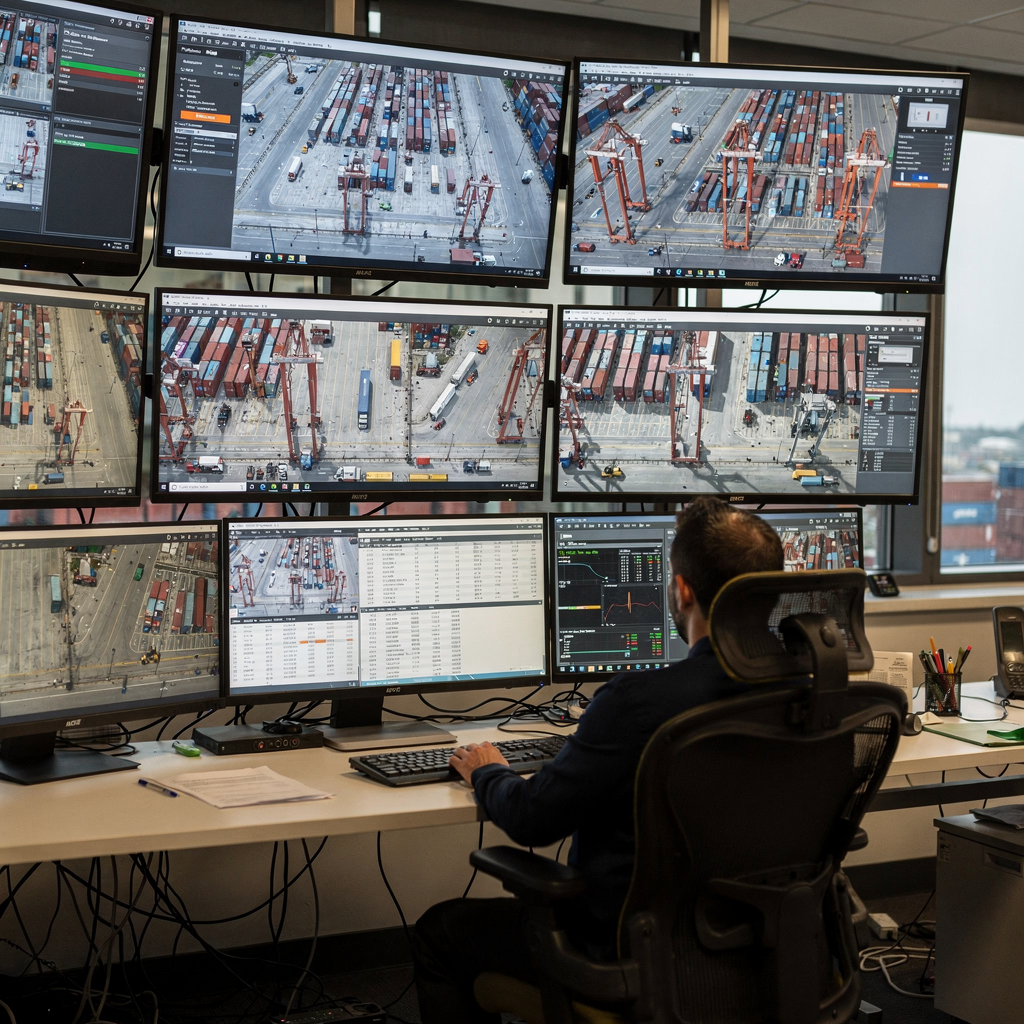
Real-time operational data transforms how terminals allocate moves and respond to surprises. Sensors, GPS trackers and a terminal operating system stream status continuously. Terminal operating systems feed berthing updates, equipment locations and task lists. IoT sensors report crane status, truck location and yard block density. As a result, planners get a clear live picture and can act quickly. Real-time data and event feeds let systems reroute a container truck or adjust a crane work plan within minutes.
In practice, terminals using these streams can automate routine work and reduce human latency. For example, an equipment dispatch message can trigger a reassignment in seconds rather than minutes. That lowers crane idle time and reduces truck queuing. The use of real-time data also reduces errors in handoffs. Terminals that integrate IoT, GPS and the terminal operating system report measurable gains when they optimize task flows.
Still, challenges remain. Data latency and inconsistent formats complicate integration with legacy TOS installations. Many ports must bridge old systems and new APIs. Integration work and data governance must exist before full benefits appear. In addition, terminals must ensure data accuracy. Inaccurate coordinates or stale sensor readings create suboptimal moves. Therefore, terminals validate feeds continuously and build fallbacks.
Finally, terminals often need cultural change. Terminal operators and planners must trust AI suggestions and real-time alerts. Training helps to adopt new workflows. For a deep dive into yard-congestion prediction and how real-time feeds improve rerouting, see this discussion on predicting yard congestion in terminal operations predicting yard congestion.
Drowning in a full terminal with replans, exceptions and last-minute changes?
Discover what AI-driven planning can do for your terminal
Optimization Strategies in Container Terminals
Optimization blends models, data and domain rules. In practice, AI, machine learning and optimization algorithms work together to make good assignments fast. Machine learning models predict demand peaks, equipment availability and likely delays. Optimization algorithms perform allocation, sequencing and routing. As a result, terminals can reduce idle time and raise throughput per crane. Studies indicate that real-time optimization and smart scheduling yield 15–30% higher equipment utilisation and 10–25% shorter container handling times Real-Time Supply Chain Visibility and recent research on deep learning in supply chains.
Digital twins and simulation let teams test strategies without disrupting live operations. They mirror the terminal and replay scenarios. Simulation optimization reveals weak points, so planners can test an integrated container terminal operations change safely. For example, a digital twin can evaluate optimization methods for reducing crane interference and optimizing yard truck routing. Then, a decision maker can deploy a refined approach in production.
At a technical level, terminals use mixed integer programming for medium-scale problems and metaheuristics for larger instances. They also employ deep reinforcement learning for dynamic scheduling where uncertainty dominates. A deep reinforcement learning approach can learn policies that balance long-term throughput and short-term delays. Still, many terminals adopt hybrid systems. They combine rules for safety and machine learning for prioritization. That combination keeps operations predictable and flexible. For further discussion on improving crane productivity using AI, review this resource on optimizing quay crane productivity in container terminals quay crane productivity.
Automate Yard Truck and Crane Dispatch Processes
To automate yard truck and crane dispatch processes, terminals build end-to-end workflows. First, demand prediction triggers planned moves. Then, a scheduler assigns tasks to the right crane or yard truck. After that, the system monitors execution and adapts. This pipeline reduces manual triage and speeds responses. They read intents, gather data from ERP and TMS, and then route or resolve actions automatically. That reduces operator time spent on routine coordination and increases consistency.
Rule-based engines still serve many terminals. They codify safety limits and labor contracts. However, reinforcement learning approaches improve dynamic performance. A deep reinforcement learning method learns from interactions and improves with simulated experience. That helps when traffic patterns shift or when a berth delay cascades across the yard. In one study, AI-driven dispatch systems cut fuel and maintenance costs by up to 18% through smarter routing and less idle time AI in Logistics and research on sustainable AI in logistics.
Automation also improves handoffs between systems. For example, a dock-to-yard handoff can generate a structured task that an automated scheduler consumes. This reduces miscommunication. Terminals that automate task assignments see smoother yard-truck routing and better crane sequencing. They also reduce the manual work around container tasks and container loading and unloading tasks. For practical measures on cutting truck loops, see this guide on reducing truck turnaround time at deepsea container ports reducing truck turnaround time.
Drowning in a full terminal with replans, exceptions and last-minute changes?
Discover what AI-driven planning can do for your terminal
Terminal Design and Optimize Equipment Flow
Terminal layout and block stacking policies directly affect travel distances and cycle times. A compact yard reduces travel. However, higher density can increase reshuffles. Thus, planners must balance stack density and travel cost. Optimizing travel paths shrinks idle time and lowers maintenance. That, in turn, reduces fuel consumption and equipment wear. Terminal designers measure KPIs such as throughput per crane and average truck turnaround to guide layout changes.
Stacking policies control how import container and export container flows intermix. For export container flows, planners often prioritize quick gate access. For import container flows, they prioritize fast retrieval. A good design ensures that each container remains accessible and that container positions match expected retrieval sequences. Simulation-based optimization helps evaluate trade-offs. For example, simulation optimization can quantify how a block shift alters container handling and container storage needs.
Design also touches on equipment fleets. Terminals choose how many yard crane units and how many internal truck moves they need. Efficient container terminal design reduces the need for excessive equipment resources. That lowers capital and operational expense. To fine-tune stacking and capacity, terminals use planning tools. These tools support energy-efficient job allocation and crane workload distribution strategies. For more on energy-aware allocation, see energy-efficient job allocation in port operations energy-efficient allocation.
Finally, KPIs are essential. Terminal efficiency depends on actionable metrics. Track throughput per crane, quay crane waiting time, average container truck cycle, and operation time per move. Those metrics help teams prioritize investments and process change. When teams use those KPIs, they can sustain improvements across the terminal.
Maritime Freight Trends and Maritime Container Sustainability
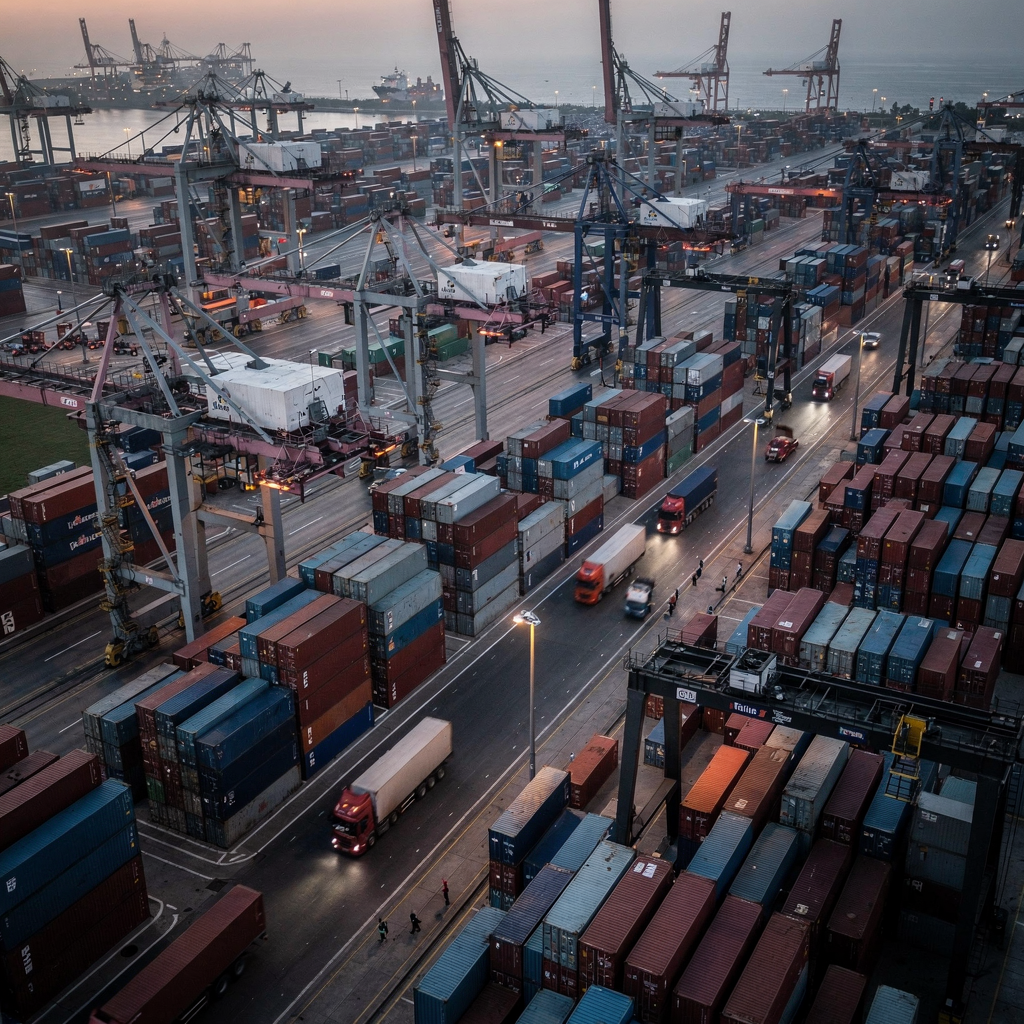
Real-time dispatch and optimization fit into wide maritime digitalisation efforts. Ports adopt digital twins, integrated port-community systems, and APIs to connect carriers, terminals and hinterland services. These integrations support resilient planning and reduce friction in intermodal terminals. Across terminals worldwide, digital adoption improves visibility and shortens reaction times. That reduces idle equipment movements and thus emissions.
Environmental gains matter. For example, optimized routing and reduced idling lower fuel use and emissions. AI-driven systems can reduce fuel consumption by nearly 18% through better equipment routing and pooling AI in Logistics. In addition, integrating big data analytics with sustainability criteria helps terminals meet regulatory and corporate goals AI for sustainable logistics.
Looking ahead, autonomous cranes and automated container terminal designs will become more common. They promise further gains in energy efficiency and consistency. Yet, full autonomy requires mature integrated scheduling, robust safety systems and changes in labor models. Ports will also deploy more joint optimization across the port community, linking shipping lines, truck operators and inland depots. That will reduce handoff delays and improve end-to-end service.
Finally, stakeholders must plan for resilient operations. They should use simulation optimization to stress-test plans. They should develop deployment roadmaps, and they should commit to data governance. For more on software market trends and automation readiness, check container terminal automation software market overview automation market overview. As maritime trade grows, terminals that optimize in real time will stay competitive and greener.
FAQ
What is the scheduling problem in a terminal?
The scheduling problem involves assigning cranes, trucks and yard moves to tasks under time and space limits. It becomes hard because the number of possible assignments explodes as demand grows.
How does real-time data improve dispatch?
Real-time data shortens decision cycles and reduces errors from stale information. It helps systems reroute trucks and reassign cranes before delays worsen.
What technologies drive optimization in container terminals?
AI, machine learning, digital twins and optimization algorithms combine to create adaptive plans. Simulation and data analytics validate strategies before live deployment.
Can automation reduce fuel and maintenance costs?
Yes. AI-driven routing and optimized sequences cut idle running and unnecessary moves. Studies report up to 18% savings in fuel and maintenance in some deployments AI in Logistics.
What role do digital twins play?
Digital twins mirror terminal state, so operators can run scenarios safely. They allow teams to test integrated scheduling changes and to measure downstream effects.
How do layout and stacking policies affect flows?
Layout determines travel distances and reshuffle frequency, and stacking policies affect access to export and import containers. Better design reduces travel and improves throughput.
What is the difference between rule-based and reinforcement learning dispatch?
Rule-based systems follow fixed policies and ensure compliance with constraints. Reinforcement learning adapts by learning from outcomes to improve long-run performance.
How do smaller ports begin with real-time optimization?
Start with data hygiene and connect key sensors and the TOS. Then pilot a limited automation use case, such as gate appointment coordination or crane workload distribution.
What KPIs should terminals track?
Track throughput per crane, quay crane waiting time, average truck turnaround and operation time per move. These metrics show where to invest in improvements.
By grounding replies in ERP and TMS data, it reduces manual triage and speeds decisions.
our products
 stowAI
 stackAI
 jobAI
jobAI
Innovates vessel planning. Faster rotation time of ships, increased flexibility towards shipping lines and customers.
Build the stack in the most efficient way. Increase moves per hour by reducing shifters and increase crane efficiency.
Get the most out of your equipment. Increase moves per hour by minimising waste and delays.
stowAI
Innovates vessel planning. Faster rotation time of ships, increased flexibility towards shipping lines and customers.
stackAI
Build the stack in the most efficient way. Increase moves per hour by reducing shifters and increase crane efficiency.
jobAI
Get the most out of your equipment. Increase moves per hour by minimising waste and delays.