
AI in terminal operations: Key Concepts
Terminal operations planning covers scheduling, resource allocation, cargo handling, and vessel traffic management. It unites many moving parts. Planners must balance berth windows, crane tasks, truck flows, and yard stacking. AI steps in to process large volumes of data quickly and to suggest better plans. AI uses machine learning models and predictive analytics to find patterns, and it helps teams optimize operations in ways that were not possible before. In practice, operators pair AI with human intelligence so decisions reflect context, and so they remain practical.
AI technologies help reduce vessel turnaround time and cut costs. For example, studies report up to a 20% reduction in turnaround time and 15–25% cost savings when ports apply AI to scheduling and maintenance (source). Such efficiency gains change KPIs for ports and cargo owners, and they support sustainability goals by lowering idle fuel burn. Case examples include Wärtsilä’s Fleet Operations Solution and ABB Ability™ Marine Pilot Vision, both of which show how AI can boost safety and precision (source).
In a smart port context, operators must integrate AI into legacy systems carefully. Terminal operating system upgrades, data governance, and staff training all matter. A human-centered approach improves outcomes, as researchers note that designing with people in mind turns AI into a teammate rather than a tool (source). In addition, combining human judgement with AI recommendations yields measurable benefits. Research shows human-AI teams outperform alone agents by about 10–15% on complex tasks (source).
To integrate AI effectively, terminal managers must consider operational efficiency, resource allocation, and equipment use. They should track KPIs and deploy a management system that surfaces decision-ready insight across operations. Also, AI applications must fit into the day-to-day operations of terminal staff. For further technical detail on optimization at ports, see relevant research on AI for deepsea container port operations for implementation patterns and examples.
Machine learning in container terminals: Enhancing Scheduling and Resource Allocation
Machine learning models now play a central role in slot assignment, crane deployment, and yard planning. These models learn from historical schedules, real-time sensor feeds, and operator feedback. They forecast demand, propose optimal allocations, and adapt when plans change. The field of artificial intelligence and machine learning combines statistical models with operational rules, and it creates robust scheduling algorithms for container terminals.
Data sources include terminal operating system logs, IoT telemetry from cranes and gates, vessel arrival data, EDI messages, and truck appointments. These data points feed models that predict peak windows, guide crane sequencing, and reduce repositioning moves. For practical examples, teams use demand forecasting to smooth peaks and adaptive berth planning to reduce idle time. Those techniques raise lift rates and throughput, which drives productivity and reduces truck waiting.
When applied well, machine learning shows throughput gains of 5–10% in lift rates and reduces idle times across quay and yard operations. Those improvements come from better allocation of cranes and from smarter slotting of export stacks. Planners also apply algorithms that balance energy-efficient job allocation with equipment constraints, and they monitor performance with clear KPIs. For deeper readings on quay crane productivity and reinforcement approaches to crane scheduling consult implementation guides and case studies on optimized quay crane productivity and reinforcement learning in crane scheduling for operational detail.
To forecast arrivals and demand, terminals use short-term forecast models and near-term prediction. Those models feed gate appointment systems so that trucks see shorter queues. Also, integrating machine learning with a terminal operating system helps ensure schedules remain feasible. As an added benefit, models reduce human triage by surfacing the best options first. This frees terminal staff for higher-value judgment tasks and supports continuous improvement.
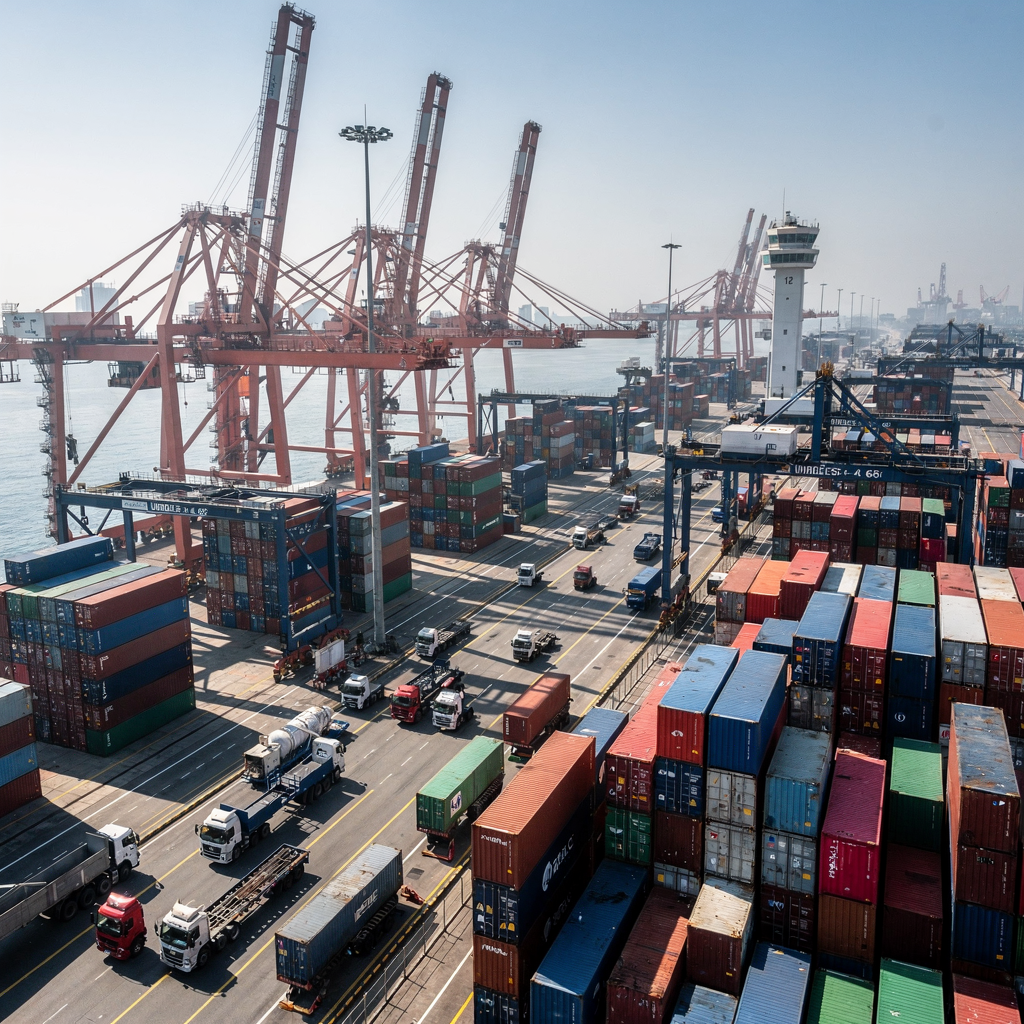
Drowning in a full terminal with replans, exceptions and last-minute changes?
Discover what AI-driven planning can do for your terminal
Artificial intelligence and AI-driven Predictive Maintenance
Predictive maintenance monitors equipment health so terminals avoid costly breakdowns. AI-driven predictive maintenance uses sensor fusion, vibration analysis, temperature logs, and oil-analysis to detect early signs of failure. Algorithms flag anomalies, schedule inspections, and recommend parts replacement before machines fail. Operators then plan repairs without disrupting vessel calls or peak handling windows.
AI systems power remote diagnostics and autonomous crane health dashboards. With these tools, maintenance teams see trends and device-level signals in one interface. Computer vision adds another layer by watching hoist motion and sling conditions. As a result, terminals reduce unplanned downtime and increase equipment availability. Research attributes a 30% reduction in human errors tied to navigation and cargo handling to AI monitoring and automation practices (source).
Predictive maintenance improves safety and reduces spare-part cost. For instance, when a crane shows rising vibration and heat, AI alerts staff early, and they perform a planned service. This reduces emergency crane replacements and lowers equipment use spikes. Autonomous dashboards also feed into the management system so planners can shift tasks around scheduled checks. Those procedures preserve throughput and protect KPIs.
Terminals gain from remote diagnostics, which let specialists guide repairs without travel. This lowers lead times and helps preserve hinterland commitments. In practical deployment, teams tie condition monitoring to spare-part logistics and to operations research models that schedule technicians. For more on yard congestion prediction and how predictive signals feed planning, consider detailed case examples that show the integration of health telemetry into planning workflows.
Transform terminal industry with Real-Time Data for Decision Support
Platforms that collect, fuse, and visualise real-time data give operators a single source of truth. A digital twin can mirror terminal state and allow planners to test scenarios fast. Dashboards provide real-time visibility across quay, yard, and gate. They surface congestion alerts and show resource bottlenecks so teams can act quickly.
Decision support now uses live feeds from sensors, truck check-ins, vessel AIS, and trucker apps. That continuous stream creates actionable insight and helps maintain situational awareness during disruptions. For example, a dynamic gate appointment system uses live yard state to open or close booking windows. Also, live yard congestion alerts let planners reroute trucks and reprioritise crane tasks.
By doing so, teams reduce manual triage and keep decision support channels uncluttered. Automated agents fetch data from ERP and TMS, then draft replies with context, and that saves time while keeping accuracy high. This approach helps terminals keep up with high message volumes and preserves human focus on complex choices.
Real-time data increases decision accuracy by 10–15% and shortens reaction times to disruption. When systems give clear options, operators decide faster and with better situational context. Terminals that invest in integrating ai with legacy systems reap benefits through faster response, improved scheduling, and better coordination with port authorities and cargo owners. For gate flow solutions and practical techniques on dynamic gate appointment systems see deeper explanations of gate optimisation and API-driven architectures for terminal connectivity.
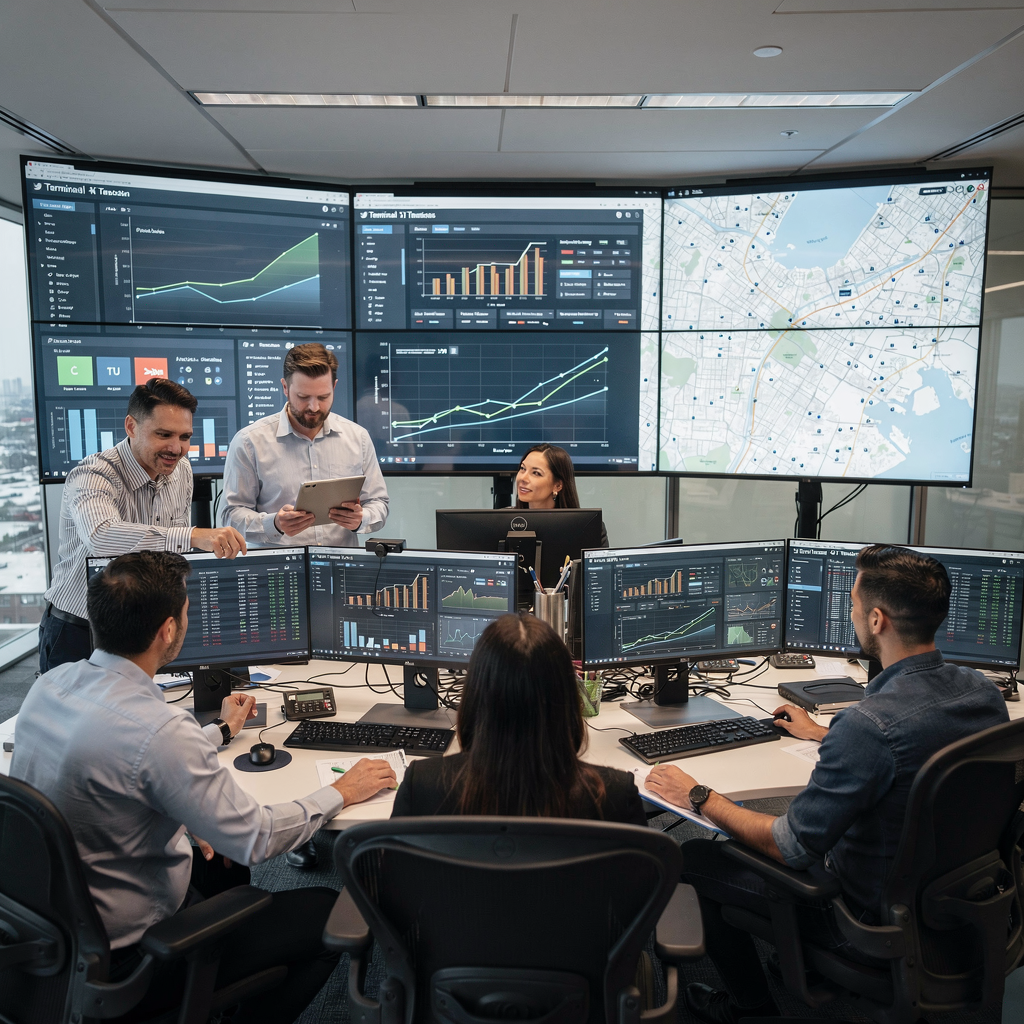
Drowning in a full terminal with replans, exceptions and last-minute changes?
Discover what AI-driven planning can do for your terminal
AI-driven Traffic Management in the Shipping Industry
AI-driven vessel arrival predictions and berth scheduling algorithms reduce waiting days for ships. Models use weather, historical arrival windows, and berth availability to propose tight windows and to sequence calls. As a result, some ports report up to 20% fewer vessel waiting days after deploying predictive scheduling and coordination tools (source).
At the same time, gate and yard traffic coordination keeps peak-hour congestion under control. Algorithms match truck arrival slots to yard capacity and to crane cycles, and they reduce conflicts. Ports coordinate tug and pilot allocation more precisely, and they improve service fairness to cargo owners and shipping lines. Real-time coordination across stakeholders prevents cascading delays.
Port community systems that share data with carriers, terminal owners, and hinterland operators make the whole chain more predictable. When systems exchange ETA updates and container movement plans, the network sees fewer surprises. Integration with customs, truckers, and feeder lines also improves throughput and reduces truck dwell. For hands-on techniques, research on reducing truck turnaround time and on event-driven API architectures explains how to connect systems for smoother flows.
Beyond scheduling, traffic management optimizes tug use and improves safety during berthing. The models suggest optimized pilot paths and tug allocation patterns that cut both time and cost. Because the shipping industry runs on margins, those improvements translate quickly into lower berth congestion and higher slot reliability. As ports integrate ai-powered tools, they must continue to monitor performance and to adjust governance with port authorities.
Future of AI in Container Terminals: Challenges and Roadmap
The future of AI points toward autonomous vehicles, reinforcement learning, and hybrid intelligence. Terminals will see more automated guided vehicles and AGVs, and they will use reinforcement learning to refine task sequencing. At the same time, the balance between machines and humans will remain crucial. Humans and AI will collaborate on edge cases and on tasks that need human intelligence and judgement.
Key challenges include data reliability, integrating AI into legacy systems, and preserving operator situational awareness. Terminals must plan for data lineage so that predictions remain trustworthy. They must also manage scalability and interface design so that staff can use recommendations without losing context. Research advocates human-in-the-loop approaches, and teams should focus on reskilling and on collaboration between humans and machines for continuous improvement.
From a technical view, terminals must tackle algorithm transparency and AI adoption hurdles. They need to document training data, to measure performance against KPIs, and to guard against upstream disruption when models change. Moreover, the terminal ecosystem requires common standards so that management systems can talk across platforms. Work on operations research, change management, and people-centred design will help.
Expected gains include further cost efficiencies, safety enhancements, and better adaptability to demand swings. As science and technology advance, teams should trial pilots, collect metrics, and scale what works. By planning for legacy integration and by building resilient models, the terminal industry can unlock new productivity while protecting workers and the hinterland supply chain.
FAQ
What is the role of AI in terminal operations planning?
AI analyzes large volumes of operational data to propose optimized schedules and resource plans. It assists human planners by surfacing options, reducing manual triage, and improving decision speed.
How much can AI reduce vessel turnaround time?
Studies report up to a 20% reduction in turnaround time when AI is applied to scheduling and berth planning (source). Actual results vary by terminal and by how well systems integrate with operations.
What data sources feed machine learning models at terminals?
Models use terminal operating system logs, IoT sensors on cranes, truck and vessel arrival feeds, and ERP or TMS records. Those inputs provide the data points models need to predict demand and to guide resource allocation.
Can AI prevent equipment failures?
Yes. Predictive maintenance leverages sensor data to detect anomalies early and to schedule planned servicing before failure. This approach reduces unplanned downtime and improves safety for terminal staff.
How do terminals maintain situational awareness with automated systems?
They use real-time dashboards and decision support tools that show system state and recommendations. Also, human-in-the-loop practices ensure operators verify and adapt AI suggestions when conditions change.
What is a digital twin and how does it help terminals?
A digital twin is a virtual model of the terminal that mirrors live state and lets planners simulate scenarios. It helps validate plans, and it increases confidence in changes before teams apply them on the ground.
How do ports coordinate with hinterland partners using AI?
Ports share arrival forecasts and container movement plans via community systems and APIs so that road and rail partners can schedule resources. This reduces cascading delays and improves end-to-end predictability.
Teams see a shift from repetitive tasks to oversight, exception handling, and analysis. Reskilling focuses on data literacy, system supervision, and collaboration between humans and AI.
Are there safety benefits to using AI in terminal operations?
Yes. Automated monitoring and predictive alerts reduce human error and help avoid hazardous failures. Studies show measurable reductions in error-related incidents when AI monitoring is introduced (source).
How can I learn more about implementing AI at my terminal?
Start with small pilots that connect a few data sources and measure clear KPIs. Read case studies on crane productivity, gate optimisation, and yard congestion prediction to understand practical steps and integration patterns.
our products
 stowAI
 stackAI
 jobAI
jobAI
Innovates vessel planning. Faster rotation time of ships, increased flexibility towards shipping lines and customers.
Build the stack in the most efficient way. Increase moves per hour by reducing shifters and increase crane efficiency.
Get the most out of your equipment. Increase moves per hour by minimising waste and delays.
stowAI
Innovates vessel planning. Faster rotation time of ships, increased flexibility towards shipping lines and customers.
stackAI
Build the stack in the most efficient way. Increase moves per hour by reducing shifters and increase crane efficiency.
jobAI
Get the most out of your equipment. Increase moves per hour by minimising waste and delays.