
The strategic role of port in global supply chains
Ports act as trade gateways and economic hubs that connect producers, buyers, and markets. They form the backbone of the global supply chain and shape how goods move between regions. For many economies, port economics drive jobs, exports, and imports. First, gateway ports concentrate container throughput and intermodal links. Next, they link shipping lines, hinterland rail, and trucking networks. As a result, efficient ports reduce costs and raise competitiveness for exporters.
UNCTAD data shows a clear performance gap between developing and developed regions. The Review of Maritime Transport finds that ships spend more time waiting in some developing ports than in advanced ports, which raises costs and uncertainty for shippers Review of Maritime Transport 2024. In plain terms, longer waiting increases logistics expense and erodes revenue margins. Indeed, delays translate into demurrage, missed connections, and extra trucking. Therefore, evaluating port performance matters for supply chain planners.
Operational performance of ports depends on three components. It refers to the operational performance of loading and unloading, berth scheduling, and yard management. These three components of port performance directly influence vessel turnaround and truck turnaround time. At the port terminal level, inefficient cargo handling becomes a bottleneck. Consequently, congestion forms at gates and yards, which slows container movements and raises dwell time.
To evaluate port performance, ports use performance indicators such as berth productivity, crane moves per hour, and utilization of terminal capacity. The container port performance index or cppi helps benchmark ports around the world. For example, top global container port hubs can process tens of millions of TEUs annually. In contrast, smaller ports may struggle to optimize their operations. For planners and port authorities, performance indicators help prioritize investment, management strategies, and improvements in port activities.
How port operations shape throughput and turnaround
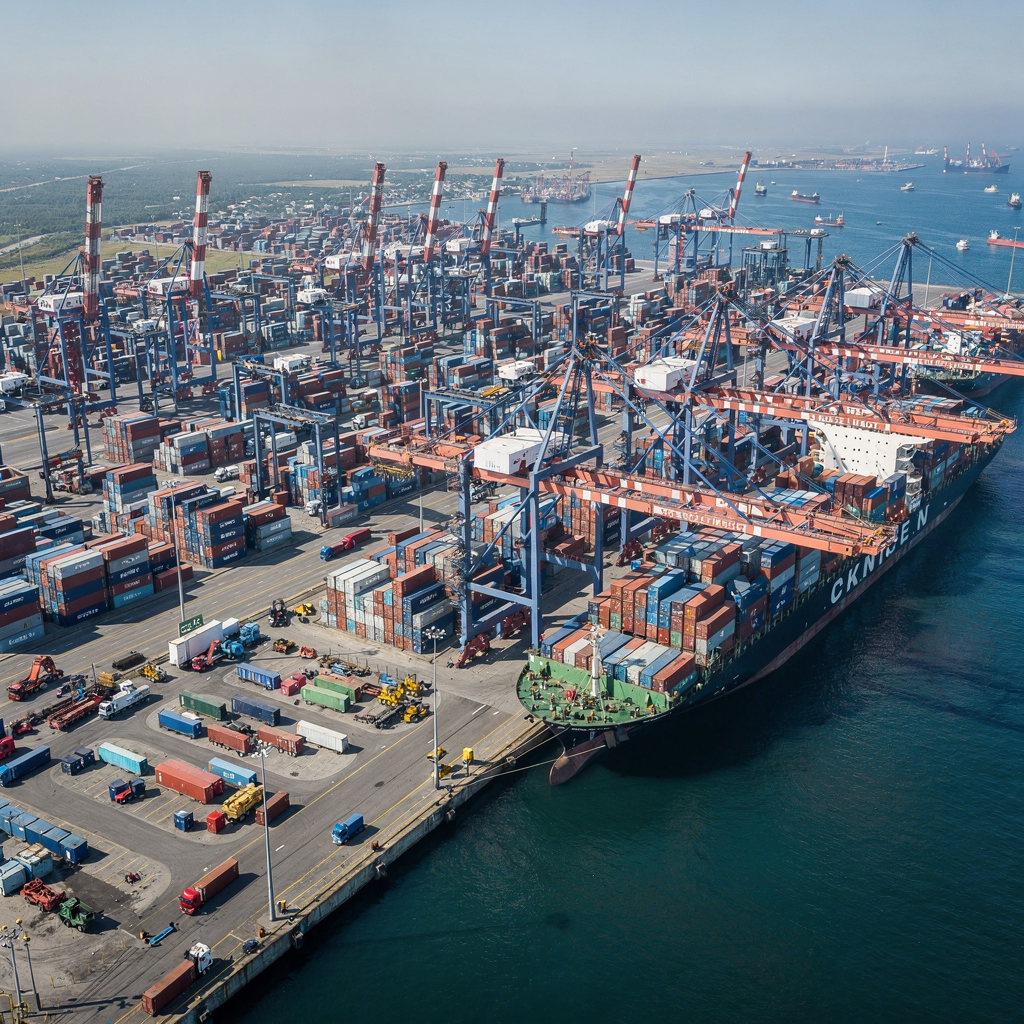
Port operations determine how quickly ships berth, cargo moves, and trucks leave. Crane productivity on the quayside sets the pace. Berth occupancy and berth scheduling affect vessel turnaround. When cranes average above certain moves per hour, vessel turnaround drops. For instance, leading ports report berth productivity exceeding 30 moves per hour, which shortens the time ships spend in port and boosts overall throughput New global benchmark ranks top container ports worldwide.
At the terminal level, yard operations and terminal capacity shape container throughput. Terminal operators balance stack density, truck throughput, and intermodal flow. When yard operations are planned with real-time data, planners optimize slot allocation and reduce dwell time. Real-time data improves vessel scheduling and yard planning, which aligns quay tasks with truck arrivals. In short, better information leads to better utilization and fewer clashes between quay and yard.
“The absence of real-time data exchange among port terminals, the container, and transport operators reduces the efficiency of operations. This lack of transparency in the supply chain leads to delays and increased costs,” notes an industry analysis Challenges in Container Drayage and How the Industry Tackles Them. Therefore, tools that enable shared schedules and visibility are essential. For practical examples, see AI models that improve quay crane productivity and yard density prediction at the individual terminal level optimizing quay crane productivity and yard density prediction.
Drowning in a full terminal with replans, exceptions and last-minute changes?
Discover what AI-driven planning can do for your terminal
Improving efficiency in container terminals with data analytics
Data drives decisions inside container terminals. IoT sensors on cranes, gate scanners, and yard cameras create a stream of information. In addition, big data analytics turn that stream into actionable insights. For example, predictive analytics can forecast yard congestion and optimize container movements before a bottleneck forms. A growing body of work shows predictive models cut dwell time and improve terminal capacity planning. See an applied case for predictive analytics in container port logistics for more detail predictive analytics in container port logistics.
Also, analytics support container terminal operations on multiple fronts. They allow terminal operators to simulate shifts, reassign cranes, and prioritize export stacks. They also enable scenario testing for peak demand and vessel bunching. When predictive systems identify high-risk periods, planners add labor or reroute trucks. As a result, container terminal efficiency improves and truck turnaround time falls.
Numerous case studies show meaningful gains. In some pilots, predictive analytics reduced dwell time by up to 20% and lowered crane idle time. These outcomes help terminals raise productivity and throughput without immediate capital expenditure. However, integrating disparate information and maintaining data consistency can be a challenge. Many terminals face issues when connecting legacy TOS, ERP, and carrier systems. Practical guides on TOS migrations and data cutover planning help reduce risk during integration data-consistency and cutover planning for TOS migrations.
At an operational level, combining real-time data with automation supports day-to-day decision-making. For example, when a gate scanner signals container discrepancies, automated workflows can trigger inspections, rebookings, or communication. That workflow automation reduces email triage and manual lookups for operations teams. Tools that automate the email lifecycle for ops teams can therefore help terminals respond faster to exceptions and maintain traceability.
Boosting container terminal efficiency using terminal operating system
A robust terminal operating system is the control plane for yard and quay management. The terminal operating system coordinates vessel stows, crane assignments, gate flows, and yard layout. It provides performance indicators that allow port management to evaluate port performance at the terminal level. A well-designed TOS streamlines container operations and supports automated decision rules that maintain container throughput.
TOS-driven automation increases crane productivity and reduces manual coordination. When a TOS integrates predictive models, cranes can be scheduled to double-cycle when appropriate. That approach helps some ports raise crane productivity beyond 30 moves per hour. Studies and implementations indicate TOS upgrades have reduced truck turn-time by roughly 25% at select terminals. For readers seeking technical approaches, see materials about gate optimization and automated stowage replanning container terminal gate optimization and automated stowage replanning.
Within the terminal, the TOS shapes yard operations and stack allocation. It enforces rules for container class, export vs import, and dangerous goods. It also provides dashboards for port authorities and port operator teams. Across the terminal yard, transparent KPIs allow management to spot a bottleneck early. For example, a spike in dwell time at a single gate signals a problem with intermodal handover or documentation. Addressing that quickly prevents a larger bottleneck that would affect vessel turnaround.
Adoption of a modern TOS calls for project management and change control. Key tasks include data mapping, cutover testing, and staff training. These efforts fall under port management and policy, and they require cooperation between owners and operators. With the right implementation, the TOS supports digital transformation and long-term efficiency gains across the port system.
Drowning in a full terminal with replans, exceptions and last-minute changes?
Discover what AI-driven planning can do for your terminal
Port management strategies for lasting port efficiency
Management and policy choices shape long-term port efficiency. Governance models differ. Landlord ports regulate infrastructure and lease terminals. Tool ports operate equipment centrally. Service ports run operations directly. For instance, landlord models often attract private terminal operators who invest in terminal automation to boost competitiveness.
Investment approaches commonly combine capital projects for berth deepening, upgrades for intermodal rail, and targeted funding for TOS and analytics. The port of los angeles and other large hubs illustrate how joint investment in equipment and information systems improves port performance and reduces congestion. In fact, optimizing quay cranes and improving truck flows have a measurable impact on cargo handling and regional supply chains Enhancing Efficiency at Ports and Terminals for Ocean Freight.
Transparent performance monitoring fosters continuous improvement. Performance indicators linked to public reporting allow stakeholders to evaluate port performance and compare trends. For example, a container port performance index helps benchmark throughput, berth productivity, and utilization. That transparency aligns owners and operators, carriers, and hinterland partners around shared targets. It also reduces inefficiency through clear accountability.
Finally, management strategies must include air quality, safety, and resilience goals. Efficient ports deliver lower emissions per TEU, better worker conditions, and more reliable shipping schedules. By investing across infrastructure, digital skills, and governance, ports can sustain efficiency gains and support the global supply that industry and consumers rely on.
Unifying systems across the container port and terminal via automation
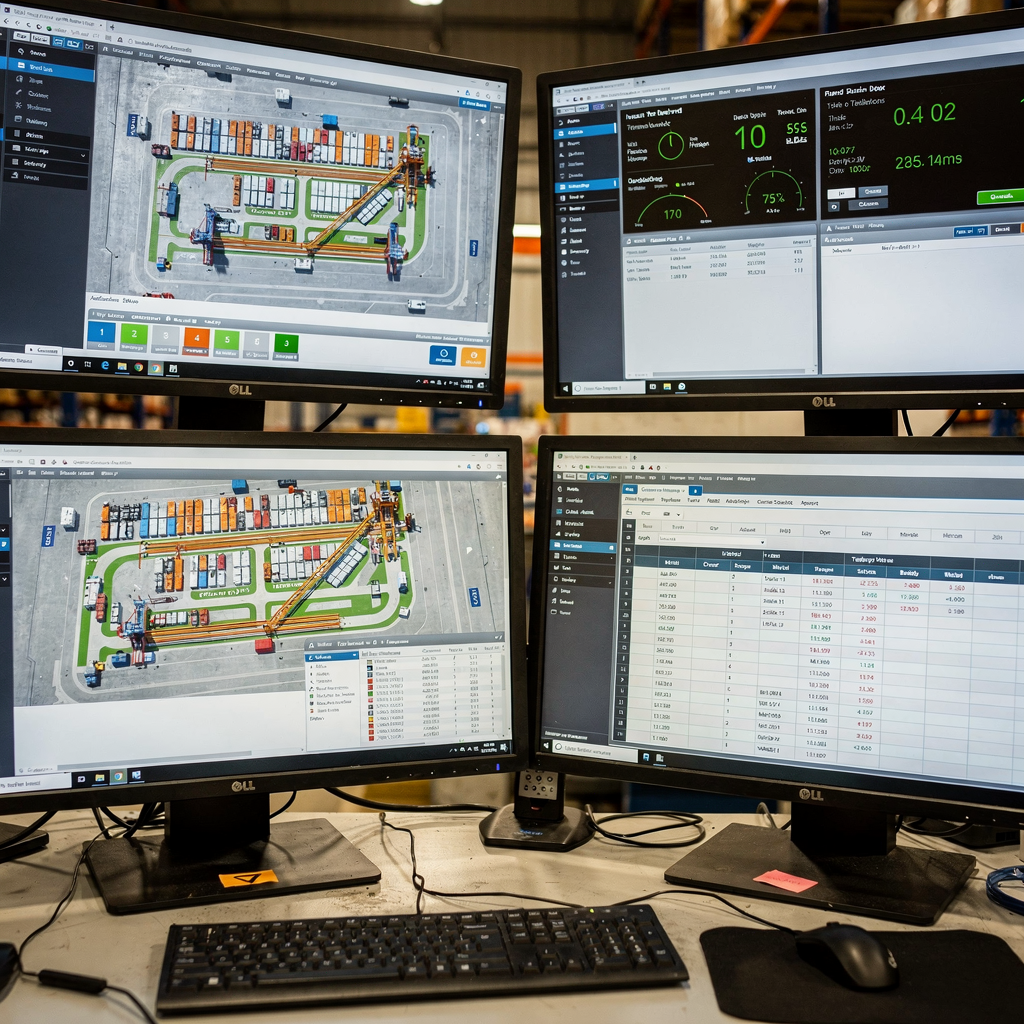
Integrated automation ties quay, yard, and gate into a single orchestration layer. Systems such as AGVs, remote-controlled cranes, and digital twins provide end-to-end visibility. Digital twins let planners simulate container movements and test layout changes before making physical alterations. When automation links to predictive analytics, terminals gain the ability to react preemptively to congestion and to optimize terminal capacity dynamically.
Global pilots show that end-to-end visibility reduces vessel delays by measurable amounts. For example, trials that combine remote crane control, yard automation, and shared scheduling have cut vessel delays by up to 15% in pilot projects. These results come from coordinated scheduling and improved container operations that limit idle time and speed loading and unloading. Also, automation helps with intermodal handovers by standardizing handoff data and reducing gate queuing.
Ports should follow concrete steps to build collaborative, data-driven ecosystems. First, create open data standards and APIs so terminal operators and carriers can exchange real-time data. Second, invest in terminal automation where return on investment is clear. Third, train operators on new workflows and safety protocols. Fourth, use phased pilots to validate performance before scaling.
Collaboration is essential. Port authorities, terminal operators, carriers, and hinterland partners must align on common KPIs and data governance. When they do, efficient ports become more predictable for supply chain planners and shipping lines. To explore AI-driven scheduling and crane optimization that support these goals, consult research on multi-vessel crane scheduling and reinforcement learning in terminal operations multi-vessel crane scheduling and reinforcement learning for crane scheduling.
FAQ
What is operational efficiency in container ports?
Operational efficiency refers to the maximization of the produced output for a given set of inputs in port activities. It measures how well a port or terminal uses resources to move cargo, reduce dwell time, and shorten vessel turnaround.
How do ports measure productivity?
Ports use performance indicators such as crane moves per hour, berth occupancy, and truck turnaround time to measure productivity. These metrics allow port authorities to compare container throughput and utilization across terminals and to evaluate port performance over time.
Why does real-time data matter for terminal operations?
Real-time data enables better vessel scheduling, gate management, and yard operations by revealing live conditions. With timely information, terminal operators can reduce congestion, avoid bottleneck formation, and improve container movements.
Can automation reduce ships spend in port?
Yes. Automation that increases crane productivity and streamlines yard flows reduces the time ships spend in port by enabling faster loading and unloading. Pilots that combine automation and digital scheduling have shown reduced vessel delays.
What role does a terminal operating system play?
A terminal operating system orchestrates yard, quay, and gate activities while enforcing business rules and performance tracking. A modern TOS supports digital transformation, improves container terminal efficiency, and helps ports optimize their operations.
How do management and policy affect port efficiency?
Management choices—such as governance model and investment priorities—shape long-term performance.
What are common operational challenges ports face?
Common challenges include legacy systems, fragmented data, peak surges that create congestion, limited terminal capacity, and coordination across many stakeholders. These challenges can cause inefficiency and longer dwell times.
How does improving port efficiency affect the supply chain?
Improved port efficiency lowers logistics costs, reduces delays, and increases predictability for shippers and carriers. That in turn supports smoother global supply and helps businesses plan inventory and distribution more effectively.
Are there environmental benefits to better port performance?
Yes. Efficient ports reduce idling times for ships, trucks, and yard equipment, which lowers emissions and improves air quality. Investments in automation and cleaner equipment amplify these environmental gains.
How can operators begin to optimize their operations?
Operators should start with data readiness, select targeted pilots for analytics and automation, and invest in staff training and TOS upgrades. For technical guidance, resources on gate optimization, predictive analytics, and crane productivity can provide practical next steps.
our products
 stowAI
 stackAI
 jobAI
jobAI
Innovates vessel planning. Faster rotation time of ships, increased flexibility towards shipping lines and customers.
Build the stack in the most efficient way. Increase moves per hour by reducing shifters and increase crane efficiency.
Get the most out of your equipment. Increase moves per hour by minimising waste and delays.
stowAI
Innovates vessel planning. Faster rotation time of ships, increased flexibility towards shipping lines and customers.
stackAI
Build the stack in the most efficient way. Increase moves per hour by reducing shifters and increase crane efficiency.
jobAI
Get the most out of your equipment. Increase moves per hour by minimising waste and delays.