
terminal Gate Operations: Defining the Bottleneck
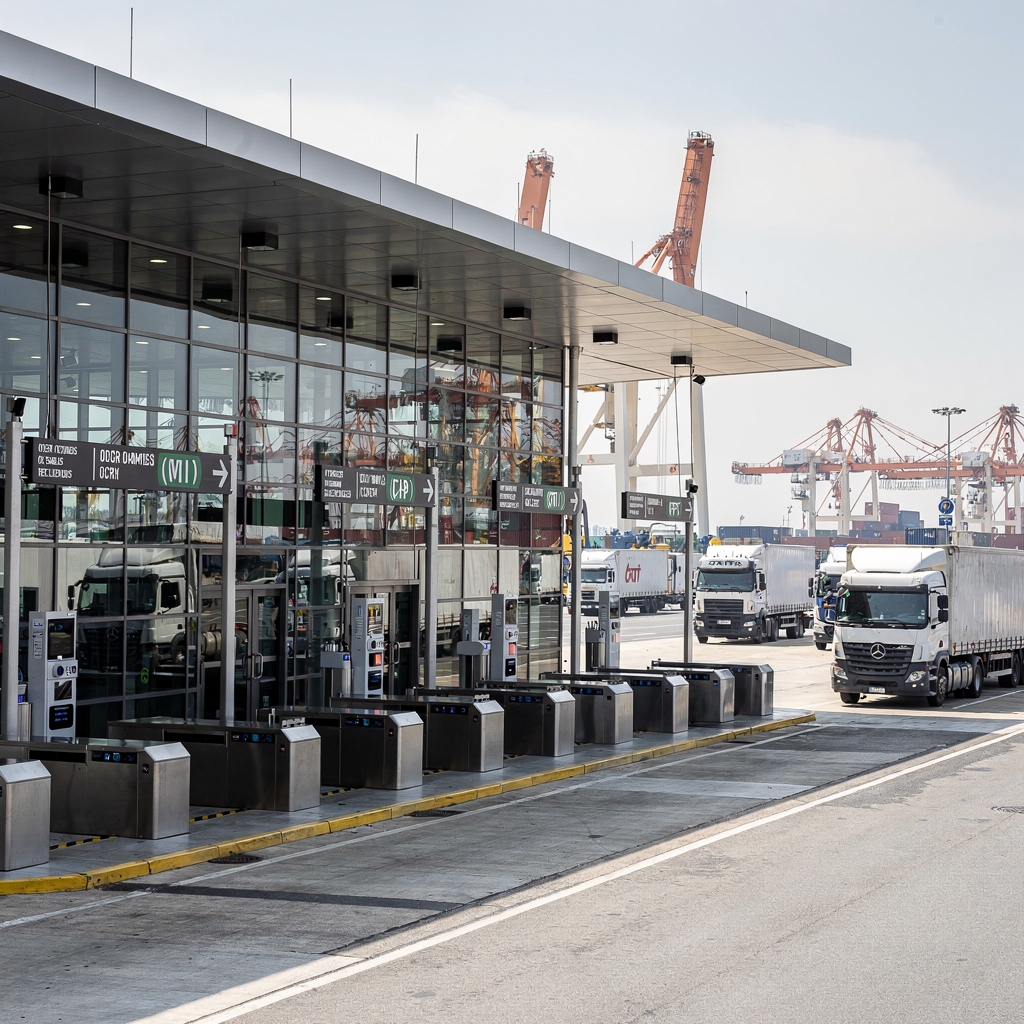
The gate sits at the edge of the yard and controls the flow of trucks and cargo between the terminal and the wider logistics network. In practice the gate does more than scan paperwork. It manages identity checks, container inspections, and yard allocation that match incoming vehicular traffic to available spaces. As truck arrivals cluster around certain hours the gate becomes the choke point that dictates yard throughput, turnaround, and the overall system efficiency. For example, field observations and studies identify that “Gate congestion is a main challenge faced by container terminals worldwide. In the scenario of gate congestion, the long waiting line of container trucks significantly impacts terminal efficiency and operational costs” Gate appointment design in a container terminal: A robust optimization ….
Common causes of congestion include peak arrivals, manual checks, mismatches in yard coordination, and delays upstream from berth operations. When a truck waits the ripple effect hits stacking, yard crane assignment, and the scheduling of containerships into major trade routes. Even small inefficiencies at the gate can increase dwell and reduce the TEU throughput the terminal can handle during a day. As a practical indicator operators track truck waiting time and gate throughput as the primary indicator of operational health.
In many seaports the mix of manual processes and seasonal spikes magnifies problems. For instance, a port container surge or an unexpected vessel arrival can overload gate resources. At the same time the gate must interface with drayage operators and intermodal partners who expect predictable turnaround. Therefore operators that target the gate first can often unlock capacity without costly physical expansion. A measured approach relies on data, simulation and a clear set of performance metrics: queue length, average waiting time, processing rate per gate lane, and non-productive time.
Terminal managers often use internal tools that tie gate events to yard moves and berth schedules. For deeper operational study see resources that explain yard density and its impact on throughput, such as an analysis of terminal yard density and turnaround effects on productivity on yard density and terminal throughput. This connection is why a small change at the gate can yield measurable gains in terminal operations without expanding the physical footprint.
terminal Appointment Systems: Scheduling for Steady Flow
Appointment systems allocate time slots so trucks arrive in a controlled pattern rather than in peaks. The principle is simple: level demand to match capacity. A robust appointment program reduces the clustering of arrivals and lowers the probability that several trucks compete for the same service window. When operators implement a truck appointment policy they smooth demand and reduce costly idle time inside the yard.
Designing a resilient gate appointment process requires a robust optimization approach that accounts for uncertainties in arrival and processing times. An optimization study demonstrates that a carefully set appointment system can cut truck waiting times by up to 30% when properly enforced and combined with real-time adjustments. The research shows this reduction when the system uses buffers, contingency slots, and dynamic rescheduling to absorb variability.
To operate effectively the gate appointment must integrate with other scheduling layers, such as berth assignments and yard crane allocation. In practice terminals use algorithms to assign slots, but they must also offer flexibility for early or delayed arrivals. A practical implementation balances strict time-slot enforcement with policies for exceptions. For example, terminals often reserve a limited number of expedited lanes for high-priority moves or for trucks carrying time-sensitive cargo.
System design also hinges on user experience and compliance. If waiting carriers cannot book or manage appointments easily they will default to ad-hoc arrivals and defeat the benefit. Here digital tools that provide confirmation, reminders, and automated rescheduling increase adherence. For guidance on appointment policies tied to yard and crane scheduling explore solutions for predictive analytics and yard congestion management predictive analytics for yard congestion. Finally, an effective truck appointment program does not stand alone. It forms part of a digital stack that includes real-time tracking, OCR at the gate, and integration into the terminal operating system for smoother handoffs.
Drowning in a full terminal with replans, exceptions and last-minute changes?
Discover what AI-driven planning can do for your terminal
model of Queuing Theory: Predicting Gate Delays
Queuing theory gives a mathematical backbone for understanding gate behavior. Simple models such as M/M/1 and M/G/1 approximate single-lane performance and let planners calculate average wait and expected queue length under given loads. These models use three key parameters: the arrival rate, the service rate, and the utilization factor. By adjusting these inputs planners can estimate how many trucks will wait and for how long if demand rises by a known amount.
For busy container terminals with multiple simultaneous lanes a queuing model to analyze marine operations often applies a multi-server framework. In other words the analysis applies a multi-server queuing model to analyze arrival-service interactions when several lanes operate in parallel. A terminal may also choose a simulation model or computer simulation when arrival patterns and service times deviate from exponential assumptions. In practice many operators combine analytical queuing formulas with a simulation method to capture real-world complexity.
Key outputs include expected queue length, average waiting time, and the probability the system exceeds a threshold queue. These outputs help operators quantify gate congestion and quantify truck waiting cost so they can compare investments such as additional lanes or automation. For example, planners will run a scenario that increases container volume or models peak-hour spikes to see when the gate will reach critical utilization. If utilization surpasses an optimal level the system behaves non-linearly and waiting escalates rapidly.
Advanced studies sometimes state that a terminal applies a specific queuing model to analyze marine performance or even mention that an optimization model is developed to feed corrective actions into scheduling tools. Operators seeking to test these approaches should use both mathematical queuing theory and detailed simulation to validate results. For further reading on how AI-driven scheduling links to crane and yard optimization see a practical guide to quay crane scheduling and yard optimization AI-driven quay crane scheduling and yard optimization.
Real-Time Data and AI model: Dynamic Traffic Forecasting
Real-time data transforms static schedules into live traffic control. Big data, data mining, and simulation models let teams monitor gate throughput and spot emerging congestion before it becomes critical. A recent study highlights that “new technologies such as big data, data mining, and simulation models have emerged in the maritime industry, enabling optimization and performance evaluation” Operational performance evaluation of a container terminal using data ….
Machine learning and neural networks can forecast arrival patterns and predict delays. These models use historical arrivals, weather, road conditions, and berth schedules to estimate short-term demand at the gate. When combined with IoT sensors, OCR and RFID, operators gain end-to-end visibility from drayage yards to berth operations. Integrating these data streams allows dynamic rerouting and quick reallocation of yard tasks to prevent unnecessary transfers.
In operational centers AI models often run alongside human supervisors. By reducing time lost in administrative triage, teams can focus on data-driven decisions that reduce gate friction. Faster communication improves adherence to truck appointment policies and cuts desk-driven latency that otherwise delays gate throughput.
For terminals that aim to use predictive analytics in a structured way, digital twins and predictive models apply simulation model approaches to test interventions before field rollout. The combination of live telemetry, algorithmic forecasts, and scenario simulation gives managers a toolkit to proactively manage peaks and maintain system efficiency. Readers interested in predictive approaches for yard and port operations can explore resources on AI and smart port digital twins AI and smart port digital twins.
Drowning in a full terminal with replans, exceptions and last-minute changes?
Discover what AI-driven planning can do for your terminal
Automated terminal Technologies: Boosting Gate Capacity
Automation at the gate removes human delays and accelerates identity and cargo checks. Automated gate technologies include OCR cameras that read container numbers and RFID gates that confirm truck and payload identity. When paired with electronic documentation the gate can clear eligible trucks in seconds rather than minutes. Studies report that automated gate adoption can increase gate processing capacity by roughly 20–40%, depending on the degree of automation and terminal size Container Terminals Automation – METRANS.
Beyond OCR and RFID the yard benefits when automation extends to crane control and yard planning. Robotic or semi-automated cranes reduce handoffs and speed handling, which in turn lowers dwell. A coordinated automation stack combines gate hardware, yard crane orchestration, and the terminal operating system so moves proceed without manual rework. That tight integration also supports environmental goals by reducing idling and related environmental pollution.
Operators considering automation must evaluate not only hardware costs but the operational changes required. Automation needs clear rules for allocation of tasks, fallback modes for outages, and training for staff who supervise automated systems. A practical approach stages investments: start with OCR and RFID at entry lanes, then expand to software-driven yard allocation and automated crane controls. This progressive path helps terminals achieve an optimal mix of human oversight and machine efficiency.
For terminals focused on boosting throughput while preserving interoperability, cloud-based yard optimization and simulation tools provide fast returns by modeling the impact of gate automation on overall productivity. Learn more about how automated quay crane scheduling and yard planning interact with gate upgrades in a case highlighting automated scheduling software automated quay crane scheduling software.
Implementing the model: Case Studies and Quantitative Gains
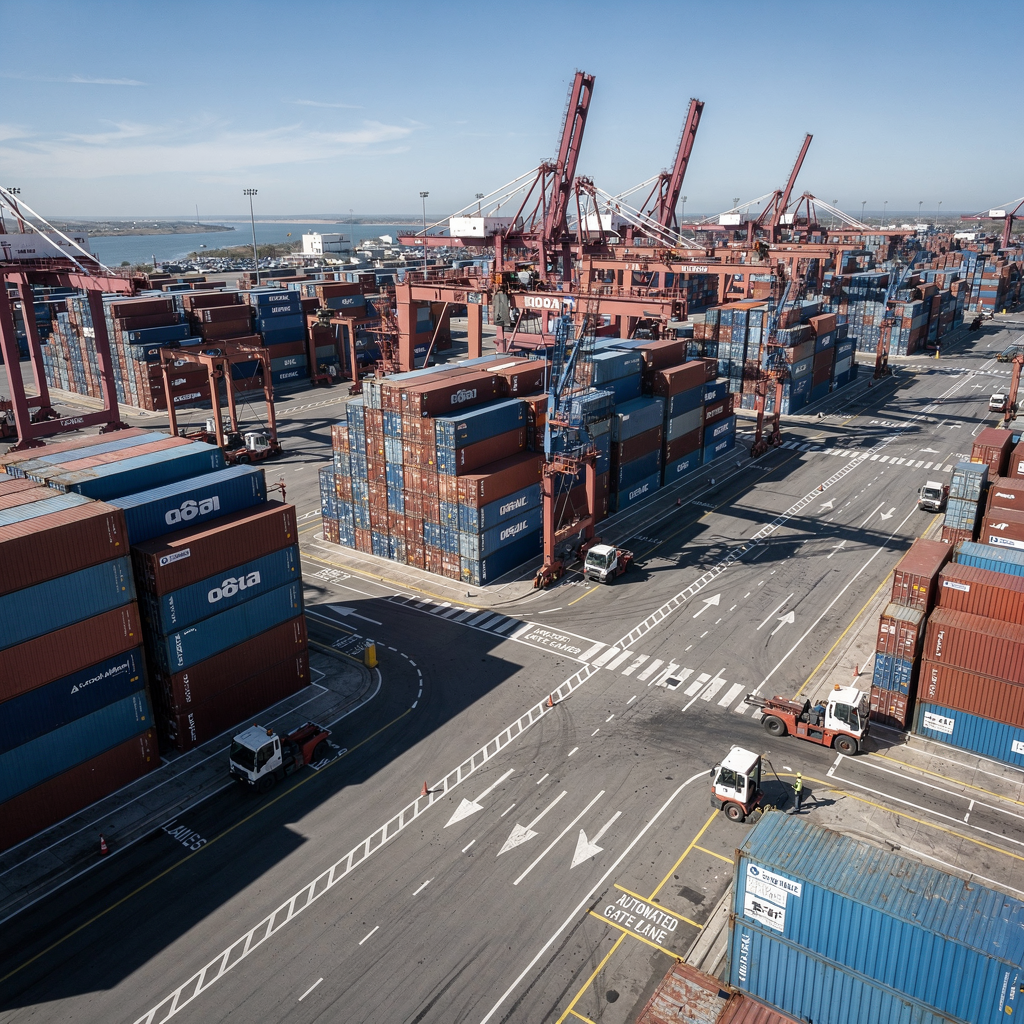
When terminals combine scheduling, automation and analytics they unlock measurable gains. Dr Maria Lopez notes that “Optimizing the gate system is not just about technology adoption but also about integrating operational strategies that align with the terminal’s overall workflow. The synergy between scheduling, automation, and real-time data analytics is key to unlocking terminal efficiency.” Optimizing container terminal operations: a systematic review. Her observation echoes industry case studies where modest changes at the gate generated significant throughput improvements.
Real-world implementations show terminals achieving 15% increases in container throughput after deploying data-driven gate management and predictive scheduling Operational performance evaluation. Others report a 20–40% increase in gate processing capacity after automating identification and document workflows METRANS report. In aggregate these gains reduce congestion and quantify truck waiting improvements that matter to carriers and shippers.
Applying a queuing model to analyze marine operations helps planners prioritize investments. For example a multi-server queuing model to analyze expected lane performance can show whether adding a lane or automating a lane yields better ROI. A terminal can also run a simulation model to test a way to reduce gate congestion under different container volume scenarios and berth schedules.
Best practices for adoption include phased rollouts, measurable KPIs, and stakeholder engagement. Start small: pilot a truck appointment program, then layer in OCR and predictive forecasting. Use computer simulation to validate changes before wide deployment. Remember to track indicators such as queue length, waiting time, and TEU throughput. In many cases the most sustainable improvements come from combining modest investments in automation with stronger operational discipline and clear allocation rules.
Finally, consider the communications backbone. By eliminating repetitive email triage teams free time to manage exceptions and interpret predictive alerts. That human-machine partnership often turns incremental efficiency into significant productivity gains.
FAQ
What is terminal gate optimization and why does it matter?
Terminal gate optimization refers to the set of practices and technologies used to speed truck flows and reduce delays at a terminal’s entry and exit points. It matters because gate performance directly affects yard throughput, vessel turnaround, and carrier operating costs.
How does a truck appointment system reduce congestion?
A truck appointment system spaces arrivals and aligns them with capacity, which smooths demand and prevents peak clustering. Properly designed systems can cut average waiting time and reduce the incidence of long queues.
Which queuing models apply to gate analysis?
Simple analytical models such as M/M/1 and M/G/1 help estimate single-lane behavior, while multi-server models handle multiple lane scenarios. Many operators combine analytical models with simulation to capture real traffic patterns.
Can AI predict short-term gate demand?
Yes. Machine learning models and neural networks use historical arrivals, weather, and schedule data to forecast short-term demand. These predictions enable proactive allocation of lanes, cranes, and staff.
What technologies speed up gate processing?
Technologies like OCR, RFID, and automated lane control eliminate manual lookups and speed identity checks. When paired with yard automation and integrated TOS tools they significantly raise processing capacity.
How much improvement should operators expect after optimization?
Case studies report improvements from modest to substantial: roughly 15% increases in throughput and 20–40% increases in gate processing capacity where automation and analytics were combined. Results depend on starting conditions and implementation quality.
Is automation enough to fix gate congestion?
No. Automation yields big benefits but must align with scheduling, appointment policies, and data-driven decision-making. The most successful programs combine technology with operational changes.
What role does communication play in gate operations?
Clear, timely communication prevents appointment no-shows and reduces exception handling. Automating repetitive communication tasks, for instance with tools that manage operational email, speeds decision-making and reduces delays.
How do operators measure success after implementing changes?
Key indicators include average waiting time, queue length, TEU throughput, and lane processing rate. Monitoring these KPIs before and after changes quantifies the impact and guides further investment.
Where can terminals learn more about implementing these solutions?
Terminals can start by reviewing case studies in quay crane scheduling, predictive yard analytics, and automation pilots. Useful resources include articles on AI-driven quay crane scheduling and predictive analytics for yard congestion to help design phased deployments.
our products
 stowAI
 stackAI
 jobAI
jobAI
Innovates vessel planning. Faster rotation time of ships, increased flexibility towards shipping lines and customers.
Build the stack in the most efficient way. Increase moves per hour by reducing shifters and increase crane efficiency.
Get the most out of your equipment. Increase moves per hour by minimising waste and delays.
stowAI
Innovates vessel planning. Faster rotation time of ships, increased flexibility towards shipping lines and customers.
stackAI
Build the stack in the most efficient way. Increase moves per hour by reducing shifters and increase crane efficiency.
jobAI
Get the most out of your equipment. Increase moves per hour by minimising waste and delays.