
port: overview of global container terminals and energy footprint
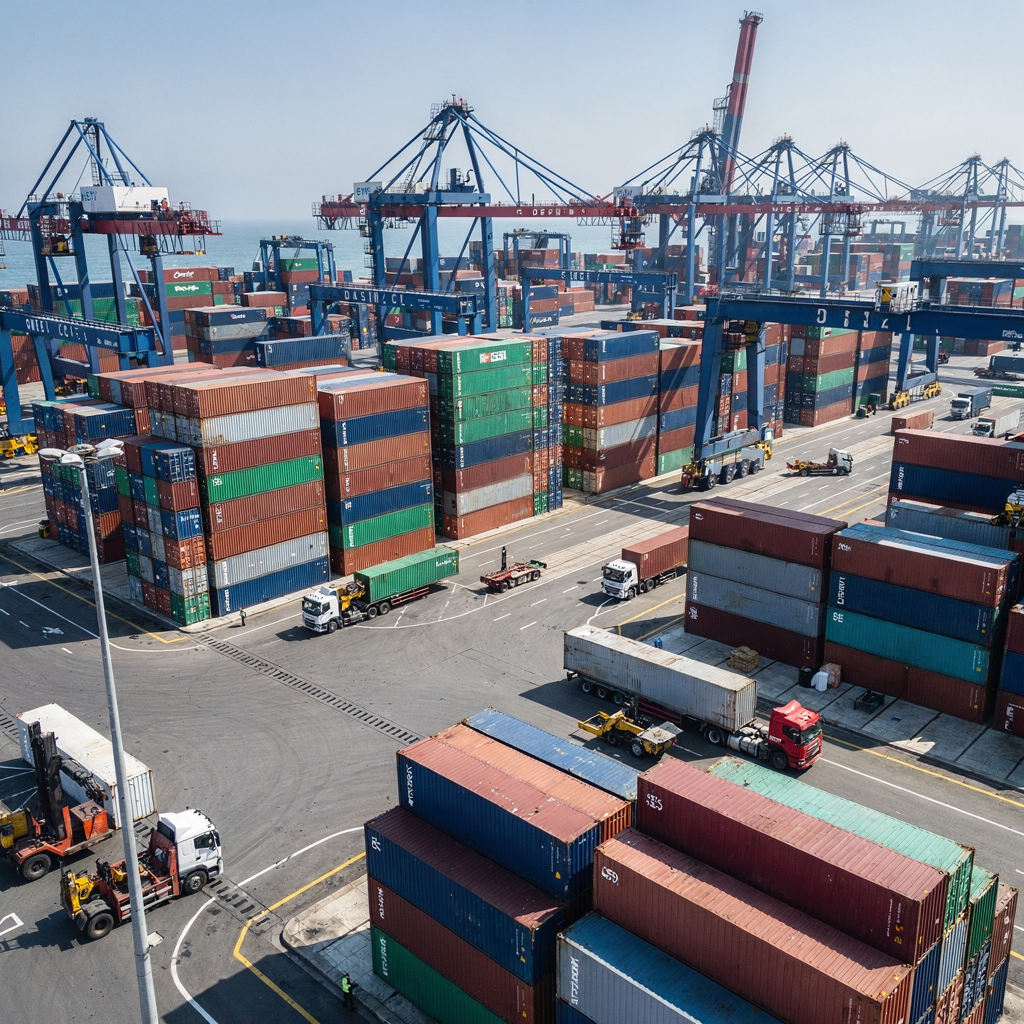
First, a port is a node in global logistics that handles the movement of goods by sea. In a simple view, a port links ships, trucks, rail and warehouses so that cargo moves from vessel to hinterland. In practice, a port manages berths, cranes, yards, gate operations and IT systems that support international trade. Also, container terminal activity has grown with global trade, and container port throughput now shapes how ports plan for capacity and energy. Reports show that container handling equipment and yard operations can consume up to 30–40% of a port’s total energy use, which makes the container terminal a focal point for efficiency efforts (Energy Transition Framework for Nearly Zero-Energy Ports – MDPI).
Next, ports are also major consumers of diesel and electricity because they operate heavy port equipment and run 24/7. Therefore, port activity links directly to greenhouse gas and local emission levels. For example, decarbonising shipping and the supporting land-side services is critical to meet climate targets by 2050, as the International Renewable Energy Agency highlights in their sector pathway (IRENA: A pathway to decarbonise the shipping sector by 2050). Also, port authorities increasingly track carbon footprint and carbon dioxide emissions at terminal and across the seaport ecosystem to meet regulation and customer demand.
Finally, improving port efficiency and reducing energy loss improves productivity and competitiveness. In addition, operators can capture cost savings by reducing energy costs and by investing in smarter scheduling, which helps ports achieve sustainability objectives while maintaining throughput. For further detail on decision support for container terminal planning, see a practical guide on container terminal decision support systems.
port operations and emission: assessing energy demands and environmental impact
First, break down port operations into core activities so that managers can measure impact. Cargo handling, yard movements, vessel servicing and gate processing form the bulk of terminal operations energy demand. Also, yard tractors, reach stackers, quay cranes and terminal trucks consume fuel and electricity during both active moving and idle times. Studies quantify that inefficient scheduling raises energy consumption due to idle running and repeated repositioning of cargo. For instance, digitalisation and better planning reduced ship waiting times by up to 20%, which lowers emissions from vessels idling at berth (UNCTAD Review of Maritime Transport 2023).
Next, quantify emissions to set targets. Cargo handling and yard equipment are responsible for measurable carbon dioxide emissions and NOx, particularly when diesel engines run for extended periods. In addition, vessel waiting times drive extra fuel burn and greenhouse gas releases because ships continue auxiliary operations while berthed or loitering. Consequently, reducing waiting times can cut CO2 per call by roughly 10–15% in many ports (UNCTAD Review of Maritime Transport 2023).
Also, quantifying energy consumption due to equipment choice and scheduling helps port management prioritise investments in low-emission gear and shore power. For example, replacing diesel-driven yard tractors with electric alternatives or AGVs lowers local emissions, and smart energy management platforms make shore power uptake feasible. For research on yard congestion and predictive analytics that support these decisions, consider the work on predictive analytics for port operations yard congestion. Finally, measuring municipal solid waste streams and operational packing practices can complement emission reduction measures by addressing solid waste while improving the overall port environment.
Drowning in a full terminal with replans, exceptions and last-minute changes?
Discover what AI-driven planning can do for your terminal
terminal and container terminal: job allocation for energy efficiency
First, job allocation in the terminal context means matching tasks to the right resource at the right time. Also, a container terminal schedules quay crane moves, yard truck trips and gate handling in ways that affect both throughput and energy use. The allocation of resources matters because it determines how often equipment runs empty, how many reposition moves occur, and how much time vessels spend at berth. For example, optimised schedules for cranes and trucks have produced energy savings in the 15–25% range in pilot projects that combined timetable changes and better sequencing (Port Electricity Commercial Model – Final Report).
Next, explain models used for job assignment. Classic approaches solve a quay crane assignment problem and a yard truck routing challenge to minimise delay and distance. Also, modern methods use AI to handle dynamic changes, such as late arrivals or sudden shifts in container mix. For practical tools, AI-driven quay crane scheduling and yard optimisation systems provide real-time sequencing that reduces idle time while increasing operational efficiency (AI-driven quay crane scheduling and yard optimization).
In addition, terminals can integrate renewable energy sources into planning so that task timing aligns with available green power. For example, a terminal may schedule high-energy lifts when solar output peaks. Further, the concept of allocation and quay crane assignment links energy-aware scheduling to equipment deployment and gate rhythms. Also, crane scheduling in a container and scheduling in a container terminal must consider the number of containers per vessel and yard density. Finally, tools that address the container matching problem and dynamic equipment pool allocation help minimise the number of crane moves and reduce the energy spent per TEU moved (solving the container matching problem in container terminals).
optimize port efficiency and reduce congestion through smart scheduling
First, smart scheduling balances quay crane sequencing with gate and yard flows to reduce bottleneck effects. Also, integrated berth allocation and quay crane coordination shorten vessel stays, which lowers vessel waiting times and fuel consumption from auxiliary engines. Algorithms for integrated berth allocation pair estimated arrival times with quay crane availability to optimise berth assignment and crane workload. In addition, reinforcement learning and optimisation models can distribute tasks across the number of crane and truck pools to limit unnecessary moves and idle running.
Next, the benefits are clear. Reduced vessel waiting times translate to lower fuel consumption for ships and faster turnarounds, which increase throughput. Also, collaborative planning between shipping companies, hauliers and port authorities allows demand smoothing, avoiding peak-hour gate surges that cause congestion and queuing outside the seaport. For examples of multi-vessel crane scheduling and yard density prediction, see research on multi-vessel crane scheduling optimisation and AI models for yard density prediction (multi-vessel crane scheduling optimization).
In addition, smart systems improve operations efficiency by automating routine tasks and by enabling human planners to focus on exceptions. By routing and resolving repetitive requests, teams gain time for strategic coordination, which supports better resource allocation and less energy consumption. Also, integrating predictive analytics for gate operations and inland transport enhances supply chain management and supports global supply chains. Finally, applying best practices like careful planning, demand smoothing and smart energy management reduces congestion and supports efficient port operations overall.
Drowning in a full terminal with replans, exceptions and last-minute changes?
Discover what AI-driven planning can do for your terminal
sustainable and efficient ports: integrating renewables and digitalisation
First, sustainable ports adopt hybrid renewable energy systems to power electrified equipment and to offer shore power to berthed vessels. Also, renewable energy sources such as solar and wind are increasingly paired with energy storage and smart energy management to offset peak demand and to enhance resilience. For instance, ports that integrate shore power reduce on-dock emissions and help shipping companies meet decarbonisation goals. In addition, energy management systems coordinate supply, storage and load to minimise energy costs and to balance higher energy demand during peak handling periods.
Next, digitalisation supports sustainable practices through energy-aware scheduling and real-time monitoring. Smart platforms forecast renewable output and match container moves to periods of abundant green power. For example, energy-aware scheduling can schedule heavy lifts when battery swaps are ready or when solar output is high to reduce reliance on diesel. Also, systems that monitor port equipment and gate throughput feed data into energy management systems and into the terminal operating system. For planning and simulation, container port emulation and predictive analytics tools help terminals identify where investments in electrification or automation yield the best returns (deepsea container port emulation software for planning).
In addition, efficient ports that integrate renewables and digital twins can cut carbon dioxide emissions per call significantly. UNCTAD and pilot reports show ports that reduce vessel idle time and that adopt shore power often see CO2 reductions up to 15% per port call (UNCTAD Review of Maritime Transport 2023). Also, investments in port infrastructure that enable shore power and electric yard fleets deliver long-term cost savings and improve the port environment. Finally, applying sustainable practices such as electrifying port equipment, deploying automated guided vehicles, and running smart energy management will help ports become greener and more resilient.
future research directions: optimize logistics for efficient port operations
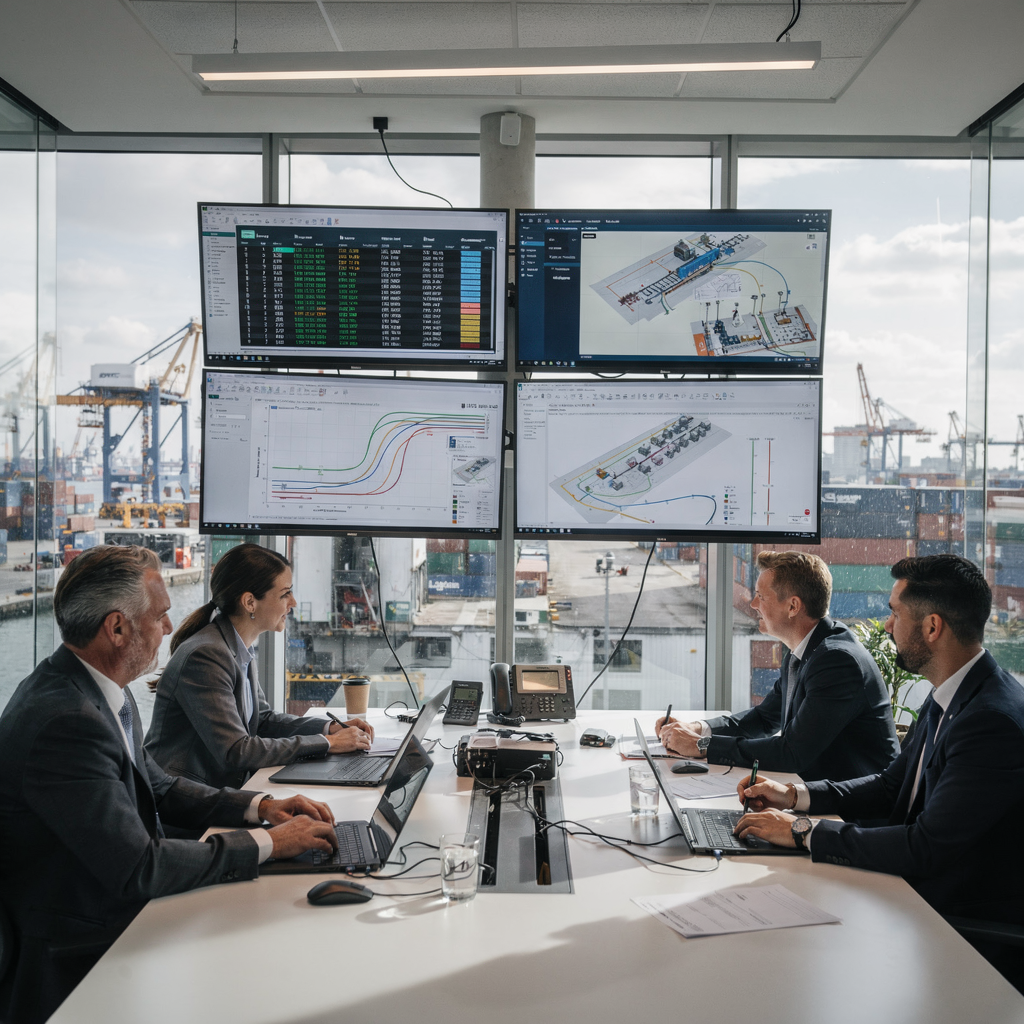
First, future research directions should target data standardisation and interoperability between systems. Also, lack of standard formats and inconsistent data quality create friction for energy-aware scheduling and for shared decision-making. Therefore, researchers and port authorities should adopt common schemas for vessel calls, yard state and gate throughput to support AI-driven models. In addition, studies must address barriers such as labor resistance to automation and the upfront investments in digital infrastructure that many ports face (Barriers to implementing ports energy efficiency and greenhouse gas reduction).
Next, advanced models can forecast renewable availability and job demand so that terminals run fewer machines and consume less energy. For example, artificial intelligence models can predict solar and wind generation windows and then align crane schedules to these windows. Also, AI and smart port digital twins enable what-if analysis that compares investments in agvs, energy storage and shore power against expected reductions in fuel consumption and operational costs. For applied research on reinforcement learning in terminal operations and dynamic equipment allocation, several experimental studies offer promising results (reinforcement learning in terminal operations).
Finally, policy incentives and public–private partnerships can accelerate adoption of cleaner technologies. Also, pilots that demonstrate cost savings and productivity gains help justify investments in port automation and energy management. In addition, multi-stakeholder trials that include shipping companies, hauliers and port authorities show how collaborative planning reduces congestion and improves operations efficiency. Therefore, combining AI forecasting, integrated berth allocation, and targeted investments in port equipment and infrastructure will guide ports toward efficient and sustainable futures.
FAQ
What is energy-efficient job allocation in port operations?
Energy-efficient job allocation means scheduling tasks and assigning equipment so that the terminal uses less energy while keeping throughput high. It involves matching crane moves, truck trips and gate slots to minimise idle running and unnecessary repositioning.
How much energy can optimised schedules save at a terminal?
Optimised schedules can produce substantial savings; pilots have reported energy savings in the 15–25% range in terminal operations. These gains come from reduced idle time, fewer empty trips, and better use of electrified equipment (pilot report).
Can ports reduce vessel emissions by improving scheduling?
Yes. Reducing vessel waiting times reduces fuel burn and emissions. UNCTAD findings indicate that ports which cut waiting times see CO2 reductions of roughly 10–15% per port call (UNCTAD).
What digital tools support energy-aware scheduling?
Tools include predictive analytics, AI-driven quay crane scheduling, and energy management systems that forecast renewable output. For example, AI-driven quay crane scheduling systems improve sequencing and yard matching to save energy and time (AI-driven quay crane scheduling).
How do renewable energy sources fit into port planning?
Renewable sources like solar and wind can power yard equipment and shore power systems when combined with storage and smart energy management. Ports can schedule high-energy tasks when renewable output is highest to reduce reliance on diesel.
What role do port authorities play in energy transition?
Port authorities set rules, fund infrastructure upgrades and coordinate stakeholders. They can incentivise investments in shore power, electrification and data sharing that enable energy-efficient practices.
Are there quick wins for reducing energy use in terminals?
Yes. Quick wins include smoothing gate arrivals, improving vessel hub planning, and automating repetitive communication tasks that slow decision-making. Automating emails and triage, for instance, frees planners to focus on job allocation improvements.
How can smaller ports benefit from these strategies?
Smaller ports can adopt low-cost predictive tools, phase in electrification and collaborate with regional partners to share best practices. Pilot projects can prove value before larger investments.
What research is needed next?
Research should focus on data interoperability, AI forecasting for renewable availability, and human factors in automation uptake. Trials that combine smart scheduling with shore power pilots will give clear evidence on cost savings and emissions reductions.
By reducing manual triage, shipping updates and task routing, the platform helps planners make faster, energy-aware allocation decisions and improves operations efficiency.
our products
 stowAI
 stackAI
 jobAI
jobAI
Innovates vessel planning. Faster rotation time of ships, increased flexibility towards shipping lines and customers.
Build the stack in the most efficient way. Increase moves per hour by reducing shifters and increase crane efficiency.
Get the most out of your equipment. Increase moves per hour by minimising waste and delays.
stowAI
Innovates vessel planning. Faster rotation time of ships, increased flexibility towards shipping lines and customers.
stackAI
Build the stack in the most efficient way. Increase moves per hour by reducing shifters and increase crane efficiency.
jobAI
Get the most out of your equipment. Increase moves per hour by minimising waste and delays.