
ai and port Overview: Role of AI in Deepsea Container Terminal Operations
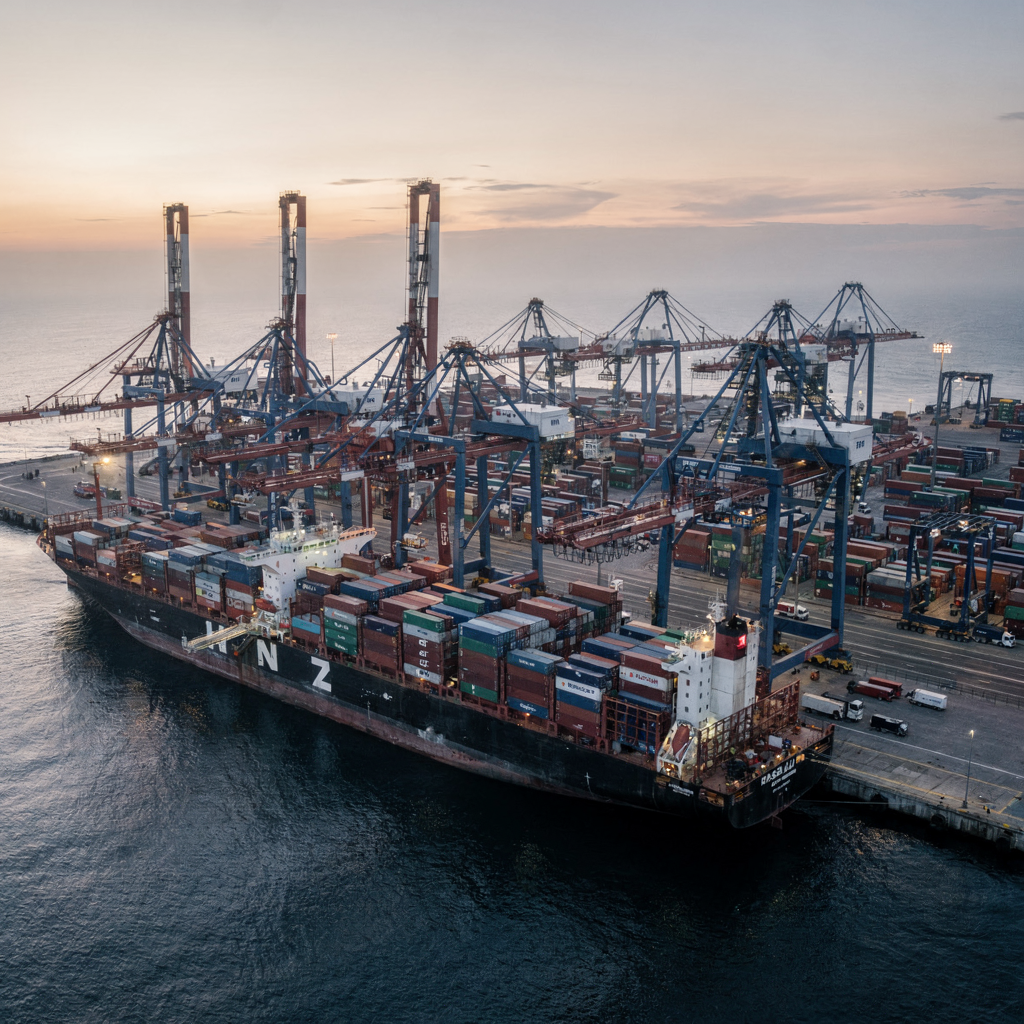
Deepsea container terminals run complex workflows that connect ships, cranes, trucks and warehouses. In a busy port, cranes lift thousands of TEU per week, and the high-hoisting equipment defines throughput. Ports run berths and yards under narrow time windows, and every move matters. For that reason, AI plays a central role in modern port operations. AI helps schedule cranes, predict failures, and route cargo. As a result, ports can handle higher volumes with fewer incidents and lower costs.
Define the scope first. A container terminal handles ship-to-shore transfers, container yard stacking, and gate movements. The high-hoisting cranes perform the heaviest lifts for large container vessels. These cranes must respect task precedence and must move within tight safety margins. Many port teams struggle with manual scheduling and fragmented data. Therefore, artificial intelligence offers automation that reduces human error and improves operational efficiency. For example, quay crane scheduling research shows that “crane constraints and operational challenges shape any scheduling strategy,” which is why AI-driven approaches matter crane constraints and operational challenges.
Common mechanical problems appear at the crane, and poor scheduling increases idle time. Consequently, ports face delays that ripple through maritime logistics and freight networks. AI enables predictive maintenance, and it optimizes move sequences in real time. As an added benefit, AI also supports operators with dashboards and alerts, so human teams retain control while automation improves speed and safety. In short, AI in port settings is not optional. It is a practical tool that streamlines tasks, reduces delays, and raises reliability across the terminal and across the broader port network.
terminal and container terminal Challenges: maritime and logistics Constraints
Crane scheduling in deepsea settings faces hard constraints. Task precedence limits simultaneous moves. That means some containers must be handled before others, and the schedule cannot violate stacking sequences or vessel stowage plans. These constraints grow tougher as container volume and ship size increase. Ultra-large container vessels create higher hoisting heights, and they force longer outreach times for quay cranes. The result is more complex sequencing and increased risk of conflict between adjacent cranes. Research shows that sophisticated scheduling is essential to cope with these constraints crane scheduling at deepsea ports.
Physical limits matter as much as planning. Berth length, quay strength, and yard layout all impose restrictions. In addition, environmental factors such as wind and tide affect crane performance. Maritime weather can reduce allowable crane speed and require adjusted lift profiles. Also, port congestion at gates and yards causes stacking pressure and longer container dwell time. Those delays hurt carriers and customers, and they increase the chance of empty container repositioning. Ports operate within these constraints, and that affects overall logistics performance.
The knock-on effects reach inland networks and shipping schedules. When a port underperforms, trucking windows slip, rail manifests change, and ocean schedules absorb delays. Ports and logistics planners see cascading impacts that reduce reliability. To address this, many ports explore smart systems and digitalization. For instance, planners use quay crane scheduling tools and yard emulation platforms to test alternatives before real deployment deepsea container port emulation software for planning. These approaches reveal queuing hotspots and help teams set reliable metrics. Ports must revise their operational rules as container vessels grow. At the same time, ports should focus on integrating data and automating decisions so that the entire maritime chain benefits from improved throughput and fewer surprises.
Drowning in a full terminal with replans, exceptions and last-minute changes?
Discover what AI-driven planning can do for your terminal
applications of ai: Crane Scheduling and Predictive Maintenance
AI models transform crane scheduling by analyzing historical moves, vessel stowage, and yard state. Machine learning and optimization engines generate schedules that respect task precedence while minimizing idle time. The result can be up to a 15–20% increase in crane utilisation when ports apply advanced scheduling techniques crane utilisation improvements. Also, AI allocates crane pools dynamically as demand shifts, and that reduces conflicts during peak windows. In practice, an ai algorithm evaluates multiple objectives and returns a near-optimal plan within minutes, and planners can select the most robust option.
Predictive maintenance uses sensor streams from motors, cables, brakes and gearboxes. By feeding time-series data into AI models, port teams can forecast component wear and schedule interventions before failures occur. Predictive maintenance has cut crane-related incidents and unplanned downtime by roughly 25% according to industry reporting predictive maintenance impact. That improvement raises safety and keeps cranes available during busy windows. Maintenance teams then switch from reactive repairs to planned replacements, and they reduce emergency crane swaps that cause operational loss.
Deployment requires careful data engineering and model validation. Advanced AI and regression or classification models identify patterns that precede failures. Also, reinforcement techniques optimize preventive schedules to balance service life and downtime. Ports can blend physics-based models with data-driven insights using a digital twin to simulate failure modes and repair sequences. For more on decision support, terminals consult domain-specific tools like container terminal decision support systems that integrate scheduling with yard plans container terminal decision support systems. Together, these applications of AI and targeted maintenance reduce risks, boost throughput, and support predictable operations across the terminal footprint.
application of ai in container Handling: Real-Time Decision Support in Smart Port Environments
AI systems ingest environmental feeds such as wind speed and tide and combine them with vessel and crane telemetry. Then they output move limits and safe lift parameters. This type of real-time decision support helps bridge the gap between static plans and changing quay-side conditions. In practice, an operator sees recommended adjustments on a dashboard, and they can approve or override suggestions. For example, when wind gusts exceed thresholds, the system suggests reduced travel velocity or temporary hold patterns. These measures keep operations safe and maintain steady throughput.
Smart port pilots already report measurable gains. Ports that run integrated trials show lower ship turnaround times. In fact, AI solutions have contributed to reducing ship turnaround times by approximately 10–12% in trials, which speeds cargo handling and helps carriers meet schedules turnaround time reduction. The AI-driven dashboards provide clear visual cues, prioritized task lists, and estimated completion times. Operators get alerts on potential yard congestion and suggested reroutes for trucks, and the system proposes yard reshuffles to reduce container dwell time.
Real-time data feeds and predictive alerts tie directly into the container terminal operating system. This integration shortens decision cycles and reduces the number of manual emails or calls required to resolve exceptions. A smart container port that combines AI planning, a digital twin and live telemetry becomes more resilient to weather and schedule irregularities. Consequently, ports and logistics stakeholders see improved reliability and clearer SLAs across the supply chain.
Drowning in a full terminal with replans, exceptions and last-minute changes?
Discover what AI-driven planning can do for your terminal
ai technologies and ai integration: implementing ai for Port Terminal Automation
Core ai technologies include optimisation algorithms, neural networks, and data analytics engines. In addition, planners use reinforcement learning for sequential decision problems and supervised models for forecasting container volumes. These ai technologies connect to existing IT via APIs and messaging layers, and the integration of ai must respect governance and data lineage. For terminals, a clear integration plan outlines data sources, model ownership, and rollback procedures. Implementation of AI starts with pilots, scales by phasing in automation, and matures through continuous monitoring.
Steps for integrating ai into a port terminal are practical. First, assess the available data and tag quality issues. Second, choose small, measurable pilots such as crane scheduling or predictive maintenance. Third, connect to the container terminal operating system and yard sensors. Fourth, validate models in a sandbox and compare performance against baseline KPIs. Fifth, deploy with human-in-the-loop controls and clear escalation paths. Our company recommends zero-code orchestration for non-technical teams so that business users set rules and tone without prompt engineering. This reduces friction and speeds ai adoption.
To mitigate these, invest in clean data pipelines, and run joint workshops with port operators and IT. Also, document failure cases and safety checks. Port operators must design fallback modes and ensure operators know how to intervene. For more technical reference on reinforcement approaches to crane scheduling, terminals can review studies on reinforcement learning in terminal operations and quay crane scheduling reinforcement learning in terminal operations. Implementing ai requires time and careful change management, yet the payoff in operational efficiency and safety typically justifies the effort.
benefits of ai: Efficiency, Safety and Sustainable Growth in Deepsea Logistics
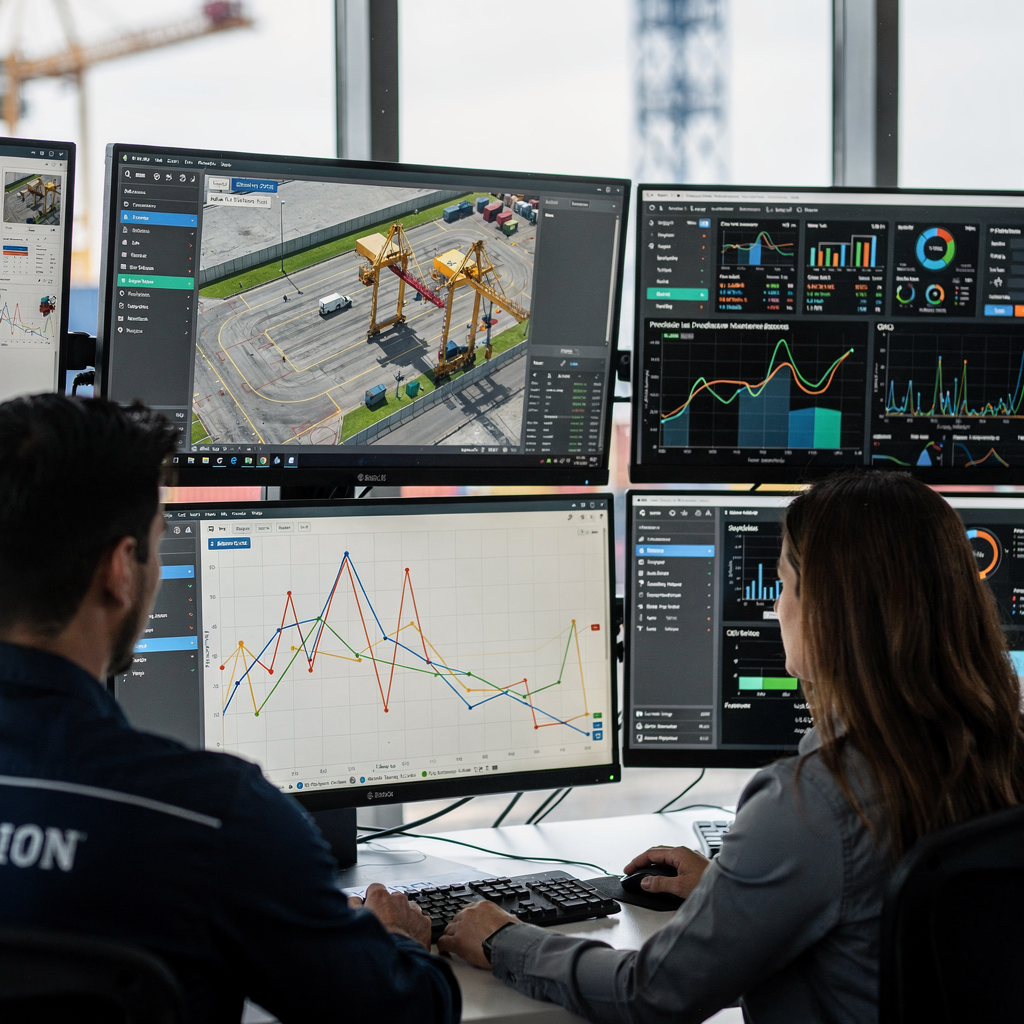
AI delivers measurable benefits across efficiency, safety and sustainability. Efficiency gains appear in higher crane utilisation and shorter ship stays. Specifically, ports implementing AI-driven crane scheduling report up to 20% higher crane utilisation in field studies crane utilisation statistic. Likewise, ship turnaround times shrink by roughly 10–12% when AI coordinates quay and yard moves, which contributes to faster maritime flows and better slot reliability.
Safety improves with predictive maintenance and real-time constraints. Predictive systems forecast wear and avoid unexpected failures, and they have reduced crane-related accidents by around 25% in practice predictive maintenance safety gains. That outcome protects crews, equipment and cargo. Sustainability follows because efficient operations use less energy per move, and shorter idling reduces emissions. A sustainable port strategy mixes green ports initiatives, energy-aware scheduling, and lower yard congestion to shrink carbon footprints across container transportation chains.
Beyond these immediate wins, AI supports strategic port development. Ports that embrace digital transformation and integration of ai can scale to serve larger container vessels and growing global container trade. For terminals planning a transition, consider a phased path to an automated container terminal or even a fully automated container terminal at specific berths. Also, research funds for the central coordination of pilots accelerate learning across ports worldwide. Consequently, many ports will modernize, and the development of container ports will reflect smarter, safer and greener operations. Overall, the benefits of AI in deepsea logistics are tangible, repeatable and aligned with long-term port industry goals.
FAQ
What is the role of AI in a container terminal?
AI schedules cranes, forecasts maintenance needs, and helps manage yard flows. It also powers dashboards that give operators real-time recommendations and reduce manual coordination across the terminal.
How much can AI improve crane utilisation?
Field studies report up to 15–20% higher crane utilisation when AI-driven scheduling is applied crane utilisation studies. The exact gain depends on baseline practices and how quickly the terminal integrates AI into daily workflows.
Does predictive maintenance really reduce accidents?
Yes. Predictive maintenance programs that use AI to analyze sensor data have reduced crane-related incidents and unplanned downtime by about 25% in published examples predictive maintenance evidence. Early detection prevents many failure modes.
Can existing terminals adopt AI without replacing all systems?
Yes. Implementing AI usually involves connecting to the container terminal operating system and adding APIs. Pilots run in parallel with current systems until operators trust the recommendations.
What data does AI need for accurate scheduling?
AI needs vessel stowage plans, crane telemetry, yard occupancy, and gate schedules. Environmental feeds like wind and tide help too, because they influence safe crane movements and timing.
How do smart port dashboards support operators?
Dashboards synthesize predictions, priorities, and alerts into concise guidance. They let operators approve or adjust plans, so human judgment stays central while automation speeds decision-making.
Are there sustainability benefits to AI at ports?
Yes. Efficient scheduling reduces idle time and energy use, and it lowers emissions per container move. Green ports strategies often include AI as a core element for reducing environmental impact.
What are common barriers to AI adoption in ports?
Addressing these requires governance, workshops with port operators, and phased pilots that prove value.
This frees planners and gate staff to focus on higher-value tasks during busy shifts.
Where can I learn more about quay crane scheduling and yard optimization?
Relevant resources include technical articles and decision-support tools that cover quay crane scheduling, yard optimization and emulation software; for example see quay crane scheduling resources and container terminal decision support systems referenced above quay crane scheduling resources, decision support systems.
our products
 stowAI
 stackAI
 jobAI
jobAI
Innovates vessel planning. Faster rotation time of ships, increased flexibility towards shipping lines and customers.
Build the stack in the most efficient way. Increase moves per hour by reducing shifters and increase crane efficiency.
Get the most out of your equipment. Increase moves per hour by minimising waste and delays.
stowAI
Innovates vessel planning. Faster rotation time of ships, increased flexibility towards shipping lines and customers.
stackAI
Build the stack in the most efficient way. Increase moves per hour by reducing shifters and increase crane efficiency.
jobAI
Get the most out of your equipment. Increase moves per hour by minimising waste and delays.