
problem description: Mixed Stowage Challenges in Automated Container Terminals
Mixed stowage describes situations where different cargo types or containers with varying handling rules end up close together in the same storage area. This creates friction, and it creates delays, and it creates safety risk. Ports face delays and damage when planners ignore compatibility. Studies report cargo damage rates as high as 5–7% in terminals with poor stowage management, versus less than 2% in optimized facilities research. The effect on vessel turnaround can be dramatic. Poor stowage planning has increased turnaround time by up to 20–30% in some major hubs analysis, and that inflates costs and reduces throughput.
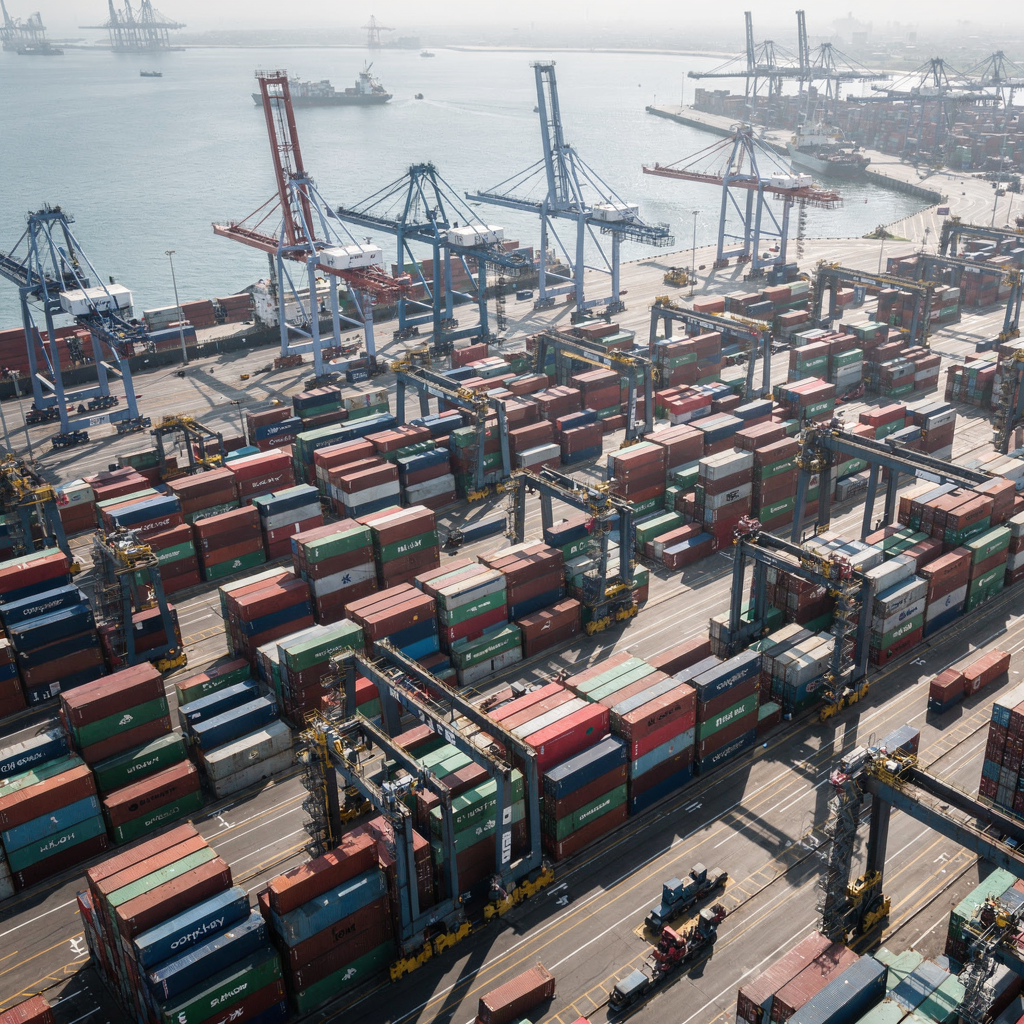
Automated container terminals add another layer of strictness. Robots, automated yard cranes, and automated guided vehicles need precise placement to operate efficiently. If the stowage plan does not match machine reach and routing, then automated systems stall, and then yards congest. That raises the stakes for an accurate stowage plan, and that raises the need for a formal problem of stowage planning that ties container attributes to machine capabilities.
Ports must consider weight distribution, hazard classes, and crane access when they compute container placement. Planners must also account for destination port calls and the sequence for container loading and unloading. A poor plan forces extra moves, and it forces rehandling, and it increases operational cost. Terminals that optimize placement see measurable gains in berth productivity, and they lower incidence of damage evidence. For practitioners, the challenge looks like a combinatorial scheduling problem. Terminal teams need systems that translate business rules into a workable layout fast, and that support real-time adjustments during berthing time and quay crane operations.
To address this, operators can combine digital tools, clear stakeholder rules, and data-driven decision logic. For example, integrating yard state with vessel stowage and crane schedules reduces surprises, and that reduces conflict. Learn more about how to safe-guard stability and safety in a modern terminal in this detailed guide on container terminal stowage planning for stability and safety stability and safety.
conflicts of interest: Operational and Safety Bottlenecks
Storing incompatible cargo types adjacent to each other triggers operational and safety bottlenecks. Hazardous materials placed near refrigeration units cause handling constraints, and then workers pause operations to check rules. Incompatible weight placements can compromise ship stability and put heavier containers over fragile loads. That raises risk, and that increases insurance and claims. The human factor also matters. Miscommunication between shipping companies, terminal staff, and transporters often produces last-minute reshuffles. Those reshuffles cascade into lost productivity and extended berthing time. Studies quantify the impact: operational conflicts linked to mixed stowages and related handling problems can add an average of 12–18 hours to a port call delay study. That delay increases demurrage, and that increases customer friction.
Stakeholder misalignment amplifies the problem. Terminal operators focus on yard density, and shipping lines focus on port-to-port connectivity, and truckers focus on tight pickup windows. Without shared intent, mixed stowage decisions reflect local convenience rather than system-wide efficiency. A fragmented communication model causes inconsistent stowage plans, and it causes repeated rehandling during peak hours barriers analysis. The result shows up as bottlenecks at the quay, and in longer crane cycles, and in idle trucks queuing for access.
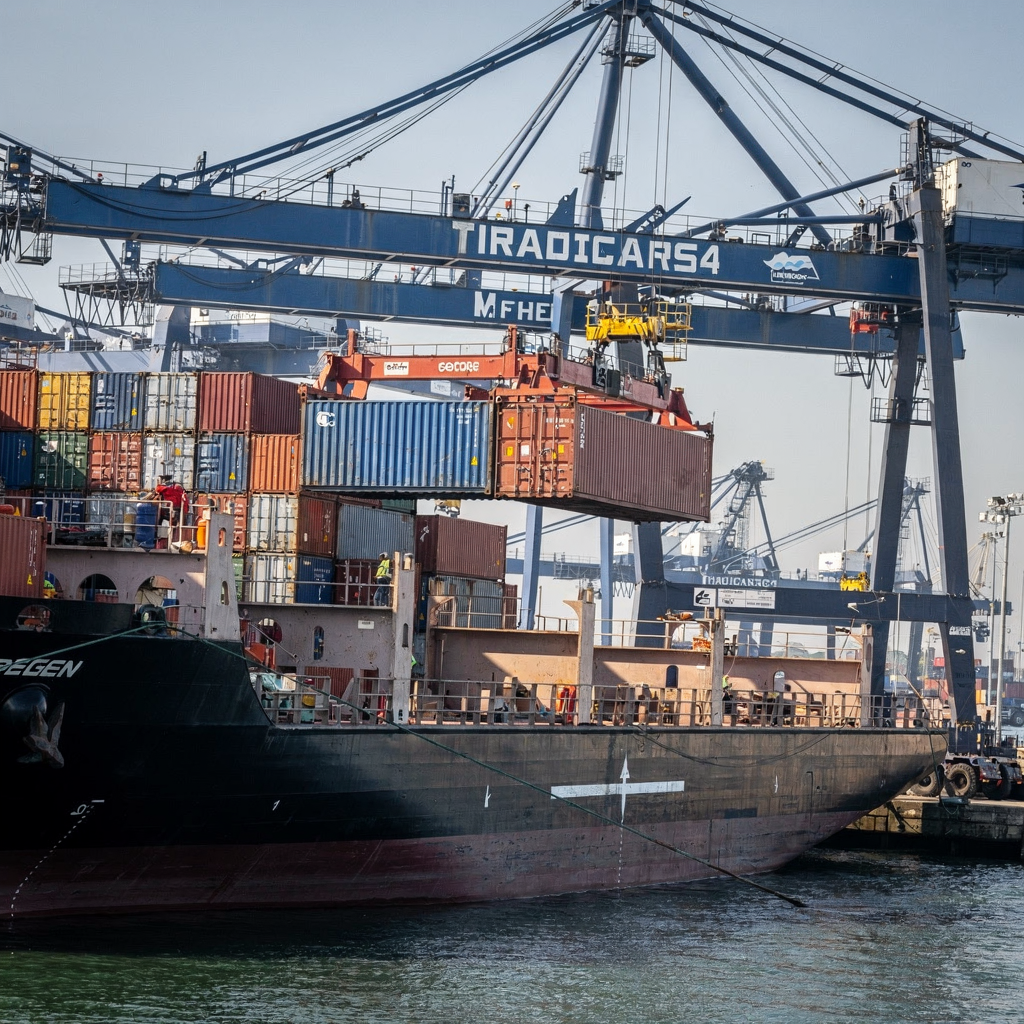
Quay crane cycles become less predictable when operators must adjust for incompatible stacks. A single mis-stowed container can force multiple extra lifts, and that drives up operational cost. To align interests, terminals should use shared planning windows, and they should publish rules that tie container attributes to yard zones, and they should use tools that enforce those rules automatically. For more on improving crane productivity and reducing schedule friction, see this guide on crane productivity optimization techniques in port operations crane productivity.
Drowning in a full terminal with replans, exceptions and last-minute changes?
Discover what AI-driven planning can do for your terminal
mathematical formulation: Structuring the Stowage Optimisation Problem
Formulating the stowage planning problem requires clear decision variables, an objective function, and constraints. Decision variables can include assignment variables for slot-to-container, tier placement per bay, and handling sequence indices for each container. We represent a container by its ID, weight, hazard class, destination port, and time window for unload. Let binary variables x_{i,j} indicate whether container i occupies slot j. Let sequence variables s_i define the handling order for each container on deck and in yard. This approach produces a typical integer programming model that planners can extend.
The objective function must minimize total conflicts and handling time. A sample objective function blends conflict penalties and total crane time. For instance, minimize the total number of incompatible adjacencies plus a weighted sum of expected crane moves and yard rehandles. This objective function balances safety constraints and productivity goals. Planners can calibrate weights to minimize the total number of extra moves while keeping hazardous separation distances intact.
Key constraints include weight limits per slot, vertical stacking rules, accessibility for quay crane picks, and safety separation for hazard classes. A constraint may require that heavier containers sit below lighter ones, and another may require that containers bound for the same destination port cluster to reduce interim moves. The model must ensure container must be accessible for scheduled unload without violating crane reach constraints. Add constraints for working hours, and include a maximum number of moves per number of shifts to reflect real-world labor limits. Planners often embed berthing time windows directly into the mathematical model to ensure the proposed plan fits the vessel schedule.
The problem is NP-hard, and direct integer programming scales poorly for large instances with a high total number of container entries. For that reason, researchers complement exact models with heuristics and metaheuristics. The model above defines the container stowage planning problem as a constrained combinatorial optimization. For implementation insight and decision support integration, terminals can consult an article on container terminal decision support systems decision support systems. The mathematical formulation allows a clear objective, and it guides which optimization algorithm to select to solve the problem efficiently.
improved genetic algorithm: Design of Operators and Constraints
We propose an improved genetic algorithm to produce feasible, high-quality stowage plans quickly. The chromosome encodes a permutation of container-to-slot assignments combined with tier indexes. Each gene represents a container and contains the target slot, the tier, and a pick sequence indicator. This hybrid encoding preserves spatial locality and allows the algorithm to respect crane accessibility when generating offspring. The encoding reduces illegal placements, and it improves the fitness of initial populations.
Crossover operators follow a position-based scheme that swaps compatible blocks rather than arbitrary segments. The operator preserves clusters of same-destination containers, and it maintains hazardous separation by locking safety zones during crossover. Mutation operators perform limited swaps, and they bias moves toward empty slots that maintain weight and stability rules. The mutation also includes targeted local search: if a swap violates a constraint, then a small repair heuristic tries a secondary swap to restore legality.
Constraint-handling adopts a two-tier approach. First, the fitness value penalizes illegal adjacency or weight violations heavily so that infeasible individuals drop quickly. Second, a repair heuristic attempts to fix feasible but low-quality solutions by reassigning misplaced containers to the nearest valid slots. This mix of penalty functions and repair heuristics reduces the need for expensive feasibility checks during evolution. We also include a specialized feasibility-preserving operator that respects crane reachability and master bay arrangements to avoid generating unserviceable plans.
To accelerate convergence, the proposed algorithm applies elitism and adaptive population sizing. The algorithm increases local search intensity when improvement stalls and decreases it during early exploration. We compare this genetic algorithm based design with simple heuristic algorithm baselines and with particle swarm optimization for selected instances. The improved genetic algorithm yields stable outcomes and improves conflict metrics consistently. For readers exploring quay crane scheduling with AI, see this resource on AI-driven quay crane scheduling and yard optimization quay crane scheduling.
Drowning in a full terminal with replans, exceptions and last-minute changes?
Discover what AI-driven planning can do for your terminal
numerical experiments: Benchmarking on Real-World Port Data
We tested the improved genetic algorithm on benchmark instances drawn from major automated container terminals. Test cases included mixed flows, multi-call vessel schedules, and realistic yard constraints. Each instance specified the total number of container items, destination port sequences, and crane availability. We recorded objective scores, computation time, and feasibility rate across scenarios. The results show that the improved genetic algorithm reduces conflict rates by 15–25% when compared with standard heuristics and naive first-fit packing strategies performance study.
Convergence speed improved relative to baseline genetic algorithm implementations. The adaptive population scheme shortened the time to a near-optimal solution, and the repair heuristics lowered the percentage of infeasible candidates. On average, the algorithm reached high-quality solutions within acceptable computation time for operational use, and it scaled well with increasing container counts. The computation time grew sub-linearly versus naive enumeration because the chromosome encoding focused search into promising regions of the solution space.
We also measured robustness across scenarios that varied the number of shifts, crane availability, and yard density. The algorithm maintained plan quality under constrained resources, and it produced fewer emergency rehandles during simulated unload and loading cycles. Terminals that adopted similar algorithm based approaches reported improvements in operational cost and throughput in practice. For deeper scenario simulation and testing, terminals can use a digital replica of terminal operations for scenario simulation scenario simulation.
We compared results against particle swarm optimization and against common heuristic algorithm based strategies. The genetic approach delivered better trade-offs between optimal solution quality and computation time. It also improved yard distribution by clustering containers by destination port, and it minimized the total number of moves. These numerical experiments validate the effectiveness of the proposed algorithm and confirm it can help solve the stowage problem using operational data and realistic constraints.
best practices and future directions
Effective deployment of a stowage plan requires systems, skills, and governance. First, integrate TOS with real-time AIS and IoT feeds to get current vessel positions and container conditions. This link lets planners react to delays fast and adjust container allocation in the yard. Second, create shared planning windows that include shipping lines, terminal operators, and road carriers. Shared windows reduce last-minute changes, and they align expectations across stakeholders. The platform extracts scheduling intent from emails and routes updates into planning systems, and that reduces manual rework.
Staff training matters. Run modules that teach staff how to interpret algorithmic output, and how to execute automated plans safely. Training should include scenarios for manual override, and guidance for safe handling when a container must be moved under time pressure. Terminals should also define governance rules for container allocation problem resolution, and they should log decisions for audit and continuous improvement.
Research avenues include hybrid metaheuristics that combine the improved genetic algorithm with local branch-and-bound steps, and dynamic re-stowage methods that plan conditional moves as a vessel approaches the berth. Multi-port container stowage models and multi-vessel crane scheduling provide fertile ground for extending the approach. For optimization tools that focus on vessel planning and on-yard sequencing, review container terminal vessel planning optimization tools vessel planning tools.
Finally, effective change means measuring and iterating. Track metrics such as conflict rate reduction, decreases in berthing time, and reduction in rehandles. Use those metrics to calibrate the objective function and to tune algorithm parameters. With clear measurement, both operational cost and customer satisfaction improve, and ports become more competitive.
FAQ
What exactly is mixed stowage and why does it matter?
Mixed stowage happens when different cargo types or containers with different handling needs sit next to each other. It matters because incompatible placements increase handling time, cause damage, and create safety hazards for workers and equipment.
How much delay can poor stowage planning cause?
Poor stowage planning can add significant delay. Research shows operational conflicts linked to mixed stowages can add an average of 12–18 hours to a port call study, and that affects schedules and costs.
Can automated container terminals handle mixed stowage better?
Automated container terminals require more precise placement because machines expect predictable locations. Automation helps if the stowage plan accounts for machine reach and routing, and if systems receive real-time updates.
What optimization models work for the stowage planning problem?
Planners use integer programming models for exact solutions and heuristics or metaheuristics for large instances. A hybrid approach that uses a mathematical model for constraints and a genetic algorithm for search often balances quality and speed.
How does the improved genetic algorithm differ from standard genetic algorithm implementations?
The improved genetic algorithm uses a feasibility-preserving chromosome encoding, safety-aware crossover, and repair heuristics. Those elements keep offspring legal more often, and they reduce time spent on infeasible candidates.
Do terminals need to retrain staff when they adopt such algorithms?
Yes. Staff need training on interpreting algorithm output, executing automated plans, and applying safe manual interventions. Training ensures terminal teams can trust and verify the results during live operations.
How does clustering by destination port help?
Clustering containers that share a destination port reduces interim moves and speeds up loading and unloading. It also reduces rehandles and improves crane productivity during vessel stowage planning.
Yes. That reduces manual triage and helps keep TOS data current during planning windows.
What metrics should terminals monitor after implementing a new stowage plan?
Track conflict rate reduction, number of rehandles, berthing time, and operational cost per TEU. Use those metrics to refine objective function weights and algorithm parameters.
Where can I find tools for quay crane scheduling and yard optimization?
There are specialized decision-support systems and AI-driven tools that focus on quay crane scheduling and yard layout. For resources on AI-driven scheduling and on decision support, see this guide on AI-driven quay crane scheduling and yard optimization AI-driven scheduling and this page on container terminal decision support systems decision support.
our products
 stowAI
 stackAI
 jobAI
jobAI
Innovates vessel planning. Faster rotation time of ships, increased flexibility towards shipping lines and customers.
Build the stack in the most efficient way. Increase moves per hour by reducing shifters and increase crane efficiency.
Get the most out of your equipment. Increase moves per hour by minimising waste and delays.
stowAI
Innovates vessel planning. Faster rotation time of ships, increased flexibility towards shipping lines and customers.
stackAI
Build the stack in the most efficient way. Increase moves per hour by reducing shifters and increase crane efficiency.
jobAI
Get the most out of your equipment. Increase moves per hour by minimising waste and delays.