
Artificial Intelligence (AI) and Port Operations at Tangier Med Container Terminal
AI now drives large shifts in how a modern port runs. First, Tangier Med container terminal faces typical inefficiencies: manual gate checks, uncertain yard placements, and uneven crane allocation. Second, these issues slow vessel turnaround and increase operational costs. Third, terminal operators measure performance with vessel turnaround, crane utilization, and container dwell time. For context, vessel turnaround links directly to throughput and to customer satisfaction. Therefore, AI becomes central to improving those metrics by automating decisions and by making them data-driven.
Today, AI combines historical logs, sensor feeds, and operational rules to suggest fast, accurate actions. For example, an AI system can predict peak gate loads, so planners can automate staffing or adjust yard stacks. As a result, teams reduce manual triage and gain time to focus on exceptions.
To quantify impact, ports that integrate AI report measurable gains. For example, Busan New Port saw an 18% throughput increase after AI-enabled automation was activated at Pier 6 in 2022 (Strategizing Artificial Intelligence Transformation in Smart Ports). Also, studies show that AI-based approaches cut crane idle time by up to 20–30% when combined with better berth and yard planning (Scheduling of automated guided vehicles for tandem quay cranes). These outcomes translate to lower operational costs and less energy consumption because equipment moves less and waits less.
Furthermore, Tangier Med can use a phased adoption strategy. First, implement data-driven dashboards and OCR for gate operations. Second, introduce AI for berth allocation and for optimizing quay crane moves. Third, connect those systems to yard stack logic and to truck appointment systems. For further guidance on this kind of phased work, see the container terminal digitalization roadmap (container terminal digitalization roadmap).
Finally, this approach helps with supply chain visibility. Now, stakeholders see schedules and crane availability in near real-time. Next, AI refines those signals to minimize delays and to optimize the whole flow. Consequently, Tangier Med and similar maritime container terminal environments can improve throughput and reduce downtime while keeping operations resilient and adaptive.
AI-driven Quay Crane Scheduling and Crane Operation
Manual crane scheduling strains when ships arrive late or when cargo mixes change. Operators struggle to coordinate multiple crane teams while avoiding interference. Consequently, inefficiencies multiply. However, AI-driven quay crane scheduling tools reduce this burden. They use predictive forecasts, berth and quay contexts, and live telemetry to propose sequences of moves that balance speed and safety. The goal remains to reduce crane idle time and to increase throughput.
For tandem lifts and dual-lift operations, AI can recommend synchronized patterns that increase container handling rates by 15–25% versus single-lift modes; researchers have documented these gains in operational tests (tandem quay crane scheduling). Also, AI helps resolve the quay crane scheduling problem by modeling interference zones and by generating feasible allocations for multiple cranes. A well-tuned algorithm minimizes crossing moves and reduces awkward crane movements.
Importantly, ports achieve measurable improvements. Studies indicate a 20–30% drop in crane idle time with AI-based scheduling and with coordinated yard handling (AI in smart ports). In practice, this means cranes spend more time lifting and less time waiting for containers or for trucks. Ports that deploy integrated quay crane assignment logic also cut berth and quay conflicts, so turnaround time improves and emissions fall due to fewer diesel cycles.
To learn more about practical techniques, see resources on reducing crane idle time in deepsea container ports (reducing crane idle time in deepsea container ports). Also, terminal teams often combine AI with proven operations research methods like mixed-integer programming or a hybrid approach. These combined tactics enhance decision quality and reduce implementation risk. Finally, the integration of AI into crane operation workflows keeps operators in control while allowing the system to optimize repetitive tasks and to suggest improvements in real-time.
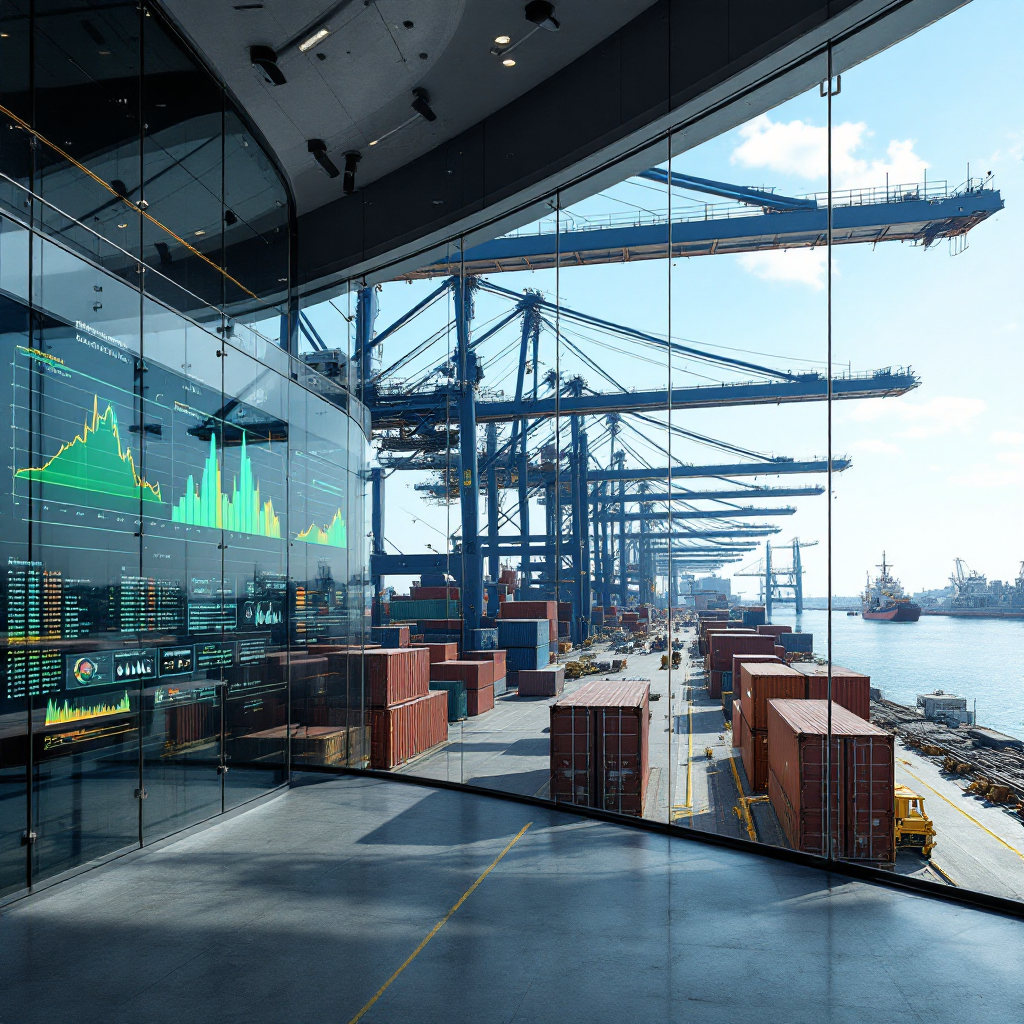
Drowning in a full terminal with replans, exceptions and last-minute changes?
Discover what AI-driven planning can do for your terminal
Metaheuristic Algorithm and Real-time Schedule Optimization
Metaheuristics pair well with AI for complex scheduling. For example, a metaheuristic algorithm can search broad solution spaces fast, while reinforcement learning refines policies from live feedback. This hybrid approach solves large combinatorial problems without exhaustive computation. As a result, terminals find near-optimal schedules in minutes rather than hours. That speed matters because vessel arrivals, weather, and truck flows change rapidly.
Real-time data feeds matter for effective decision-making. Systems ingest vessel arrival times, berth allocation updates, and sensor readings from cranes and from trucks. Then the algorithm proposes a new schedule and communicates it to operators and to the terminal execution layer. The model minimizes conflicts between adjacent crane movements and reduces idle time by reassigning moves dynamically. In one recent study, researchers note the benefits of combining metaheuristics with reinforcement learning to reschedule yard cranes and quay cranes under disruptions (yard crane rescheduling study).
Next, real-time schedule optimization reduces the quay crane assignment friction that often causes delays. For instance, when a berth changes, the AI system recalculates priorities and shifts tasks to maintain high crane utilization. Also, these models incorporate constraints like crane availability, safe distances, and equipment limitations. The results include smoother handoffs from ship to yard and better alignment with truck arrival windows.
To explore related techniques, consider the digital replica and scenario simulation work that helps validate schedules before execution (digital replica of terminal operations). Finally, combining metaheuristic algorithm logic with deep reinforcement learning can drive steady improvements. Thus, terminals get both fast solutions and adaptive learning that improves over time.
Integrate Automated Crane to Optimize Forecast Cargo Movements
Linking automated crane systems with demand forecast models creates a more fluid flow of cargo. First, accurate forecast data informs which stacks will be needed and when. Second, automated crane control uses that forecast to pre-position containers for faster retrieval. This integration reduces gate queues and improves throughput. For example, a well-executed forecast led to an 18% throughput improvement at an automated pier cited in research (Pier 6, Busan New Port).
Forecasts rely on multiple signals. These include shipping schedules, truck appointments, and OCR reads at the gate. AI analyzes video and sensor streams to produce timely, accurate forecasts that update as new data arrives. Importantly, predictive models reduce unexpected congestion in the yard and at the gate, so terminal operations run more predictably. AI-driven demand estimates let teams schedule automated crane moves to match real expected loads.
Moreover, integrating automated crane control with forecast outputs helps to minimize repositioning moves and to avoid unnecessary fuel burn. In practice, automated crane systems that act on reliable forecasts shorten container handling cycles.
For further reading on integrating stowage and yard planning into these flows, see integrated stowage and yard planning resources (integrating stowage and yard planning). Finally, many ports must tune their automated crane logic to local rules and to safety constraints. Therefore, a phased rollout that tests forecast accuracy and automated responses provides a safe path to higher throughput.
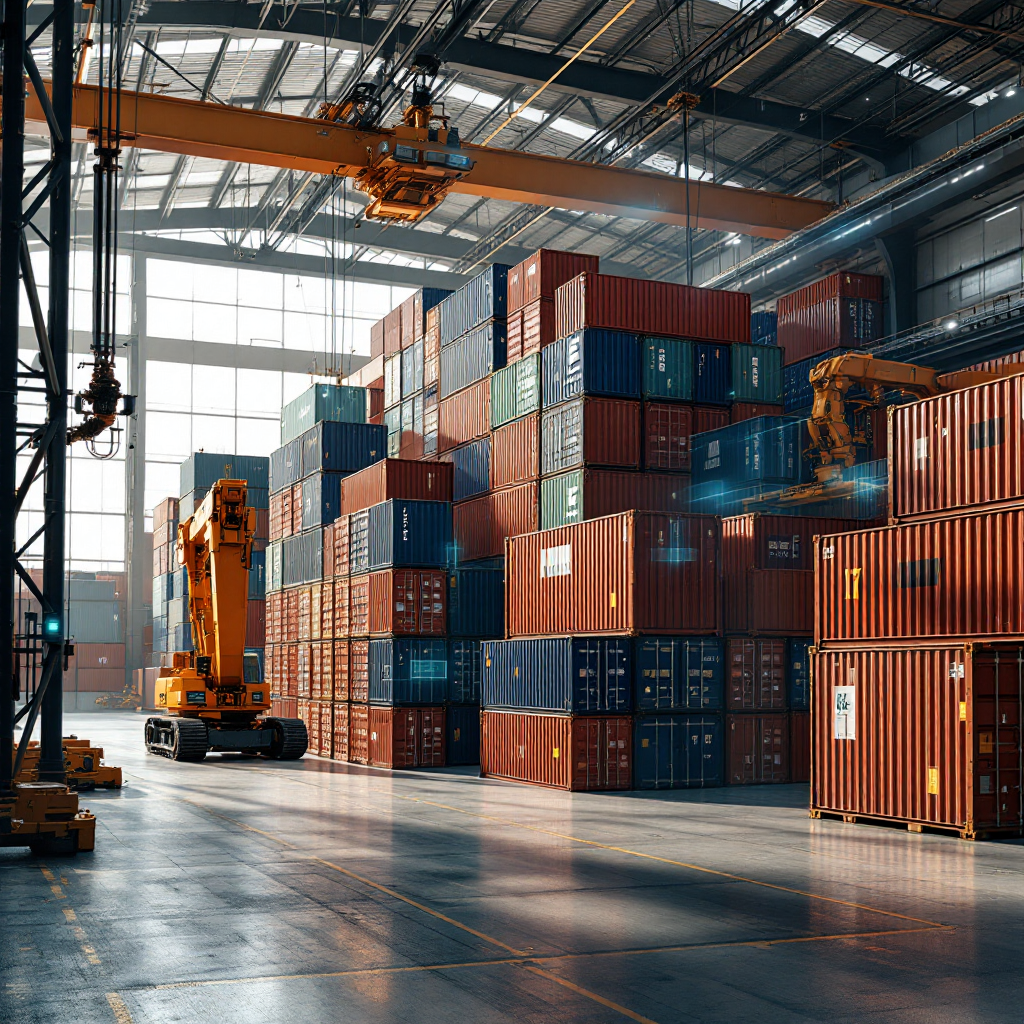
Drowning in a full terminal with replans, exceptions and last-minute changes?
Discover what AI-driven planning can do for your terminal
Yard Stack Management: Container Stacking and Automate
Yard stack management is a core determinant of terminal efficiency. AI assigns yard crane tasks and directs container stacking to reduce moves and to free throughput capacity. For example, AI-driven yard crane rescheduling has cut container relocation moves by up to 25% in studies that combine heuristic search with machine learning models (yard crane rescheduling study). These savings reduce operational costs and speed turnaround.
AI decides where to place inbound containers based on likely retrieval time, truck appointment windows, and vessel load plans. The system minimizes reshuffles and thus shortens container dwell time. In a recent deployment, AI helped reduce average container dwell time by 22% at a major terminal, which improved gate flow and yard throughput (AI in smart ports). Also, optimizing the stack reduces congestion and supports safer crane movements.
Automated crane control hinges on good planning. The AI uses machine learning models to estimate demand per stack and to recommend crane assignment that balances load and minimizes deadhead travel. Moreover, linking this logic with automated guided vehicles (AGVs) or with RTG prioritization creates a coherent flow from ship to truck. For further detail about real-time yard strategies, see real-time container terminal yard optimization strategies (real-time container terminal yard optimization strategies).
Finally, the hybrid approach of combining metaheuristics and learning reduces the curse of dimensionality in large yards. This hybrid method yields faster solutions and more robust plans. As a result, terminals see fewer delays, better crane utilization, and more predictable operations. Equally important, operators retain oversight and can intervene when exceptions occur.
Predictive Maintenance, Utilization and Berth Allocation Benefits of AI
Predictive maintenance keeps cranes working and prevents costly equipment failure. AI analyzes sensor streams and historical logs to detect early signs of wear. Predictive maintenance models alert technicians before failures force downtime. This method increases crane availability and helps keep schedules on track.
At the same time, AI monitors utilization metrics for cranes and for yard vehicles. These analytics reveal underused assets and help terminal planners rebalance tasks to optimize utilization. Consequently, operational efficiency improves and operational costs drop. Also, berth allocation systems that integrate AI reduce berth idle time and greenhouse gas emissions by smoothing vessel handling and by cutting unnecessary tug or engine-on time.
Automated berth allocation and quay scheduling together allow terminals to optimize across ship calls and yard demand. Studies indicate that collaborative optimization across trucks, berth, and crane systems yields meaningful gains in whole-terminal performance (collaborative optimization study). Additionally, AI-enhanced OCR and data-driven gate processes speed handling and reduce queuing, while AI analyzes video to support safety and to detect anomalies in operations (enhancing crane and gate OCR).
Benefits of AI include sustainability gains, lower equipment downtime, and clearer planning. For example, reduced crane idle time lowers energy consumption during handling. Also, AI helps terminal operators plan maintenance windows to avoid peak demand. In sum, AI and machine learning bring predictive insight, better utilization, and smarter berth allocation to modern container terminals, which improves throughput, lowers costs, and strengthens the entire supply chain.
FAQ
What is AI quay crane scheduling?
AI quay crane scheduling uses artificial intelligence to plan and sequence crane moves at a berth. It balances safety, speed, and resource constraints to reduce crane idle time and to improve throughput.
How much can AI reduce crane idle time?
Research shows AI-based scheduling can reduce crane idle time by about 20–30% in many contexts (scheduling study). Reductions vary with execution quality and with how well systems integrate with yard and berth planning.
Can AI improve yard stacking and container relocation?
Yes. AI-driven yard crane rescheduling and stacking strategies can cut relocation moves by up to 25% and can reduce container dwell time substantially (yard study). These gains depend on data quality and on how the AI coordinates with automated crane control.
What role does predictive maintenance play?
Predictive maintenance uses sensor data to forecast equipment failure and to schedule repairs before breakdowns occur. This approach reduces downtime and increases crane availability, which supports better schedule adherence.
Are there examples of successful AI deployments?
Yes. For instance, Busan New Port reported an 18% throughput increase after AI-enabled automated quay crane operations began at Pier 6 (MDPI study). Other deployments show similar improvements when AI integrates berth allocation and yard flows.
How do AI and machine learning handle real-time disruptions?
AI ingests real-time signals like vessel arrivals, berth changes, and sensor alerts. Then reinforcement learning or a metaheuristic algorithm generates updated schedules to minimize conflicts and to optimize utilization. This dynamic rescheduling keeps operations resilient under change.
Will AI replace crane operators?
No. AI augments operator decision-making and automates repetitive tasks while keeping humans in the loop for safety and exceptions. Operators remain essential for oversight, safety, and for handling complex exceptions.
How can terminals start integrating AI?
Terminals should begin with a pilot that targets one bottleneck, such as crane scheduling or gate OCR. Next, expand integration to yard and berth allocation. For practical roadmaps, read the container terminal digitalization roadmap (digitalization roadmap).
What data sources does AI need?
AI needs structured logs, sensor and video feeds, OCR outputs, and ERP/TMS inputs to produce accurate forecasts and schedules.
How does AI affect sustainability at terminals?
AI reduces unnecessary moves and idle equipment time, which lowers energy consumption and emissions. Also, smarter berth allocation and fewer tug cycles further reduce the environmental footprint of terminal operations.
our products
 stowAI
 stackAI
 jobAI
jobAI
Innovates vessel planning. Faster rotation time of ships, increased flexibility towards shipping lines and customers.
Build the stack in the most efficient way. Increase moves per hour by reducing shifters and increase crane efficiency.
Get the most out of your equipment. Increase moves per hour by minimising waste and delays.
stowAI
Innovates vessel planning. Faster rotation time of ships, increased flexibility towards shipping lines and customers.
stackAI
Build the stack in the most efficient way. Increase moves per hour by reducing shifters and increase crane efficiency.
jobAI
Get the most out of your equipment. Increase moves per hour by minimising waste and delays.