
Understanding container terminal Decision Support Systems
A Decision Support System in a container terminal helps people make better, faster choices. It pulls data from many sources. Then it runs scenarios, and it suggests actions. The platform supports scenario simulation, resource scheduling, and performance monitoring. For example, a well-designed decision support system can simulate peak windows and recommend specific allocation of quay cranes to avoid a bottleneck. It can optimize yard moves and reduce manual errors, and it can improve overall terminal performance.
Ports that adopt these tools report measurable gains. Automated placement and smarter scheduling have cut container dwell time by up to 20% in some operations (source). Throughput often rises between 10% and 25% thanks to better planning and real adjustments (source). Some terminals also record annual cost savings near 15% after they combine planning and predictive maintenance (source). These statistics show how operational efficiency, cargo volumes, and performance monitoring change when terminals go digital.
Experts back this approach. As Dr Maria Lopez explains, “Decision Support Systems equipped with digital twins not only improve operational efficiency but also provide a strategic advantage by enabling ports to anticipate and mitigate disruptions before they occur.” (Dr Maria Lopez). Her quote highlights resilience and the role of digital twinning. And terminal operators see the impact daily. For example, a manager reported a 15% throughput increase after integrating planning tools (John Smith quote).
For multiple stakeholders the value is clear. Stakeholder groups gain faster insights, and they share a common view of expected demand. Tools that deliver performance insights and data-driven alerts reduce downtime and smooth vessel calls. Therefore teams handle higher volumes, and they respond to disruption to operations with less delay. For terminals worldwide this modern approach supports continuity, and it supports resilience across the supply chain.
Integrating terminal operating system and tos platforms for real-time insights
Terminal decisions rest on good data. A terminal operating system collects inputs from cranes, RTG units, gate systems, and metocean feeds. Then it harmonizes that input for use across planning and execution. TOS platforms provide structured records for vessel moves, and they log container movements. This architecture enables real-time visibility for gate operations and berth planning.
Modern TOS connects yard equipment telemetry and access control logs, and it links to port community systems and customs authorities. The result is faster turn times and fewer surprises. For instance, when a berth needs adjustment, real-time information from the TOS allows a planner to change berth allocation within minutes. That seamless data exchange reduces idle time and avoids costly downtime.
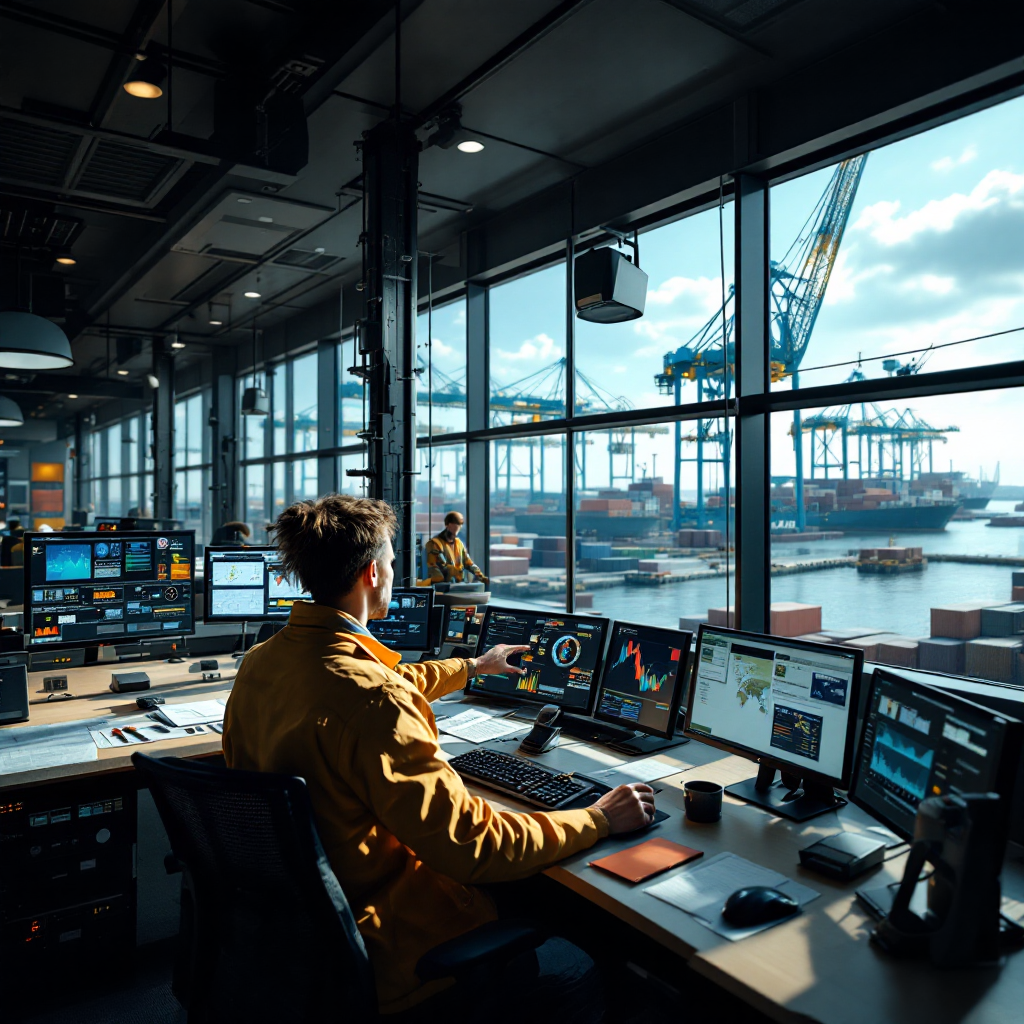
Good system integration matters. APIs and middleware let a TOS share container tracking feeds with external partners, and they let vessel planning tools refresh ETAs. This smooth flow supports real-time monitoring of container handling and gate flows. It also enables process automation where rules trigger actions automatically. For example, when a truck appointment arrives late, the TOS can reassign a yard slot and update the haulier and shipping lines automatically.
To streamline integration, terminals use standard interfaces. Tools that enable seamless communication between the TOS and downstream systems make planning and scheduling simpler. They also make it easier to join ERP systems or warehouse management modules. This reduces manual handovers and minimizes manual errors. As a result, terminal efficiency improves, and terminal operators can focus on strategy.
Drowning in a full terminal with replans, exceptions and last-minute changes?
Discover what AI-driven planning can do for your terminal
Container terminal operating systems: digital twinning and predictive analytics
Container terminal operating systems model physical assets, and they mirror real actions in software. Then they simulate moves to test plans before those plans reach the yard. A digital twin framework recreates the terminal in near real-time so managers can run what-if scenarios. A recent research proposal frames a Decision Support System with digital twinning-based resilience analysis as central to port resilience computation (study).
Predictive analytics then extends planning. It forecasts labour needs, and it anticipates yard equipment failures. Teams can shift maintenance windows to reduce downtime and to avoid disruption to operations. Predictive models also recommend targeted yard reshuffles to keep flows smooth. For example, when forecasted cargo volumes rise unexpectedly, the system suggests staging patterns that reduce driving distances and that optimize yard capacity (related resource).
These platforms help with yard management and with berth planning. They feed planners with performance monitoring metrics and with actionable performance insights. They also guide decisions that optimizes resource utilization across cranes and trucks. A software solution that uses both a digital replica and predictive algorithms supports minimal disruption during spikes. As a case study, researchers used a digital replica to compute port resilience and to measure how much recovery time a terminal would need under several shock scenarios (case study).
Operators of large terminals use these capabilities to keep pace with cargo growth. This approach reduces manual scheduling and improves inventory management in adjacent warehouses. It also complements container tracking systems so that every container move shows in the twin. Teams therefore see the yard as a live system, and they act early when risks appear.
Leveraging management systems for a seamless supply chain
Management systems in ports cover communications, documentation, and partner coordination. They tie together shipping lines, hauliers, and terminal teams so operations align with wider supply chain needs. When these systems work well, they improve traceability and they cut delays at handoffs. For example, Port Optimizer™ demonstrates how collaborative platforms enable synchronized planning among multiple stakeholders (Wabtec).

These platforms integrate with warehouse management and with gate systems, and they feed status to customs authorities. They also support inventory management and intermodal handoffs. That means freight moves with fewer stops, and it avoids queueing that causes a bottleneck. As supply chain visibility increases, stakeholders make decisions faster and with more confidence.
In practice, management systems enable streamlined workflows. For example, when a booking changes, the platform updates vessel planning, and it alerts the terminal and the haulier. Our AI agents reduce time spent on manual email triage, and they route queries to the right team with context. This change cuts reply time and it reduces avoidable errors in documentation.
By connecting port community systems to terminal efficiency tools, ports achieve better coordination. The result is reduced congestion, improved gate operations, and more predictable arrival patterns. Collaborative platforms therefore support minimal disruption and they help terminals worldwide meet rising demand.
Drowning in a full terminal with replans, exceptions and last-minute changes?
Discover what AI-driven planning can do for your terminal
Addressing legacy systems and navis integration challenges
Many ports still run older platforms. Legacy systems create friction when terminals upgrade. They often use proprietary formats and they resist standard APIs. That makes system integration slow, and it raises the risk of manual errors. A careful strategy is required to modernize without disrupting daily work.
Navis offers widely used solutions, and it competes with custom-built platforms. Choosing between navis and bespoke software solution depends on scale, budget, and integration needs. Navis brings proven modules for vessel planning and yard control. Custom builds can tailor workflows and they can better match niche processes at large terminals. Either approach must address data management, and it must plan migration carefully to avoid disruption to operations.
Integration tactics include middleware layers, adapters, and strict data standards. Teams can run parallel systems while they validate messaging and while they test access control and authentication. They should also harden cybersecurity when linking external feeds. As one practical step, integrating stowage and yard planning helps synchronize moves and reduces reshuffle needs (integration guide).
Finally, ports must prepare staff for digital transformation. Training reduces resistance, and it reduces the chance of mistakes during cutover. For terminals that span many decades, phased rollouts keep operations steady. By prioritizing critical interfaces such as ERPs and gate systems, teams preserve continuity and they protect against long downtime.
Harnessing real-time data to optimise operations
Real-time data arrives from IoT sensors, AIS feeds, weather stations, and camera systems. Real-time monitoring feeds planning tools so teams react to changing conditions. Planners use that information to fine-tune quay crane cycles, and to adjust yard blocks. The approach streamlines container handling and it optimizes resource allocation.
AI-driven decision rules then translate streams into tasks. These rules automate routine assignments, and they reduce manual touchpoints in the workflow. For instance, when a crane detects a fault, predictive alerts schedule maintenance and reschedule moves to reduce downtime. This process automation improves operational performance, and it often optimizes resource utilization across the terminal.
Looking forward, 5G will enable faster edge computing for millisecond updates, and more detailed digital twinning will replicate every container movement. This will boost real-time visibility and it will support better planning and scheduling. Terminals that adopt these upgrades gain a competitive edge in maritime logistics.
To implement quickly, operators test real-time yard optimization strategies in small pilots and then scale. Tools that connect to container tracking systems and to yard management platforms deliver immediate value. They reduce bottleneck risk, and they improve overall terminal performance. For practical tips and technical patterns, the guide to real-time yard optimization is a helpful resource (guide). With the right mix of connectivity, automation, and AI, terminals can streamline flows and protect service levels for multiple stakeholders.
FAQ
What is a Decision Support System in a container terminal?
A Decision Support System is software that helps planners and operators make informed choices by analyzing operations data and running simulations. It combines inputs from sensors, TOS records, and external feeds to suggest actions and to forecast impacts.
How much can a Decision Support System reduce container dwell time?
Adoption of automated planning and optimized placement has reduced dwell time by up to 20% in some terminals (source). Results depend on execution, data quality, and change management.
Do Decision Support Systems work with older systems?
Yes, but integration requires adapters or middleware. Ports should plan phased migration to avoid disruption and to protect against compatibility issues with legacy systems.
What role does digital twinning play in terminal resilience?
Digital twinning creates a virtual replica of the terminal so operators can run what-if scenarios and measure recovery timelines. Research shows this approach helps compute port resilience and supports proactive responses (study).
How do TOS platforms and a Decision Support System interact?
A terminal operating system provides operational records and timestamps that a Decision Support System uses for planning and real-time decisions. Seamless data exchange between the two systems keeps plans aligned with live conditions.
Can Decision Support Systems integrate with customs and port community systems?
Yes. Integration enables automatic document exchange, faster clearances, and better coordination across the supply chain. That improves gate operations and reduces queues.
Is Navis the only viable vendor for modern terminals?
Navis is a common option, but custom platforms and other vendors also serve large terminals. Choice depends on features, existing infrastructure, and long-term digital transformation goals.
How do predictive analytics reduce downtime?
Predictive models forecast equipment failures and labour shortages so teams can schedule maintenance and shifts proactively. This planning lowers emergency repairs and shortens service interruptions.
What is the value of automating operational emails for terminals?
Automating emails reduces manual triage and speeds responses to partners like shipping lines and hauliers.
Where can I learn more about real-time yard optimization?
Technical guides and practical resources explore pilots and scaling approaches. One useful resource is a guide to real-time yard optimization strategies that explains patterns and tools (resource).
our products
 stowAI
 stackAI
 jobAI
jobAI
Innovates vessel planning. Faster rotation time of ships, increased flexibility towards shipping lines and customers.
Build the stack in the most efficient way. Increase moves per hour by reducing shifters and increase crane efficiency.
Get the most out of your equipment. Increase moves per hour by minimising waste and delays.
stowAI
Innovates vessel planning. Faster rotation time of ships, increased flexibility towards shipping lines and customers.
stackAI
Build the stack in the most efficient way. Increase moves per hour by reducing shifters and increase crane efficiency.
jobAI
Get the most out of your equipment. Increase moves per hour by minimising waste and delays.