
empty containers: Understanding Trade Imbalances at Inland Terminals
Empty containers are the backbone of global container logistics. They return to the network after goods discharge and then wait for the next export. First, they act as movable storage and second, they enable exporters to meet seasonal surges. As a result, operators track their location, condition, and availability constantly. Trade imbalances create surplus stocks in some regions and shortages in others. Therefore, inland depots often receive more empty containers than they dispatch. For example, a major dry port that handles hinterland flows reported predictable accumulations after bulk export seasons, and planners used that data to redesign yard layouts and scheduling. This pattern shows that export–import imbalances drive the problem of empty at inland hubs.
Next, consider the numbers that affect decisions. Yard handling, stacking, and damage checks add measurable cost. For context, typical storage and handling costs per TEU vary with region, but estimates place the cost of idle empty units between $5 and $20 per TEU per day in many systems depending on dwell time and local labour rates. You can see how those costs compound when thousands of units sit idle. Consequently, operators adopt inventory rules to avoid excessive stacking and to reduce the cost of empty container storage.
Also, an inland empty container will tie up capital. Therefore, shipping planners model the demand for empty containers and the expected turnaround. Operators must balance holding enough units to meet bookings and avoiding surplus that increases yard congestion. In practice, container leasing and redistribution decisions hinge on accurate forecasts of container volume and container supply across the hinterland. Furthermore, optimizing flows reduces unnecessary returns to port and helps maintain service levels.
Finally, logistics teams link this planning to their terminal operating systems and to partner systems. For technical readers, you can explore how to connect planning with automation in this guide to TOS-agnostic API layers for AI optimization. Also, planners often combine yard planning with quay operations; read about integrated approaches in our article on integrating stowage and yard planning. These links provide operational steps that help match container inland availability to demand and avoid a severe shortage of empty containers.
empty: Cost and Environmental Impacts of Unused Units
Direct costs from empty movements add up quickly. Transport, handling, yard space, and dwell time represent core line items. For example, a terminal pays truck and chassis fees for every reposition move and staffing for gate checks. Also, each yard shift consumes crane time and fuel. Consequently, the total empty container cost affects margins across the supply chain. Researchers estimate that sensible policies can trim repositioning cost substantially, and that fact drives investment in smarter control systems Balancing Sea and Land Repositioning for Empty Container Logistics.
Indirect costs matter as well. Congestion rises when yards hold surplus empties. Then, gate delays increase, trucks queue, and turnaround times grow. This escalation blocks capacity for laden flows and raises the opportunity cost of capital tied in idle units. Therefore, terminal operators track dwell-time metrics and aim to reduce the rate of empty stagnation. Also, container leasing and container freight pricing both react when visible shortages or surpluses occur.
Environmental costs add urgency. Empty truck movements produce CO2 and worsen local air quality. Studies show that empty container movements account for a notable share of inland freight emissions, so reducing these moves supports sustainability targets The Environmental Impact of Inland Empty Container Movements. For instance, moving empties back to a seaport instead of routing them via nearby inland depots increases vehicle-kilometres and emissions. Consequently, using dry ports and coordinated transfers can shrink road miles and emissions significantly. One analysis reported that using inland depots cut road movements by roughly 30%, lowering carbon output in the hinterland Assessing the eco-efficiency benefits of empty container repositioning.
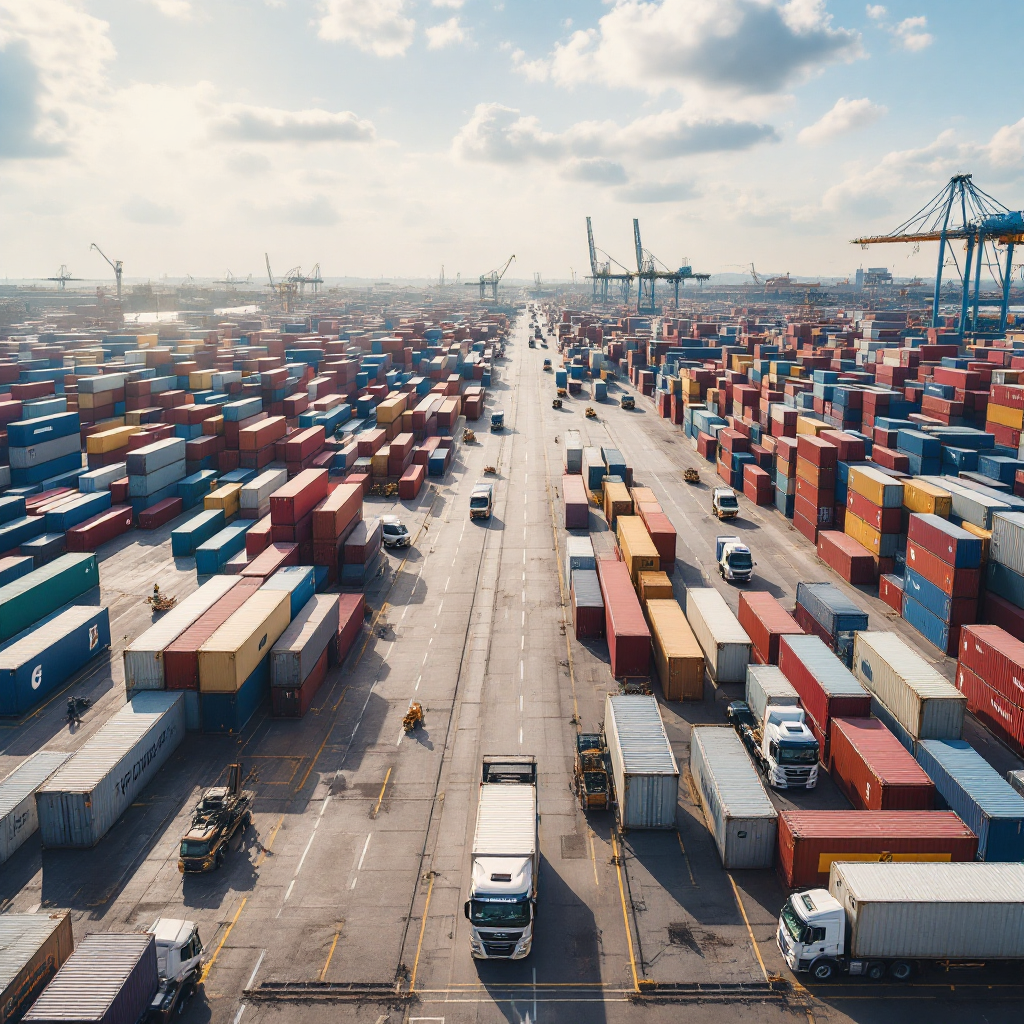
Also, operations teams measure emissions against cost savings when they change container repositioning policies. Therefore, linking environmental KPIs to financial KPIs encourages better decisions. Finally, efficient empty container transportation choices lower both the cost of renting empty containers and the cost of renting space for storage.
Drowning in a full terminal with replans, exceptions and last-minute changes?
Discover what AI-driven planning can do for your terminal
optimization: Inventory Threshold Models for Container Management
Inventory threshold models provide a simple, effective way to control stocks. The max-min review system sits at the centre of many proposals. Under this model, terminals set a minimal level and a maximal level for empty container inventory. When stocks fall to the minimum, the system triggers replenishment. When stocks exceed the maximum, the system triggers redistribution or leasing actions. This approach reduces arbitrary repositioning and aligns supply with local needs. Researchers model the system to show how thresholds shape repositioning frequencies and yard occupation Empty container reposition using max-min review system.
Then, simulation studies quantify the benefits. For instance, threshold-based policies can cut repositioning cost by 15–20% compared with naive or ad-hoc approaches. The cost advantage comes from fewer empty trips and lower handling rates. Additionally, fewer moves reduce damage risk and paperwork. Therefore, terminals reduce both direct repositioning cost and indirect opportunity costs.
However, operators must trade off inventory carrying cost against repositioning frequency. Holding more empties prevents stockouts but raises storage and capital costs. Conversely, tight thresholds reduce carrying cost but increase the chance of a service failure and the need for emergency repositioning. The right balance varies with demand volatility and container leasing options. Forecast accuracy therefore changes the optimal threshold settings. To support that work, planners integrate forecasting and execution systems. For practical system design see our guidance on advanced container terminal planning systems, which outlines how to link threshold rules to scheduling engines.
Also, complex operations sometimes layer max-min review with multi-period planning and probabilistic demand estimates. The result reduces stockouts while keeping moving costs low. In short, this optimization model aligns inventory policy with expected flows and with contractual obligations from shipping companies. Finally, teams measure performance by tracking the number of times systems must rent empty containers or move units back to seaports to meet short-term demand.
empty containers and optimization: Integrating Multi-Modal Repositioning Strategies
Combining rail, road, and barge unlocks scale benefits. Rail moves excel at long-distance bulk transfers, road moves provide last-mile flexibility, and barges reduce trucking in river corridors. Therefore, multi-modal hubs and scheduling minimize total network cost. One multi-period linear programming study that integrated rail and road reported an 18% reduction in repositioning cost in a case study, and planners used that result to redesign weekly service rotations Multi-period empty container repositioning approach for multimodal ….
Also, triangulation strategies help. Instead of returning empties to the seaport, terminals route them through intermediate inland depots. This triangulation reduces travel distance and leverages local demand, producing about 10–12% savings for large carriers according to published work Optimizing Empty Container Repositioning at Inland Terminals. As a result, the network reduces empty containers transported by road and cuts emissions. Additionally, using inland depots as buffer nodes supports seasonal swings in container volume and helps meet the demand of empty containers without repeated long-haul returns to ports.
Next, coordination challenges arise. Multi-modal schedules need shared information on bookings, availability, and yard capacity. Therefore, systems must exchange data in near real time. Also, planners need consistent KPIs across rail operators, barge companies, and trucking partners. That requirement makes integration with TMS and ERP systems essential. For teams building integrations, our article on TOS-agnostic API layers explains methods to harmonize data feeds and route plans. Further, gate appointment and arrival prediction systems improve synchronization; see research on AI-based decision support for lift planning for related integration benefits.
Finally, the multi-modal approach depends on reliable forecasts and clear contracts with shipping companies. When parties agree on repositioning responsibilities and cost allocation, the network acts faster and with lower friction. Thus, optimising empty container movement between modes reduces both cost and emissions and helps terminals manage container utilization more effectively.
Drowning in a full terminal with replans, exceptions and last-minute changes?
Discover what AI-driven planning can do for your terminal
particle swarm optimization: Advanced Algorithms for Enhanced Planning
Particle swarm optimization (PSO) adapts well to routing and allocation problems. PSO models a set of candidate solutions as particles. Each particle moves through the solution space and learns from its own experience and from the group’s best positions. For empty container problems, the method searches for near-optimal routing and allocation that respect capacity, timing, and cost constraints. PSO often converges quickly on good solutions. Therefore, researchers apply it to the problem of empty and find robust schedules for complex networks.
Also, comparing PSO with other meta-heuristics shows benefits and trade-offs. Genetic algorithms mutate and recombine candidate plans, while tabu search explores neighbourhoods with memory. PSO tends to require fewer tuning parameters and can exploit smooth objective landscapes effectively. Empirical studies report that PSO achieved an extra 6–8% reduction in total cost over baseline linear programming schedules in select cases, particularly when the network included many discrete depot decisions and routing options. For readers interested in algorithm choice, these results indicate that hybrid approaches can capture the strengths of both LP and heuristics.
However, computational demands can grow. Large networks produce high-dimensional search spaces that increase runtime. Therefore, teams must balance solution quality against acceptable execution time. One pattern is to use LP models for baseline scheduling and then run PSO or another heuristic to refine assignments within operational windows. Also, terminals often integrate optimisation outputs with their terminal operating systems so planners can act on schedules quickly.
Finally, practical deployment requires careful engineering. Teams should test algorithms on historical flows, tune objective weights for cost versus emissions, and validate outcomes under stress scenarios. Also, consider coupling PSO with robust optimization techniques to handle the stochastic arrival of containers. The right mix of methods yields a resilient plan that adapts to disruptions and limits container repositioning cost while meeting operational constraints.
Future Outlook: Sustainable empty containers Repositioning and optimization
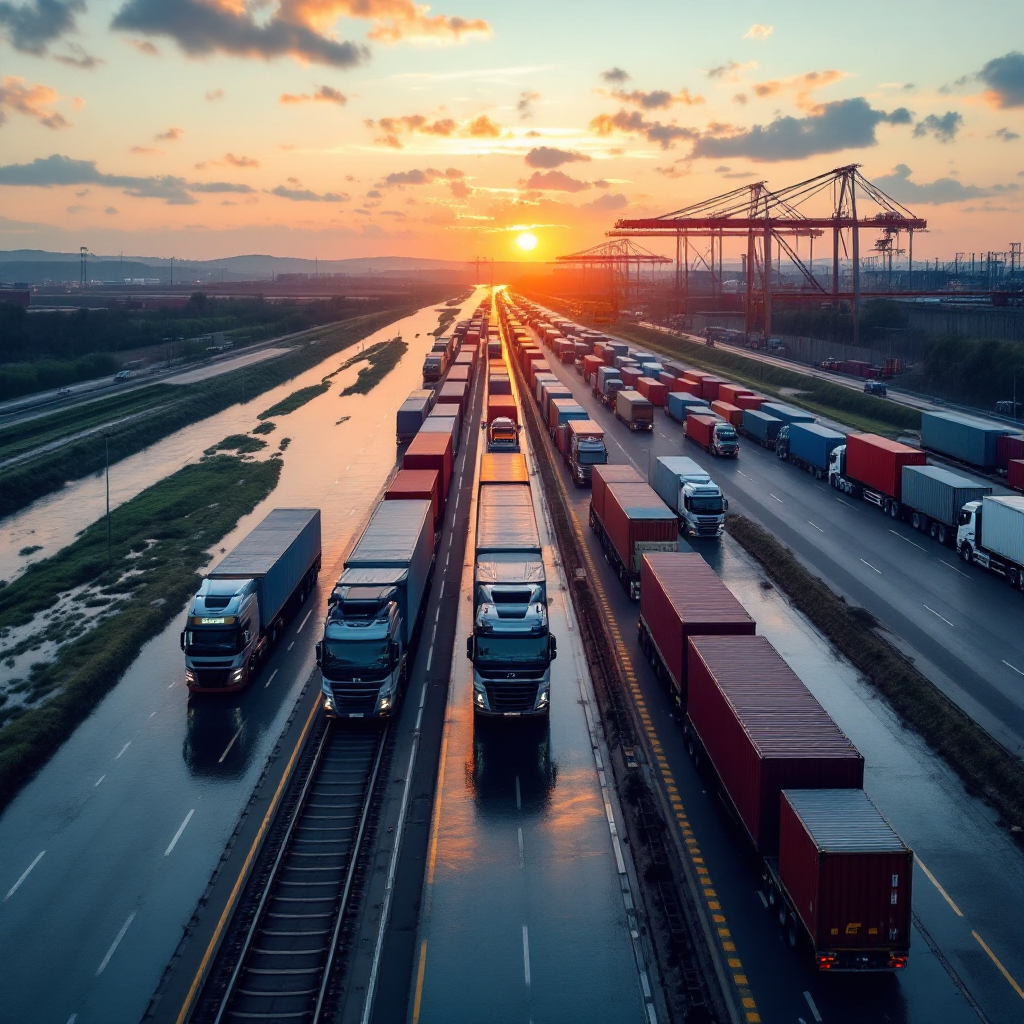
Hub location models promise large gains in distance and emissions reductions. For example, research shows that optimally sited inland depots can cut total repositioning distances by up to 25% when planners apply a robust hub-and-spoke design Optimizing sustainable hub depot locations for empty container …. Therefore, locating inland depots strategically reduces the number of empty containers from ports traveling extra miles. Also, moving containers via intermodal corridors lowers road kilometres and eases urban congestion.
Next, stochastic and robust approaches address uncertain container flows. Random demand, delayed vessel arrivals, and seasonal peaks force planners to keep buffers. Consequently, robust optimization helps set thresholds and reserve resources to maintain service. Recent studies include random variables for container inputs and outputs to reflect weather, strike risk, and demand swings; these methods help design networks that perform under uncertainty A study on the influence of reposition threshold on low-carbon empty …. Also, joint optimisation of seaport and inland terminal operations reduces duplicated moves and produces better overall outcomes when organisations coordinate.
Additionally, digital twins and AI-driven forecasting will transform operations. Digital replicas of yards simulate stacking, gate flows, and repositioning decisions so planners can test policies before executing them live. AI models predict container demand at granular levels, which allows terminals to allocate empty containers with precision and to meet the demand for empty at short notice. For teams integrating AI into terminal workflows, read our deployment playbook on steps to implement inland container terminal automation. Also, emission accounting and carbon-pack compliance become standard. Companies will report and reduce the carbon footprint of container logistics by optimizing empty container allocation and by selecting low-carbon transport modes.
Finally, future research should explore hybrid optimisation methods, digital integration standards, and practical policies for leasing empty containers during peaks. Also, future research could quantify trade-offs between local storage, transport emissions, and container leasing costs. These directions will support a more sustainable and cost-effective container supply chain. In the meantime, operators should adopt threshold rules, multimodal routing, and advanced algorithms to minimize the total cost and carbon footprint of repositioning empty containers.
FAQ
What are empty containers and why do they matter?
Empty containers are units that have completed a laden move and await use for exports. They matter because they represent capital, yard space, and logistical effort; mismanagement increases costs and emissions and reduces service reliability.
How do trade imbalances affect inland terminals?
Trade imbalances create regions with surplus containers and regions with shortages. Inland terminals near export-heavy areas can accumulate empties, which increases storage needs and yard congestion. Conversely, import-heavy regions may face a shortage of empty containers and pay to rent or reposition units.
What direct costs come from moving empty containers?
Direct costs include truck and rail moves, handling by cranes and yard equipment, and storage fees for empty container storage. These costs also encompass labour and repair checks for each unit that moves through a terminal.
How do empty container moves affect the environment?
Unnecessary truck and train movements emit CO2 and particulate matter. Studies indicate that optimizing repositioning and using inland depots can cut road moves and reduce emissions substantially, which supports sustainability goals.
What is a max-min review system in container management?
The max-min review system sets minimal and maximal inventory thresholds for empties. When stock hits the minimum, the system triggers replenishment. When stock exceeds the maximum, it triggers redistribution or leasing. That method reduces arbitrary repositioning and stabilizes availability.
Can multiple transport modes lower repositioning costs?
Yes. Combining rail, road, and barge reduces total distance and cost in many networks. Triangulation through inland depots can achieve double-digit percent savings on repositioning cost in well-coordinated systems.
What is particle swarm optimization and how does it apply?
Particle swarm optimization is a meta-heuristic that searches for high-quality solutions by simulating a cooperative group of candidate solutions. It applies to routing and allocation of empties, often improving results beyond classical linear programming in complex networks.
How do terminals integrate optimization outputs into operations?
Terminals connect optimisation tools to terminal operating systems and transport management systems. They then translate schedules into gate appointments, truck instructions, and crew plans. Automating email workflows using AI agents speeds coordination and reduces manual errors.
What future trends will change empty container repositioning?
Look for hub location models, robust optimisation, digital twins, and AI-driven forecasting. These trends will help terminals reduce distance, manage uncertainty, and meet carbon-accounting requirements.
How can I learn more about implementing these solutions?
Start by reviewing technical guides on terminal automation and planning systems, and by piloting threshold policies in controlled areas of the yard. For practical resources, explore articles on implementing inland automation and on advanced planning systems to inform your roadmap.
our products
 stowAI
 stackAI
 jobAI
jobAI
Innovates vessel planning. Faster rotation time of ships, increased flexibility towards shipping lines and customers.
Build the stack in the most efficient way. Increase moves per hour by reducing shifters and increase crane efficiency.
Get the most out of your equipment. Increase moves per hour by minimising waste and delays.
stowAI
Innovates vessel planning. Faster rotation time of ships, increased flexibility towards shipping lines and customers.
stackAI
Build the stack in the most efficient way. Increase moves per hour by reducing shifters and increase crane efficiency.
jobAI
Get the most out of your equipment. Increase moves per hour by minimising waste and delays.