
ai-powered real-time container planning
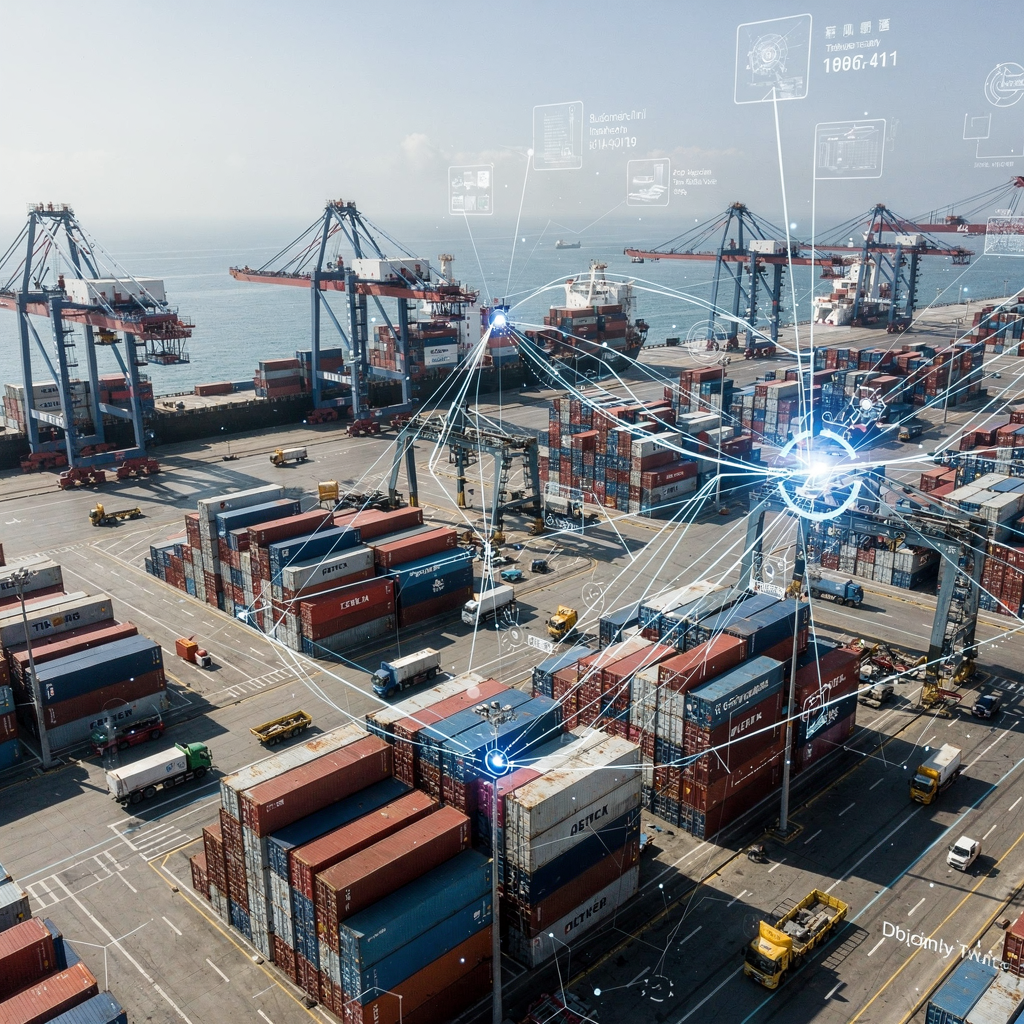
Real-time replanning means adjusting plans as events happen. It uses live feeds, models, and control logic. In container planning, a digital twin simulates equipment, stacks, and ship calls. The digital twin lets planners test options before they touch the quay. For example, a digital twin-driven proactive-reactive scheduling framework models quay, yard, and truck flows to support dynamic decisions Digital twin-driven proactive-reactive scheduling framework for port operations. AI models then predict congestion and suggest reroute options. They analyze sensor streams, gate logs, and yard telemetry. Then they score sequences by crane productivity, travel distance, and future risk. This approach reduces idle time and keeps moves per hour high.
AI estimates container stacking risk. It recommends allocation and sequencing to limit rehandles. Loadmaster.ai experiments show that real-time replanning can cut idle equipment time by 15–20% and boost throughput by 10–12% Real-time container terminal replanning strategies. These are measurable benefits. They arise when AI balances quay loading and yard reshuffles. Our company applies reinforcement learning agents to train policies inside a sandbox digital twin. The agents learn to optimize multiple KPIs, so the terminal gains both stability and higher throughput. The planner keeps final authority. The system proposes options that are explainable and auditable.
Predictive analytics and forecasting play key roles. AI-driven forecast models warn about yard congestion and burst arrivals. Tuning happens in simulation. Then deployment follows with guardrails and online learning. This lowers the chance of a bottleneck and reduces downtime. For more on capacity scenarios and test methods, read a practical guide on container terminal capacity planning using digital twins capacity planning with digital twins. In short, AI-powered real-time planning combines models, policies, and a digital twin to optimize container handling and keep terminal staff focused on exceptions.
automate port operations
Automation lifts routine tasks from people. It covers quay crane cycles, yard truck routing, and gate check-ins. Modern systems automate repetitive moves and keep the crane busy. Quay crane control ties into the job dispatcher and the yard strategist. The result is fewer delays and smoother handoffs. For example, automated decision support cuts replanning latency from hours to minutes and allows near-instant changes when a vessel is late or a crane needs maintenance Real-time container terminal replanning strategies.
Quay crane sequencing benefits directly. Shorter idle windows raise moves per hour. Sensors and IoT devices stream position and status. Then AI agents compute optimal sequencing for load and unload to protect productivity and reduce rehandles. Automation also reduces human error in gate checks and yard moves. It feeds a management system with real-time data. That system issues clear jobs to drivers and crane operators. It also flags exceptions for human intervention. As a result, the terminal sees higher equipment utilisation and less manual data entry.
Automation must respect operational constraints. That includes safety margins, labour rules, and vessel windows. A balanced design allows a mix of automated and manual control. It makes deployment less risky and speeds acceptance by terminal staff. For detailed tactics on reducing crane idle time and improving dispatching, explore specific techniques to reduce crane idle time with better planning reducing crane idle time. Ultimately, automate where it saves energy, cuts downtime, and scales predictable outcomes across shifts.
Drowning in a full terminal with replans, exceptions and last-minute changes?
Discover what AI-driven planning can do for your terminal
optimization of terminal and intermodal processes
Terminal optimization embeds algorithms into daily decision flows. Terminal Operating Systems use optimization engines to plan berths, allocate yard slots, and sequence cranes. The goal is to reduce rehandles, balance workload, and streamline operations across modes. A well-implemented tos coordinates ships, trucks, and rail. It smooths container flow and avoids peaks that strain the yard. Terminal operating systems thus connect berth choices to yard placements and truck appointments. This reduces unnecessary travel and lowers the number of containers that require reshuffle.
Intermodal coordination reduces handover friction. When rail windows align with vessel calls, the whole chain benefits. TOS-level optimization helps match ship unload rates to truck slots. It also informs freight transport partners about sequencing and expected waits. That coordination yields measurable benefits. Studies report up to an 8% reduction in turnaround variability, which improves schedule reliability and supports the supply chain The Role of Reliability in Container Shipping Networks.
Optimization uses predictive forecasts for truck arrivals and yard congestion. Machine learning models provide near-term forecasts and actionable recommendations. They prioritize moves to protect quay productivity, and they reassign stacks to avoid future conflicts. For terminals that need to test yard strategies before going live, digital twin-based strategy testing explains outcomes in realistic scenarios digital twin yard strategy testing. The result is fewer delays, smoother vessel calls, and improved berth allocation that supports consistent throughput.
erp integrate container shipping workflows
Enterprise Resource Planning integration ties commercial and operational flows. ERP connects bookings, invoices, and resource schedules with the terminal control plane. When you integrate ERP with a TOS, financial and operational teams share the same view. That reduces manual data entry and avoids billing errors. It also speeds reconciliation. For example, real-time tracking of container status updates billing events in the ERP. That saves time and cuts human error in contract settlements.
Connected systems enable seamless berth allocation and yard planning. When berth windows update, the ERP and TOS exchange calls and constraints. This keeps stakeholders informed and reduces the chance of a missed window. Integrated workflows also improve collaboration among shipping partners, truckers, and rail operators. They help sequence loading and unloading in ways that reduce rehandles and wasted moves. For terminals planning a TOS migration, careful integration planning preserves continuity and keeps operations steady handling TOS migration.
ERP integration also supports lifecycle tracking. It links cradle-to-gate events for containers and assets. This helps planners forecast revenues and plan maintenance. The system can flag exceptions for the planner or for terminal staff. It also produces auditable logs for governance and compliance. By integrating enterprise resource planning and terminal control, terminals gain a single source of truth. This leads to measurable benefits, fewer disputes, and better stakeholder visibility across systems.
Drowning in a full terminal with replans, exceptions and last-minute changes?
Discover what AI-driven planning can do for your terminal
port operations real-world performance metrics
Real-world cases show clear gains. Ports that implemented real-time replanning and AI saw 15–20% reductions in idle equipment time and roughly 10% gains in throughput Real-time container terminal replanning strategies and The Top 25 Terminal Operating Systems (TOS) in 2026. These outcomes reflect changes in quay sequencing, yard allocation, and truck appointment handling. They also reflect better crew and crane coordination. The numbers help justify AI investments and faster deployment cycles.
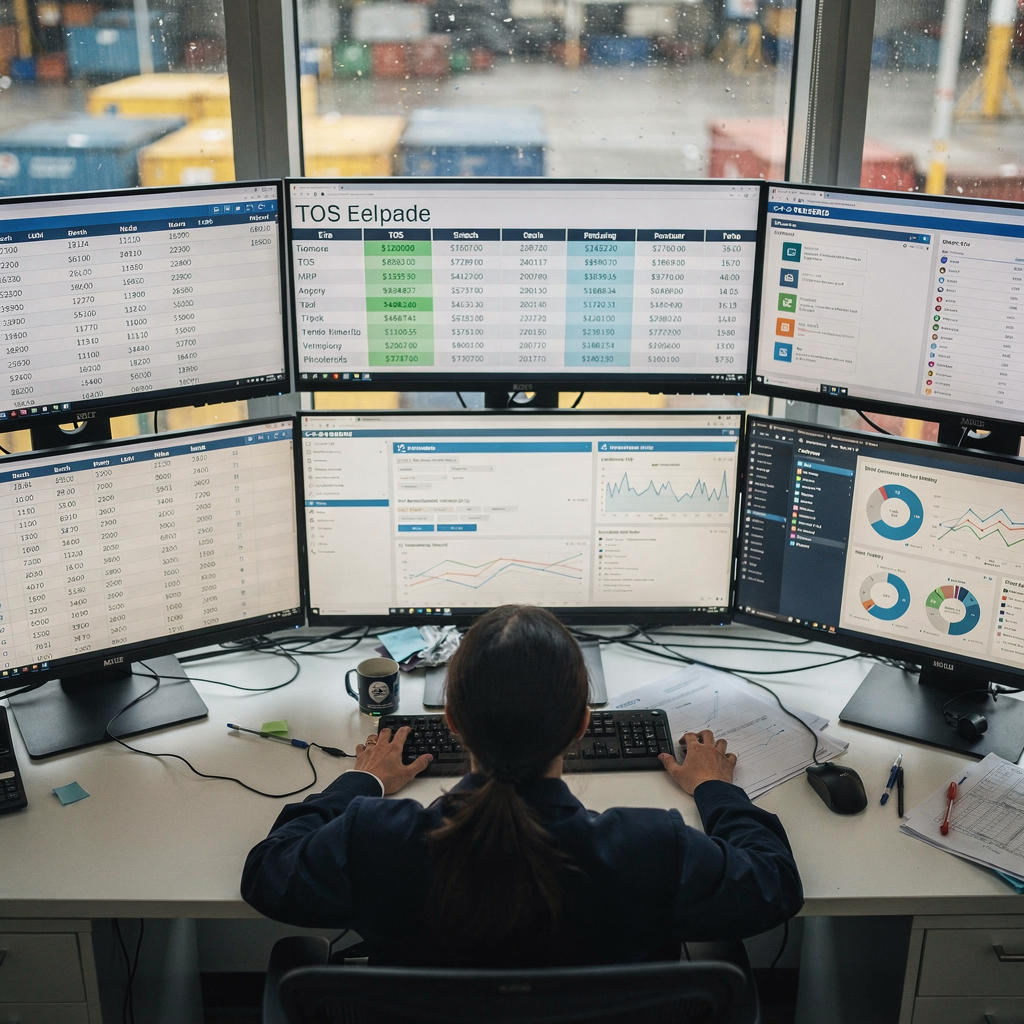
Key KPIs include equipment utilisation, container dwell time, berth productivity, and moves per hour. Watchgate and truck turn times also matter. For example, a focused program to reduce crane idle time improved gross crane rate benchmarks, which increased daily moves per hour and lowered average dwell. You can track measurable outcomes with dashboards that blend sensor telemetry and business metrics. Loadmaster.ai emphasises closed-loop optimization with agents like StowAI and StackAI to reduce rehandles and balance yard work.
Experts back these findings. Dr Maria Lopez notes that “Real-time replanning is no longer a luxury but a necessity for container ports aiming to maintain operational resilience and competitiveness” Dr Maria Lopez quote. Sumo Analytics explains that synchronized berth scheduling and yard operations yield precise resource allocation and agility Container Ports & Logistics Hubs – Sumo Analytics. These endorsements align with measurable benefits reported in practice. They also show how digital twin models and prediction engines deliver repeatable improvement across terminal shifts.
ai automation optimization and integration
Future AI algorithms will focus on predictive congestion management and energy-efficient scheduling. They will forecast demand spikes and recommend routing that cuts travel distance. For example, predictive models can forecast a gate surge and advise temporary reroute rules to protect quay flow. AI-powered policies will also trade off KPI priorities to meet short-term constraints. This allows a terminal to dynamically shift focus, for instance, from maximizing moves to reducing waste and carbon during low tide events.
Deeper automation will span the entire port ecosystem. Expanded digital twin coverage will include landside freight transport, rail yards, and hinterland forecasts. Then multi-agent AI will coordinate across these domains to optimize the whole lifecycle of a cargo move. For more on multi-agent approaches and scaling AI across operations, review work on multi-agent AI in port operations multi-agent AI in port operations. These systems will reduce human firefighting and give planners better foresight.
Sustainability features will become standard. Energy-aware sequencing curbs engine idling, and optimal routing cuts unnecessary travel. Together, they lower waste and carbon while improving operational efficiency. Expect tighter integration between AI models and existing systems. That includes TOS, ERP, and sensor networks. The aim is to streamline operations, so terminals can improve reliability, cut costs, and offer more seamless service to each shipper and stakeholder. Deployment will follow with careful guardrails and explainable decision logs to maintain trust and governance.
FAQ
What is real-time replanning for container terminals?
Real-time replanning updates operational plans as events unfold, such as vessel delays or equipment issues. It uses live feeds and models to reroute tasks and reassign equipment to maintain flow and reduce downtime.
How does a digital twin help container planning?
A digital twin simulates quay, yard, and gate interactions so teams can test policies before live changes. It lets AI agents learn in safe scenarios and then apply strategies that reduce rehandles and travel distance.
Can AI reduce crane idle time?
Yes. AI-driven sequencing and job allocation can lower crane idle windows and increase moves per hour. Studies report idle equipment reductions of 15–20% with proper replanning and dispatching.
How do ERP and TOS integration improve operations?
Connecting ERP to a TOS synchronises commercial and operational data, which reduces manual data entry and billing errors. This leads to more accurate berth allocation and better visibility for stakeholders.
What are common KPIs to measure terminal performance?
Typical KPIs include equipment utilisation, berth productivity, container dwell time, and moves per hour. Tracking these metrics shows measurable benefits from optimization and automation.
Is automation safe for terminal staff jobs?
Automation focuses on routine and repetitive tasks while leaving exceptions to staff. This reduces firefighting and enables staff to focus on higher-value planning and oversight.
How does AI handle yard congestion?
Predictive models forecast yard congestion and suggest sequencing or placement changes to prevent bottlenecks. The system can recommend stack moves that protect future vessel operations.
What role does sustainability play in AI deployment?
AI can schedule moves and routing with energy use in mind, cutting waste and carbon from unnecessary travel. This yields environmental gains and lower operating costs.
Do terminals need historical data to use AI?
Not always. Reinforcement learning can train agents in a simulated digital twin, so systems can start without extensive historical data. This cold-start ready approach speeds initial deployment.
How quickly can replanning switch from hours to minutes?
Automated decision support systems reduce replanning latency by automating data ingestion and policy evaluation. As a result, replanning that once took hours can now complete in minutes, enabling near-instant responses to disruption.
our products
 stowAI
 stackAI
 jobAI
jobAI
Innovates vessel planning. Faster rotation time of ships, increased flexibility towards shipping lines and customers.
Build the stack in the most efficient way. Increase moves per hour by reducing shifters and increase crane efficiency.
Get the most out of your equipment. Increase moves per hour by minimising waste and delays.
stowAI
Innovates vessel planning. Faster rotation time of ships, increased flexibility towards shipping lines and customers.
stackAI
Build the stack in the most efficient way. Increase moves per hour by reducing shifters and increase crane efficiency.
jobAI
Get the most out of your equipment. Increase moves per hour by minimising waste and delays.