
maritime operations: breaking down data for port efficiency
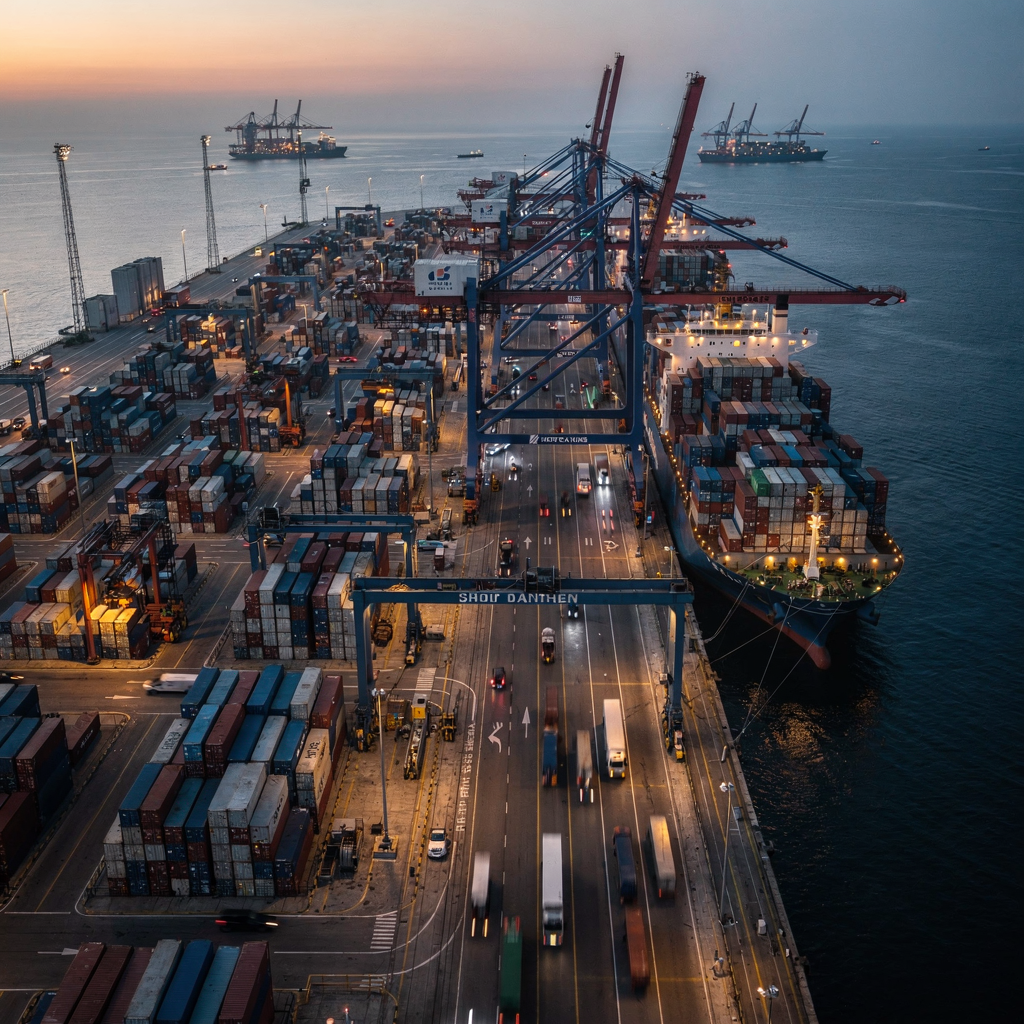
Deepsea MARITIME OPERATIONS in container terminals involve many moving parts and tight schedules. Ships arrive. Cranes lift. Trucks collect boxes. Planners coordinate all tasks. The complexity rises with vessel size, mixed cargo types, and intermodal handoffs. To manage that complexity, operators must BREAKING DOWN DATA across systems and teams. That step reduces surprises and improves throughput.
Types of data in a terminal include AIS signals, container sensors, and records from the terminal operating system. These TYPES OF DATA come from ship sensors, quay cranes, gate systems and truck trackers. They create LARGE AMOUNTS OF DATA and VAST AMOUNTS of information about timing, location, and performance. When these streams are mashed together, planners can see bottlenecks and then act to OPTIMIZE flow. For example, a SMART PORT implementation that used IoT and analytics reported a 20% reduction in vessel turnaround time Smart Port Development – ESCAP. That figure shows how targeted insights can change outcomes.
Breaking down data into usable sets matters for berth allocation, yard planning and vessel scheduling. Analysts fuse AIS data with sensor data from containers to better PREDICT arrival windows and yard demand. Data allows planners to balance quay moves and yard stacking. This reduces rehandles and decreases equipment wear. The ROLE OF BIG DATA in this work is to turn raw telemetry into schedule-ready guidance. As IBM puts it, “the systematic processing and analysis of large amounts of data to extract valuable insights” What is big data analytics? – IBM.
Terminals often suffer from DATA SILOS and legacy systems that block a single source of truth. To OVERCOME those barriers, teams must INTEGRATE feeds and set up STORAGE SOLUTIONS that are accessible and secure. Workflows that once relied on human memory now use effective data visualisations. This improves decision-making and cuts firefighting. Loadmaster.ai uses a digital twin approach that helps planners test policies before they affect live operations; see our work on container terminal capacity planning using digital twins for more context. The result is measurable operational efficiency and smoother vessel operations.
big data analytics in maritime: role of big data algorithms
Big data algorithms power forecasting and scheduling across terminals. First, architects choose between batch processing and REAL-TIME stream processing. Batch systems handle historical loads. Stream frameworks provide provide real-time responses when conditions change. Stream processing is essential when a berth window shifts or weather alters a voyage.
Machine learning and other AI methods forecast cargo volumes and surge demand. These models learn from past trends and from simulation runs. They can PREDICT peaks before they happen and suggest staffing and crane allocation changes. Analytics can be used to recommend crane sequences that reduce idle time and speed vessel work. One study showed that ports using advanced analytics cut vessel turnaround by roughly 15–25% Exploring the impact of Big Data analytics capability on port ….
Predictive MAINTENANCE is another clear application. ML models use performance data and sensor readings to PREDICT equipment failures and time maintenance slots. Predictive maintenance initiatives have reduced unplanned downtime by up to 30% in trials Advancements and Challenges in Real-time Big Data Analytics. That saves costs and protects safety at sea by ensuring cranes and yard gear perform reliably.
An ALGORITHM-driven crane scheduling pilot at a major Asian terminal used reinforcement learning to coordinate sequences across multiple cranes. The pilot reduced driving distance and balanced workloads. That approach is similar to how our multi-agent work coordinates stowage, stack placement and dispatch in real operations; see our piece on multi-agent AI in port operations. Closed-loop policies learn from simulated scenarios and then adapt online. The result is robust planning that does not rely only on past performance.
When teams INTEGRATE big data streams, they unlock actionable data insights that enhance decision-making. The POWER OF BIG DATA becomes visible not only in reports but in shorter vessel idle time, improved crane productivity, and a measurable reduction in inefficiency. Advanced data processing supports both batch trend analysis and the real-time analytics needed for live dispatch decisions.
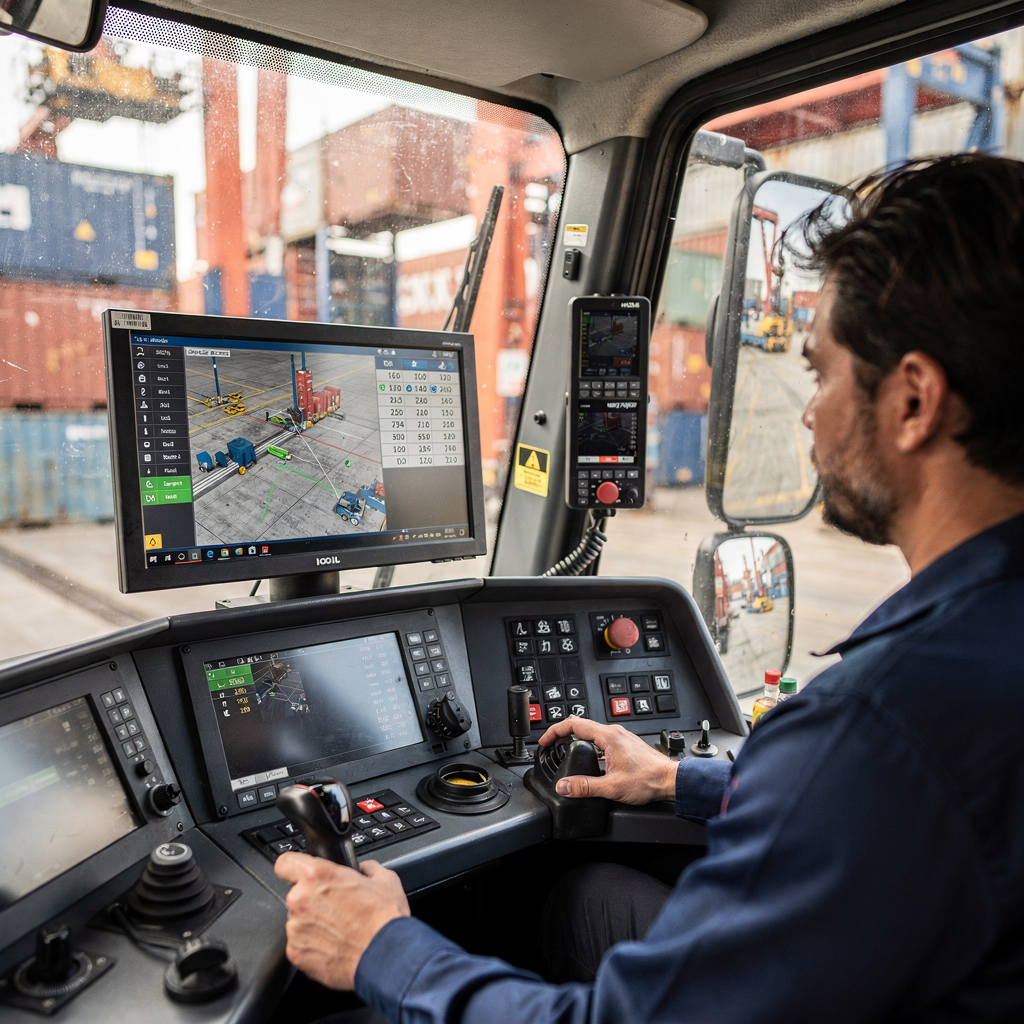
Drowning in a full terminal with replans, exceptions and last-minute changes?
Discover what AI-driven planning can do for your terminal
data analytics in maritime: use cases in the shipping industry
Use cases in terminals span tracking, forecasting and visibility. Container tracking ties an identifier to location reports and to performance data from ship sensors. Demand forecasting predicts future cargo flow weeks ahead. End-to-end visibility stitches data from vessel calls, gates and inland modes so teams can prepare for inbound volumes. These core USE CASES reduce congestion and speed handoffs across the network.
For the SHIPPING INDUSTRY, the benefits are clear. Reduced wait times lower fuel burn in harbour. Less congestion means lower costs per TEU. One study found cross-port data sharing boosted throughput by 15% when terminals and carriers shared ETA updates and yard status in a coordinated way Digital Technique-Enabled Container Logistics Supply Chain … – MDPI. That shows how COLLABORATION among stakeholders can multiply gains.
AI-powered dashboards and collaborative control towers give stakeholders a single view of vessel and yard states. These tools PROVIDE REAL-TIME visibility and guide gate appointments, docker assignments and chassis flows. Companies that INTEGRATE this level of orchestration report more stable schedules. For deep tactical improvements, teams must link TOS telemetry with higher-level planners. Our work on handling TOS migration projects explains how integrations can be achieved without operational disruption.
Tracking improves risk management and compliance. Historical and real-time insights help to monitor weather patterns and to AVOID ADVERSE routing or stacking choices. Predictive models can recommend when to consolidate or split loads, and when to shift gates to handle peaks. By combining MACHINE LEARNING forecasts with human oversight, shipping companies and MARITIME COMPANIES can reduce rehandles and lower operational costs.
Data in the maritime industry supports smarter decisions across the fleet, not just single terminals. Systems that share ETA, yard capacity, and crane status allow carriers to route sailings more efficiently. That creates a more resilient and responsive network for global shipping.
big data in the maritime: a data-driven route to sustainability
Big data in the maritime sector helps reach environmental targets. Terminals and carriers track fuel consumption and emissions at the vessel, vehicle and yard level. When analytics identify idle times and inefficient routing, operators can take action and reduce overall emissions. A European smart terminal reported a 15% fall in port-related emissions after implementing coordinated scheduling and truck appointment systems.
Route optimization and ROUTE PLANNING for harbour transits cut time at low speeds and reduce fuel use. Data-driven route optimization uses AIS feeds and weather patterns to suggest fuel-efficient speeds and departures. Those changes result in measurable FUEL CONSUMPTION savings and lower CO₂ outputs. Data analysis supports slow steaming when appropriate, and more aggressive speeds where time-to-market requires it.
Monitoring idling and engine performance on yard trucks and feeder vessels helps maintain a fuel-efficient operation. Sensor networks feed performance data to analytics models that recommend preventive actions. That approach also supports REGULATORY COMPLIANCE and reporting for authorities. Analytics in the maritime industry enables terminals to document reductions and to show progress against sustainability KPIs.
Data allows planners to adopt multi-objective control that balances throughput and emissions. AI-powered solutions can reweight goals during peaks so that quay productivity is protected while overall emissions remain low. Our reinforcement learning agents simulate trade-offs and suggest policies that protect future plans while reducing unnecessary travel; read about balancing stowage quality and crane productivity for examples. This combination of OPTIMIZE and sustainability thinking helps ports meet long-term goals.
Drowning in a full terminal with replans, exceptions and last-minute changes?
Discover what AI-driven planning can do for your terminal
data in the maritime industry: overcoming big data challenges
Adopting analytics faces real hurdles. DATA INTEGRATION issues arise when legacy systems, TOS software and vendor devices operate in isolation. Data silos block the flow of robust data and make it hard to produce consistent dashboards. Stakeholders must create pipelines that normalise formats and guard quality. Storage solutions must scale so that historical and real-time information remain accessible.
CYBERSECURITY and protecting sensitive data are non-negotiable. Terminals handle sensitive information about shipments and customers. Ensuring data security and GDPR compliance requires strong encryption, network segmentation, and governance. Loadmaster.ai builds audit trails and explainable policies to support regulatory requirements and to protect sensitive information in live runs.
Another challenge is the SKILL GAP. Many teams need training to interpret models and to design experiments. The industry can OVERCOME this with partnerships between academia and industry, plus on-the-job upskilling. Standardisation initiatives and data-sharing frameworks are emerging to help stakeholders exchange ETA updates and yard status. These frameworks reduce friction and enable collaborative optimisation across operators and carriers.
Big data challenges also include scale and latency. Real-time analytics requires pipelines that handle large volumes without delays. To address that, operators use hybrid cloud and edge solutions and design for scalability. For hands-on improvements, review methods like our work on cloud versus edge AI for container ports which compares architectures for live decision-making. By tackling integration, security, and skills, the sector can harness data insights and improve resilience.
future of maritime: algorithm trends and maritime data insights
The future of maritime will feature deeper models and lighter infrastructure. Deep learning methods will help pattern recognition for complex yard states. Optimisation heuristics will combine with reinforcement learning to search for multi-objective policies. For example, agents will aim to increase crane productivity while keeping driving distances low and balancing yard workload.
Predictive and prescriptive analytics will guide next-generation terminal design. Simulations and digital twins will allow planners to explore layouts and rules before any physical change. Digital twin testing can speed pilots and reduce risk. See our article on digital twin container port yard strategy testing for how simulated scenarios train agents without production risk.
Maritime data platforms will trend toward cloud-native stacks, with microservices and event-driven integration. Real-time analytics will push decisions to the edge where low latency matters. Autonomous equipment and fully automated terminals will rely on continuous data flows from ship-to-shore and from fleet sensors. The IMPLEMENTATION OF BIG DATA must include scalability and strong data governance so that systems remain dependable as they grow.
Looking ahead, autonomous vessels and fully automated terminals will be powered by robust data and AI that can PREDICT maintenance, improve route optimization, and enhance safety at sea. These advances will transform how logistics and voyage planning are coordinated. To read about algorithmic scheduling and minimizing crane idle time, explore our guide on reducing crane idle time with better planning. The FUTURE OF MARITIME is data-driven, and the right models will help terminals operate faster, cleaner and more predictably.
FAQ
What is the role of big data in container terminal operations?
Big data transforms raw telemetry and transactional records into actionable insights. By integrating AIS, TOS, and sensor streams, terminals can optimize berth allocation, yard stacking, and crane sequences.
How does predictive maintenance reduce downtime?
Predictive maintenance uses performance data and algorithms to forecast when equipment will fail. That allows teams to schedule repairs before failures occur, which lowers unplanned outages and keeps operations steady.
Can data analytics improve environmental performance?
Yes. Analytics can track fuel consumption and idle time, then recommend route planning and scheduling changes that lower emissions. Terminals that implement coordinated scheduling often report measurable emissions reductions.
What are common data integration challenges?
Legacy systems, incompatible formats and data silos are typical obstacles. Overcoming them requires pipelines that normalise inputs and clear governance that ensures data quality and access.
How do control towers use AI to improve throughput?
Control towers aggregate feeds and present unified dashboards. AI then suggests actions on stowage, sequencing and truck appointments so stakeholders act on the same facts.
What security measures protect terminal data?
Encryption, access controls and network segmentation are essential. Strong policies for protecting sensitive information and compliance with regulations like GDPR must be in place.
Do small terminals benefit from these technologies?
Yes. Scaled solutions and cloud services make advanced analytics accessible to smaller operators. Digital twins and simulation also offer low-risk pilots before full deployment.
How does reinforcement learning differ from traditional ML in terminals?
Reinforcement learning trains agents by simulating millions of decisions and rewards, aiming to discover superior policies. Traditional ML often learns patterns from historical data and can be limited to past performance.
What types of data do terminals collect?
Terminals collect AIS signals, sensor readings from cranes and trucks, TOS events, gate timestamps and weather patterns. These inputs feed forecasting and operational systems.
How can stakeholders start a data-driven transformation?
Begin with a clear problem, set measurable KPIs, and run simulations or pilots. Partner with experienced vendors and invest in training to build internal capabilities. For hands-on examples, explore resources on container terminal capacity planning and digital twins which show practical steps for scaling analytics.
our products
 stowAI
 stackAI
 jobAI
jobAI
Innovates vessel planning. Faster rotation time of ships, increased flexibility towards shipping lines and customers.
Build the stack in the most efficient way. Increase moves per hour by reducing shifters and increase crane efficiency.
Get the most out of your equipment. Increase moves per hour by minimising waste and delays.
stowAI
Innovates vessel planning. Faster rotation time of ships, increased flexibility towards shipping lines and customers.
stackAI
Build the stack in the most efficient way. Increase moves per hour by reducing shifters and increase crane efficiency.
jobAI
Get the most out of your equipment. Increase moves per hour by minimising waste and delays.