
terminal and container terminal operations: an overview of port productivity
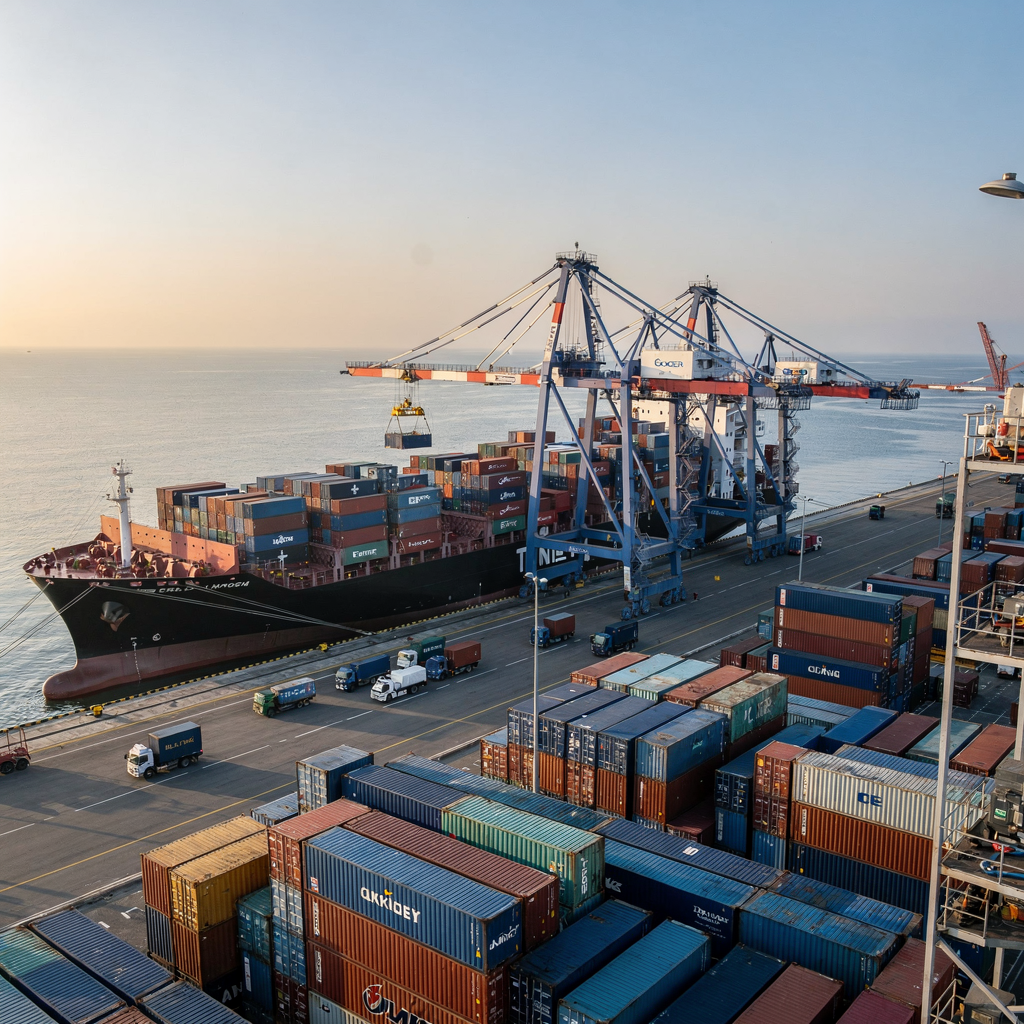
The terminal is the beating heart of a port. It receives container ships and moves boxes between sea and land. Therefore, smooth processes here determine vessel turnaround and supply chain rhythm. For container terminal operations the quay is the frontline. Quay crane work links ship stowage to yard storage. Consequently, inefficiency at the quay cascades through the whole facility.
Quay crane idle time counts as any period when a crane is not actively handling containers. Reducing that idle time improves terminal throughput and lowers cost. For example, a 10% cut in idle time can increase throughput by roughly 5-7% according to industry sources and studies Port Gantry Crane – Efficient & Smart Container Handling. Furthermore, coordinated operations between shore cranes and yard carriers have cut idle time by up to 15% in some terminals Straddle Carrier vs Gantry Crane: Which Fits Your Business?. These figures help set benchmarks for planners and terminal operator management.
Current benchmarks vary by region, ship mix, and equipment. High-performing terminals report container moves per hour that outpace peers by double digits when they optimize sequences, maintenance, and yard flow. Thus, a terminal operator can measure gains in moves per hour, reduced ship waiting time, and more efficient equipment allocation. In addition, terminal throughput becomes a clear KPI to track against peers and against the weekly planning horizon.
Transitioning a manual yard to an automated container terminal alters the balance of decisions. Automated container solutions add predictability, yet they still need smart scheduling and decision-making. Therefore, a mix of people and technology yields the best outcomes. Loadmaster.ai uses AI-driven agents to train policies in a digital twin so terminal teams can compare strategies before they commit. For further reading on automated yard strategy patterns see our work on stowage mask patterns AI-driven yard strategy optimization.
Overall, the terminal must harmonise quay, yard, gate, and planning systems. Then, planners can reduce bottlenecks and rehandles. Specifically, focusing on the number of quay cranes, manpower schedules, and maintenance planning influences daily performance. Also, good monitoring and fast decision-making make the difference between average and leading terminal productivity.
literature review of optimization techniques to reduce idle time
Research on reducing crane idle time spans simulation studies, heuristics, and rule-based systems. First, operations research methods and simulation models let teams test scenarios safely. For example, simulation frameworks model crane operations, yard moves, and equipment allocation to reveal bottlenecks simulation models for automated terminal operations. Second, heuristic methods deliver fast, practical schedules. Heuristic solutions often use greedy rules, dispatching priorities, or hybrid logic to sequence moves. Third, metaheuristic approaches like genetic algorithm and tabu search seek better global solutions when the search space grows.
Moreover, academic and industry studies compare different optimization techniques. Simulation plus heuristics often provides robust day-one performance. Meanwhile, genetic algorithm applications have shown promise in planning berth windows and reducing shifting delays. For instance, literature that addresses berth allocation and quay crane sequencing highlights measurable gains when allocation and quay crane constraints are solved together. A combined approach typically reduces ship waiting time and improves crane utilisation.
Case studies provide real-world evidence. Terminals that adopted coordinated scheduling between shore cranes and yard carriers reduced crane idle time by up to 15% Straddle Carrier vs Gantry Crane. Also, better vessel planner operations boosted moves per hour and reduced shifting How Vessel Planner Operations Boost GCR. These studies underline a pattern: integrating berth allocation, crane scheduling, and yard planning reduces rehandles and speeds up workflows.
Different optimization methods suit different contexts. Heuristic methods are quick and easy to implement. Optimization models offer higher-quality schedules but need more computational power and data. Genetic algorithm solutions balance exploration and exploitation. They work well for complex scheduling problems with many local optima. At the same time, reinforcement learning and simulation-trained policies can discover novel strategies without copying past mistakes. Loadmaster.ai’s multi-agent approach trains policies in a digital twin so planners can test trade-offs between quay productivity and yard quality; see our research on trade-offs trade-offs between crane productivity and yard quality.
Drowning in a full terminal with replans, exceptions and last-minute changes?
Discover what AI-driven planning can do for your terminal
optimization and genetic algorithm in berth allocation
The berth allocation problem determines when and where a ship docks. It affects crane operations directly. If the berth schedule is poor then cranes sit idle while containers wait. Thus, proper berth planning increases resource utilisation and lowers ship waiting time. Berth allocation must balance vessel size, draft, arrival uncertainty, and quay length. In practice, planners use a planning horizon that ranges from hours to a weekly planning horizon. The choice affects flexibility and responsiveness.
Genetic algorithm principles help solve berth allocation and quay crane conflicts. A genetic algorithm encodes candidate berth schedules as chromosomes. It then applies selection, crossover, and mutation to evolve better allocations. Over many generations this process reduces conflicts between adjacent vessel time windows and crane assignments. Therefore, it can produce compact time windows, fewer ship shifts, and lower crane repositioning. Studies and pilots using genetic algorithm techniques show reduced berth time and improved crane utilisation.
Furthermore, combining berth allocation with quay crane scheduling yields additional gains. Integrated berth allocation and quay solutions avoid local optimisation that harms overall terminal performance. The allocation and quay crane approach ensures that berth choices are consistent with crane availability and shore operations. In some pilot projects, integrated berth allocation and quay scheduling decreased cranes’ idle and cut total time at berth. One implementer reported a 12% increase in moves per hour after refining berth allocation and crane sequencing How Vessel Planner Operations Boost GCR.
Operationally, terminals must also consider crane maintenance windows and the number of quay cranes assigned to each vessel. Therefore, scheduling must embed maintenance planning as constraints. Loadmaster.ai’s approach can simulate maintenance scenarios and include them in the optimization process. For terminals exploring berth allocation methods, practical guidance and pilot testing are essential. Moreover, addressing the berth allocation and quay crane assignment together reduces conflicts and improves decision-making at the quay.
enhancing yard logistics through terminal management strategies
Yard logistics connect the quay to the gate. Therefore, improving yard flow reduces delays at the quay and in turn reduces idle time. Coordinating quay cranes with automated guided vehicles, straddle carriers, and yard trucks is central. In coordinated systems each move is timed so that carriers arrive when the quay is ready to hand off containers. Consequently, cranes remain productive and carriers avoid long waits.
Yard layout optimisation and sequencing also matter. Well-designed stacking zones reduce container relocation problem effects. Stacking patterns that group containers by destination, by size, or by service speed reduce unproductive moves. Meanwhile, smart yard planning reduces travel distance and balances workload across yard crane fleets. For example, yard crane scheduling and yard management methods allocate tasks to RTGs or yard cranes to flatten peaks and avoid bottlenecks.
Integrated terminal management systems join TOS, crane telemetry, and carrier routing to enable seamless operations. These systems integrate planning with execution so planners can monitor performance and change plans in real time. Terminals that deploy integrated systems often see fewer rehandles and a more even load on equipment. For deeper technical examples on AGV routing and scheduling see our discussion on AGV routing algorithms AGV routing and scheduling algorithms.
Practically, terminal teams need clear metrics to manage the yard. Key metrics include travel distance, number of rehandles, and average container stacking time. Also, the operational plan must protect the quay during peaks while maintaining gate throughput. Loadmaster.ai’s StackAI learns to place and reshuffle containers to balance workloads and keep lanes clear. As a result, terminals that embrace integrated yard planning reduce operational inefficiency and improve overall terminal efficiency.
Drowning in a full terminal with replans, exceptions and last-minute changes?
Discover what AI-driven planning can do for your terminal
improve container throughput with dynamic terminal operating scheduling
Dynamic terminal operating scheduling uses live data to adapt plans. Real-time data streams from the TOS, crane sensors, and AGVs feed optimisation models. Thus, schedules shift to reflect vessel delays, equipment faults, and gate surges. The result is fewer idling periods and more continuous crane operations. Indeed, terminals that implement adaptive scheduling report measurable throughput gains and faster decision-making.
Dynamic crane assignment and workload balancing allocate tasks based on current loads. Instead of static blocks, scheduling adapts to queue lengths and equipment health. Also, the use of a live digital twin lets teams run what-if scenarios before applying changes. For terminals interested in digital twin capacity planning and sandbox testing see our container-terminal capacity planning pages container-terminal capacity planning using digital twins and digital twin container port yard strategy testing.
Shift sequencing and decision support tools help terminal operators make trade-offs quickly. Decision-making benefits from dashboards that show packing, crane scheduling, and planned maintenance. Then, operators see the consequences of reallocating a quay crane or changing a carrier route. Studies show that these adaptive techniques can increase moves per hour and reduce unplanned downtime. For example, automation and smart crane systems with predictive maintenance reduce unexpected breakdowns and improve continuous operation Konecranes – Stay Productive.
In practice, terminals that combine real-time integration with policies trained in simulation gain resilience. Loadmaster.ai’s three agent architecture — StowAI, StackAI, JobAI — trains policies in simulation and then drives live decisions. Consequently, terminals move from firefighting to planned, proactive control. As a result, throughput rises, rehandles fall, and overall operational costs drop.
optimize idle time in container terminal optimization for productivity
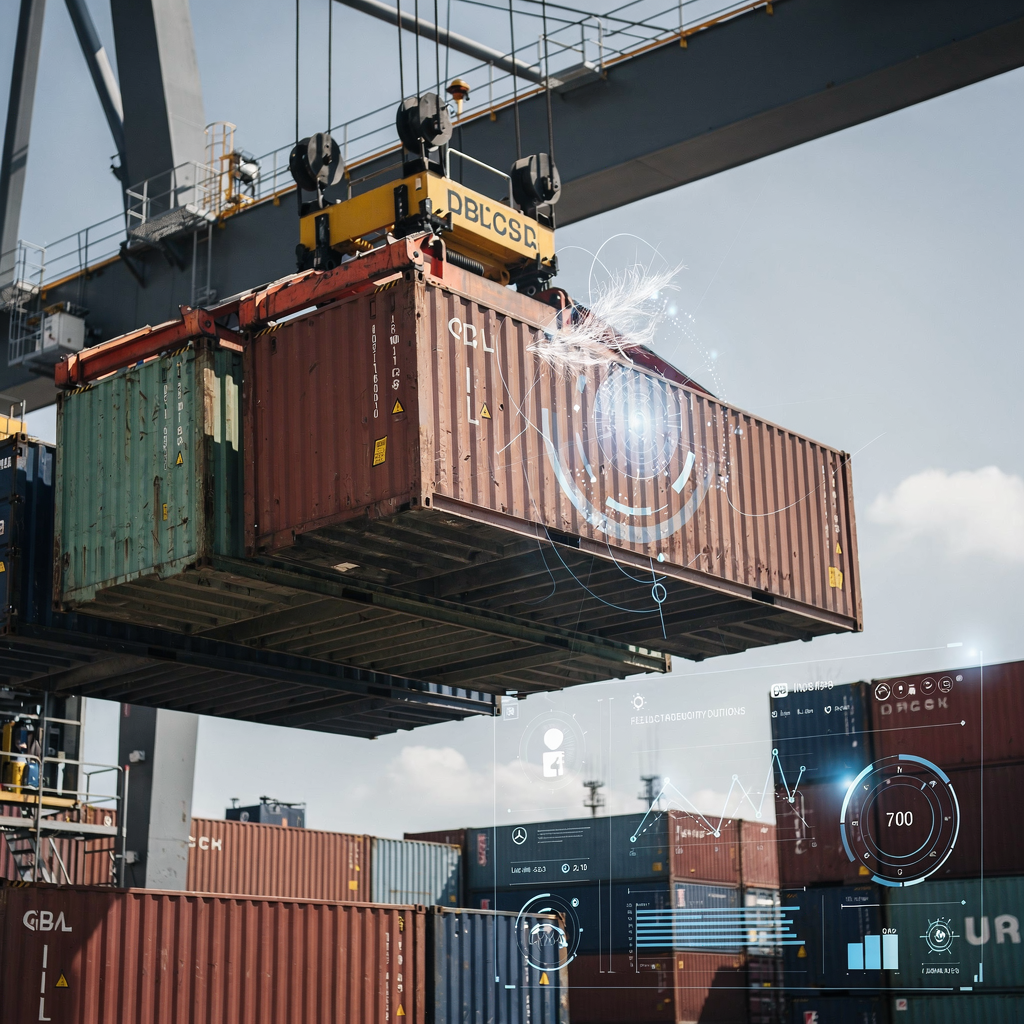
Monitoring is the first step to reduce cranes’ idle. Key metrics include crane utilisation, moves per hour, and average waiting time at quay. Dashboards that show these values let terminal operator teams react quickly. For instance, a simple alert for under-utilised cranes triggers reassignment or maintenance checks. Also, tracking container relocation problem metrics highlights where stacking patterns cause extra moves.
Practical steps to implement container terminal optimization initiatives begin with small pilots. Start with a pilot block, test an optimization model, and measure total time and cost changes. Then, expand successful tactics across more berths. Use an optimization process that respects operational constraints and safety rules. For terminals running automated container operations the test environment should include a digital twin and live telemetry integration.
Expected productivity gains and ROI are significant. Reducing idle time by even 10% often increases terminal throughput by 5-7% and cuts vessel delays. Coordinated operations may reduce cranes’ idle by up to 15%, while automated scheduling and predictive maintenance can cut unplanned downtime by up to 20% Konecranes – Stay Productive. Therefore, the business case for optimization models and investment in optimization methods is strong.
Finally, successful projects balance short-term wins with long-term change. Operational change requires training, governance, and TOS integration. Loadmaster.ai helps terminals implement closed-loop optimisation with agents trained in simulation so that planners keep control while the AI improves resource utilization. In practice this approach reduces rehandles, shortens driving distances, and stabilises shift-to-shift performance. As a result, terminals become more resilient and more cost-effective. In short, smart planning and targeted technology investment reduces idle and raises terminal productivity.
FAQ
What is quay crane idle time and why does it matter?
Quay crane idle time refers to periods when a crane is not actively handling containers. It matters because idle cranes lower moves per hour, increase ship waiting time, and raise operational costs for the terminal.
How much throughput can terminals gain by reducing idle time?
Industry data suggest that a 10% reduction in idle time can increase throughput by about 5-7% Port Gantry Crane – Efficient & Smart Container Handling. Actual gains depend on vessel mix, yard layout, and equipment mix.
Which optimization techniques are most effective to reduce idle time?
Effective techniques include simulation, heuristics, and metaheuristics such as genetic algorithm. Combining simulation with adaptive policies trained in a digital twin tends to produce robust improvement in live operations.
What is berth allocation and how does it affect crane utilisation?
Berth allocation decides where and when ships dock at the quay. If berth windows are poorly scheduled then cranes may be underused or conflict with adjacent vessels. Better berth allocation usually improves crane scheduling and increases utilisation.
Can genetic algorithm solve berth allocation problems?
Yes. A genetic algorithm can evolve berth schedules that reduce conflicts and align crane availability. It has been used successfully in pilots to shrink berth time and improve crane productivity.
How do yard strategies influence quay performance?
Yard strategies control stacking, reshuffles, and carrier routing. Better yard planning reduces rehandles and travel distance. Consequently, quay cranes see more continuous handoffs and less downtime.
What role does real-time scheduling play in terminal productivity?
Real-time scheduling adapts assignments based on live data from TOS and equipment. It helps rebalance work among cranes, respond to delays, and avoid long waits. Adaptive scheduling tools therefore raise moves per hour and resilience.
Are automation and AI safe choices for terminals?
When implemented with constraints and governance, automation and AI improve performance while preserving safety. Training policies in a sandbox digital twin and deploying with guardrails reduces operational risk.
How quickly can a terminal see ROI from optimization projects?
Many terminals observe measurable gains within months after a pilot. Benefits include reduced rehandles, lower driving distances, and higher crane utilisation, which together accelerate return on investment.
Where can I learn more about integrating AI with TOS and yard systems?
For practical implementation guidance, review resources on TOS migration, AGV scheduling, and digital twin integration. Useful pages include our work on AGV routing AGV routing and scheduling algorithms, yard truck routing yard truck routing optimization, and governance-ready AI governance-ready AI for deepsea container ports.
our products
 stowAI
 stackAI
 jobAI
jobAI
Innovates vessel planning. Faster rotation time of ships, increased flexibility towards shipping lines and customers.
Build the stack in the most efficient way. Increase moves per hour by reducing shifters and increase crane efficiency.
Get the most out of your equipment. Increase moves per hour by minimising waste and delays.
stowAI
Innovates vessel planning. Faster rotation time of ships, increased flexibility towards shipping lines and customers.
stackAI
Build the stack in the most efficient way. Increase moves per hour by reducing shifters and increase crane efficiency.
jobAI
Get the most out of your equipment. Increase moves per hour by minimising waste and delays.