
digital twin is a virtual: virtual representation of the physical container terminal
A digital twin creates a virtual replica of a physical terminal. First, it maps assets and processes. Then, it links sensors and systems to mirror activity. In plain terms, the twin is a virtual replica of a real facility and it reflects asset states, equipment positions, and flows. Importantly, the twin supports decision-making by using real-time data to show what happens now and what may happen next. The core components include data integration, sensor networks, and a simulation engine that runs scenarios. This framework helps planners and terminal operators see throughput limits before changes occur.
Data integration connects Terminal Operating System feeds, equipment telemetry, and weather inputs. Next, sensor networks on quay cranes, yard vehicles, and gates stream status updates. Then, the simulation engine runs those inputs against rules and optimization goals. This architecture reduces uncertainty. For example, planners can test a new berth schedule in the virtual environment. As a result, they can optimize berth allocation without disrupting live operations. This method improves operational efficiency and reduces needless risk.
Discover how digital twin technology lets teams test layout changes, crane assignments, and yard stacks with confidence. The model uses historical data and live telemetry. Also, analytics layer syntheses patterns and flags emerging congestion. When planners ask “what if,” the twin answers with metrics. Consequently, terminals can balance quay productivity and yard quality in real time. For teams that need a cold-start solution, simulation-based policy training works well. Loadmaster.ai, for example, spins up a digital twin and uses reinforcement learning to train control policies against explainable KPIs. This approach avoids dependence on past days alone and helps planners find better-performing strategies quickly.
Finally, the virtual representation of the physical terminal supports predictive maintenance and performance tracking. It enables planners to spot weak links. It also helps to prioritize capital investments by showing where added capacity yields the best returns. In short, a digital twin gives transparency and control. Therefore, terminal teams can plan capacity with more confidence and less disruption.
port operations and logistics: capacity planning hurdles in global trade
Ports face rising container volumes and tighter schedules. First, global trade growth strains existing infrastructure. Next, vessel sizes and alliances add complexity to berth planning. As a result, terminals must allocate slots dynamically. Traditional planning relies on siloed data, manual scheduling, and fixed rules. That causes frequent misalignments between arrival times, berth availability, and yard capacity. For many terminals, these constraints reduce throughput and raise costs.
Siloed systems hamper fast decisions. For example, yard data may live in one system while berth planning sits in another. Consequently, operators cannot see the whole picture. Manual scheduling adds delay. It also increases the risk of rehandles and long driving distances. Moreover, gates and hinterland connections add variability. Trucks and rail arrivals vary by hour. So, planners need adaptive allocation that keeps equipment busy and reduces vessel waiting.
Ports struggle to match berth slots with yard utilization. Berth scheduling must account for quay cranes, tug availability, and customs windows. Yard planning must adapt to container storage constraints and stacking rules. Also, terminal operating system integration often falls short. A TOS may not stream equipment telemetry fast enough for real-time decisions. That is why many terminals still firefight rather than plan. Planners and terminal operators face trade-offs between crane productivity and yard quality. A smart digital strategy must balance those trade-offs, and fast. For more on trade-offs and strategies, see this discussion on balancing crane productivity and yard quality from Loadmaster.ai (balancing stowage and crane productivity).
Finally, congestion extends vessel waiting times and raises costs. Digital twin models help by integrating live feeds and offering a consolidated view. In practice, terminals that adopt integrated digital solutions see smoother planning, fewer surprises, and better use of space. Therefore, the industry is moving toward connected systems that link berth planning, yard planning, and gate operations into one continuous flow.
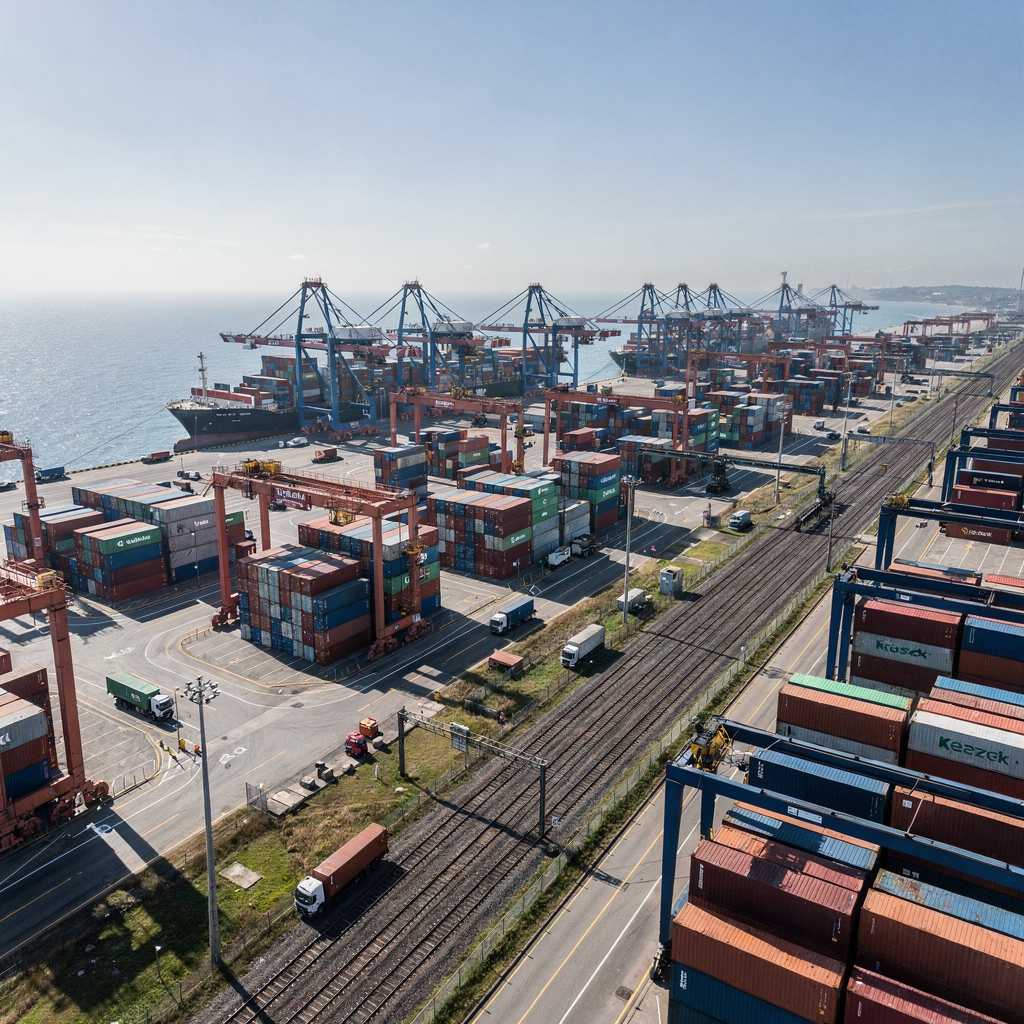
Drowning in a full terminal with replans, exceptions and last-minute changes?
Discover what AI-driven planning can do for your terminal
using digital twins for predictive simulation to optimize terminal operations
Using digital twins, terminals can simulate many futures. First, they ingest vessel schedules, gate windows, and yard states. Then, the virtual model runs what-if cases. These analyses forecast peak demand and vessel arrival patterns. Planners can test different berth schedules. Also, they can compare crane allocations and yard layouts. Because the model uses both historical data and live telemetry, it produces realistic scenarios quickly.
Simulation helps identify bottlenecks early. For instance, a model can reveal that quay cranes will idle because yard reshuffles will block containers. Likewise, simulation can show where truck queueing will overwhelm a gate. By running multiple scenarios, teams uncover weak links and time windows that matter most. Consequently, planners can reassign resources before the problem appears in the physical terminal. This predictive approach reduces idle time and increases moves per hour.
Digital twin models also support testing of capacity expansion plans. Rather than invest blindly, terminals can emulate added yard blocks, new crane types, or extra gate lanes. Then, planners measure the marginal throughput gain. For quantitative evidence, research shows digital twin models can improve operational efficiency by up to 15–20% through optimized equipment scheduling and layout planning (study on resilience and sustainability in port facilities). In addition, combining simulation with reinforcement learning creates closed-loop improvement. Loadmaster.ai uses that technique to train agents in a sandbox digital twin, which produces policies that reduce rehandles and improve balance across quay and yard.
Moreover, predictive simulation supports predictive maintenance and alerting. By simulating equipment wear and failure patterns, the model helps planners set maintenance windows with minimal disruption. This approach keeps quay cranes and yard machines running longer and reduces emergency downtime. Finally, simulation-driven planning improves decision speed. Operators move from reactive firefighting to proactive scheduling. The result is a measurable uplift in throughput and utilization, and fewer costly surprises.
AI and automation: connectivity, crane control and optimised container movement for higher throughput
AI and automation combine to speed container movement. First, AI algorithms analyze flows and suggest sequences for quay cranes. Next, automation systems execute moves and track progress. Together, these technologies reduce handoffs and errors. AI also supports automated yard planning and gate operations. That cuts processing times and keeps equipment working.
Using AI, systems can optimize crane sequencing to reduce idle time. For example, reinforcement learning agents can learn policies that balance crane productivity and yard quality. Loadmaster.ai trains three agents—StowAI, StackAI, and JobAI—against explainable KPIs in a digital twin. The agents learn by simulating millions of decisions. Then, they deploy with guardrails to support real operations. This method reduces dependence on historical data and preserves performance when conditions change.
IoT connectivity powers faster control loops. Sensors on cranes and yard vehicles stream telemetry. As a result, AI models get current context. That lets them plan moves with minimal latency. Smart crane control, coupled with improved connectivity, accelerates loading and unloading. For terminal operators, this leads to higher throughput per berth and better utilization of assets. Research shows digital twin approaches paired with reinforcement learning can reduce energy consumption by up to 25% during operations, which further shortens idle times and raises effective throughput (digital twin energy optimization study).
Finally, automation supports safety and consistency. Digital twin-driven safety systems report a 30% decrease in incidents at terminals that adopt them (safety management and decision support). That reduction keeps capacity steady. It also lowers downtime tied to investigations and repairs. Overall, AI, IoT, and automation convert data into coordinated action across quay, yard, and gate. This integration raises productivity and secures performance under pressure.
Drowning in a full terminal with replans, exceptions and last-minute changes?
Discover what AI-driven planning can do for your terminal
smart ports: streamline operations, processing times and cost savings
Smart ports use digital twin insights to streamline operations. First, they test changes in the virtual environment. Next, they apply winning strategies live. By doing so, terminals shrink processing times. They also cut rehandles and unnecessary moves. Research supports strong gains. For example, terminals that use digital twin models report 15–20% efficiency improvements in scheduling and layout planning (resilience and sustainability assessment). In addition, digital twin-based methods that include reinforcement learning achieve up to 25% energy reduction, which lowers operating costs (energy optimization paper).
Smart ports also benefit from fewer incidents. Digital twin-driven safety management has helped terminals cut incidents by about 30%, which reduces stoppages and keeps throughput stable (safety study). Consequently, terminals achieve better berth planning, faster gate processing, and smoother hinterland handoffs. These outcomes translate into cost savings. For example, reduced dwell times lower storage fees and handling labor hours. In many cases, improved utilization defers the need for heavy capital expansion.
To quantify cost savings, consider shorter dwell times. If a terminal lowers average dwell by 12 hours, it can handle more calls with the same yard footprint. That increases throughput and reduces per-container handling cost. Also, fewer rehandles and balanced yard workloads cut fuel usage and machine wear. These reductions produce both direct savings and indirect benefits for the supply chain. For practical guidance on implementing simulation models, see Loadmaster.ai’s overview of simulation approaches for terminal automation (simulation models for automated terminal operations).
Finally, smart ports that tie digital twin insights to their terminal operating system and equipment control create continuous improvement loops. They measure outcomes, refine policies, and update models. Over time, these ports become more resilient and energy efficient. They also provide more predictable service to shipping lines and hinterland partners. Therefore, smart ports offer both operational and commercial advantages.
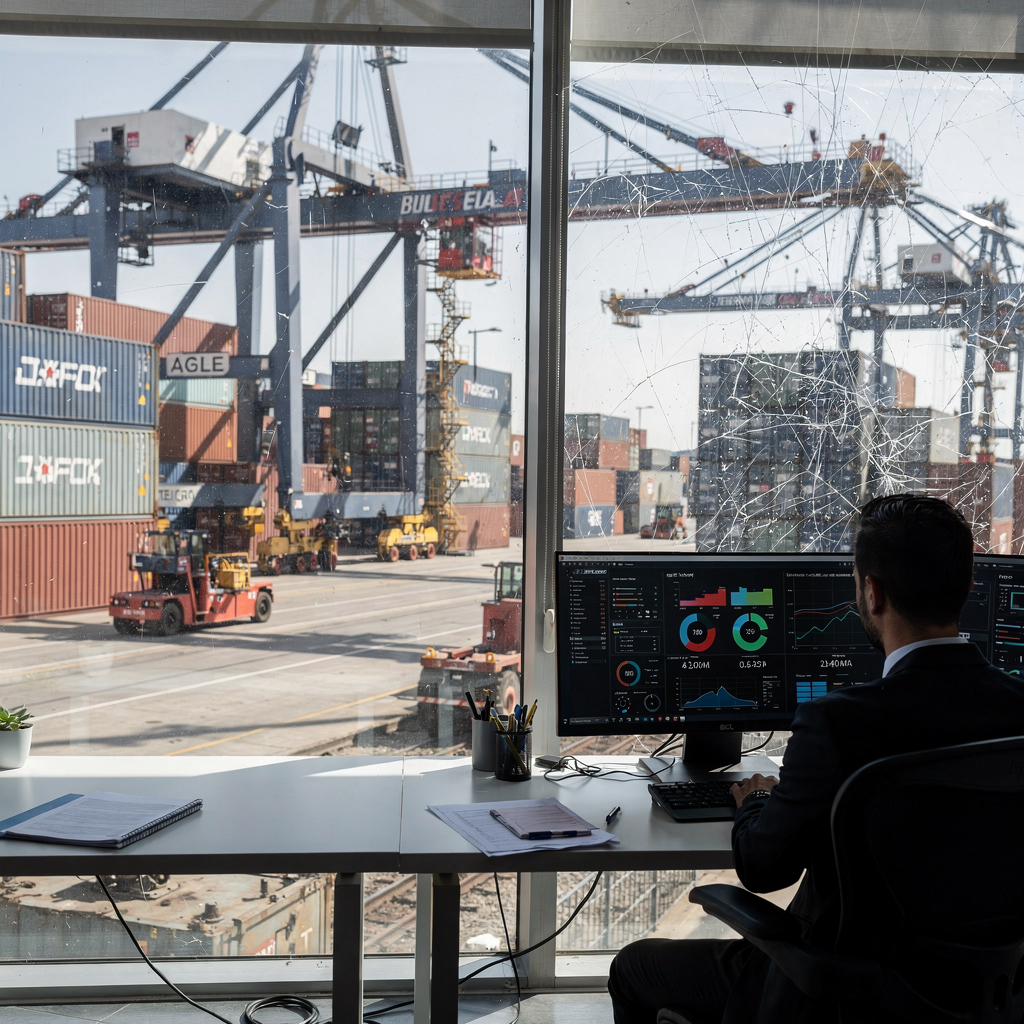
real-world use cases: forecast results and improve efficiency in capacity planning
Real-world use cases show how digital twin models lift performance. For example, large terminals use twin-based simulation to improve berth scheduling and yard planning. Port of Rotterdam and major operators have piloted digital twins to test infrastructure changes. Those pilots validated forecast accuracy for vessel arrivals and yard utilisation. In practice, operators can compare multiple allocation strategies before selecting one. This reduces risk and improves expected returns on investment.
Studies show that adopting digital twin models improves performance metrics as predicted. For instance, a recent review states that “digital twins provide a basis for higher transparency, control, and data-driven decision-making in seaports and terminal facilities” (research on digital twins in seaports). These tools boost forecast reliability for vessel calls and yard demand. As a result, terminals can pre-assign blocks, shield critical stacks, and optimize crane sequences. That combination increases throughput and reduces wasted moves.
Loadmaster.ai’s pilots illustrate practical gains. The reinforcement learning agents train inside a digital twin, then run policies in production with explainable rules. The agents target multiple KPIs simultaneously, such as crane productivity and yard congestion. This yields consistent improvements across shifts and different vessel mixes. The approach also solves the cold-start problem; simulations generate experience so AI agents do not need large historical datasets. For readers interested in automation workflows, see Loadmaster.ai’s work on moving from rule-based planning to AI optimization in port operations (rule-based to AI optimization).
Lessons learned include the need for clean integration and governance. Terminals must connect TOS, crane telemetry, and gate systems. They must also define KPI weights and safety constraints. Finally, phased rollouts and human-in-the-loop validation reduce operational risk. For further technical reference on low-latency data processing and AI architecture, see this resource on data processing for terminal AI solutions (low-latency data processing). Together, these steps let ports convert digital twin forecasts into sustained capacity gains and better service.
FAQ
What is a digital twin for a container terminal?
A digital twin is a virtual model that reflects a physical terminal’s assets and processes. It uses real-time data and simulation to mirror operations and support planning.
How does a digital twin improve capacity planning?
It enables planners to simulate berth schedules, yard layouts, and equipment usage before making changes. Consequently, terminals can test scenarios and avoid disruptions.
Can digital twins integrate with my TOS?
Yes. Digital twins commonly integrate with a terminal operating system via APIs and telemetry. This connection ensures simulations use current data and keep plans executable.
Do digital twins require historical data to work?
Not always. Simulation and reinforcement learning approaches can generate experience in a sandbox twin, reducing reliance on historical datasets. That helps cold-start implementations.
What role does AI play in digital twin solutions?
AI analyzes patterns and learns control policies that optimize moves across quay, yard, and gate. AI enables automated sequencing, resource allocation, and continuous policy improvement.
How do digital twins affect energy consumption?
They help reduce unnecessary moves and idle times. Research shows certain twin-driven approaches can cut energy use by about 25%, which also supports throughput goals (energy optimization study).
Are digital twins safe for live operations?
Yes, when teams use sandbox testing, guardrails, and human-in-the-loop validation. Proven implementations, coupled with explainable KPIs, reduce operational risk during rollout.
What savings can ports expect from digital twins?
Terminals report efficiency improvements of 15–20% and fewer incidents. Those gains translate into lower handling costs, reduced dwell times, and deferred capital spend (efficiency study).
How do digital twins help with berth planning?
They simulate vessel arrivals, crane assignments, and expected service times. This lets planners optimize berth allocation and reduce vessel waiting, which improves overall port performance.
Where can I learn more about implementing simulation models for terminals?
Technical guides and vendor case studies provide implementation paths. For example, Loadmaster.ai offers resources on simulation models and AI-driven yard strategy that explain step-by-step approaches (simulation models for automated terminal operations, AI-driven yard strategy).
our products
 stowAI
 stackAI
 jobAI
jobAI
Innovates vessel planning. Faster rotation time of ships, increased flexibility towards shipping lines and customers.
Build the stack in the most efficient way. Increase moves per hour by reducing shifters and increase crane efficiency.
Get the most out of your equipment. Increase moves per hour by minimising waste and delays.
stowAI
Innovates vessel planning. Faster rotation time of ships, increased flexibility towards shipping lines and customers.
stackAI
Build the stack in the most efficient way. Increase moves per hour by reducing shifters and increase crane efficiency.
jobAI
Get the most out of your equipment. Increase moves per hour by minimising waste and delays.