
literature review of port emission and carbon emission in container terminal routing
This literature review synthesizes how emission sources link to inland routing and terminal operations. First, researchers have quantified emission hotspots at gateways. Second, they show patterns across road, rail and maritime legs. Third, models embed operational detail to calculate carbon emission consequences. A key source notes the role of terminal software in cutting emission from handling and transport “improving the functionalities of TOSs can significantly enhance operational efficiency, leading to reduced emissions”. Also, the IPCC highlights that improvements at terminals can lower greenhouse gas emissions and support broader climate goals Chapter 10: Transport. Thus, the literature review finds consistent support for targeting inland points of control to cut emission.
Road moves dominate many supply chains. Therefore road-related emission often rise in congested urban links. Rail moves tend to have lower carbon emission per ton-kilometre. Likewise, barges on an inland waterway can show considerable savings when integrated with terminals optimal inland waterway design. In measured comparisons, inland barge segments can cut CO2 emissions by as much as 30% versus trucks on the same corridor. So, mode choice drives emission differences. Meanwhile, vessel size and route choice influence emission from the sea leg. A long, slow route with a very large container ship increases fuel burn and associated emission, yet better inland flow management can mitigate some effects Review of Maritime Transport 2024.
Models in the literature range from simple emission factors to integrated emission calculation modules. Some Terminal Operating Systems now include carbon emission outputs tied to moves and idling. For example, TOS-linked models estimate co2 emissions for truck dwell, crane idling and container handling. These models feed routing and scheduling algorithms to reduce idling and repositioning. However, gaps remain. Data standardisation is often missing. Also, emission factors vary by geography and year. For instance, 2021 studies used different fuel factors than 2022 updates. Therefore careful calibration matters. In practice, accurate emission accounting supports emission reduction planning, carbon emission quota decisions, and reporting under trading systems. Finally, this literature review shows that targeting inland terminals yields practical and measurable emission benefits when combined with clear metrics and decision tools.
container terminal operations and routing optimisation for terminal efficiency
Terminal operations hold direct leverage over emission from inland distribution. First, scheduling and yard management cut handling delays. Second, they reduce unnecessary moves and so reduce fuel use. Third, improved sequencing lowers crane idle time and truck wait. A Terminal Operating System that supports dynamic scheduling will reduce emission linked to rehandles and idle equipment source on TOS benefits. Also, modern systems can surface co2 emissions per move. Thus planners can trade throughput for lower emission targets in real time.
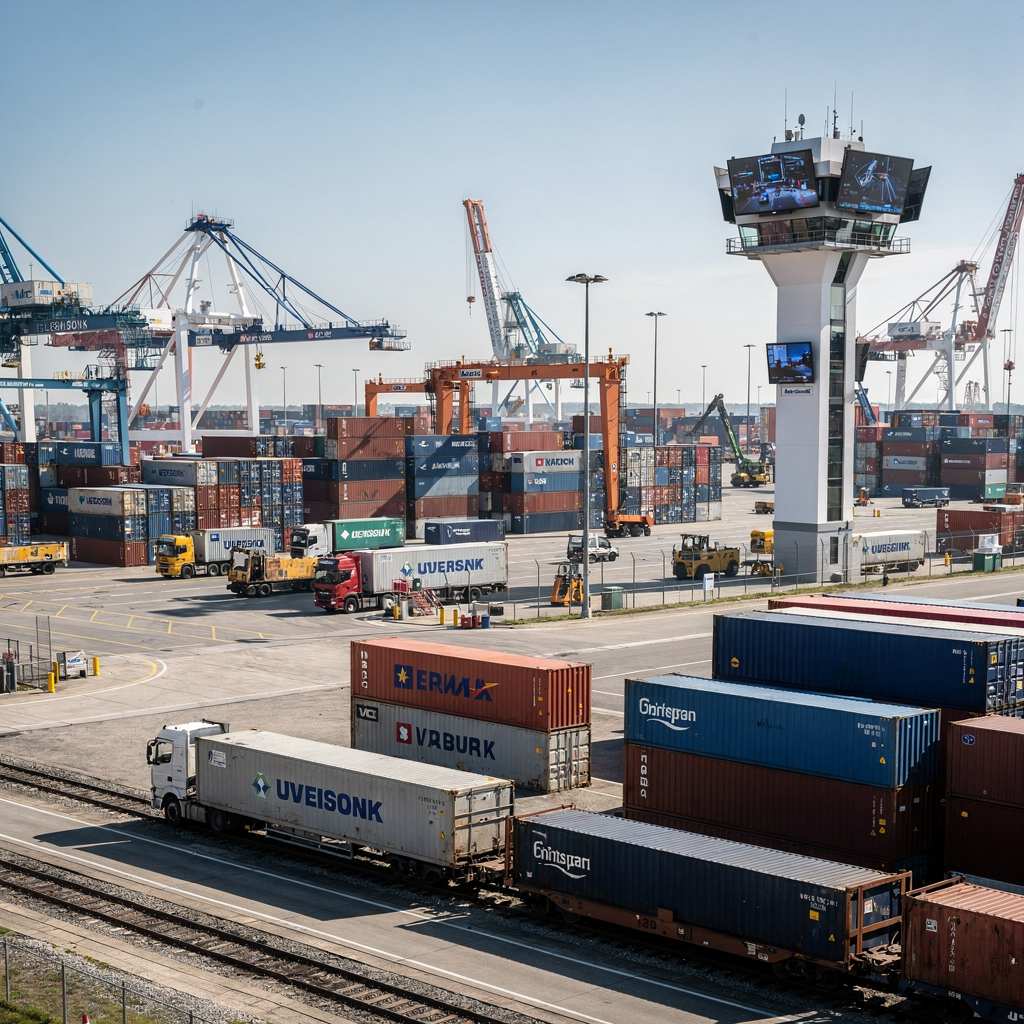
Optimization of empty moves matters a great deal. For instance, empty container repositioning accounts for non-trivial emission in many networks. So minimising empty container travel reduces both operational cost and emission. Planners use heuristics, and then more advanced AI-based approaches. At Loadmaster.ai we apply RL agents to balance quay productivity with yard congestion and route distances. Our agents learn to place containers to cut travel, to reduce rehandles, and to lower fuel burn across a shift. Also, simulation-first training enables cold-start deployment without relying on historical data.
Real-time tracking and analytics enhance routing and scheduling. GPS and telemetry give current location and status. Then, the system recommends short routes for straddles and trucks. Consequently driving distance drops. Consequently, fuel and emission fall. Route optimization reduces idle time at gates. It also aligns vessel discharge with inland truck and rail availability. For terminals that adopt digital twin approaches, the gains are consistent and measurable. See our explanation of simulation-first AI for inland container terminal optimization for more context on digital twin training and deployment simulation-first AI for inland container terminal optimization. In sum, operational routing optimization is a practical path to emission reduction and better throughput.
Drowning in a full terminal with replans, exceptions and last-minute changes?
Discover what AI-driven planning can do for your terminal
maritime freight modes and reduce emissions through intermodal routing
Combining maritime and inland modes delivers strong emission gains. First, intermodal routing shifts cargo away from high-emission truck legs. Second, it uses rail and inland barges that are often more energy efficient. For example, studies show an inland waterway leg can reduce CO2 emissions by up to 30% compared with truck-only routing inland waterway savings. Also, the Chamber of Marine Commerce documents that diversified port entry and routing cuts total transport time and therefore total emission CMC Container Study. Thus intermodal design directly supports emission reduction.
Mode shifts require planning and incentives. Rail corridors must offer reliable frequency. Barges need terminal interfaces that handle the transfer without long waits. Consequently terminal design and routing choices shape modal share. The UNCTAD review notes that inefficient terminal operations and longer sea routes increase fuel usage, but better inland routing can offset these trends UNCTAD Review 2024. Also, larger container ship calls change inland demand patterns. So inland planning must adapt to vessel schedules. Then, intermodal flow smoothing reduces peaks that create truck queues and higher emission.
Practical strategies include scheduled barge feeders, timed rail services, and co-loading hubs near inland distribution centres. Also, gate appointment systems cut truck dwelling. In addition, digital data exchange between shipping lines, terminals and inland carriers reduces mismatch and empty return trips. These changes lower fuel consumption and associated co2 emissions. For operators seeking actionable steps, our work on optimizing equipment moves to save fuel in terminal operations has specific methods to lower driving distances and fuel use optimizing equipment moves to save fuel. Overall, intermodal routing is a cornerstone of a sustainable freight network and supports measurable emission reduction across the transport chain.
sustainable practices and environmental impact: case study on port container systems
This chapter examines a European inland-port case study that illustrates sustainable measures and measurable environmental impact. First, the study focused on terminal layout, vessel call patterns and hinterland links. Second, it quantified fuel use, transit times and co2 emissions before and after changes. The case study found that terminal redesign and improved routing reduced unnecessary truck trips and cut emission. Specifically, integration of barge feeders and rail spurs shifted freight from trucks, which reduced carbon emission and local pollutants.
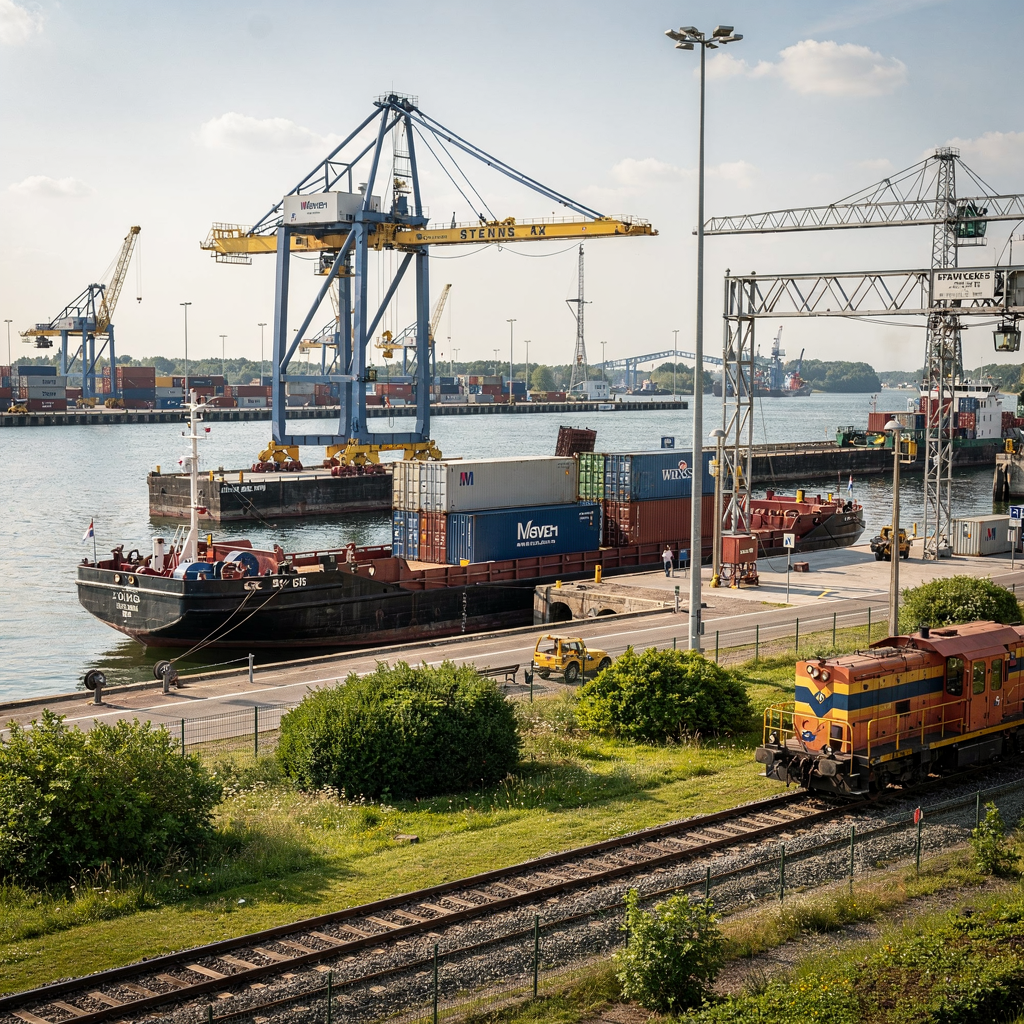
Electric yard equipment and shore-power options further reduce the carbon footprint. For example, electrifying RTGs, and applying shore-side power for refrigerated container plug-ins lowered diesel use. The study measured lower fuel consumption and lower emission after these interventions. In addition, shore power reduced emissions during dock-side stays. Thus the environmental impact was visible in both fuel bills and in co2 emissions statistics. Operators used emission calculation tools to report progress to regulators and to traders. This transparency supported sustainability goals and improved stakeholder confidence.
Infrastructure choices matter. Better stacking density reduced driving distances inside the yard. Also, automated gate flows cut truck idling. These shifts lowered energy consumption and emissions in practical terms. The case study included a report on emissions and operational costs that showed a favourable trade-off: moderate capital for electrification and process change yielded ongoing emission reduction and lower operating expense. Moreover, the results support broader decarbonizing plans for the sector and align with international maritime and EU targets. For readers interested in implementation patterns, our terminal operations digitalization roadmap explains phased adoption and governance steps terminal operations digitalization roadmap. Overall, the case study demonstrates that targeted design and technology investments deliver both environmental and operational gains.
Drowning in a full terminal with replans, exceptions and last-minute changes?
Discover what AI-driven planning can do for your terminal
port container logistics and emissions of container in inland routing
Container logistics decisions shape emissions across the flow. Empty container moves, laden repositioning, and last-mile delivery all add emission. In particular, empty container repositioning drives avoidable travel. So optimising repositioning lowers associated emission costs. A focussed plan to schedule empties against expected inbound loads can cut runs and reduce fuel burn. Also, digital visibility reduces single container roundtrips that add emission and time.
Modelling helps to compare scenarios. For example, emission of a container can be modelled under different route and mode choices. The model includes truck distance, rail leg, barge segment and terminal handling. Then the system reports expected co2 emissions and operational time. These outputs enable planners to pick options that minimize emission while meeting service goals. Also, such models feed into emission trading or carbon emission quota planning if a terminal participates in a trading system.
Best practices include better matching of import loads with export empties, use of inland hubs to aggregate cargo, and appointment systems to smooth truck arrivals. Further, AI-driven scheduling reduces rehandles and shortens routes. Loadmaster.ai applies RL agents in a digital twin to reduce travel and rehandles, and to stabilise performance across shifts. The result is lower fuel usage and a measurable drop in emission. In addition, routing strategies should include sensitivity to peak congestion because emissions and operational costs rise steeply under delay. Finally, balancing container flow with environmental goals requires ongoing measurement. Tools that output co2 emissions per move make the trade-offs visible. They support sustainable decisions and advance decarbonizing of the freight system.
future research in sustainable routing to reduce emissions
Future research must test emerging technologies and policy measures that lower emission across inland networks. First, AI, IoT and digital twins offer new levers for routing optimization and emission reduction. Second, real-world trials will reveal scalability and acceptance barriers. Third, standardised emission calculation methods are needed for comparability. For example, research should include controlled trials that measure co2 emissions and energy consumption under different TOS strategies. Also, studies should report emissions per container across the full journey to inform carbon footprint accounting.
Key research areas include multi-agent reinforcement learning for coordinated quay-yard-gate control. Also, investigation into data standardisation and exchange protocols can unlock coordinated routing decisions across stakeholders. Then, linking these systems to emission trading or carbon emission quota frameworks could create financial incentives to reduce emission. Moreover, policy experiments that support modal shift to rail and inland barges will test how much emission reduction is achievable at scale. In addition, longitudinal studies that compare 2021 and 2022 baselines will track progress over time. Overall, rigorous future research will close the gap between simulation and practice.
Gaps remain in emission accounting and in field validation. Furthermore, trial projects should evaluate social and economic implications alongside environmental impact. To support adoption, policymakers can offer incentives for electrification and for terminal upgrades that lower emission. Also, public-private collaborations can fund pilot corridors that combine barges, trains and digital routing. Finally, operational AI that learns in simulation and then adapts live—like the reinforcement-learning agents we build at Loadmaster.ai—can deliver measurable emission reduction by reducing rehandles, shortening routes and stabilising throughput. Continued research and trialing will be essential to scale sustainable routing across the global freight network and to cut greenhouse gas emissions in a verifiable way.
FAQ
What is the role of inland routing in reducing emission?
Inland routing shapes how cargo moves after a ship call and so affects total emission. Better routing reduces idle time, rehandles and driving distance, which lowers fuel use and emission.
How much can intermodal routing cut co2 emissions?
Studies show that adding inland waterway or rail legs can cut CO2 emissions substantially, in some cases by up to 30% compared to truck-only moves. The exact saving depends on distance, load factor and vessel or barge efficiency optimal inland waterway design.
Do Terminal Operating Systems report emission metrics?
Modern TOS solutions can include emission calculation features and co2 estimation for moves. These outputs help planners trade speed and throughput against emission objectives TOS study.
What practices reduce empty container related emission?
Matching import and export flows, using inland hubs and optimising empty container repositioning can reduce empty trips. Digital visibility and appointment systems also cut unnecessary moves and fuel use.
How do AI methods improve routing to reduce emissions?
AI can optimise multi-objective trade-offs like quay productivity versus yard congestion and driving distance. Reinforcement Learning agents can simulate millions of decisions to find policies that lower rehandles and fuel burn, then deploy them with guardrails.
Can terminals achieve emission reduction without large capital spending?
Yes. Operational changes such as better scheduling, appointment systems and route optimization can yield emission gains quickly. Electrification produces larger reductions but requires capital.
What external data improves routing optimization?
Live truck telemetry, vessel ETA updates, and rail booking data improve routing decisions and reduce idling and rehandles. Data sharing across stakeholders supports modal shifts and lowers emission.
How do terminals measure progress on emission reduction?
Terminals can track fuel consumption, co2 emissions per move and transit times as core KPIs. Consistent emission calculation methods enable comparison and reporting to regulators and customers.
Are there policy tools that encourage low-emission inland routing?
Incentives for electrification, grants for intermodal infrastructure, and carbon pricing or emission trading mechanisms can all encourage operators to reduce emission. Public procurement that favours low-emission logistics also helps.
Where can I read more about applying AI to reduce fuel use in terminals?
Loadmaster.ai publishes case studies and technical pieces on simulation-first AI and equipment move optimisation to save fuel. See our pages on simulation-first AI and optimizing equipment moves for detailed methods and results simulation-first AI, optimizing equipment moves to save fuel.
our products
 stowAI
 stackAI
 jobAI
jobAI
Innovates vessel planning. Faster rotation time of ships, increased flexibility towards shipping lines and customers.
Build the stack in the most efficient way. Increase moves per hour by reducing shifters and increase crane efficiency.
Get the most out of your equipment. Increase moves per hour by minimising waste and delays.
stowAI
Innovates vessel planning. Faster rotation time of ships, increased flexibility towards shipping lines and customers.
stackAI
Build the stack in the most efficient way. Increase moves per hour by reducing shifters and increase crane efficiency.
jobAI
Get the most out of your equipment. Increase moves per hour by minimising waste and delays.