
Understanding Hidden Operational Capacity in Container Terminal
Hidden capacity describes the unused or unseen potential inside a container terminal that can be unlocked without physical expansion. First, it matters because terminals face rising container volume and limited space, and so small efficiency gains compound into large throughput improvements. Second, hidden capacity shows up as berth underuse, yard congestion, and crane idle time. For example, berth occupancy may be low in one area while adjacent berths suffer congestion, and yard utilisation may appear acceptable overall yet contain pockets of heavy stacking that slow retrieval and increase container dwell time. These inefficiencies reduce the efficiency of the container and the broader supply chain, and they force planners into firefighting rather than planning.
Key metrics help reveal hidden capacity. Berth occupancy rates, vessel waiting time, yard utilisation percentages, average crane moves per hour, and container dwell time all point to where terminal operators lose throughput. Additionally, truck turnaround and average driving distance for yard tractors expose routing and assignment problems that cost time and fuel. When teams track these metrics together, they see trade-offs between quay productivity and yard congestion and can test options that balance both. For a concrete estimate, studies report that AI-enabled berth and yard management can increase throughput by up to 20% without new infrastructure, and that same approach can reduce idle times and delays substantially (Understanding and Predicting Port Congestion with Machine Learning).
One practical way to discover latent capacity is to map detailed operations and then stress-test schedules. For instance, digital twins let teams simulate shifts in container flow, and the results often identify underused time slots or resources. At Loadmaster.ai we use a simulation-first approach to learn policies that reduce rehandles and balance workloads, and this helps terminals unlock hidden capacity without copying past mistakes. Finally, by measuring both micro-level metrics such as crane idle time and macro-level KPIs like moves per TEU, terminals can target improvements that raise throughput and resilience together.
The Role of AI and Machine Learning to Optimize Port Throughput
AI and machine learning bring predictive power and pattern recognition to complex port operations. In practice, machine learning models process AIS data, sensor streams, and operational logs to forecast congestion and to suggest dynamic resource allocation. For example, predictive analytics can forecast peak demand periods and recommend where to allocate cranes or where to stage containers ahead of vessel arrival. Research shows that intelligent scheduling and predictive maintenance can improve terminal throughput and reduce idle time significantly (Smart Port Market: Revolutionary Growth & Future Insights 2025).
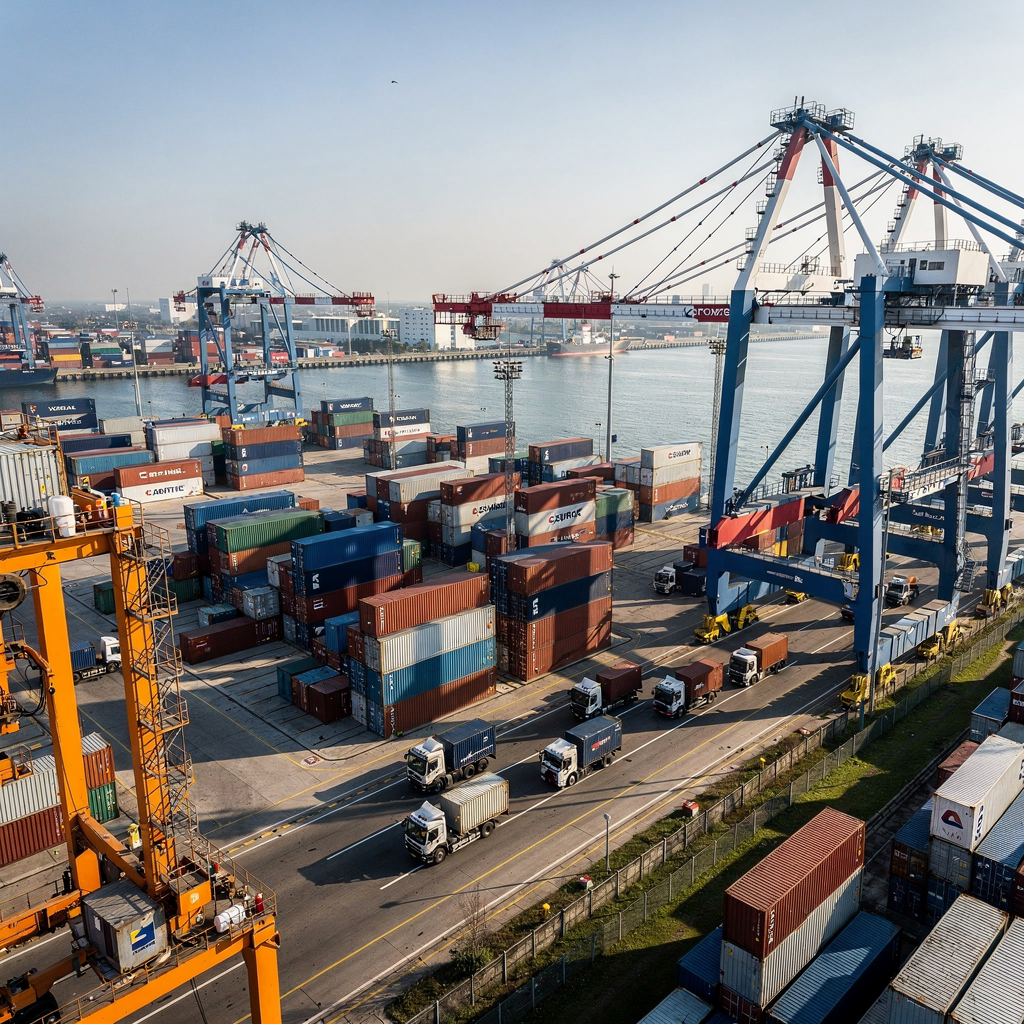
Machine learning and deep learning let terminals detect subtle patterns in container flow, and they also allow forecasts that human planners would miss. For instance, demand forecasting models can predict container volume spikes and recommend dynamic berth allocation. Then, AI can coordinate quay cranes, yard equipment, and gate slots to reduce vessel turnaround time. When terminals adopt ai-driven predictive maintenance, downtime can fall and equipment availability rises, which in turn increases throughput and reduces delays. In one study, deep learning approaches contributed 15–25% gains in inventory and resource optimization, and this directly impacts terminal performance (Enhancing supply chain management with deep learning).
Another strong benefit comes from real-time decision support. Modern AI systems ingest telemetry from RTGs and straddles, and they output schedules that minimize travel and rehandles. Using reinforcement learning, agents can explore new strategies rather than imitate past decisions, and this helps terminals adapt to unusual vessel mixes and disruption. In short, the potential of AI is to forecast, optimize, and coordinate so terminals move from reactive firefighting to proactive control. For a deeper look at predictive KPIs and scheduling use cases, see resources on simulations for terminal planning (simulations for terminal planning).
Drowning in a full terminal with replans, exceptions and last-minute changes?
Discover what AI-driven planning can do for your terminal
Applications of AI Technologies in Terminal Operating Systems
AI technologies integrate with terminal operating systems to transform daily scheduling and execution. First, a terminal operating system provides the data and the control points. Then, AI overlays optimization, predictive insight, and closed-loop control. Integration of AI with a terminal operating system is a necessary step if terminals want automated container movement, better berth plans, and smoother gate flows. For example, dynamic berth allocation and automated yard stacking become practical when AI links to TOS APIs, equipment telemetry, and the gate booking system. See our article on terminal operating systems for more context (terminal operating systems).
Deep learning excels at complex pattern recognition in container flows, and agent-based modelling simulates interactions between cranes, trucks, and ships to reveal emergent bottlenecks. Combined, these approaches allow systems to propose schedules that both maximize crane productivity and protect yard balance. For instance, an ai model can suggest a different container stowage pattern that reduces shifters and speeds discharge while a job scheduler sequences moves to keep equipment busy. Furthermore, a closed-loop arrangement where AI sends plans and then refines them with execution feedback leads to steady improvement. Loadmaster.ai uses reinforcement learning agents—StowAI, StackAI, and JobAI—to search policy space and to optimize multi-objective KPIs without relying on historical data. This avoids the trap where supervised models merely replicate the average of past practice.
Practical gains include faster decision speed, less unnecessary travel, and more resilient operations during peaks. For terminals moving to automated container terminals or upgrading their TOS, AI integration delivers measurable results in throughput, energy use, and consistency. If you are evaluating AI applications, consider risk-mitigation and staged pilots; our work on simulations for terminal planning and safety-aware AI planning outlines typical steps and guardrails (safety-aware AI planning).
AI Integration for Container Ports and Container Vessels
Integration across port community systems and vessel traffic systems allows AI to coordinate port and vessel operations. When terminals share real-time data with carriers and VTS, schedules improve and berthing delays fall. For example, real-time updates of ETA and berth assignments let vessels slow steam or reroute, and that reduces fuel consumption while improving berth utilization. Sharing data between terminal and vessel planners enables better container stowage decisions, and that reduces rehandles and improves crane productivity. The link between port management and the vessel planner is central to optimized operations.
AI integration across systems also supports vessel planning and port call optimization. By combining historical patterns and live AIS feeds, AI can forecast arrival clusters and advise on dynamic resource allocation. Port authorities and port operators can then create buffer plans, and these reduce queuing and waiting time. Research into port congestion and predictive analytics demonstrates the value of forecasts for port terminals, and terminals that adopt such approaches report measurable reductions in turnaround time (Understanding and Predicting Port Congestion with Machine Learning).
One case study involves a major European port that integrated AI to coordinate berth slots, yard planning, and gate windows. The system cut truck turnaround time and smoothed peak loads by restructuring vessel cuts and yard placements. As a result, the port achieved both operational gains and sustainability improvements because fewer trucks idled and ships spent less time circling. If your team plans to integrate AI across port community systems, consider staged pilots that connect TOS, VTS, and carrier feeds. For guidance on reinforcement learning deployments in port settings, see our work on reinforcement learning for deepsea container port operations (reinforcement learning for deepsea container port operations).
Drowning in a full terminal with replans, exceptions and last-minute changes?
Discover what AI-driven planning can do for your terminal
Benefits of AI Implementation for Large Container Terminals and Sustainability
AI implementation delivers quantifiable benefits across throughput, costs, and emissions. For instance, predictive maintenance powered by AI can reduce equipment downtime by roughly 30% and thereby increase available moves per shift (Smart Port Market). At the same time, AI-enabled berth and yard management can increase throughput by 10–20% without adding infrastructure, which directly boosts capacity and competitiveness. These improvements also translate to sustainability gains since shorter travel distances and fewer rehandles mean lower fuel burn and fewer truck emissions.
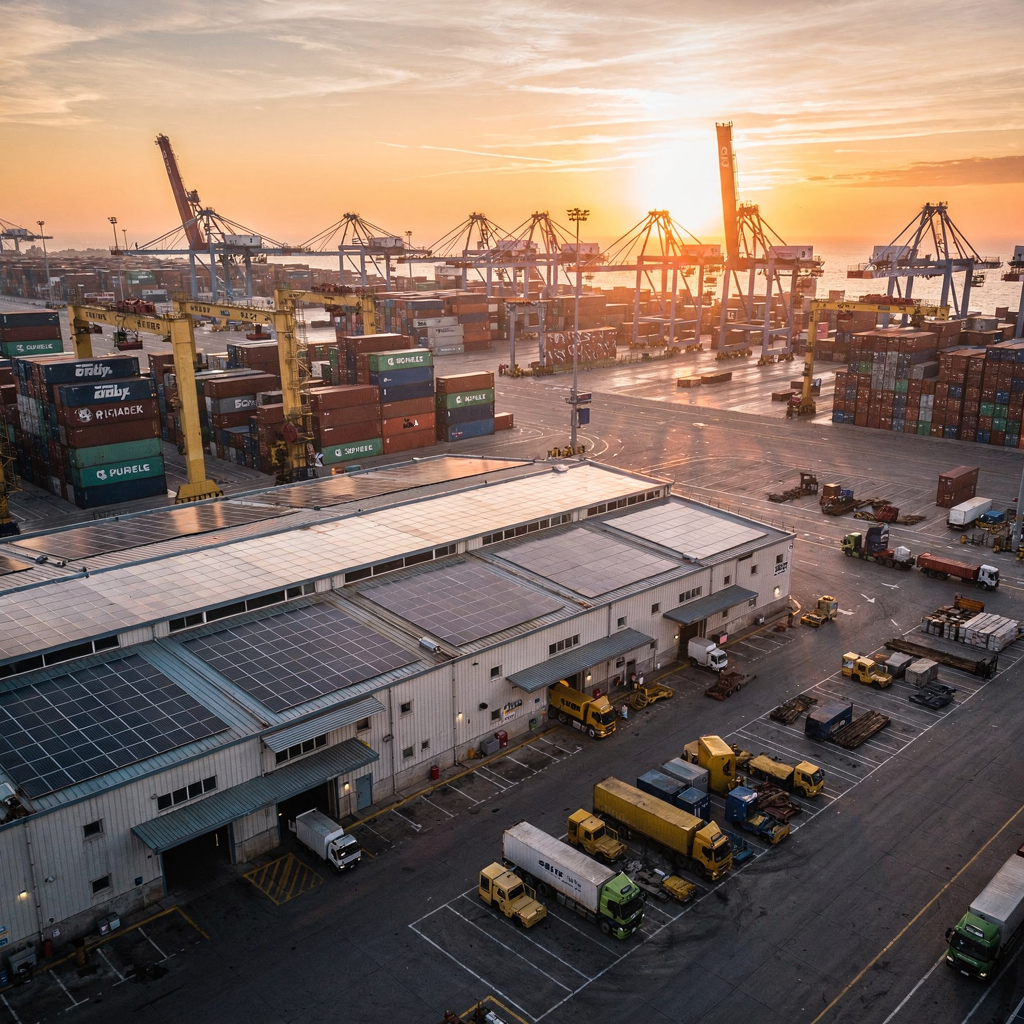
From an environmental view, operational changes that reduce idle time and steaming hours cut CO2 and NOx emissions. Also, better scheduling reduces queuing at the gate and decreases truck congestion near the port. AI supports such outcomes by recommending energy-aware assignment rules and by enabling opportunity charging strategies for electric AGVs and yard equipment. In practice, terminals that combine efficiency and sustainability goals see operational gains and align with emerging standards. The EU green port initiatives increasingly expect terminals to show both capacity improvement and environmental metrics, and AI helps meet these targets.
Large container terminals also gain resilience. An AI system that forecasts demand and adapts schedules during disruption keeps equipment busy and lowers the number of rehandles. These gains preserve throughput during peak periods and protect service levels for shippers and carriers. In short, the benefits of AI span operational performance and environmental goals, and they represent a way for ports and terminals to modernize responsibly.
Steps to Implementing AI and application of AI in container through Container Terminal Operating System
Implementing AI begins with clear data needs and a phased plan. First, define the KPIs you want to improve and identify the telemetry your terminal operating systems can provide. Next, connect TOS APIs, equipment telemetry, gate systems, and port community feeds into a secure data platform. Key early tasks include validating data quality, creating a digital twin, and running pilot scenarios in simulation. For teams that need terminal modelling tools, simulation resources guide testing and deployment paths (container terminal modelling).
Then, design AI pilots that focus on high-impact use cases such as dynamic berth allocation, stack placement rules, and real-time job sequencing. A practical approach uses sandbox training to avoid risk. For example, Loadmaster.ai trains reinforcement learning agents inside a digital twin so agents learn policies without relying on historical data; this avoids teaching the AI to repeat past mistakes. After simulation, move to staged live trials with strict guardrails and human oversight. During pilots, measure gains with KPIs and refine the ai model until results are robust across shifts and vessel mixes.
Stakeholder engagement is essential. Train terminal operators and planners, and include port authorities and carriers in rollout discussions. Also, create governance for model updates and explainability so teams trust automated suggestions. Finally, scale by integrating the AI into the container terminal operating system while maintaining monitoring and continuous improvement. By combining pilot-tested policies, strong governance, and ongoing KPI tracking, terminals can capture the full potential of AI and improve operational efficiency and sustainability. For practical steps on integration and decoupling control logic from TOS, see our architecture guidance (decoupling fleet control logic from TOS).
FAQ
What is hidden capacity in a container terminal?
Hidden capacity refers to underused or unrecognized ability inside a terminal to handle more containers without new infrastructure. It often shows up as uneven berth use, localized yard congestion, or suboptimal crane scheduling that, when corrected, increase throughput.
How does AI help reduce crane idle time?
AI predicts demand and sequences moves to keep cranes working on high-value tasks and to avoid unnecessary rehandles. In addition, AI can coordinate cranes with yard placements so that the next container is available just in time, which reduces idle minutes.
Can AI improve truck turnaround times at gates?
Yes. AI-driven scheduling and real-time slot allocation smooth gate peaks and let trucks enter and exit faster. By integrating gate data and predicted yard state, terminals can reduce truck queues and lower emissions.
What data is required for AI pilots in terminals?
Pilots need TOS data, equipment telemetry, AIS feeds, gate bookings, and ideally sensor streams from yard equipment. If historical data is sparse, simulation and reinforcement learning can generate safe training experience.
Is historical data mandatory to start with AI?
No. While historical data helps, reinforcement learning and digital twin simulation allow training without extensive historical data. This cold-start readiness lets terminals begin using AI quickly while avoiding past mistakes.
How does AI support sustainability goals?
AI reduces unnecessary travel, lowers idle time, and shortens vessel waiting, which together cut fuel consumption and emissions. These operational savings support compliance with green port regulations and contribute to corporate sustainability targets.
What is the role of the terminal operating system in AI integration?
The terminal operating system provides the data feeds and control points that AI needs to recommend and to implement plans. Integration via TOS APIs enables closed-loop optimization and safe deployment of automated decisions.
How long does it take to see benefits from AI pilots?
Some benefits, such as improved planning and reduced rehandles in simulations, appear during pilot phases within weeks. Full operational gains typically take several months of iterative refinement and stakeholder training.
Can AI work with existing TOS and equipment?
Yes. Modern AI solutions integrate with different TOS platforms and equipment telemetry via APIs and EDI, allowing terminals to keep existing systems while adding optimization layers. This approach minimizes disruption during implementation.
What governance is needed for AI in container terminals?
Governance should include clear KPIs, audit trails, explainability, and human-in-the-loop controls for critical decisions. Regular performance reviews and model retraining ensure that AI stays aligned with operational goals and regulatory requirements.
our products
 stowAI
 stackAI
 jobAI
jobAI
Innovates vessel planning. Faster rotation time of ships, increased flexibility towards shipping lines and customers.
Build the stack in the most efficient way. Increase moves per hour by reducing shifters and increase crane efficiency.
Get the most out of your equipment. Increase moves per hour by minimising waste and delays.
stowAI
Innovates vessel planning. Faster rotation time of ships, increased flexibility towards shipping lines and customers.
stackAI
Build the stack in the most efficient way. Increase moves per hour by reducing shifters and increase crane efficiency.
jobAI
Get the most out of your equipment. Increase moves per hour by minimising waste and delays.