
Port Layout and Container Stacking: Stack Operations in the Terminal
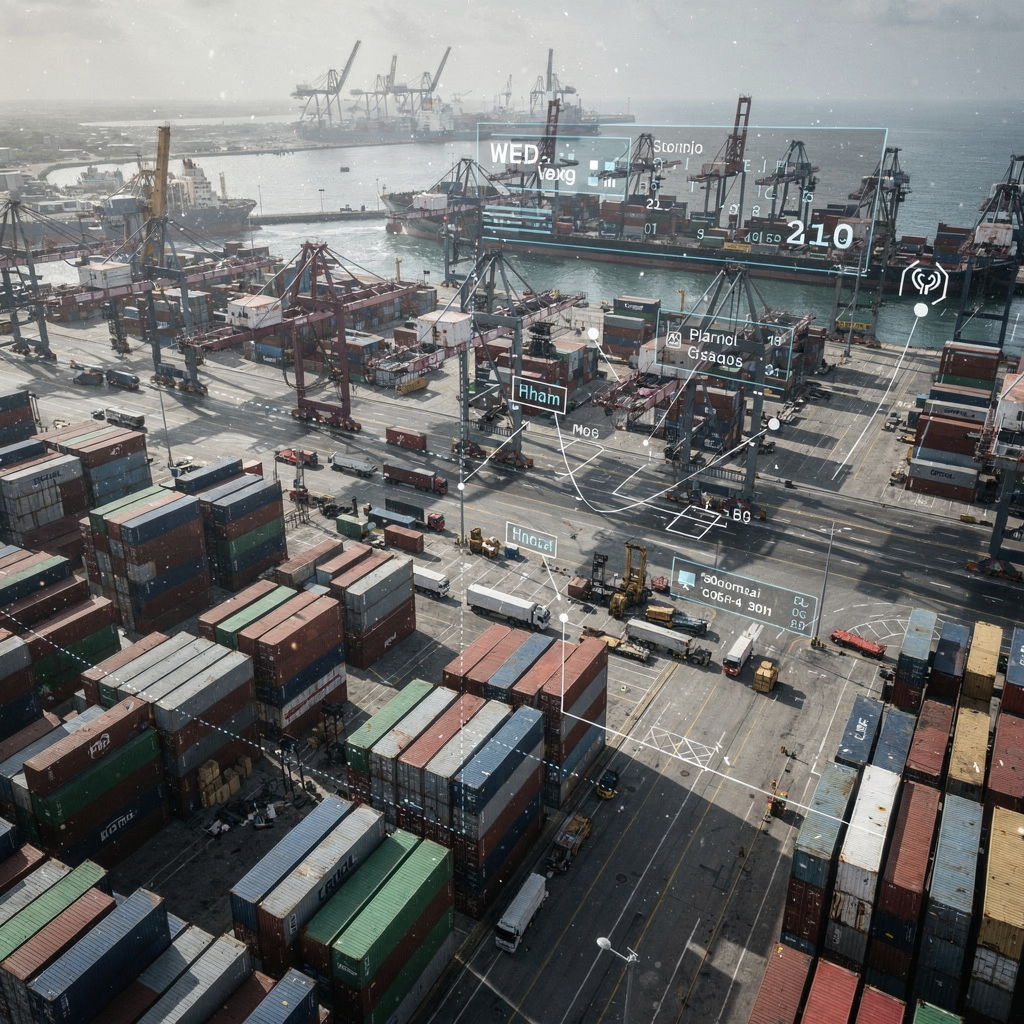
Ports channel freight through distinct zones, and each zone has a clear role in container flow. First, ships call at the quay where quay crane operations load and discharge containers. Then, trucks, trains, and automated vehicles move boxes to the container yard. Next, the yard stores containers in blocks and organizes them for outbound moves. Finally, rail links and gate areas handle long-haul transfers. This chain shapes how a stowage plan fits into broader port operations. Also, planners must coordinate vessel stowage with onshore stacking and truck flows to optimize throughput.
Yard block design follows safety codes and practical limits. For example, CTU safety rules guide how high stacks can go and how to segregate hazardous units; the authority explains that “the terminal has stowed and segregated DG (dangerous goods), 00G, and reefer containers in accordance with safety and operational guidelines” (CTU Code). Therefore, block layout balances maximum stack height against safe handling and stability. Additionally, container size, weight distribution, and yard crane reach define realistic stack footprints. Short stacks reduce reshuffle risk, and taller stacks improve storage density but raise handling complexity.
Mixed stowage demands segregation among hazardous, refrigerated, and general cargo. First, reefers need power access and priority moves to avoid spoilage. Second, dangerous goods require separation distances and clear labeling. Third, general cargo fills remaining slots. AI can help assign positions that respect rules and reduce unnecessary reshuffle. For dynamic yards, real-time updates from sensors and TOS feeds let AI reassign locations as vessels or trucks change schedule (Maritime Digitalisation Playbook).
Key metrics matter for assessing stack operations. Average stacking time captures handling speed. Yard utilisation rates show how much storage capacity the port uses. Safety compliance measures adherence to segregation and stacking limits. Also, container dwell time informs whether the yard holds cargo too long. For example, terminals that adopt AI-driven stowage planning report significant efficiency gains and better capacity use; studies note a 20–30% reduction in handling time and roughly a 15% increase in yard capacity utilisation (efficiency study, capacity manual). Therefore, ports and planners should measure both safety metrics and productivity KPIs.
Planners and operators work closely, and our company helps by training AI agents that simulate yard choices and find robust placement policies. Loadmaster.ai builds digital twins so StackAI can test stacking scenarios without disrupting live yard operations. This approach reduces firefighting and preserves tribal knowledge. In practice, it shortens the time that an operator spends on tactical reshuffles. As a result, the terminal gains steady performance across shifts.
Algorithm and Genetic Algorithm Approaches for Stowage Plan Optimization
The stowage planning problem is a classic NP-hard combinatorial challenge. It mixes weight limits, segregation rules, container size constraints, and access priorities. Planners must place every container so the vessel remains stable, hazardous loads segregate correctly, and export boxes remain reachable. Also, the yard must remain balanced to minimize moves. Thus, designing a stowage plan involves an allocation problem across space and time that often outstrips manual methods.
Algorithmic approaches vary from exact integer programming to heuristic metaheuristics. Genetic algorithm methods have attracted attention because they explore large solution spaces efficiently. With chromosome encoding of container positions, each gene maps to a slot or stack. Crossover and mutation operators produce new candidate stowage plans. Then, a fitness function evaluates moves, crane idle time, and reshuffle counts. Also, hybrid strategies combine genetic algorithm search with local improvement heuristics to refine solutions quickly. In trials, genetic algorithm routines reduce the number of unnecessary relocations and shorten crane and yard workloads.
AI builds on these algorithmic foundations. Machine learning models predict handling time per container and estimate crane cycles from historical and simulated data. Then AI algorithms integrate those predictions into the optimization loop. For instance, a genetic algorithm can score candidates using a learned model of quay crane operations and yard crane productivity. Additionally, deep models such as a deep reinforcement learning model can learn policies that balance quay efficiency and yard congestion without explicit enumeration of every plan. Our Loadmaster.ai approach trains agents in a sandbox so policies generalize to real disruptions and shifting vessel mixes.
Quantitative gains from algorithm-driven stowage are compelling. Studies show 20–30% reductions in container handling time and about a 15% rise in yard capacity utilisation when terminals adopt algorithm-based stowage planning and dynamic scheduling (efficiency study, capacity manual). Also, an AI-driven stowage plan can lower the number of container shifts, which directly cuts fuel use and running hours for yard cranes. For ports aiming to optimize turnaround, these numbers matter because they translate into shorter berth stays and lower costs.
Integration challenges remain. Data quality varies across terminal systems. So, algorithm developers must validate model inputs and guard constraints in the code. For that reason, modern solutions use explainable fitness functions and audit trails. Consequently, planners can accept algorithmic recommendations and still validate regulatory compliance. For more on simulation-backed case studies that validate algorithm performance in real terminals, see our simulation case studies page (simulation case studies).
Drowning in a full terminal with replans, exceptions and last-minute changes?
Discover what AI-driven planning can do for your terminal
Automated Container Terminal and Crane Operation Integration
Automation spans manual assist to full autonomy. Some ports run remote-controlled quay cranes. Others operate fully autonomous straddle carriers and AGVs. An automated container terminal embeds automation in vehicles, cranes, and gate systems. This trend changes how AI assigns tasks and sequences moves. Also, automation raises the opportunity for closed-loop control where AI issues commands and equipment reports back telemetry in real time.
Real-time data streams power those AI decision loops. IoT sensors on containers and chassis feed temperature, shock, and position. TOS updates reveal incoming vessels and container arrival times. These feeds integrate with AI modules for dynamic task assignment. For example, when a late arrival forces a ship to shift its loading order, AI can recompute optimal moves and reassign quay crane tasks. The Maritime Digitalisation Playbook highlights how ports can connect sensors and systems to enable such dynamic control (Maritime Digitalisation Playbook).
Coordination between quay crane, yard crane, and AGVs demands tight scheduling. AI algorithms take goals like minimizing crane idle time, reducing driving distance, and meeting berth windows. They then output move sequences for quay crane operations and yard crane tasks. In practice, this reduces human error and enforces consistent crane cycle times. Also, it lowers container dwell time and reduces unnecessary reposition moves that inflate handling counts.
Automation improves reliability and throughput. For instance, terminals that integrate AI and automation see more consistent crane performance and lower dwell periods. Advanced systems also provide exception alerts to operators. Therefore, operators retain oversight but no longer need to make every tactical choice. Loadmaster.ai trains JobAI agents that coordinate moves across quay, yard, and gate. These agents keep equipment busy and cut wait times. For technical teams wanting to model equipment and crane interactions, our terminal equipment scheduling simulation solutions page provides relevant resources (terminal equipment scheduling simulation).
Vessel Stowage Planning and Vessel Stowage at Berth
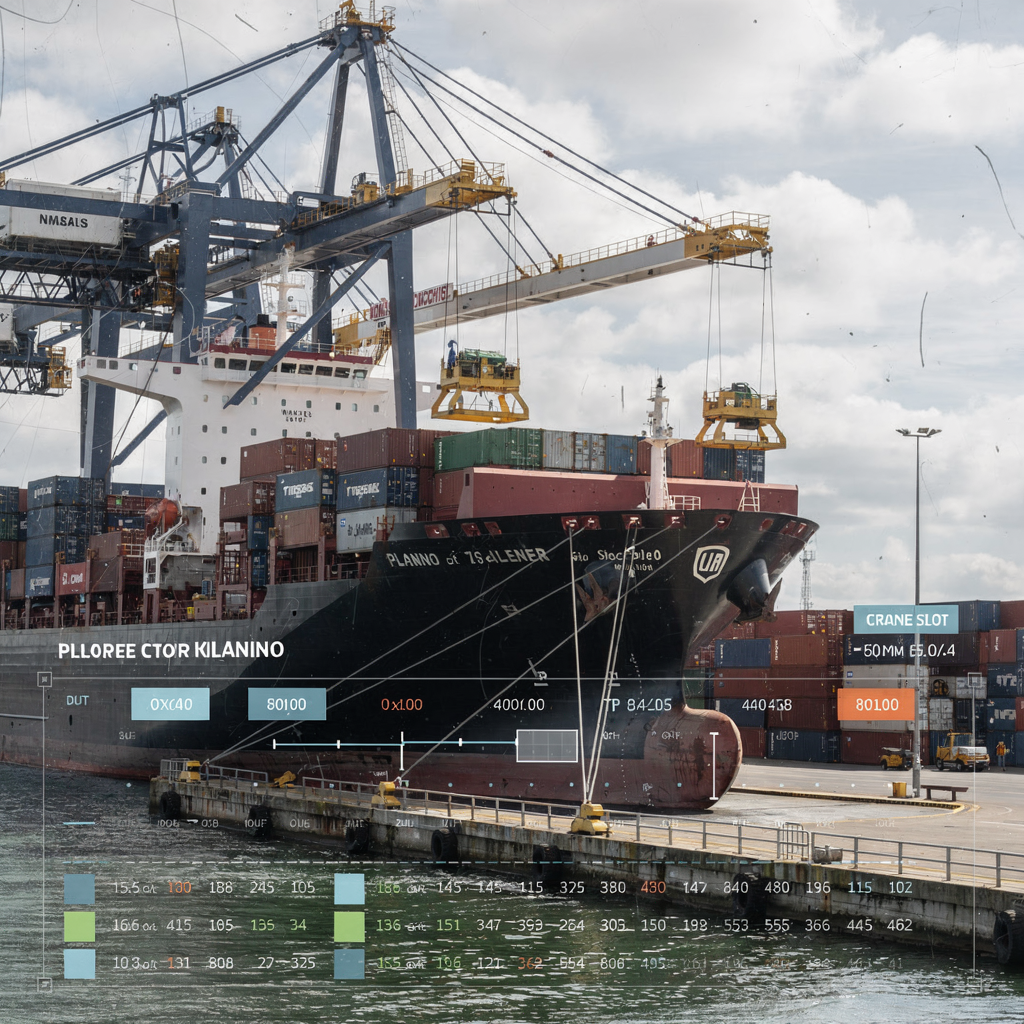
Vessel stowage blends ship-centric and shore-side goals. Onboard, planners must maintain balance and stability. They must place dangerous goods correctly and ensure export containers remain accessible. Onshore, terminals want short quay stays and smooth flows to the yard. AI helps reconcile these objectives by creating a stowage plan that respects ballast, segregation, and handling constraints.
AI-driven algorithms target berth window adherence and minimal vessel idle time. They simulate crane sequences and predict loading and unloading durations. Then, the system proposes sequences that avoid long crane handoffs and that keep the berth productive. In trials, simulation results show that vessel-focused AI can accelerate turnaround by about 10–15% compared with manual planning, by reducing unnecessary shifters and by increasing gross crane rate (efficiency study).
Vessel stowage planning also needs feedback loops. Berth scheduling affects yard allocation. Likewise, yard congestion can force alternative stowage choices. Therefore, AI-driven stowage engines must integrate berth, yard, and gate data. For example, if a yard block reaches capacity, the stowage plan must adapt to avoid long terminal truck queues. AI tools and simulations help by testing what-if scenarios in digital twins. See our terminal performance modelling software resources for modelling details (terminal performance modelling).
Simulation plays a key role in validating vessel plans. By running a plan through a high-fidelity simulation, operators can detect risky stowage decisions before execution. Also, simulation quantifies impacts like crane sequencing delays or extra reshuffle moves. This practice validates the plan problem against operational KPIs. Finally, combining genetic algorithm search with learned handling-time estimators yields robust vessel stowage that minimizes berthing time while preserving safety and access.
Drowning in a full terminal with replans, exceptions and last-minute changes?
Discover what AI-driven planning can do for your terminal
Stacking Strategies to Optimize Cargo Flow
Good stacking strategies reduce reshuffle counts and speed retrieval. Block stacking groups by destination and service to shorten internal travel. Echelon stacks place high-turn containers closer to the gate or quay. Also, neighborhood grouping clusters containers that will move together, which reduces crane and truck travel. Port teams choose stacking strategies based on forecasted flows and vessel schedules.
Dynamic restacking algorithms adapt when schedules change. If a vessel delays, the algorithm reprioritizes which containers to protect for upcoming calls. It then issues reshuffle moves when the benefits outweigh the cost. These dynamic policies outperform static rules because they consider future windows and equipment workload. For instance, an AI policy might accept an extra short-term move to avoid many costly shifters later.
Prioritisation heuristics help optimize crane operation sequences. By ranking containers according to earliest-needed status and location, AI reduces repositioning moves. In practice, this approach can cut relocations by around 25% and speed yard cycles by roughly 12% in studied cases. Those outcomes come from combining genetic algorithm or deep reinforcement learning approaches with precise yard telemetry and crane models (efficiency study).
Case studies show tangible benefits. When terminals apply stacking strategies that integrate yard crane reach and quay crane schedules, they see reduced number of container shifts and steadier crane throughput. Our StackAI agent trains on simulated yard topologies to place and reshuffle containers while balancing workloads across crane and yard. Also, this agent helps reduce driving distances and protect future plans. For teams that need to validate stacking policies in a sandbox, our simulations for terminal planning page provides tools and examples (simulations for terminal planning).
Operator Decision Support in Container Terminal AI Systems
Operators remain central to safe and compliant terminal runs. AI should assist, not replace, human judgement. So, operator roles focus on supervision, exception handling, and regulatory checks. Dashboards present recommended stowage patterns, predicted delays, and alerts for hazardous loads. These interfaces let operators accept, tweak, or reject AI proposals.
Alerts and visualisations increase trust. For example, a dashboard can highlight which stacks contain dangerous goods and which require immediate moves. Also, it can show predicted yard congestion and recommended reshuffle sequences. Training AI with operator feedback improves accuracy and aligns models to local rules. Over time, the system learns the operator’s preferences and offers recommendations that match operational constraints.
Our design philosophy enforces operational guardrails. We make sure AI actions validate against safety codes and terminal rules before deployment. Also, every decision logs an audit trail so teams can trace the rationale behind stowage decisions. This approach supports compliance and supports regulatory review. Finally, collaborative AI–operator workflows reduce firefighting and help terminals move from reactive to proactive control. For teams exploring integration with existing TOS, see our TOS integration overview (terminal operating system integration).
FAQ
What is an AI algorithm for a stowage plan?
An AI algorithm for a stowage plan uses computational methods to assign containers to slots in the yard and on the ship. It balances safety rules, weight, accessibility, and equipment workload to minimize reshuffles and improve efficiency.
How does a genetic algorithm help with stowage planning?
A genetic algorithm encodes candidate stowage plans as chromosomes and evolves them via crossover and mutation. Over many generations, it finds plans that reduce handling time and reshuffles while respecting constraints.
Can AI adapt when vessels arrive late or schedules change?
Yes. Modern AI systems integrate real-time data from sensors and the TOS and then recompute priorities and moves. This dynamic replanning reduces last-minute firefighting and helps protect quay productivity.
Do operators lose control when AI assists stowage decisions?
No. AI systems provide recommendations and visualisations while operators retain final authority. The system logs decisions and supports exception handling so humans supervise and validate actions.
What efficiency gains should ports expect?
Studies report typical reductions in handling time of 20–30% and yard capacity gains near 15% when AI and optimization algorithms are applied. Results vary by terminal layout and implementation specifics (efficiency study).
How do AI models handle hazardous and refrigerated cargo?
AI enforces segregation rules and prioritises reefers for powered slots. It models safety separations and includes them as hard constraints during planning, which helps to avoid violations and spoilage (CTU Code).
Is simulation important for deploying stowage AI?
Yes. Simulation validates plans before execution and lets teams test edge cases and disruptions in a digital twin. It reduces risk and helps tune AI policies for a specific port layout (simulation case studies).
How does automation change crane and yard coordination?
Automation enables closed-loop tasking between quay crane, yard crane, and vehicles. AI coordinates sequences to keep equipment busy and reduce idle time, improving overall throughput and reliability.
Can AI handle multi-port stowage planning?
Yes. AI can extend to multi-port stowage planning and consider feeder links, but this requires data sharing across terminals and coordination on allocation. Multi-port solutions must balance local yard policies with wider shipping schedules.
Where can I learn more about integrating AI with my TOS?
Check integration guides that explain APIs and EDI flows for TOS systems. For practical steps and tools, explore our terminal operating system integration resources (terminal operating system integration).
our products
 stowAI
 stackAI
 jobAI
jobAI
Innovates vessel planning. Faster rotation time of ships, increased flexibility towards shipping lines and customers.
Build the stack in the most efficient way. Increase moves per hour by reducing shifters and increase crane efficiency.
Get the most out of your equipment. Increase moves per hour by minimising waste and delays.
stowAI
Innovates vessel planning. Faster rotation time of ships, increased flexibility towards shipping lines and customers.
stackAI
Build the stack in the most efficient way. Increase moves per hour by reducing shifters and increase crane efficiency.
jobAI
Get the most out of your equipment. Increase moves per hour by minimising waste and delays.