
gullseye logistics technologies inc: Evolution and Market Position
Founded in 2011 in Istanbul, Turkey, gullseye logistics technologies inc started with a focused mission to modernize port systems and streamline operations. The company launched products that aimed to provide real-time access to yard and quay data, and then iterated quickly to meet the needs of multipurpose terminals. By 2024 the firm had delivered notable deployments, including Alport Conakry, where implementation milestones demonstrated measurable gains in productivity and reduced dwell times GullsEye’s Operation at Alport Conakry. In addition, the upgrade at Riga Universal Terminal underscored the system’s ability to support complex cargo flows and intermodal interfaces Riga Universal Terminal upgrades operations with GullsEye TOS.
The market context matters. gullseye entered a competitive field of more than 235 rivals offering software for port and quay planning. Tracxn lists the company alongside firms such as Portchain, OOCL and Navis GullsEye – 2025 Company Profile. Therefore, the evolution of the product suite moved toward modular, API-first architectures. In 2024 the vendor released Gen2 capabilities that emphasize mobile management and 3D visualization to support yard planning and container management. Also, the vendor maintains 24/7 access to operational dashboards so stakeholders can view KPIs and vessel timelines in real-time GullsEye | Terminal Operating System.
Growth milestones included integrations with ERP and CRM systems, expanded support for ro-ro, rail operations, bulk and liquid cargo, and partnerships with local integrators. For example, projects in African and Baltic ports illustrated how gullseye reduces manual scheduling and improves equipment allocation. Next, the firm has leveraged partnerships and reseller channels; one named partner in industry conversations is Portek International Pte Ltd, which functions as a regional partner or through its subsidiary relationships in some markets. As a result, gullseye positioned itself as a practical, modular provider in the space of modern port software. Finally, the company’s trajectory shows focus on adaptability, customer-centric development and continued refinement of its Gen2 product line for multipurpose terminals with varying volume ranges.
terminal operations: Challenges and Solutions at Riga Universal Terminal
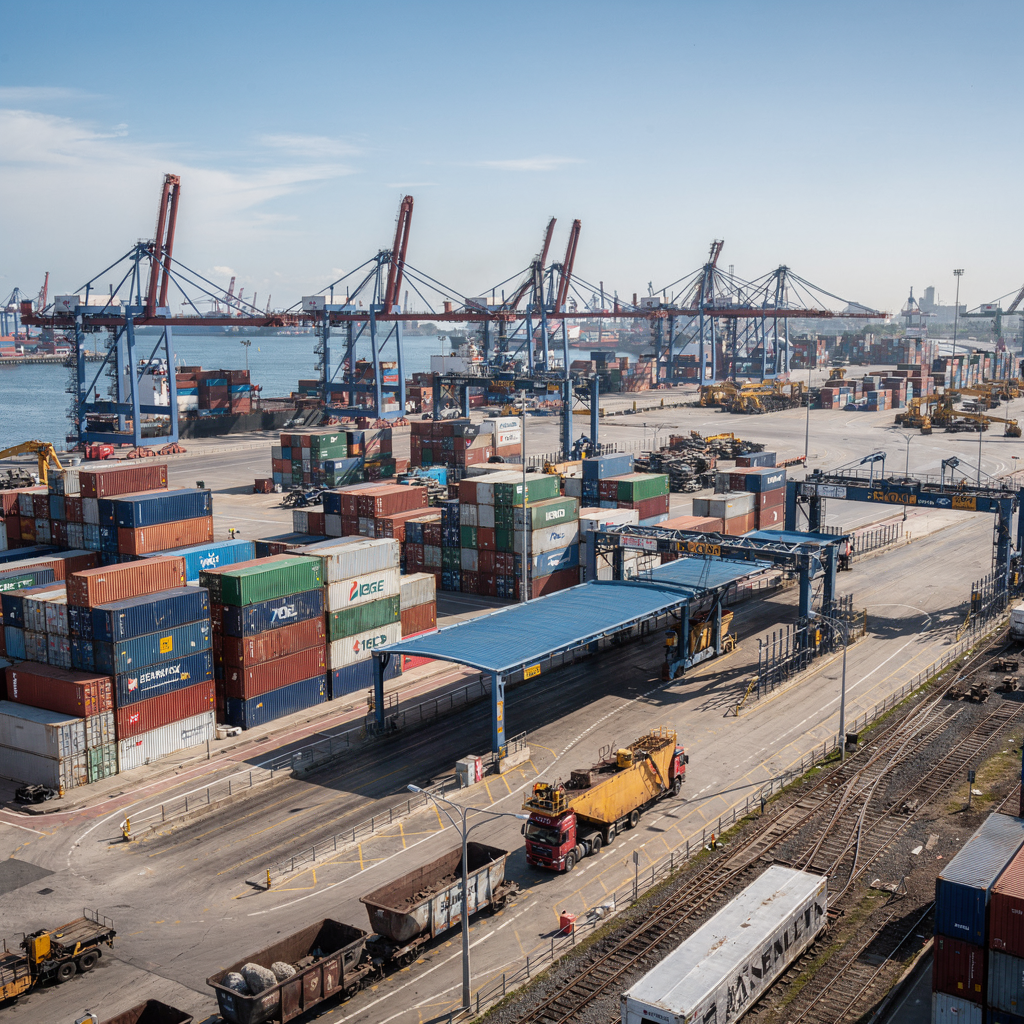
Riga Universal Terminal handles container flows, bulk and general cargo, rail connections and ro-ro services, which creates a complex operational picture. In practice, the mix of container terminal activity and bulk and frozen cargo handling puts pressure on yard planning and quay slotting at the Port of Riga. As Latvia’s largest multipurpose facility, rut must balance vessel berthing, gate throughput and intermodal transfers without incurring long idle times. For example, conflicting berth windows and late arriving vessels create yard congestion and cascading delays. Therefore, the need for real-time visibility and better sequencing became obvious.
RUT successfully transitioned to gullseye logistics to modernize scheduling and improve container management. The upgrade is documented in industry coverage that notes gullseye’s advanced system was selected to bring modern TOS workflows and 3D monitoring to the terminal Riga Universal Terminal upgrades operations with GullsEye TOS. The project aimed to reduce asset under-utilisation and to streamline cargo operations so cranes, trucks and yard equipment operate in closer coordination. Also, the terminal required an integrated solution that could access and manage terminal operations from a single pane, while providing auditable reporting for customers and authorities.
Pain points at RUT included yard congestion during peaks, vessel scheduling friction and suboptimal use of straddles and RTGs. Moreover, manual workflows compounded delays because planners relied on siloed spreadsheets and human memory. The solution focused on real-time monitoring and predictive sequencing that enable dispatcher teams to prioritize moves, reduce rehandles, and lower driving distances. For planners interested in simulation-based approaches to yard problems, Loadmaster.ai has resources on terminal decision support and simulation that explain how digital twins can validate sequencing rules and measure expected TEU throughput terminal decision support simulation. In short, the Riga project shows how a complete terminal software upgrade can rethinking port operations and improve throughput consistently.
Drowning in a full terminal with replans, exceptions and last-minute changes?
Discover what AI-driven planning can do for your terminal
tos solutions: Core Features and Customisation
A modern tos must deliver real-time data access, flexible workflows and deep integration with existing enterprise systems. gullseye’s Gen2 platform provides dashboards and mobile applications so operators can respond quickly. The system allows planners to view vessel ETAs, quay crane sequences and yard inventory from one connected interface. Also, built-in reporting and auditing modules give terminals an auditable trail for billing and compliance tasks, which helps improve customer satisfaction.
Multi-cargo support is central to the design. The solution covers container, ro-ro, bulk, liquid cargo and rail operations, which makes it viable for multipurpose facilities. In particular, the platform supports liquid cargo and rail with cargo-specific workflows and safety checks. For container management and gateblocks, the system optimizes moves and helps reduce unnecessary shifters. The platform also provides customizable dashboards and workflow rules so teams can tailor processes to local needs of terminals and regulatory regimes.
Integration matters. The product connects seamlessly with ERP, CRM and equipment telemetry via APIs and EDI links. This ensures stakeholders outside the terminal can access key metrics without duplicate data entry. If you want to compare different vendors or test integration approaches, Loadmaster.ai’s comparison of terminal operating systems and simulation tools is a helpful reference for selecting systems and verifying integration patterns comparison of terminal operating systems and simulation tools. Also, the TOS provider delivers modules for reporting, auditing and custom workflows that match commercial agreements and slot booking rules. The result is an integrated platform that moves beyond relying on a basic tos and toward an all-in-one orchestration layer for port operations.
advanced tos and cutting-edge technology: 3D Monitoring and Real-Time Control
Advanced tos capabilities include 3d virtual yard maps, continuous telematics feeds and model-driven analytics. The 3D monitoring feature gives operators a spatial, intuitive view of yard placement and crane reach. This 3d virtual perspective supports safety checks and allows dispatchers to plan moves with confidence. Also, the platform supplies mobile notifications and self-service portals, so truck drivers and customers can see ETAs and gate slots in real-time.
Data analytics enables predictive planning. By analyzing historical patterns and current queues, the system forecasts yard congestion and suggests reshuffles to protect vessel productivity. In addition, mobile applications let planners and foremen receive automated alerting when KPIs deviate from targets. This approach reduces manual coordination and speeds corrective actions. The combination of advanced monitoring and predictive analytics improves productivity and operational efficiency across quay and yard operations.
Safety, security and compliance benefit from automation too. The system enforces chemical segregation for liquid cargo, manages weight limits for rail wagons and archives audit trails for inspections. For terminals focused on modernize efforts and digital solutions, these features matter when integrating with wider supply chains. As a provider of cutting-edge technology, gullseye goes beyond basic dashboards to deliver real-time monitoring and automated alerts that support operational continuity. Also, events such as TOC Europe 2025 provide forums to review innovations and share best practices for equipment automation and digital twin validation GullsEye – 2025 Company Profile.
Drowning in a full terminal with replans, exceptions and last-minute changes?
Discover what AI-driven planning can do for your terminal
all-in-one global logistics: Integration and Real-Time Visibility
A unified, all-in-one approach helps terminals become an efficient node within global logistics networks. The integrated solution links vessel planners, yard strategists and gate teams on a single platform. As a result, stakeholders can see simultaneous data flow across quay, yard and gate. This design supports the goal to access and manage terminal operations from a single source of truth, and it improves transparency for shippers and forwarders.
APIs and stakeholder dashboards run 24/7. These interfaces let carriers, agents and customs view progress and obtain documents. For terminals expanding their roles as a logistics hub, the platform connects booking systems and EDI feeds so schedule updates propagate seamlessly. Also, for planners who want to validate changes before go-live, Loadmaster.ai offers terminal simulation tools for capacity and terminal-performance modelling that demonstrate effects on TEU throughput and yard utilization terminal simulation for capacity investment decisions. This step reduces risk and supports measured investment.
Scalability is essential. The design scales to support multi-purpose terminals with varying volume ranges and adapts to new types of cargo. The system allows terminals to expand services, which helps ports and terminals join wider supply chains. Moreover, real-time visibility into KPI dashboards supports faster decisions and ties operational changes to measurable outcomes. The platform also supports API connectivity to third-party analytics, which helps terminals pursue data-driven decision-making across regions and integrate into broader freight networks. Ultimately, the integrated platform supports a modern port approach to end-to-end coordination.
gullseye: Impact on Efficiency and Future Trends
Implementations of the system have produced measurable improvements in throughput and turnaround times. For example, terminals reported faster berth-to-gate transit and reduced idle crane time after deployment. These gains translate into improved customer satisfaction and clearer, auditable workflows for billing and inspections. Also, operators benefit from reduced rehandles and improved container management across yard blocks.
Ongoing support and maintenance are core offerings. The vendor provides 24/7 technical help and software updates so terminals avoid prolonged downtime. This sustained support helps deliver consistent operational efficiency and maintains SLA performance. In addition, the roadmap includes AI-driven optimisation and automation, with features like digital-twin simulations that allow scenario testing before operational changes. Loadmaster.ai’s approach to reinforcement learning agents complements this trend by offering closed-loop optimisation agents that focus on quay productivity, yard balancing and dispatcher automation terminal decision support simulation. These agents learn in a sandboxed digital twin and then apply policies live with safe guardrails.
Looking ahead, the future will include greater use of predictive planning, tighter equipment telemetry and richer KPI visualisation. For terminals with mixed flows—container, ro-ro, bulk and liquid cargo and rail operations—AI will help manage trade-offs between quay throughput and yard congestion. The industry also trends toward self-service portals and mobile applications that improve visibility for drivers and customers. Finally, the evolution of standards and events such as TOC Europe 2025 will continue to shape interoperability expectations across vendors, making integrated, customer-centric systems the norm. As ports modernize, the combined value of advanced monitoring, adaptability and integrated solutions will drive enhanced efficiency across the global logistics ecosystem.
FAQ
What is gullseye and what does it do?
gullseye is a vendor of terminal software that focuses on real-time monitoring, scheduling and yard planning. The company provides solutions for container, ro-ro, bulk, liquid cargo and rail operations to help terminals optimize throughput and reduce delays.
How did Riga Universal Terminal modernize its systems?
Riga Universal Terminal upgraded to a Gen2 solution that added 3D monitoring, mobile management and integrated dispatch workflows. The upgrade improved berth planning and yard utilization while providing real-time dashboards to stakeholders Riga Universal Terminal upgrades operations with GullsEye TOS.
Can the system handle multiple cargo types?
Yes. The platform supports a wide range of types of cargo including containers, ro-ro, bulk and liquid cargo, plus rail operations. This multipurpose support helps terminals manage mixed traffic without separate siloed tools.
Does the solution integrate with ERP and CRM systems?
It does. The solution connects through APIs and EDI to ERP and CRM platforms so commercial and operational data flows seamlessly. This integration reduces duplicate entry and improves transparency for commercial teams.
What role do analytics play in the platform?
Analytics provide predictive planning and KPI tracking. The system analyzes current queues and historical trends to forecast congestion and suggest reshuffles, helping to reduce rehandles and improve productivity and operational efficiency.
How can terminals validate the impact of a TOS before going live?
Terminals can use terminal simulation and digital twins to test scenarios and measure effects on TEU throughput and yard utilization. For detailed simulation approaches, see resources on terminal performance modelling and capacity planning terminal performance modelling.
What improvements do customers typically see after deployment?
Customers often see reduced crane idle time, faster quay-to-gate transit, fewer rehandles and improved yard balance. These operational gains translate into better customer satisfaction and clearer billing and audit trails.
How does the platform support mobile and driver interactions?
It includes mobile applications and self-service portals that let truck drivers and service providers view gate slots and ETAs. This reduces wait times and improves the flow of vehicles through the gate area.
Is there support for safety and compliance workflows?
Yes. The system enforces checks for hazardous cargo, weight limits and segregation rules, and it records audit trails for inspections and regulatory reporting. This helps terminals meet local and international compliance standards.
How do AI and optimisation tools fit into this ecosystem?
AI-driven optimisation and reinforcement learning agents can augment TOS features by improving vessel planning, yard placement and dispatcher decisions. For actionable simulation-driven optimisation approaches, Loadmaster.ai provides tools and case studies that show how closed-loop agents can raise throughput while reducing variability simulation case studies.
our products
 stowAI
 stackAI
 jobAI
jobAI
Innovates vessel planning. Faster rotation time of ships, increased flexibility towards shipping lines and customers.
Build the stack in the most efficient way. Increase moves per hour by reducing shifters and increase crane efficiency.
Get the most out of your equipment. Increase moves per hour by minimising waste and delays.
stowAI
Innovates vessel planning. Faster rotation time of ships, increased flexibility towards shipping lines and customers.
stackAI
Build the stack in the most efficient way. Increase moves per hour by reducing shifters and increase crane efficiency.
jobAI
Get the most out of your equipment. Increase moves per hour by minimising waste and delays.