
Introduction to simulation and enterprise dynamics®
Simulation in logistics and supply chain contexts creates a controlled, repeatable environment to test decisions. It lets planners model the flow of goods, time-based events, and decision logic before committing to a physical change. For many teams, the ability to simulate peak demand or equipment failure reduces risk and helps test capacity under pressure.
Enterprise Dynamics® is a mature simulation platform that supports complex scenario building. In fact, enterprise dynamics is a discrete-event platform that maps time-based events to objects, and enterprise dynamics is an object-oriented tool that lets modelers customize objects and workflows. The software platform developed by incontrol traces its lineage back to Taylor ED and Taylor Enterprise Dynamics, and it is now known as incontrol enterprise dynamics in many industrial settings.
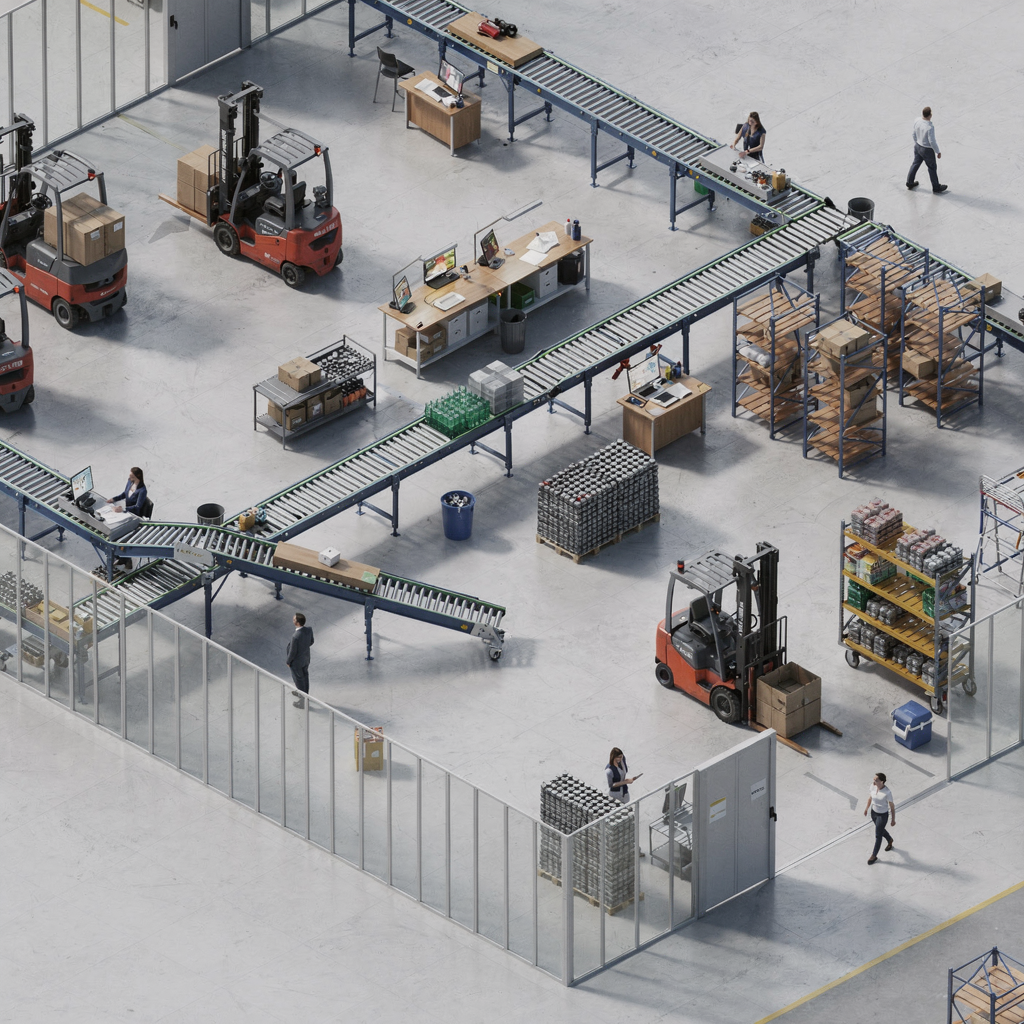
Virtual warehouse models built in Enterprise Dynamics® help decision makers visualize layout changes, conveyor routing, and picker assignments. These create virtual models of production lines, distribution centers, and warehouse flows so teams can experiment with resource allocation and layout tweaks. For example, simulation studies show simulation-based approaches have grown over 40% in academic publications over the past decade, pointing to wider adoption of these methods (review on supply chain disruptions and resilience). That strength matters when stakeholders want measurable outcomes.
Enterprises use these models to reduce costs and improve throughput. In practice, companies integrating ERP or enterprise resource planning with simulation report efficiency gains and lower inventory holding by about 20‑30% in some studies (integrated logistics and ERP research). Thus virtual warehouses support evidence-based investment planning. Loadmaster.ai uses similar digital twin techniques when training RL agents for container terminals. We spin up a digital twin, train agents, and then test policies in controlled experiments to ensure safe and robust deployment.
Key terms used here include simulation model, digital twin, and visualization. These help cross-functional teams understand how changes ripple through the flow of goods and the broader supply chain. Finally, because many readers search for hands-on tooling, note that simulation software choices affect modeling fidelity and run times, so selecting the right platform matters early in any program.
Overview of simulation software for logistics
Simulation software for logistics ranges from lightweight 2d and 3d visualizers to enterprise-grade platforms that support complex simulations and high-fidelity digital twins. Vendors vary by features: some focus on pre-built industry-specific libraries and drag-and-drop model assembly, while others target advanced users who need a debugger, scripting access, or the atom editor for fine control.
Enterprise Dynamics® sits among the leading choices because it balances visualization capabilities, configurable logic, and support for external systems. The incontrol simulation solutions suite includes a logistics library and tools to build complex simulation models, and it supports 2d or 3d presentations. For teams deciding which tool to use, consider model fidelity, run times, and integration with warehouse management systems and ERP. For container terminal teams, readers can find comparisons of tools and use cases in our review of terminal simulation tools (what simulation software do container terminals use).
When comparing options, note that some packages emphasize rapid model construction with drag-and-drop blocks and pre-built conveyors and forklifts. Others, like Enterprise Dynamics®, let analysts customize objects and implement event-oriented logic to mirror real-world processes. That flexibility matters for custom transport systems and production lines. The right software impacts model fidelity and run times. For example, discrete-event approaches model queuing and resource contention precisely, so they often run faster than full physics-based models for the same warehouse processes.
Another consideration is the ability to connect simulation outcomes to planning systems. Integration with excel spreadsheets or ExcelActiveX controls speeds data exchange, while APIs allow linkages to TOS or WMS. For more on combining simulation and terminal operating systems, see our article on TOS and simulation differences (TOS vs simulation differences). Finally, budget and learning curve matter. The Home Edition and entry-level toolkits let smaller teams learn core concepts before scaling to enterprise deployments.
Drowning in a full terminal with replans, exceptions and last-minute changes?
Discover what AI-driven planning can do for your terminal
Discrete event simulation in complex systems
Discrete event simulation models systems as a sequence of time-based events. Each event changes the state of one or more simulation objects. In logistics, events include arrivals, departures, machine failures, and shift changes. This event-oriented design mirrors real operational decision points, which helps teams test multiple scenarios quickly.
Discrete event simulation supports workflows that include queuing, resource contention, and batching. Modelers predefine process steps, resource allocation rules, and routing logic, and then run multiple scenarios to measure performance. A typical workflow starts with scoping the network, mapping the flow of goods, and creating virtual models of distribution centers and conveyor paths. Then analysts calibrate the model with real data, run experiments, and analyze simulation outcomes to test capacity or identify bottleneck nodes.
Complex systems such as multi-site distribution networks benefit from this approach. For example, simulating peak-season throughput across several regional hubs reveals cascading constraints that single-site models miss. A well-designed simulation model can show how a short delay at a port or a breakdown at a cross-dock affects downstream warehouses and customer fulfillment. Researchers note that combining simulation with machine learning can improve predictive accuracy by up to 25%, improving forecasting for uncertain conditions (simulation and ML in supply chains).
Case study: simulating peak-season throughput. A retailer used an ED Logistics model to simulate peak flows across three distribution centers. The model included conveyors, pack stations, and dynamic routing logic. After running multiple scenarios, the team changed shift overlap times and added a temporary sorter. The simulation revealed a 15% improvement in throughput and a measurable reduction in congestion at critical conveyors and packing islands. That outcome matches other studies that show big data plus simulation can reduce logistics operational costs by 15–20% (big data analytics in supply chain).
Discrete event simulation is powerful because it lets teams test multiple scenarios and tune policies with clear KPIs. Companies like Loadmaster.ai use such models as the sandbox digital twin to train reinforcement learning agents. We simulate millions of decisions to create robust policies that generalize across changing terminal states.
Fields of application: intralogistics and supply chain
Intralogistics covers the internal movement and storage inside a warehouse. Key processes include picking, packing, sorting, and conveyor routing. Simulation maps these processes to pre-built conveyors, pick stations, and sorter objects so teams can identify inefficiency and test fixes. For example, simulating picker routing and conveyor timing often surfaces bottleneck points at packing islands or choke points at sorter merges.
Across the wider supply chain, simulation helps plan facility locations, transport modes, and supplier scenarios. It supports upstream activities like inbound scheduling and downstream tasks like last-mile delivery. Simulating entire supply chains lets teams test responses to supplier disruption, port delays, or demand spikes. A recent review highlights that simulation provides a powerful tool to anticipate and mitigate risks in complex logistics systems (“simulation provides a powerful tool to anticipate and mitigate risks”).
Risk management and resilience scenarios are common fields of application. For example, teams run multiple scenarios that include equipment failure, sudden demand surges, or labor shortages. The simulation then shows which mitigations pay off. In practice, combining simulation with AI and big data enables adaptive control and real-time decisions in Logistics 4.0 setups (Logistics 4.0 potential). This approach helps teams balance trade-offs like quay productivity versus yard congestion in terminal contexts.
Another intralogistics use is testing warehouse management systems and integrations. Simulated scenarios can validate WMS logic and ERP interactions before roll-out. For container terminals, connecting simulation to TOS and telematics is common. See our resources on terminal equipment and berth scheduling for examples and tool recommendations (terminal equipment scheduling solutions) and (port berth scheduling simulation tools). Overall, simulation supports both daily operations and strategic investment planning across the supply chain.
Drowning in a full terminal with replans, exceptions and last-minute changes?
Discover what AI-driven planning can do for your terminal
Optimise material handling and key features of Enterprise Dynamics
Material handling systems include conveyors, sorters, AGVs, cranes, and manual pickers. Common bottleneck patterns occur at merges, sorters, and manual workstations. To optimize these areas, teams test layout tweaks, change buffer sizes, and alter resource allocation. Small layout changes often yield outsized gains. For example, adding a short buffer before a sorter can smooth peaks and improve throughput.
Enterprise Dynamics® provides rich visualization capabilities and configurable control modules to support such experiments. The platform supports 2d and 3d rendering so stakeholders can see both plan views and animated, high-resolution scenes. It also supports external 3d models and VR output like Oculus for immersive review. The atom editor and Atom tools let advanced users customize logic and create drag-and-drop templates for repeated patterns. Users can customize objects and use an integrated debugger to step through event sequences when they need to diagnose inefficiency precisely.
Key features of enterprise include animation, data analytics, and control modules that allow teams to test multiple scenarios and predefine rules. Enterprise Dynamics® offers pre-built conveyors, industry-specific libraries, and configurable WMS connectors so simulation outcomes can feed into warehouse management systems and ERP. Version options such as 10.6 and version 10.6.1 provide incremental improvements, including better interact configurations and expanded logistics library elements. The platform includes ExcelActiveX links for exchanging data with excel spreadsheets and for rapid KPI reporting.
Optimization techniques range from simple to advanced. At the basic level, change buffer lengths and reroute flow. At the advanced level, implement resource allocation policies that adapt to queue lengths or predicted arrivals. Loadmaster.ai uses similar optimization thinking when training RL agents: we test policies in a digital twin, measure KPIs like moves/hour and driving distance, and then deploy policies that strike multi-objective trade-offs. Simulation can thus both optimize and validate decisions before live changes.
Infrastructure, scalable platforms and home edition
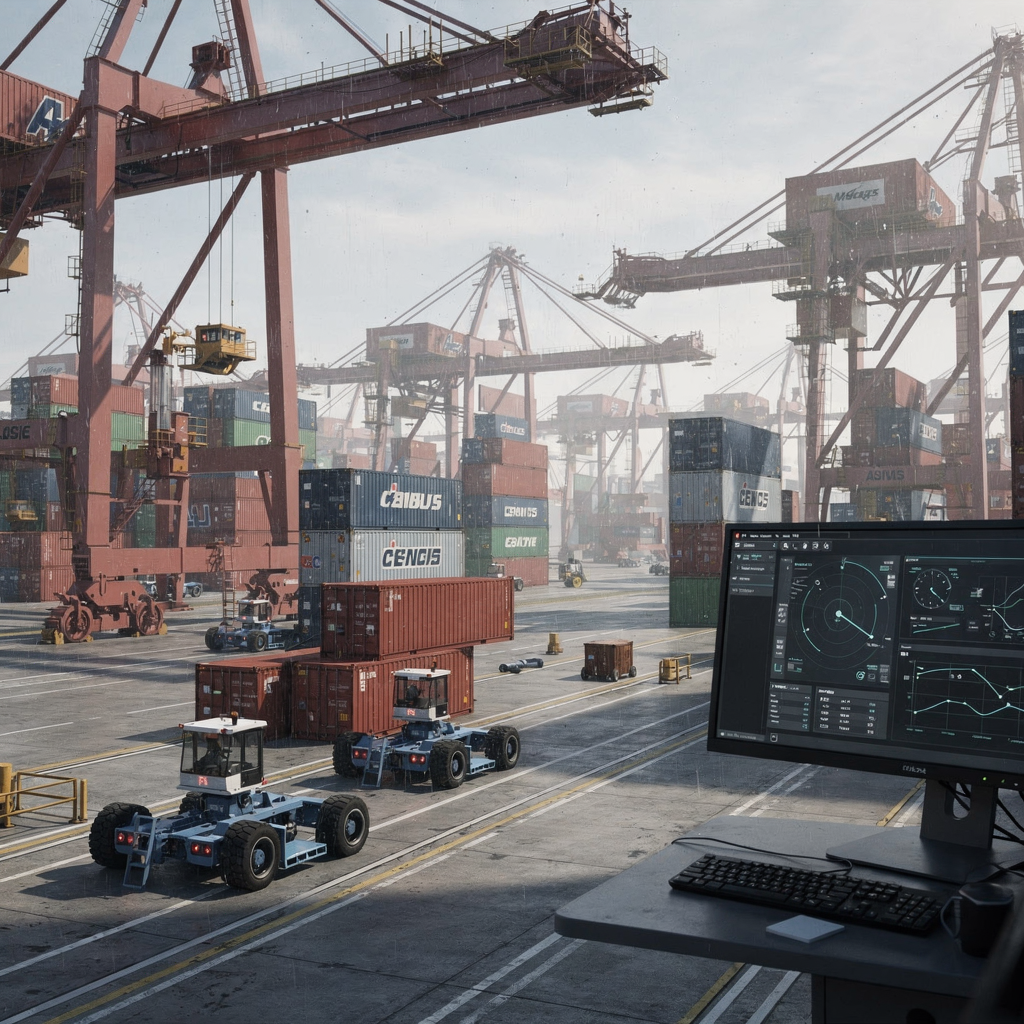
Infrastructure choices shape how quickly models run and how large they scale. For enterprise-scale simulation, teams typically deploy scalable compute clusters, on-premise servers, or cloud instances to parallelize runs. Scalability and scalability planning reduce runtime for large experiments and allow running many multiple scenarios overnight. That approach helps test policies under hundreds of stochastic realizations to measure risk and variance.
Enterprise deployments must also account for integration with external systems, telemetry, and TOS. Good platforms support APIs and connectors so the simulation can ingest live data or feed results to planning tools. For port and terminal teams, simulation often integrates with terminal operating systems and equipment telemetry to make models realistic. Our page on terminal decision support provides implementation patterns and system links for teams exploring integration (terminal decision support simulation).
The Home Edition targets learning and smaller projects. It gives students and small teams access to a reduced feature set that still supports build complex simulation models and create virtual models of warehouses. The Home Edition includes many pre-built objects and drag-and-drop assembly so users can learn discrete event concepts without heavy infrastructure. It also serves pilots that later scale onto enterprise clusters. Key infrastructure features include parallel processing support, cloud snapshots, and a model debugger for complex simulations.
Finally, consider total cost of ownership. Scalable systems reduce runtime and let analysts test more ideas. They also allow teams to better test capacity, to validate resource allocation rules, and to reduce the risk of poor investments. If you manage terminals, you can read about capacity investment decisions and modeling yard operations in our practical guides (simulation for capacity investment) and (how to model container yard operations). With the right infrastructure and tooling, simulation becomes a dependable part of planning and operational improvement.
FAQ
What is enterprise dynamics and how does it differ from other platforms?
Enterprise Dynamics® is a discrete-event simulation product that emphasizes object-oriented modeling and visualization. It differs by offering deep customization, a logistics library, and strong connectors for ERP and WMS integration.
Can I simulate both 2d and 3d warehouse layouts?
Yes. Enterprise Dynamics® supports 2d and 3d rendering so you can view plan layouts and animated scenes. You can also combine 2d for quick experiments and 3d for stakeholder walkthroughs.
Does simulation help with risk management in supply chains?
Absolutely. Simulation helps visualize disruption impacts and test contingency plans. Researchers also state that “simulation provides a powerful tool to anticipate and mitigate risks” in complex logistics systems (source).
What are the infrastructure needs for enterprise-scale modelling?
Enterprise-scale modeling benefits from scalable compute, either cloud or on-premise clusters. Parallel processing shortens run times and supports many stochastic runs to test multiple scenarios and measure variability.
How do I connect simulation to my WMS or ERP?
Most platforms offer APIs and ExcelActiveX or csv connectors for integration. Enterprise Dynamics® supports Excel integration and configurable connectors to link simulation outcomes to warehouse management systems and ERP.
Is there a version suitable for learning and pilots?
Yes. The Home Edition provides a lighter footprint for learning and proof-of-concept projects. It includes pre-built objects and drag-and-drop tools to accelerate model building.
Can simulation reduce operational costs?
Simulation combined with analytics and improved workflows can reduce operational costs. Studies show combining big data analytics and simulation can cut logistics costs by roughly 15–20% (study).
How does Loadmaster.ai use simulation in terminal AI?
Loadmaster.ai creates a digital twin of container terminals and uses simulation to train reinforcement learning agents. These agents learn policies by simulating millions of decisions so they can perform well in live operations without relying on historical data.
What types of problems can discrete event simulation solve?
Discrete event simulation handles queuing, resource allocation, throughput testing, and what-if analysis for production lines, conveyor systems, and transport systems. It is especially useful for event-driven operations and time-based events.
Where can I learn more about simulation for terminal planning?
We provide practical guides and tool comparisons for terminals. Start with our articles on terminal optimisation digital twin and reducing terminal bottlenecks to explore case studies and software choices (terminal optimisation digital twin) and (reduce terminal bottlenecks).
our products
 stowAI
 stackAI
 jobAI
jobAI
Innovates vessel planning. Faster rotation time of ships, increased flexibility towards shipping lines and customers.
Build the stack in the most efficient way. Increase moves per hour by reducing shifters and increase crane efficiency.
Get the most out of your equipment. Increase moves per hour by minimising waste and delays.
stowAI
Innovates vessel planning. Faster rotation time of ships, increased flexibility towards shipping lines and customers.
stackAI
Build the stack in the most efficient way. Increase moves per hour by reducing shifters and increase crane efficiency.
jobAI
Get the most out of your equipment. Increase moves per hour by minimising waste and delays.