
tos and simulation in container terminal operations
A terminal operating system sits at the centre of modern container management. The TERMInal operating system coordinates gate checks, vessel planning, and yard allocation while communicating with handling equipment and shore systems. TOS links berth planning and landside flows. It informs who does which move, and when. At the same time, simulation acts as a virtual sandbox that helps teams test schedule changes, swap allocation rules, and evaluate stack heights without touching live operations.
Simulation allows planners to test arrival pattern shocks, measure travel distance impacts, and validate quay crane sequences. For example, academic work shows that microsimulation helps improve terminal throughput by 10–20% and reduce operational time by about 12% when TOS features are optimised (study). In practice, simulation provides a safe simulation environment to test the interaction between RTGs, straddle carriers, and AGVs before changes go to production. This reduces yard congestion and helps terminal managers craft allocation rules that shorten travel and reduce reshuffle events.
From the yard operations view, container stacking policies, gate lanes sizing, and crane cycles can be tuned in a model. That tuning yields measurable gains in utilisation and reduce idle time for cranes and tractors. For instance, Konecranes’ CONTROLS emulation and Equipment Control System linkage helps tune parameters to cut idle time and boost utilisation by up to 15% in some deployments (Konecranes). Because shipping lines change schedules, a combined TOS and simulation approach supports frequent what-if runs. As a result, terminal operators see fewer surprises at the berth and stronger operational efficiency.
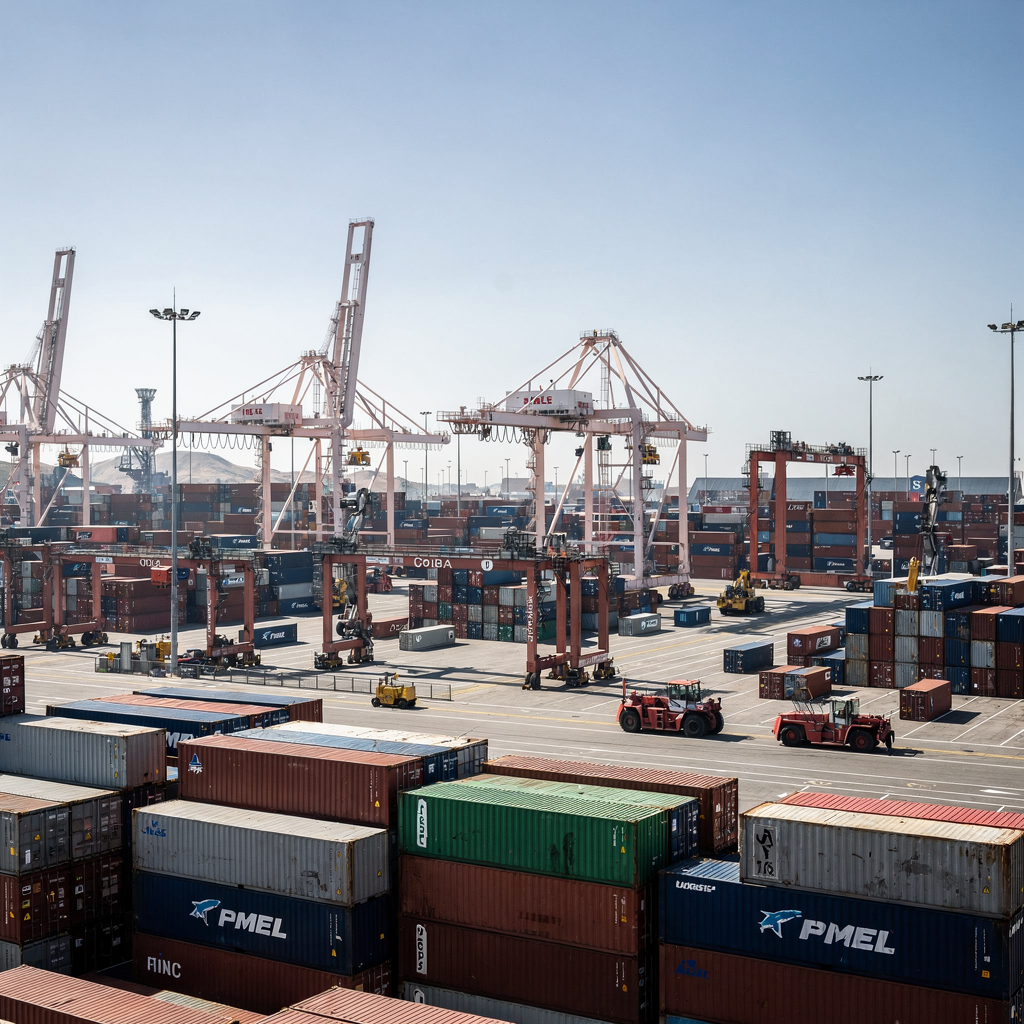
Building a real-time simulation model for terminal optimisation
Building a real-time simulation model starts with extracting data from your TOS and sensors. First, map processes: gate to yard, yard to quay, and quay to landside. Next, select a fitting container terminal simulation software or port terminal simulation tools that support live feeds and an interface to the TOS. Integration requires clear APIs and EDI channels so that vessel arrival times, booking data, and equipment telemetry stream into the model as real-time input.
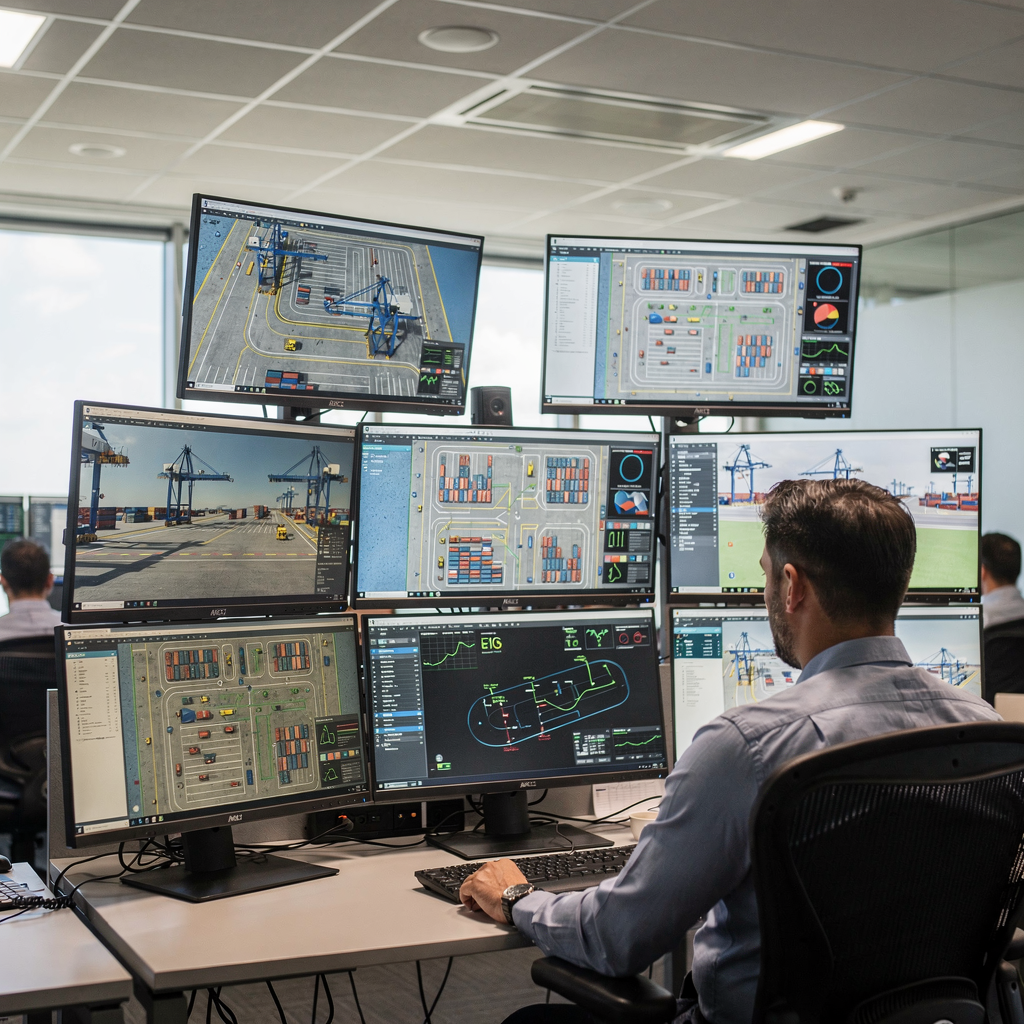
A robust simulation model must ingest real-time data such as crane cycles, truck arrival timestamps, and RTG positions. Then, the model must replay and predict container flow, helping terminal planners and the planner role validate changes before execution. For accuracy, calibrate travel distance metrics and handling equipment performance with on-site telemetry. Calibration is the step that lets the model represent your specific container yard and stack heights.
When done well, the closed-loop setup uses live measurements to update the simulation and feed adjustments back to the TOS. Terminals that link digital twin technology with TOS have reported measurable gains: for example, throughput improvements of 10–20% and up to a 12% reduction in operation time in academic and industry reports (research). To further explore comparison choices, see a practical guide to simulation and optimisation tools for TOS that details tool selection and integration patterns (simulation and optimisation tools). Finally, validate the model with a decision support study that compares model predictions to short pilots before wider rollout.
Drowning in a full terminal with replans, exceptions and last-minute changes?
Discover what AI-driven planning can do for your terminal
Integrate tos with automation to enhance container handling
Linking TOS with automation unlocks higher crane productivity and smoother yard flows. A notable product example is CONTROLS emulation by Konecranes, which ties emulation to Equipment Control Systems (ECS) so teams can tune move sequences without risking live operations (Konecranes). This kind of integration helps reduce idle time and increase utilisation of quay crane and RTGs on peak shifts. Adjustments made in the emulator are then transferred to the TOS or the ECS for staged rollout.
Automation components range from AGVs and RTGs to straddle carriers and automated quay crane controls. AI-driven agents can then propose parameter changes that shorten travel and improve throughput. For example, digital twin pilots show that AI adjustments to crane cycles and yard tractor dispatch can cut reshuffle and reduce idle time, resulting in better utilisation by roughly 15–18% in some case studies (industry report).
At Loadmaster.ai we use a closed-loop approach: we spin up a digital twin, train reinforcement learning agents, and then present policy suggestions that are safe by design. The system coordinates StowAI for quay planning, StackAI for yard allocation, and JobAI for execution. That approach reduces unnecessary shifters and balances loads across RTGs and straddle carrier fleets. To compare TOS choices and how they connect to automation, our notes on Navis vs Kaleris provide context on system interfaces and integration readiness (Navis vs Kaleris). When you integrate TOS with automation, make sure allocation rules, gate lanes, and operator guardrails remain clear and auditable.
Port simulation case study: improving throughput in a container terminal
A mid-sized port deployed a digital twin technology solution linked to their TOS to address high dwell times and unpredictable yard congestion. The terminal operator first ran a decision support study and then used the simulation and TOS integration to trial layout changes. In simulation-driven pilots the team tested revised yard allocation, moved some stack heights, and changed quay crane pairings to improve container flow and reduce truck turnaround.
Before the project, the terminal struggled with uneven RTGs and straddle carrier workloads. After integration and tuning, the terminal recorded a 15% rise in throughput and 25% fewer disruptions during peak windows, according to empirical reports and industry summaries (TBA Group). The pilot validated that reducing unnecessary reshuffle and increasing moves per hour at the quay delivered both faster gate processing and shorter vessel stays. The operators used a simulation environment to rehearse operator decisions and to train staff on new sequences so that live operations saw minimal friction when the new plan rolled out.
Operator training in the emulator also improved human decision-making. Trainees practiced rare failure modes such as sudden berth delays and coordinated responses with the terminal operator role. The simulation allowed the team to assess changes to crane cycles, inspect the trading platform of booking windows, and then measure the impact on container stacking patterns. Internally, teams tracked performance indicators like moves per hour and average truck wait. For teams who want to evaluate similar pilots, a review of port logistics simulation software reviews can help select appropriate tools (software reviews).
Drowning in a full terminal with replans, exceptions and last-minute changes?
Discover what AI-driven planning can do for your terminal
Leveraging real-time data in terminal operations
Real-time data changes how terminals react to shifting conditions. Live telemetry from quay crane encoders, truck GPS, and gate RFID readers feeds predictive analytics that recommend crane assignment and truck scheduling. This approach helps the planner identify bottlenecks quickly and to validate suggested reschedules before committing them. Real-time data also prevents hidden slippage that weakens measurement when feeds are delayed, a point highlighted in industry analysis of simulation vs tos (analysis).
Predictive models forecast vessel arrival and truck surges, allowing the terminal operator to pre-position containers and to adjust yard allocation. For example, live operations that incorporate real-time data reduce dwell time at gates by reallocating gate lanes and by pre-assigning yard blocks. The result is faster decision-making and reduced queuing. A strong feed into the container terminal simulation software ensures that the model mirrors current conditions and that the simulated actions remain executable in the field.
Real-time feeds also support monitoring of handling equipment health. Predictive alerts can redirect work from a struggling quay crane or an RTG showing high vibration. In practice, terminals use these alerts to schedule brief maintenance windows and to keep crane cycles stable. The closed-loop flow of data, simulation, and execution therefore improves operational efficiency while lowering cost. For teams interested in capacity choices, terminal capacity planning software offers templates and dashboards to tie predictions back into investment decisions (capacity planning).
AI-driven simulation model to integrate tos and automation
Next-generation digital twins embed machine-learning optimisation loops that test thousands of small policy variations. A simulation model fed by reinforcement learning can search beyond human heuristics to improve throughput while protecting yard balance. Loadmaster.ai builds closed-loop agents that learn within a sandbox and then deploy with guardrails. This approach removes dependence on historical data and produces policies that adapt to new arrival pattern mixes and unexpected disruptions.
Industry forecasts suggest that AI can boost equipment utilisation and reduce disruptions. Reported gains include up to an 18% rise in utilisation and a 25% cut in operational disruptions when AI and digital twin technology are combined with TOS-driven controls (industry). Simulation-driven agents can automatically adjust allocation rules, rebalance yard allocation, and propose AGV paths that shorten travel. That kind of optimisation may also improve throughput metrics when operators focus on multi-objective goals such as protecting the berth while reducing yard congestion.
Best practices for integration require clear interfaces, fail-safe constraints, and phased trials. Integration requires stakeholder alignment, a robust interface between TOS and the simulation, and staged go-live plans. Teams should also track performance indicators continuously and use a decision support study to compare pre- and post-deployment metrics. To get started, teams often review tools that specialise in terminal decision support simulation and in enterprise simulation tools for port logistics to pick a stack that fits their technology and governance needs (decision support) and (enterprise tools). When done correctly, the closed-loop AI agents increase moves per hour, reduce idle time, and deliver consistent performance across shifts, giving terminal managers the predictability they need.
FAQ
What is the difference between TOS and simulation?
TOS runs live operations, managing bookings, gate checks, and resource allocation in real-time. Simulation models mimic those processes to test scenarios without impacting live operations.
Can simulation validate changes before they go live?
Yes. A simulation allows teams to validate parameter changes, allocation rules, and layout modifications safely. It reduces risk by predicting impacts on crane cycles and yard congestion.
How does digital twin technology help container terminals?
Digital twin technology creates a virtual replica of the terminal that mirrors live telemetry and schedule data. It supports AI training, what-if analysis, and operational rehearsals to improve operational efficiency.
Do AI agents need historical data to work?
Not always. Reinforcement learning agents can learn via simulated experience inside a digital twin, so they can start without extensive historical records. This avoids repeating past mistakes present in archived data.
What gains can operators expect from emulation tools?
Tools like CONTROLS help tune automation parameters and can boost utilisation while reducing idle time. Industry cases report up to 15% improvement in utilisation when properly implemented.
How important is real-time data feed to simulation accuracy?
Real-time data is crucial for accurate emulation and prediction. Live feeds reduce slippage in measurements and help models respond to changing vessel arrival and truck patterns.
Can simulation help reduce reshuffle events?
Yes. Simulation-driven yard allocation and stack planning reduce reshuffle by optimising container stacking and access. This reduces unnecessary moves and lowers handling costs.
What role do terminal managers play in AI deployments?
Terminal managers set KPI priorities, approve allocation rules, and supervise phased rollouts. Their expertise guides the AI agents and ensures operational governance and safety.
Are these systems compatible with existing TOS solutions?
Most modern AI and simulation platforms use APIs and EDI to connect with leading TOS products. Loadmaster.ai, for example, is TOS-agnostic and designed to integrate via standard interfaces.
How should a terminal start a simulation project?
Begin with a decision support study, choose a port terminal simulation tool that supports live feeds, and run small pilots in a simulation environment. Validate results against real measurements before wider deployment.
our products
 stowAI
 stackAI
 jobAI
jobAI
Innovates vessel planning. Faster rotation time of ships, increased flexibility towards shipping lines and customers.
Build the stack in the most efficient way. Increase moves per hour by reducing shifters and increase crane efficiency.
Get the most out of your equipment. Increase moves per hour by minimising waste and delays.
stowAI
Innovates vessel planning. Faster rotation time of ships, increased flexibility towards shipping lines and customers.
stackAI
Build the stack in the most efficient way. Increase moves per hour by reducing shifters and increase crane efficiency.
jobAI
Get the most out of your equipment. Increase moves per hour by minimising waste and delays.