
simulation model of container terminal operations
First, define the scope clearly. A good simulation model begins by naming the flows to represent: import, export and transshipment activities. These three activity types cover the main INTERMODAL movements and determine yard layout and staffing. In practice, terminals manage quayside work, internal yard stacking, and gate handling as linked subsystems. You model vessel arrival patterns and truck waves, and then define resource pools for quay cranes, RTGS, straddle carriers, and terminal tractors. The modelling step also sets SYSTEM REQUIREMENTS for data refresh, telemetry, and TOS integration.
Second, list the key components. The quayside requires berth allocation logic and quay cranes for container moves. Yard STACKING rules control placement, reshuffles, and dwell time. Gate handling covers truck booking, check-in, and dispatch. You also model rail and road interfaces for multimodal connections. To capture real behaviour, include handling systems like RTGS and straddle alongside automated equipment. This helps quantify trade-offs between quay crane productivity and yard congestion.
Third, select the right tool. Many teams use AnyLogic for combined agent-based and discrete-event approaches. anylogic’s hybrid support helps when you need both flow-level DES and agent actions for trucks or automated guided vehicles. Use AnyLogic to replay traffic patterns and to calibrate service times against measured data. When you want to connect a digital twin to live telemetry, ensure your TOS API endpoints and IoT feeds are available for model updates. For further reading on TOS compatibility and options, see our guide to the best terminal operating systems for 2025 (best terminal operating systems).
Finally, name one design goal. You might aim to reduce berth occupancy by 10% or increase throughput by 8%. A STATEMENT of measurable goals guides whether you build a greenfield layout or test optimisation of existing assets. Since many ports trade off several KPIs, involve all stakeholder groups early. That includes the vessel planners, yard strategists, and the shift-level planner who will use the model outputs.
discrete event simulation in port terminals
Discrete event simulation is the backbone for most port-level studies. In a DES, the system advances from event to event. Events include vessel arrival, crane cycle start, truck check-in, and container pickup. This method suits stochastic systems because it captures random arrivals and service times accurately. You should include a clear definition of events and event scheduling rules before coding starts. This ensures deterministic components remain separate from probabilistic ones.
Handling stochastic arrivals matters. Vessel arrival patterns are not fixed; they vary with shipping lines and weather. You must model vessel arrival distributions and truck waves. Use measured interarrival times and distributions for service times. For vessel arrival modelling and resilience, see work on digital twin approaches that assess port resilience and sustainability (digital twin for resilience). When you use simulation to test extreme scenarios, the model reveals how QUEUE lengths and vessel delays grow under stress.
Data requirements are practical and precise. You need historical logs of service times, crane cycles, gate processing, and container dwell. Calibrate your simulation model developed from this data. Include service times distributions, crane move cycles, and truck interarrival curves. Capture RTG and straddle working patterns, and measure idle time. You must also record QC counts and quay crane productivity to validate outputs. For example, a study reported quay crane productivity around 30 moves per hour in high-frequency services (performance analysis for a maritime port).
Finally, include replay and what-if runs. A good simulator can replay historical days and then run counterfactual scenarios. This lets planners test labour shortages, equipment failures, and deterministic gate closures. The simulation provides a risk-free sandbox where planners can quantify impacts on berth occupancy and throughput. Use DES for operational experiments, and consider agent-based extensions when individual vehicle behaviour matters.
Drowning in a full terminal with replans, exceptions and last-minute changes?
Discover what AI-driven planning can do for your terminal
terminal simulation software and automation
Start by listing software features you need. Terminal simulation software should model quay cranes, yard blocks, gate lanes, and automated equipment. It must support scenario management, replay, and KPI dashboards. You should choose a tool that integrates with TOS and can consume IoT feeds. A digital twin adds value when you require continuous calibration with live data. Academic work highlights the need for reliable data to keep a digital twin useful: “Only reliable data, collected daily and interfaced with the terminal’s TOS, can ensure the accuracy and usefulness of digital twin simulations for operational decision-making” (digital readiness study).
Next, look at automation. Automated terminals use AGVs, automated cranes, and automated equipment for yard moves. The software must model AGV routing, battery constraints, and QC sequences. It must also represent straddle and RTG behaviours for mixed operations. For terminals that plan to deploy closed-loop AI, consider a platform that supports training agents in a sandbox digital twin. Loadmaster.ai builds RL agents that train in a simulated digital twin and then deploy with guardrails. This approach helps reduce rehandles and balance workloads.
Then, verify integration needs. The simulator should connect to your TOS. For guidance on TOS selection and integration patterns, our resource on simulation and optimisation tools for TOS explains typical APIs and workflows (simulation and optimisation tools for TOS). Also, check the compatibility list for your current terminal operating system in case you need adapters (TOS comparison).
Finally, plan for real-time inputs. Use IoT for equipment telemetry and gate sensors. Feed real-time QC counts and quay crane productivity into the model. This enables short-term planning and automated dispatch decisions. The software must also offer a dashboard for decision support so operators can act on model outputs. A good platform will allow replay, live experiments, and safe deployment to production.
optimisation of supply chain and terminal operations
Techniques for berth allocation and crane scheduling reduce vessel delays and increase throughput. Start with heuristic scheduling and then layer optimisation algorithms. Mixed-integer programming works for berth windows, while metaheuristics often help for crane sequencing. Use optimisation to balance crane productivity against yard congestion. For many terminals, the trade-off between quay efficiency and yard driving distances creates a recurring bottleneck. A focused optimisation routine can reduce rehandles and long drives.
Yard layout optimisation also matters. Simulation helps evaluate different yard block sizes, stacking heights, and RTGS positions. You should test container stacking rules, like dedicated import blocks or rotation-based storage. Changing stacking rules can reduce dwell time for import boxes and improve service levels for shipping lines. Use simulation to quantify expected gains before making physical changes.
Optimisation algorithms improve throughput. Combine deterministic planners and RL or heuristic optimisers for multi-objective control. Loadmaster.ai, for example, trains StowAI and StackAI to optimize multiple KPIs simultaneously. These agents balance quay crane productivity and yard workloads, and they adapt to vessel arrival variability. When you need to optimize gate windows, algorithms can recommend timed truck slots to minimize gate queuing.
Also, consider operational robustness. Algorithms should handle unknowns and vessel delays. Use scenario testing to locate the worst-case bottleneck and to improve robustness. A case study shows how simulation helped a terminal lower berth occupancy and vessel turnaround by testing multiple berth-allocation strategies under peak shipping lines demand (simulation for ports).
Drowning in a full terminal with replans, exceptions and last-minute changes?
Discover what AI-driven planning can do for your terminal
case studies in port simulation and container port planning
Example 1: reducing berth occupancy and vessel turnaround. A terminal ran a simulation model that combined berth allocation with crane sequencing. They used DES to test different berth windows and crane assignments. The study reported that optimizing sequence logic cut average vessel turnaround by 12%. The findings referenced quay crane productivity targets and berth occupancy metrics to validate gains (performance analysis). Case studies like this illustrate how targeted changes can yield immediate results.
Example 2: minimising gate congestion through scheduling. Another study modelled truck arrival waves and gate processing. Planners introduced time-windowed bookings and automated gate lanes. The model showed gate queues fall by over 40% during peaks. The experiment used real TOS logs and sensor data to tune service times. This created a more predictable flow for road and rail, and it helped shift the terminal from firefighting to planned handovers.
A case study shows how simulation can also support greenfield planning. In those projects, teams test yard layouts and quay crane numbers before construction. The simulation model developed scenarios to balance capital expense and expected throughput. Simulation helped stakeholders see trade-offs visually. It gave planners evidence to choose a design that met service levels and capital limits.
Lessons learned and best practices include early stakeholder engagement and clear KPIs. Include planners, terminal operating managers, and stevedore teams. Use short runs for validation, and then scale experiments. Finally, make sure your simulator links to the TOS and can replay historical days for validation. For guidance on enterprise tools and open-source options, explore our resources on enterprise simulation tools for port logistics (enterprise simulation tools) and open-source solutions (open-source terminal simulation software).
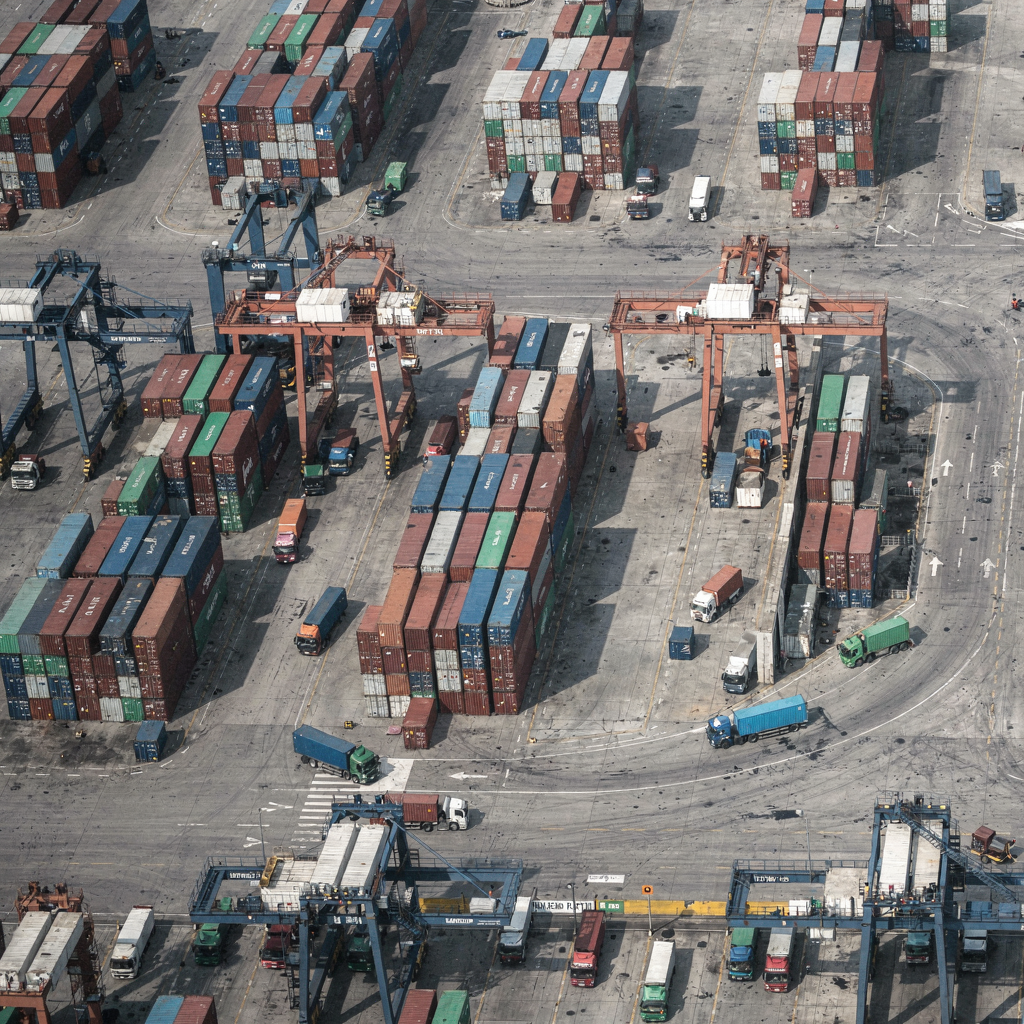
minimise delays with terminal simulation software at container port
Scenario testing helps you prepare for labour shortages and equipment failures. Run scenarios for sudden QC outages, for a failed quay crane, and for severe weather. These tests reveal where a single failure causes wide disruption. You can then design mitigation steps to reduce vessel delays and to protect service levels. With the right simulation, you can rehearse decision sequences before you deploy them in live operations.
A decision support dashboard turns data into action. A dashboard should show berth occupancy, crane productivity, and TEU throughput in real time. It should also display yard heatmaps and gate queues. When you combine a dashboard with simulation, you get forward-looking alerts. These alerts help planners move from reactive firefighting to proactive control. Use metrics that matter to stakeholders, and include a replay to show why a recommendation exists.
Continuous improvement depends on feedback loops. Deploy policies in a sandbox, measure outcomes, and then refine rules. Reinforcement learning agents can train in a risk-free digital twin and then deploy with operational guardrails. This approach reduces idle time and rehandles. It also increases robustness across shifts. Loadmaster.ai offers a method to spin up a digital twin, train agents, and then deploy safely. The process is risk-free because agents learn in simulation and not on live vessels.
Finally, pick the right simulation. The right simulation balances accuracy and runtime. It should integrate with your TOS and provide APIs for data exchange. When you use simulation to guide operational changes, measure before and after. Quantify gains in berth occupancy and container moves. That will show stakeholders the value of investing in simulation and automation for port and terminal operations.
FAQ
What is a container terminal simulation?
A container terminal simulation is a virtual representation of quay, yard, and gate processes. It uses models like discrete event and agent-based to test scenarios without risk to live operations.
Why should terminals use simulation?
Simulation provides a risk-free way to test operational changes and to quantify impacts on KPIs. It helps planners reduce bottlenecks and improve service levels.
Which software supports terminal simulation?
Tools like AnyLogic support hybrid modelling, while specialised port simulation software offers TOS connectors. For TOS-specific integrations, review enterprise simulation options on our site.
How does a digital twin differ from a simulator?
A digital twin uses live data to mirror operations continuously, while a simulator often runs offline scenarios. Digital twins require reliable TOS and IoT feeds for ongoing accuracy.
Can simulation help reduce berth occupancy?
Yes. By testing berth allocation and crane schedules, simulation can lower berth occupancy and shorten vessel turnaround, as shown in academic studies.
What data do I need to run a meaningful simulation?
You need vessel arrival logs, service times, crane cycles, gate processing times, and yard handling rules. Accurate data improves calibration and robustness.
Is automation modelled in terminal simulations?
Yes. Simulation can represent AGVs, automated cranes, RTGS, and straddle behaviour. This helps evaluate mixed human-automation scenarios.
How do I measure success after changes?
Use KPIs like berth occupancy, quay crane productivity, and TEU throughput. Compare baseline runs with post-change simulations to quantify benefits.
Can simulation support greenfield planning?
Absolutely. Greenfield projects use simulation to test layout, equipment counts, and service levels before construction. It reduces capital risk and improves design choices.
How do reinforcement learning agents work with a digital twin?
Agents train in a sandbox digital twin and learn policies that balance multiple KPIs. After training, they deploy with guardrails and live feedback to ensure safe operations.
our products
 stowAI
 stackAI
 jobAI
jobAI
Innovates vessel planning. Faster rotation time of ships, increased flexibility towards shipping lines and customers.
Build the stack in the most efficient way. Increase moves per hour by reducing shifters and increase crane efficiency.
Get the most out of your equipment. Increase moves per hour by minimising waste and delays.
stowAI
Innovates vessel planning. Faster rotation time of ships, increased flexibility towards shipping lines and customers.
stackAI
Build the stack in the most efficient way. Increase moves per hour by reducing shifters and increase crane efficiency.
jobAI
Get the most out of your equipment. Increase moves per hour by minimising waste and delays.