
kaleris tos and terminal operating system: Market Position and Core Features
Kaleris holds a leading name among terminal providers, and it stands out as the leading provider of supply chain systems in many discussions. In fact, Kaleris is described as the world’s largest provider of terminal operating systems, and that recognition helps explain why many terminal leaders evaluate its offerings closely (source). The company combines scale with specialized products that cover vessel planning, yard planning, and gate processing for a wide range of terminal setups, and this breadth supports both large and scaled sites.
The core of Kaleris is its platform approach, and it bundles a modern terminal operating system with modules that support container management, billing requirements, and vessel planning. The platform integrates electronic data from shipping lines and port partners, and it supports mission-critical supply chain operations with interfaces to equipment telemetry. Kaleris also develops versions that target mixed cargo and container terminal environments, and customers find that the system can manage every type of cargo, including break bulk and project cargo. The Navis brand under the Kaleris umbrella remains a recognized name in many ports and in live sites around the world (source).
Key capabilities include advanced terminal operating system features, and they range from yard planning and berth window management to vessel loading sequences. The platform supports real-time visibility and offers a visibility platform that integrates satellite feeds and on-site sensors to present a unified picture. For terminals that want to optimize throughput, Kaleris provides optimization modules and tools for terminal management. The software solution also supports specific operational processes like container handling, roro, and handling of railway and truck arrivals such as semi-trailer trucks and trailer flows.
Supply chain teams choose Kaleris to reduce manual processes, and to gain more predictable KPIs and higher terminal productivity. For terminals that require a new terminal operating system or an upgrade, Kaleris offers options to configure integration opportunities and to support go-live at scale. If you want more on how a TOS connects to simulation, see how terminal operating system simulation integration can help planning and testing terminal operating system simulation integration.
real-time visibility in mixed cargo terminals: Data Integration and Insights
Mixed cargo terminals require broad data inputs, and Kaleris focuses on aggregating feeds from satellites, IoT devices, and on-site sensors to ensure deep situational awareness. The system collects raw telemetry and then cleans and fuses that data to create a single source of truth, and operators get a common view of yard states, vessel arrival times, and gate queues. This combined approach gives terminal operators greater visibility and supports supply chain execution and visibility across complex operations (source).
Real-time dashboards show vessel ETA, berth windows, and expected moves per hour, and they help teams prioritize tasks. For example, terminals that adopt these dashboards can reduce vessel turnaround by coordinating berth window management with yard planning, and in practice some sites report a 15% reduction in turnaround when they tighten decision cycles and use data to schedule crane work and truck slots (source). The visibility platform also supports exception alerts, so planners see delays, equipment faults, or congestion early. Then they can reassign resources, and they can preserve productivity while avoiding costly rehandles.
Mixed cargo terminals must handle containers, break bulk, and ro-ro movements, and Kaleris supports those workflows within one system. The mixed cargo tos enables custom rules for cargo types and for different yard blocks, and it simplifies transitions between container handling and general cargo processing. For teams that wish to verify changes before a go-live, simulation and digital twin methods help, and readers can learn more about terminal digital twin software to validate scheduling strategies terminal digital twin software.
Finally, Kaleris supports integration with external systems, and that capability furthers streamlining operations. For mixed cargo terminals that expect changing shipping patterns, this integration maintains continuity across vessel planning, yard planning, and gate flows. As a result, terminals improve decision-making and raise operational efficiency while handling diverse cargo types and complex handling scenarios.
Drowning in a full terminal with replans, exceptions and last-minute changes?
Discover what AI-driven planning can do for your terminal
navis tos optimization modules: Boosting Equipment and Yard Efficiency
The navis tos includes core optimization modules that focus on yard planning, vessel planning, and equipment dispatch, and those modules work together to increase moves per hour and reduce unnecessary reshuffles. Navis and related products under Kaleris provide advanced optimization modules that coordinate quay cranes, straddles, and RTGs, and they aim to balance workloads across shifts. The approach reduces idle equipment and shortens job cycles, and terminals see measurable gains when they tune the modules to local rules and priorities.
Kaleris tos supports automation of container stacking and equipment dispatch, and the system uses optimization to place boxes in the yard where they minimize travel and protect future vessel sequences. In field reports, some terminals realized up to a 20% increase in yard throughput after implementing optimization and yard solutions to save time (source). These gains come from fewer rehandles, better crane productivity, and smoother handoffs between quay and yard teams. Importantly, navis tos pairs optimization modules with guardrails so planners keep control and can configure constraints that reflect local rules and KPIs.
For terminal operators who want to go beyond rules-based dispatch, advanced tools simulate what-if scenarios and recommend plans. Loadmaster.ai integrates well here, because its RL-driven agents create policies that augment vessel planning and yard strategy without requiring historical data. Our StowAI and StackAI agents can train in a sandbox and then align with the TOS; for more on simulation-led testing see the terminal throughput simulation and port terminal simulation tools that support safe trials terminal throughput simulation and port terminal simulation tools.
The result is a scalable approach to equipment usage. Terminals that adopt navis tos and complementary RL agents observe steadier performance across shifts, lower driving distances, and balanced workloads across cranes and movers. This combination supports mission-critical supply chain operations that need consistent execution and measurable terminal productivity.
mixed cargo tos for diverse cargo types: Streamlined Handling Workflows
Terminals that handle both containers and conventional loads need a unified approach, and mixed cargo tos addresses that requirement by supporting break bulk, roro, and container workflows in one system. Kaleris designed its tools to manage every type of cargo so planners avoid switching systems when cargo mixes change. This consolidation simplifies billing requirements and electronic data flows, and it reduces errors that occur when teams use separate spreadsheets or manual logs.
The mixed cargo tos provides custom rule engines that apply different handling rules for bulk, break bulk, and containerised cargo. For example, ro-ro lanes may use special staging rules for trailers and automobile shipments, and the system can reserve quay space for project cargo or oversized loads. The platform also supports special flows for railroad cars and semi-trailer trucks, and it helps planners sequence vessel loading with yard slots to reduce double-handling. Such tailored rules improve operational processes and improve efficient workflows across the terminal.
When a terminal moves from manual processes to a mixed cargo system, it gains consistent workflows and fewer exceptions. Kaleris enables terminals to configure handling rules and to create seamless transition states between cargo operations. A typical workflow might route a break bulk discharge to a temporary holding area, then to a dedicated general cargo shed, and then to road transport, while container moves follow a different yard planning path. This flexible workflow reduces bottlenecks, and it streamlines operations across cargo types.
For teams that want to validate these configurations before a go-live, simulation plays a key role. Use cases such as container-terminal-what-if-simulation help teams test berth assignments, vessel loading plans, and yard block allocations to ensure the mixed cargo tos will deliver the expected benefits container terminal what-if simulation. Ultimately, mixed cargo terminals that adopt a unified system reduce rehandles, cut dwell time, and improve service for shipping lines and customers.
Drowning in a full terminal with replans, exceptions and last-minute changes?
Discover what AI-driven planning can do for your terminal
terminal optimization with Automation: Gates, Yards and Vessel Operations
Automation within a TOS targets repetitive tasks and then frees staff to focus on exceptions and planning. Kaleris provides gate automation and appointment scheduling that speed truck turn times, and it links gate events to yard solutions so teams know where incoming containers will sit. The platform supports automated checks for booking validity, and it can integrate with electronic data to streamline billing requirements and customs entry. These automations reduce queueing at the gate and lower labour costs at peak times.
Across yard and quay, optimization ties resource allocation to equipment availability. The system provides a visibility layer so dispatchers see which cranes and straddles are free, and then they can assign moves to minimize travel. This approach helps terminals optimize crane productivity and reduce wasted time. Kaleris also supports berth window management that aligns vessel arrival estimates with crane schedules, and that alignment shortens vessel time at berth.
Automation also reduces human error by enforcing business rules during execution. For instance, the system can block moves that violate stacking rules, and it can require approvals before high-risk tasks proceed. These controls matter for mission-critical supply chain operations where mistakes cause costly delays. The platform offers cloud-based options and on-prem deployments to suit IT preferences, and it supports externalization to specialist providers when needed, because it offers various externalization choices and integration opportunities to match local strategies.
To test automated flows before committing, terminals can simulate gate peaks and equipment failures to ensure the automation holds up. Readers who want to explore integration with simulation tools can review simulation-for-terminal-operating-system-decision-support to see how models validate automation strategies simulation for terminal operating system decision support. Overall, automation in gates, yards, and vessel operations drives steady operational efficiency and consistent KPI delivery.
cargo visibility and real-time Analytics: Transforming Decision-Making
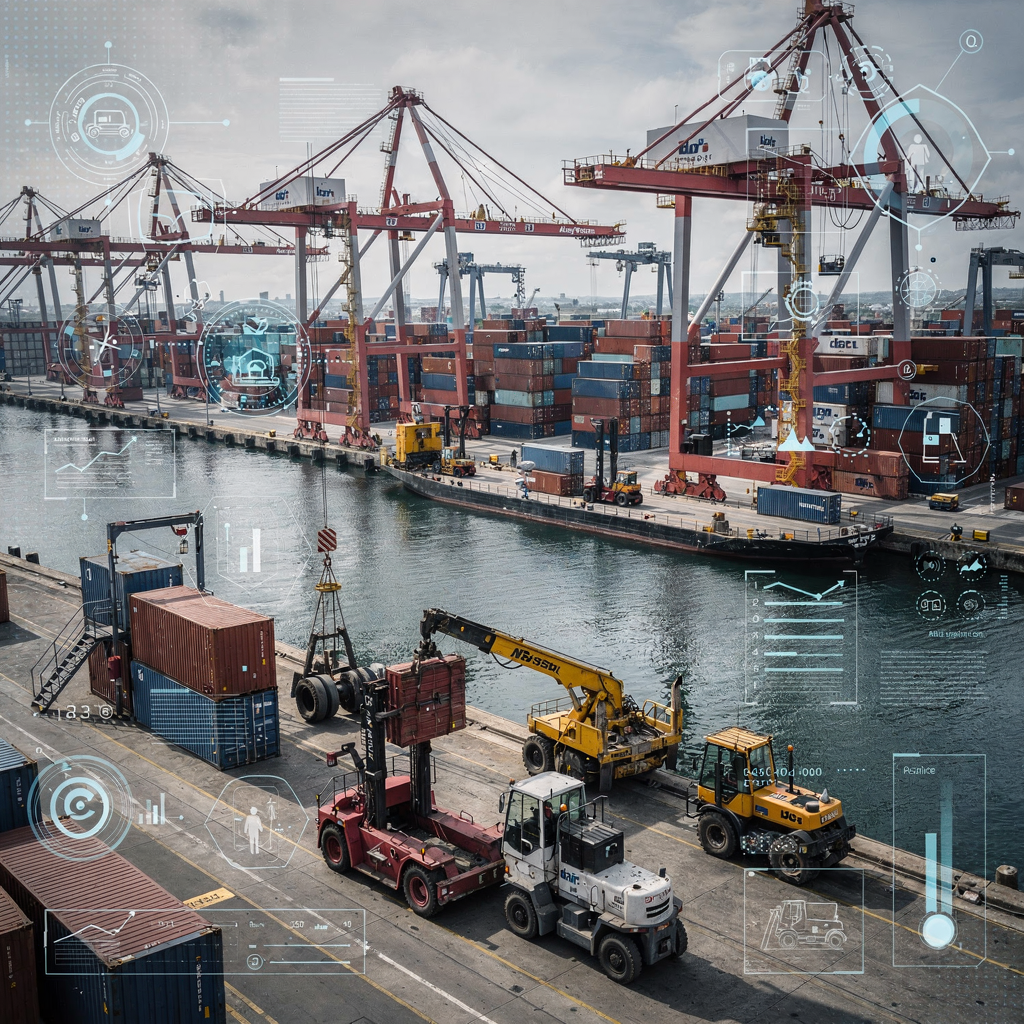
Advanced analytics and cargo visibility change how terminals make decisions. Kaleris combines machine data, satellite feeds, and on-site sensors to create a single operational picture, and the platform then runs analytics to predict equipment faults and to schedule maintenance. These predictive maintenance signals reduce unplanned downtime, and they extend equipment life. Terminals that adopt such analytics improve operational efficiency, and they lower maintenance costs over time.
End-to-end visibility helps teams track a container from vessel arrival to cargo dispatch, and it links gate events, yard locations, and vessel loading status. The system surfaces KPIs such as moves per hour, dwell time, and crane utilization so managers can act quickly. For mixed cargo terminals, the visibility platform also separates flows for break bulk and containerised goods, and it supports complex handling without losing sight of priorities.
From a financial perspective, terminals often see a rapid ROI when they combine a TOS with analytics. For example, sites that reduce rehandles and shorten vessel dwell gain direct cost savings and higher terminal productivity. Kaleris supports scalability so the same tools can work for a sized business or terminal operation as well as a global hub. For terminals that want deeper testing of analytics-driven policies, simulation tools such as terminal-layout-optimisation-simulation and terminal-equipment-simulation-tool let planners stress-test scenarios before live deployment terminal layout optimisation simulation and terminal equipment simulation tool.
Loadmaster.ai complements these capabilities by providing reinforcement learning agents that improve vessel planning and yard planning without requiring historical data. Our agents train in a digital twin and then deploy with operational guardrails, and this approach yields fewer rehandles and more consistent performance across shifts. Together, Kaleris solutions and RL-driven agents address the full stack from visibility and analytics to automated execution software and supply chain execution software, and they support terminals that serve shipping lines and global trade.
FAQ
What is Kaleris and what does its TOS offer?
Kaleris is a major provider of terminal systems and a leading provider in the market. Its TOS offers yard planning, vessel planning, gate automation, and analytics to support terminal management and efficient workflows.
Can Kaleris handle mixed cargo terminals?
Yes, the platform supports mixed cargo operations and custom rules for break bulk, ro-ro, and containers. This capability reduces handoffs between systems and simplifies cargo types handling and cargo flows.
How does real-time visibility improve terminal performance?
Real-time visibility gives planners timely data on vessel status, yard state, and gate events. With that information, teams can reduce dwell time, adjust resources, and improve terminal productivity.
What gains can optimization modules deliver?
Optimization modules can balance equipment use and reduce rehandles, which often increases yard throughput by measurable percentages. Some terminals report improvements approaching 20% after full deployment and tuning.
Is the system scalable for different terminal sizes?
Yes, the software solution supports both small and large operations and it is designed to be scalable. Terminals can configure rules to match local needs and can add modules as throughput grows.
How does automation affect labour and errors?
Automation reduces repetitive manual processes and enforces business rules, which cuts human error and lowers labour costs. It also frees staff to focus on exceptions and planning rather than routine tasks.
Can Kaleris integrate with simulation and digital twins?
Yes, the platform supports integration opportunities and can link to simulation tools to validate changes before go-live. Simulation helps test berth planning, yard allocations, and workflow changes safely.
Does the TOS support predictive maintenance?
Yes, analytics in the TOS provide predictive maintenance signals that reduce unplanned downtime. Predictive insights save cost and improve equipment availability.
How do shipping lines benefit from a modern TOS?
Shipping lines see faster vessel turnarounds and more reliable berth windows, which improve schedule adherence. Better terminal performance also supports smoother global trade and supply chain execution.
Can Loadmaster.ai solutions work with Kaleris systems?
Yes, Loadmaster.ai agents are TOS-agnostic and integrate via APIs to augment vessel planning and yard strategy. The combined approach helps terminals achieve consistent KPI improvements and safer go-live transitions.
our products
 stowAI
 stackAI
 jobAI
jobAI
Innovates vessel planning. Faster rotation time of ships, increased flexibility towards shipping lines and customers.
Build the stack in the most efficient way. Increase moves per hour by reducing shifters and increase crane efficiency.
Get the most out of your equipment. Increase moves per hour by minimising waste and delays.
stowAI
Innovates vessel planning. Faster rotation time of ships, increased flexibility towards shipping lines and customers.
stackAI
Build the stack in the most efficient way. Increase moves per hour by reducing shifters and increase crane efficiency.
jobAI
Get the most out of your equipment. Increase moves per hour by minimising waste and delays.