
terminal operations: scope and complexity
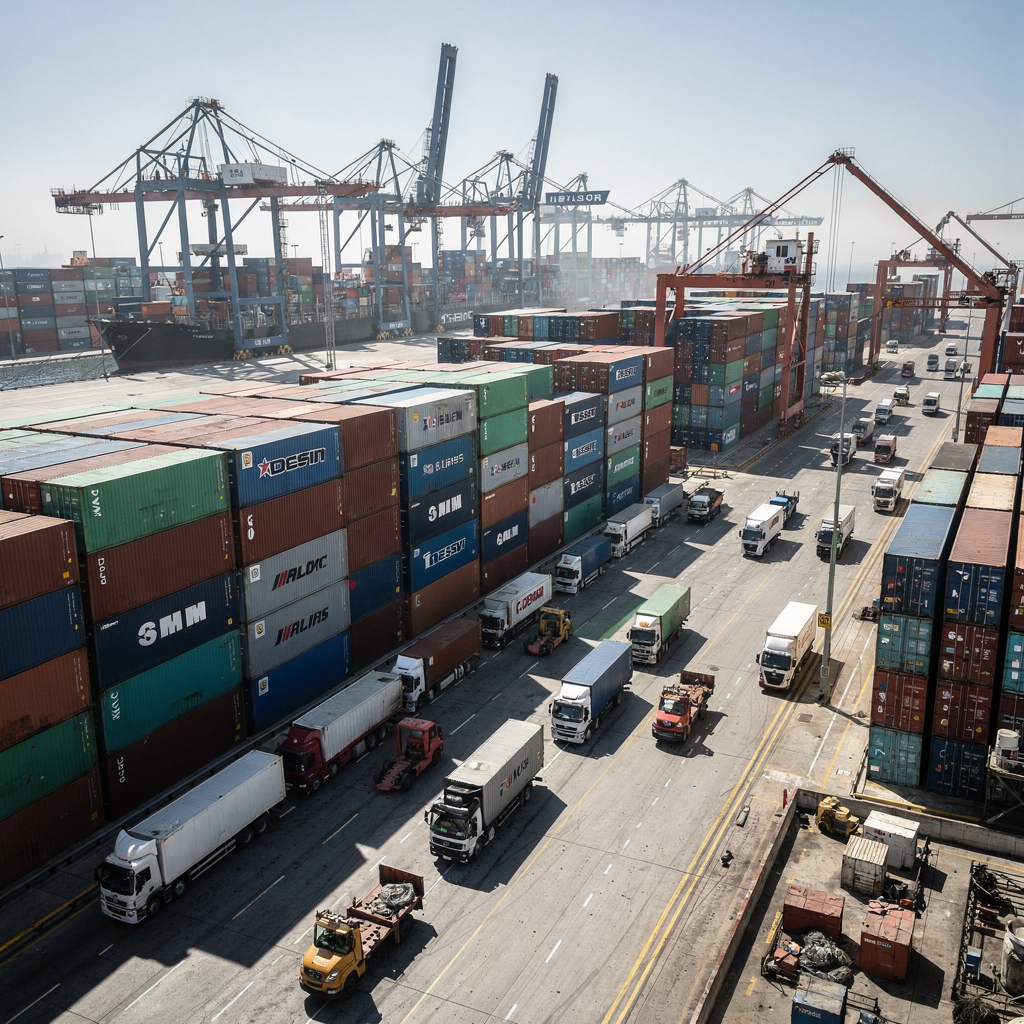
Terminal environments vary widely in scale and function. A container terminal focuses on stacked boxes moved by gantry crane systems, RTG equipment, and yard tractors. Ro-Ro terminals accept wheeled vehicles and need fast ramp access. Other terminal types include bulk, breakbulk, and intermodal hubs that link rail and road. Terminal managers balance vessel schedules, yard stacking, gate throughput, and inland connections. They must also manage service time at the quay and the number of trucks that queue at gates.
Operational variability drives many challenges. Vessel arrivals come with stochastic windows and changing call sizes. Weather alters berth windows and equipment productivity. Labour shifts create sudden drops and surges in capacity. Road traffic and port-side road congestion affect truck turnaround. These elements combine to produce a dynamic system that is hard to predict and hard to test in a live environment. Live trials risk disrupting shipping lines and causing demurrage. For that reason operators prefer virtual testing to assess the impact of changes without disrupting operations.
Terminal layout and equipment mix shape outcomes. A small feeder terminal uses different yard operations and a different control system than a mega-terminal. The type of equipment, whether RTG or gantry crane, affects driving distances and idle time. Existing terminals face distinct constraints compared with a new terminal where planners can design for capacity of the terminal from day one. Planners need to analyse container data, gate cycles, and yard flows to reduce unproductive moves and improve equipment productivity.
Simulation helps clarify trade-offs. For example, when planners simulate peak truck volumes they can see which quay crane sequencing choices increase yard congestion. That insight helps terminal operator teams make better day-to-day decisions. If you want to learn more about purpose-built digital testing, see our overview of container terminal simulation software which explains how to model yard, gate, and quay together.
simulation techniques: DES and beyond
Discrete-Event Simulation, often called DES, has become the standard approach for detailed terminal analysis. DES models events such as crane picks, truck arrivals, and gate checks as discrete happenings over time. The method captures the stochastic nature of service time and helps predict congestion. A systematic review shows that over 70% of recent studies in container terminals use discrete-event approaches, reinforcing DES as the mainstream tool An Empirical Study of the Applications of Discrete-event simulation in container terminals.
Other techniques complement DES. Agent based approaches represent individual actors, like trucks or drivers, and their local rules. Monte Carlo techniques support risk analysis by sampling many random futures. System dynamics helps when managers want to explore feedbacks at high level. A sensible workflow mixes methods. Use DES for yard operations and quay crane sequencing and agent based for detailed yard vehicle behaviours. Use Monte Carlo to quantify uncertainty in demand.
Practically, teams build a simulation model and then run different scenarios. They can simulate what happens if gate throughput doubles, or if a quay crane is offline for several hours. These what-if scenarios reveal impacts on container moves, idle time, and downstream congestion. Simulation model outputs then feed into decision-making. For a concrete tool discussion and industry examples, review research on simulation for Ro-Ro decision support which highlights gains in resource allocation.
When you need software to run many experiments, choose simulation tools that support parameter sweeps and visualization. If you want to explore multi-level optimization together with DES, check resources on discrete event implementations that integrate with optimization engines. In practice, teams use these methods to simulate, validate, and refine terminal planning before they change real operations.
Drowning in a full terminal with replans, exceptions and last-minute changes?
Discover what AI-driven planning can do for your terminal
port challenges: throughput and resilience
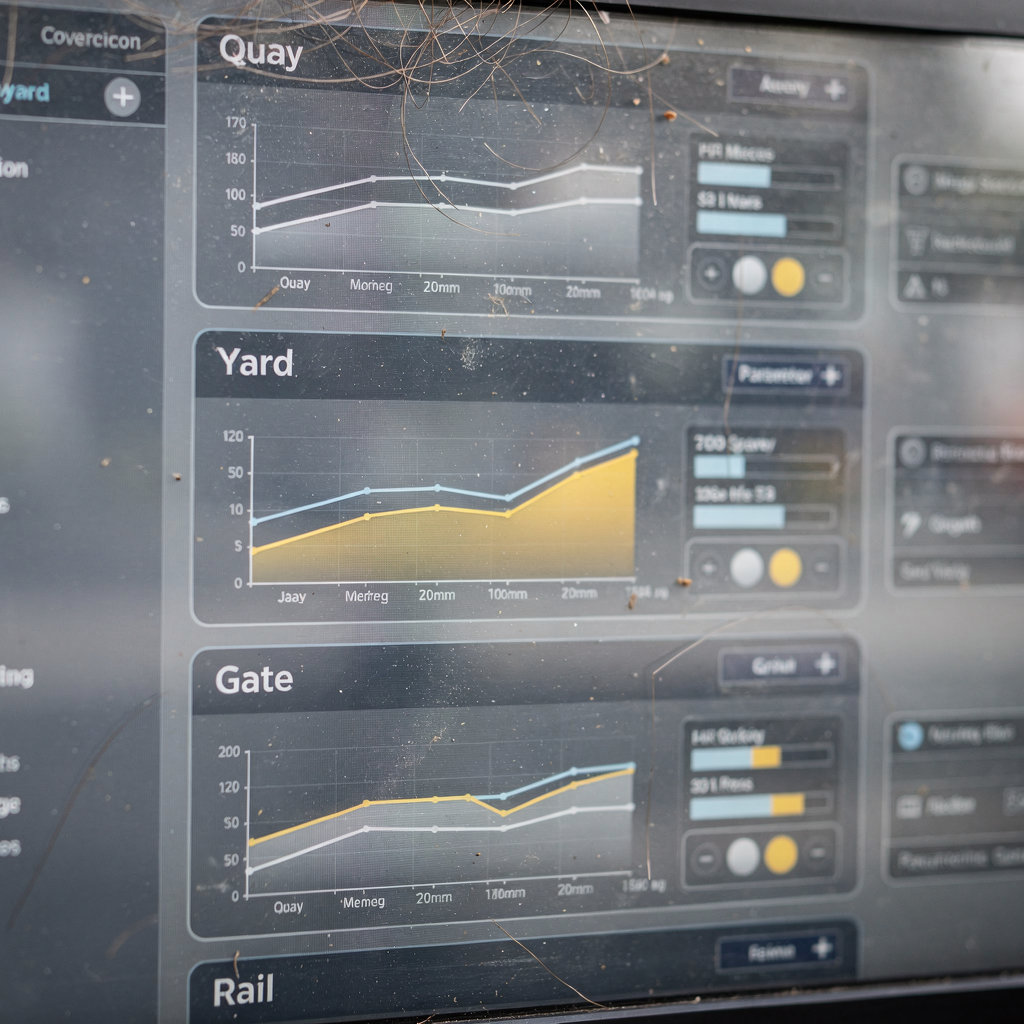
Ports face persistent pressure to increase throughput while staying resilient. Key kpis include moves per hour, berth utilisation, and gate throughput. Managers watch the kpi dashboards and react to imbalances. Peak demand can create queuing across the entire facility. Weather events and equipment failures create sudden shocks that ripple through quay, yard, and gate. Port management must balance short-term firefighting with long-term robustness.
Simulation helps stress-test resilience strategies. Teams can design scenarios that mimic extreme demand peaks, crane breakdowns, or a shortage of labour. By testing different alternatives, they can assess the effect of extra cranes, temporary shifts, or changed stacking policies. Simulation also helps quantify demurrage risk when berth windows slip. For resilience case studies see work on maintaining ports under varied conditions A decision support system for maintaining a resilient port.
Modern terminals increasingly use automation. For example, automated guided vehicles and agvs change scheduling logic and reduce variability in truck routing. Guided vehicles lower human-driven variability, yet they create new system requirements for charging, routing, and fallback modes. Simulation allows operators to compare blended fleets with purely manual fleets in a safe setting. It also shows how automation affects allocation of terminal resources and the balance between quay productivity and yard congestion.
Real-time data feeds improve situational awareness. However, some strategies need offline verification. For complex changes, use a digital twin or simulation model to test scenarios before live rollout. Terminal operator teams can then adopt phased plans with measured confidence. If you want to explore digital twins for resilience and sustainability, consult the research on digital twin for port facility assessment. The tests reduce risky changes and support more stable productivity across shifts.
simulation model frameworks: generic to specific
Frameworks that let teams build once and adapt often are powerful. One paper describes a factory approach for Ro-Ro terminals that creates specific decision support cases from generic components A simulation-based decision support framework devoted to Ro-Ro terminals. That factory concept accelerates deployment and boosts consistency.
Good frameworks use modular design. Modules typically include vessel handling, quay crane sequencing, yard stacking, gate operations, and intermodal links. Each module exposes clear interfaces so teams swap sub-models without rebuilding the whole system. A modular design supports scalability. Small feeder terminals and mega-terminals can share the same core modules but with different parameter sets and layout rules.
Frameworks must also capture layout and operations together. Terminal layout defines driving distances and stacking rules. Operations define dispatching, shunting, and rehandles. By linking layout and operations, a simulation approach can assess the capacity of the terminal under different staffing or equipment mixes. This lets planners predict future needs and evaluate different system dynamics before they commit capital.
For practitioners, a terminal simulation that supports rapid scenario creation is invaluable. If you want a hands-on example of layout experiments and what-if trade-offs, see our page on terminal layout optimisation simulation. The framework approach reduces time to answer and increases the robustness of recommendations. When teams validate a simulation model they can then apply findings at scale and avoid disruptive field trials.
Drowning in a full terminal with replans, exceptions and last-minute changes?
Discover what AI-driven planning can do for your terminal
terminal operating system (tos): integration with simulation
The terminal operating system orchestrates ships, cranes, trucks, and yard vehicles in real time. TOS software assigns crane tasks, sequences container moves, and manages slot allocation. When you integrate simulated scenarios with a TOS you create an environment to test new policies without risk. A good integration lets teams replay operational histories, test reorganization options, and measure impact on resource allocation and equipment productivity.
Simulation outputs feed TOS dashboards and alerts. For example, a simulation model can generate predicted queue lengths for the next six hours. The TOS then surfaces that data as an alert and proposes alternative crane sequences. This closed loop improves operational and strategic choices. Our team uses a digital twin and trains AI agents in simulation, then integrates policies into the live TOS with guardrails. That path reduces the reliance on past data and helps adopt AI-driven control safely.
Model credibility matters. The NASA guidance on simulation credibility stresses the need to advance input uncertainty propagation and output quantification Simulation Credibility – NASA. You must validate models against known kpi behaviour and perform sensitivity checks. Use predictive models and compare simulated port outcomes with historical benchmarks where available. Also validate the TOS integration with staged rollouts to ensure the control system responds as expected.
For teams building this bridge, anylogic simulation software is a commonly used engine and offers libraries for quay crane and yard operations. If you want practical guidance on TOS integration, see our resource on terminal operating system simulation integration. That page explains how to export scenarios, feed them to the TOS, and validate recommended changes in a controlled environment.
optimization outcomes: energy, resource and strategic gains
Simulation delivers measurable benefits. For container terminals researchers reported energy savings up to 15% by testing optimized layouts and operational strategies in a simulation environment A simulation tool for container operations management at seaport. Those gains often come from reduced driving distances and fewer rehandles. In Ro-Ro settings, documented improvements in resource allocation reached around 20%, enabling higher throughput without proportional increases in operational cost ROPAX: Exploring the Use of Simulation.
Beyond energy and cost, simulation supports strategic planning. Teams can compare different alternatives for terminal expansion, automation rollouts, or schedule changes. They can assess the effect of adding a gantry crane or increasing the number of trucks. Simulation also helps optimise yard footprint by measuring unproductive moves and idle time under each design. These metrics link directly to long-term investment choices and to the business case for automation.
Modern practice blends simulation with optimization. Techniques range from rule-based tuning to AI-driven multi-objective optimization. For example, reinforcement learning combined with a digital twin can optimise quay sequences, stack placements, and dispatcher decisions jointly. Loadmaster.ai takes this route by training agents in a sandbox twin to cut rehandles, reduce travel, and balance workloads. The result is higher moves per hour, more reliable productivity, and lower cost and energy.
To explore digital twin pathways and sustainability trade-offs, review research on digital twin for resilience and sustainability assessment or our guide to terminal digital twin software. These resources explain how simulation supports longer-term planning and helps terminals prioritise investments that produce the best return on resilience and environmental metrics.
FAQ
What is the role of simulation in terminal decision-making?
Simulation lets teams test different scenarios and measure results without disturbing live operations. It supports quantitative comparison and helps planners prioritize changes that improve kpi performance.
Which simulation techniques are most common for container terminals?
Discrete-Event Simulation is the most used approach for detailed terminal analysis. Agent based and system dynamics complement DES for local behaviours and high-level feedback respectively.
How much energy can terminals save with simulated layout changes?
Studies report energy savings up to 15% in container terminals when operators implement strategies derived from simulation experiments source. Savings come from reduced travel and fewer rehandles.
Can simulation improve resilience to disruptions?
Yes. By stress-testing peaks, equipment failures, and weather events, simulation helps design recovery plans and evaluate robustness. This reduces demurrage risk and helps maintain service levels.
How does a simulation model connect to a live TOS?
Models export forecasts and recommended sequences that the TOS consumes as inputs or alerts. Integration usually uses APIs or EDI so the TOS can apply changes with operator oversight.
Is simulation useful for new terminal design?
Absolutely. Simulation helps predict capacity of the terminal and compare layout and operations before construction. It reduces costly redesigns and aligns investment with future needs.
Do automated guided vehicles require different simulation setups?
They do. AGVs and automated guided vehicles change routing, charging, and scheduling constraints. Simulations must model vehicle interactions and the control algorithms that manage them.
How do I validate a simulation model for a real-world terminal?
Validate by comparing simulated kpi trends with historical behaviour and by running sensitivity checks. Use staged rollouts and monitor the TOS to ensure predictions match observed outcomes.
What outcomes can terminal operators expect from optimization?
Operators can see fewer rehandles, balanced workloads, and higher moves per hour. Resource allocation typically improves and energy consumption often drops when optimisation is applied.
Where can I learn more about integrating simulation into terminal planning?
Start with practical guides such as our pages on layout optimisation, discrete event implementations, and TOS integration. They show step-by-step approaches and implementation considerations.
our products
 stowAI
 stackAI
 jobAI
jobAI
Innovates vessel planning. Faster rotation time of ships, increased flexibility towards shipping lines and customers.
Build the stack in the most efficient way. Increase moves per hour by reducing shifters and increase crane efficiency.
Get the most out of your equipment. Increase moves per hour by minimising waste and delays.
stowAI
Innovates vessel planning. Faster rotation time of ships, increased flexibility towards shipping lines and customers.
stackAI
Build the stack in the most efficient way. Increase moves per hour by reducing shifters and increase crane efficiency.
jobAI
Get the most out of your equipment. Increase moves per hour by minimising waste and delays.