
simulation model and digital twin: risk-free design for port terminals
A simulation model and a digital twin sound similar, and yet they serve distinct roles in a maritime context. A simulation model is a simplified, verifiable representation of processes and rules. A digital twin extends that idea into a live, data-linked virtual replica of equipment, layout and workflows. In a CONTAINER TERMINAL context the digital twin mirrors quay moves, yard stacking, gate flows and vessel schedules so planners can test options without real impact. For practitioners this risk-free approach transforms planning into an iterative craft, and it reduces costly mistakes while enabling faster learning.
These systems replicate VESSEL movements, CRANE tasks, CARGO transfers and yard operations using detailed logic and data. Variables in a simulation model include arrival times, berth positions, crane rates, truck arrivals, and stacking rules. By adjusting those variables planners can run multiple scenarios and observe visual feedback. Then they can compare metrics like berth occupancy, crane utilization and a move count metric that highlights idle time and demurrage.
Using simulation, teams can stress test peak windows, equipment failures, and labor variations in a RISK-FREE ENVIRONMENT. This technique supports capacity planning and helps TOS tuning before the port or yard experiences disruption. A digital twin also lets reinforcement learning agents train against explainable KPIs, as used by modern solutions that spin up virtual terminals and learn policies without historic bias. For readers who want technical integration tips, see our guide on digital twin integration with container terminal operating systems.
Simulation is a powerful tool when teams need to verify changes and to reduce uncertainty. It also supports verifiable benchmarking and provides clear visualizations of system performance. For terminal operators and port authorities this approach lowers risk, improves decision speed, and yields durable improvements in operational efficiency and disruption response.
port simulation software: features for optimize throughput and resource allocation
Port simulation software bundles modules that mirror real-life workflows so teams can optimize resource allocation and increase throughput. Core modules typically include vessel flow, quay crane scheduling, yard logistics and equipment use. Each module works together to create a coherent picture of the dock, and teams can run multiple scenarios to compare trade-offs. For deeper technical comparisons, see our review of container terminal simulation software.
Optimization algorithms inside these tools balance allocation, reduce idle time and suggest crane assignments that raise moves per hour. Discrete event and agent-based methods run side by side in many suites, while discrete event simulation software remains common for berth and QUEUING studies. Real-time dashboards show KPIs, provide visualization, and let supervisors rapidly adjust the plan. Integration with a TOS or telemetry systems helps the model reflect live conditions and allows planners to benchmark planned vs actual performance.
These systems often include predictive modules that simulate berth windows, gate queues and truck arrivals so teams can reduce waiting times. Tools from vendors such as Rockwell and AnyLogic demonstrate how modelling can deliver measurable gains. For example, simulation can drive a 15–20% increase in throughput by improving equipment deployment and cutting idle time (industry report). Rockwell notes the same practical benefit when planners employ thoughtful modelling and dashboards (Rockwell Arena).
Modern suites let teams integrate a digital twin with external planning tools so that simulations feed live decision support. This ability to INTEGRATE planning and execution helps optimize port performance and prevents bottleneck formation at the berth and in the container yard. Ultimately, port simulation software serves as a tool for port and terminal teams that need to allocate assets quickly and to test changes before they go live.
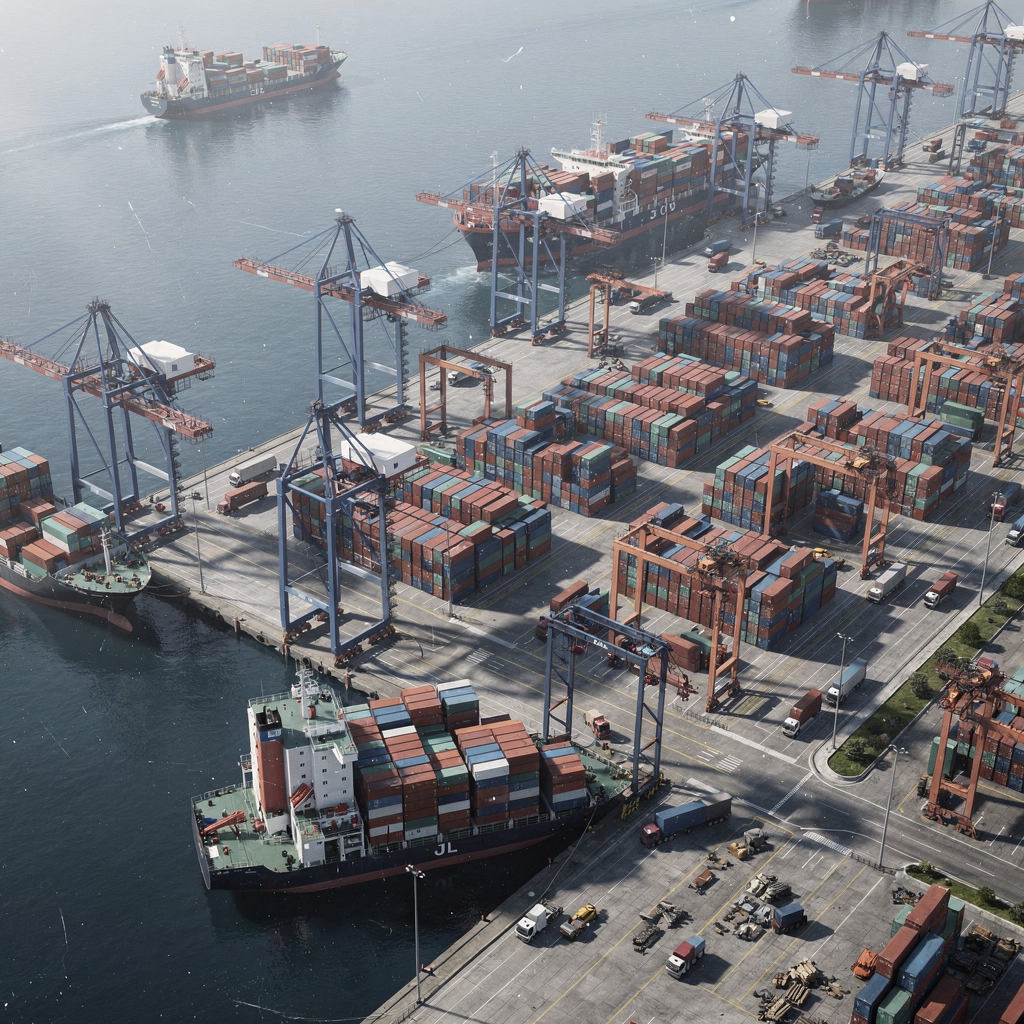
Drowning in a full terminal with replans, exceptions and last-minute changes?
Discover what AI-driven planning can do for your terminal
simulation-based training with port simulator: crane, gantry, RTG, straddle carrier and forklift
Simulation-based training raises operator skill while reducing risk. A port simulator recreates quayside and yard conditions so crews can practice CRANE operations, RTG sequencing, straddle carrier moves and forklift handling. Simulators capture visual feedback and they let trainers pause, rewind and repeat complex sequences. CM Labs highlights that “operator training serves a critical purpose in the terminal workflow, ensuring productive, safe operations” (CM Labs). That direct advice maps well to a training program that blends classroom rules, hands-on sessions and virtual drills.
Quayside crane trainers focus on vessel stow sequencing, safe lifts and gantry coordination. Yard simulators emphasize stack management in the container yard and reducing unnecessary reshuffles. Mobile-equipment training includes RTG, straddle carrier and forklift modules that mirror actual cab ergonomics and response. Each simulator variant enforces business processes, permits stress tests and supports verifiable assessments for certification. Training programs using simulators report marked reductions in operator error rates and faster ramp-up times. Studies show simulator training can cut operator errors by roughly 30% and reduce time-to-competence significantly (CM Labs).
Simulator sessions also let planners test changes to workflows and to measure the human impact before rolling out new rules. For container terminal operations teams, blending simulator work with a digital twin and recorded telemetry creates a powerful feedback loop. If you want hands-on examples about building a digital twin for inland operations or to see how vessel planning parameters affect training, check our pieces on building a digital twin of an inland container terminal and on vessel planning with variable hoist, trolley and gantry parameters.
automation and decision support: boosting efficiency in ports and terminals
Automated decision support brings consistency and speed to port operations. Decision support layers analyze data from the quay, the yard and the gate to propose executable plans. These proposals help terminal operators balance throughput against yard congestion, and they reduce firefighting. AI-driven agents can handle allocation, sequencing and dispatch, while human supervisors maintain oversight and governance. Our work at Loadmaster.ai leverages reinforcement learning to train agents inside a digital twin so they can suggest, and then execute, multi-objective policies that respect local rules.
Automation links directly to simulation by allowing the planning loop to run millions of trials in a simulation environment. This closed-loop training produces robust policies that handle various conditions and disruption response. For example, our StowAI, StackAI and JobAI agents learn to reduce rehandles and to shorten driving distances without relying on historical biases. That approach differs from supervised models because it does not merely imitate past behavior.
Decision support tools produce real-time plans, visualizations and alerts that speed responses to machine failures or weather impacts. They also let port authorities set KPI weights and guardrails while the system optimizes for those targets. The result includes measurable gains in operational efficiency and lower downtime, and it secures performance across shifts. For design teams who need more on capacity planning using simulation, our guide on capacity planning using digital twins in terminal operations contains practical templates and checklist items.
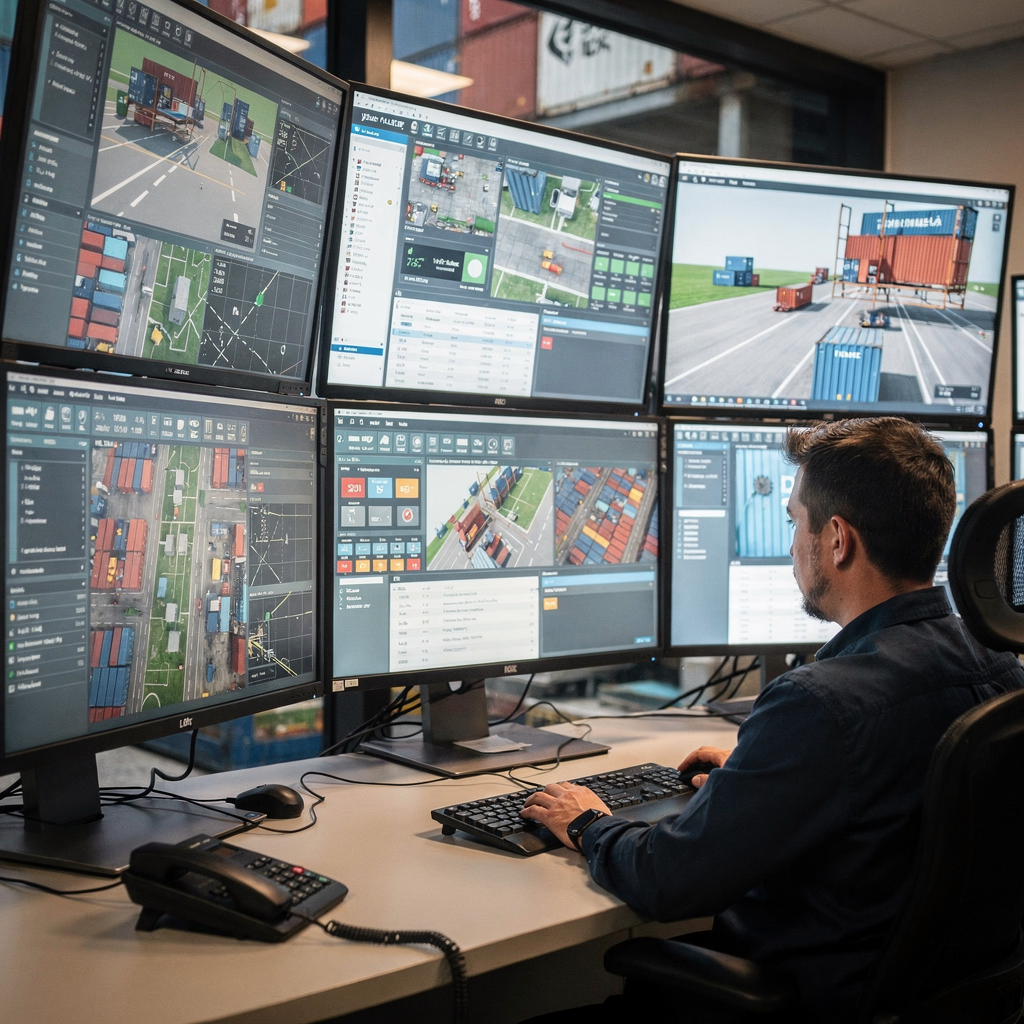
Drowning in a full terminal with replans, exceptions and last-minute changes?
Discover what AI-driven planning can do for your terminal
terminal optimization: minimising bottlenecks with simulation
Model-driven analysis highlights common quay and yard bottlenecks so teams can act quickly. A model identifies chokepoints at the berth, crane conflicts, truck gate peaks and container yard congestion. By mapping truck arrival patterns and quay service rates to stacking policies, planners can redesign workflows and reduce waiting times. Simulation modeling helped several terminals to test crane assignment rules, and they found simpler sequences often reduced idle time and demurrage.
Techniques to optimize crane assignment include rule-based heuristics, integer allocation and metaheuristic search. These methods balance crane coverage across berths, protect future vessel work and preserve safe working distances. For container stacking, strategies that favor depth limits and proactive reshuffle planning reduce rehandles and save energy. Gate throughput improves when planners adopt dynamic reservations, separate lanes for appointment and on-demand trucks, and quick-turn scanning processes.
Small changes can yield significant gains: improved crane utilization and shorter truck turns translate directly into higher THROUGHPUT and lower costs. A benchmark from industry reporting suggests throughput gains of 15–20% are achievable when terminals optimize equipment deployment and reduce idle time (industry report). In practice the best projects combine simulation with pilot testing and operator input so the plan fits real-world constraints and system requirements. For teams seeking a practical map to optimize port, our piece on optimizing container terminal TOS configuration for performance outlines actionable steps to align models with execution.
case studies: real-world gains in throughput and cost savings with port simulator
Case studies illustrate how terminals translate models into measurable improvements. Hamburg Port Consulting’s HPCsim toolbox models vessel and cargo flows to optimize allocation and throughput; Dr. Michael Schmidt states that simulation “are no longer optional but a necessity” for modern terminals (HPC). Rockwell’s Arena examples show how discrete event approaches improve scheduling and increase productivity (Rockwell). AnyLogic has also published cases where strategic planning with modeling reduced operational costs by up to 25% (AnyLogic).
Across projects, common outcomes include faster vessel turns, fewer rehandles and steadier daily performance. Training simulators cut error rates by about 30% in reported trials, improving safety and lowering incident response time (CM Labs). Ports and terminals that combine simulator-led training with live testing in a digital twin see rapid gains in time-to-competence and in-system resilience.
Practical lessons emphasize stakeholder alignment, realistic input data, and staged rollouts. Teams should begin with a focused pilot block, then expand once results match model predictions. For readers considering multi-agent or AI-native strategies, our article on AI-native container terminals with multi-agent planning architectures explains how simulation training produces robust control policies that generalize to highly complex, dynamic processes. Overall, these examples confirm that simulation tools and port simulator pilots yield verifiable benefits in throughput, cost and safety.
FAQ
What is a digital twin and how does it differ from a simulation model?
A digital twin is a live, data-connected virtual replica of a physical asset or system. A simulation model is often a static or scenario-focused representation; a digital twin links to real-time telemetry so it can mirror ongoing operations and support decision support.
Can simulation software predict berth congestion?
Yes, port simulation suites use arrival patterns and crane rates to forecast berth occupancy. They help planners test scheduling changes and measure the impact before committing resources.
How do training simulators improve safety?
Simulators allow operators to practice without risk and to rehearse emergency procedures. Reported evidence shows simulator programs can reduce error rates by about 30%, improving on-the-job safety and reliability (CM Labs).
What modules should I expect in port simulation software?
Common modules include vessel flow, quay crane scheduling, yard logistics and equipment use. Advanced suites also offer analytics dashboards and TOS integration to link planning with execution.
How much throughput improvement is realistic?
Industry studies suggest throughput can improve by 15–20% when terminals optimize equipment deployment and idle time (industry report). Actual gains depend on current practices and implementation quality.
Do I need historical data to benefit from AI agents trained in simulation?
No. Reinforcement learning agents can train inside a digital twin without depending on historical data. They learn policies by exploring many scenarios, which helps in cold-start situations.
How do I integrate simulation output with my TOS?
Most platforms provide APIs or data exports to integrate with a TOS and operational dashboards. See our integration guidance on digital twin integration with container terminal operating systems for practical steps (integration guide).
What is a good pilot strategy for adopting simulation?
Start with a focused pilot on a single berth or yard block, validate model outputs against real-world data, then expand. Keep operators involved to ensure the simulation reflects business processes and system requirements.
Can simulation help with environmental and weather planning?
Yes, models can include environmental factors and test disruption response to storms or tidal constraints. That capability supports risk mitigation and more resilient scheduling.
Where can I learn more about container terminal simulation tools?
Explore vendor case notes from HPC, Rockwell and AnyLogic for examples, and visit our technical resources on container terminal simulation software to find checklists and implementation advice (software resources).
our products
 stowAI
 stackAI
 jobAI
jobAI
Innovates vessel planning. Faster rotation time of ships, increased flexibility towards shipping lines and customers.
Build the stack in the most efficient way. Increase moves per hour by reducing shifters and increase crane efficiency.
Get the most out of your equipment. Increase moves per hour by minimising waste and delays.
stowAI
Innovates vessel planning. Faster rotation time of ships, increased flexibility towards shipping lines and customers.
stackAI
Build the stack in the most efficient way. Increase moves per hour by reducing shifters and increase crane efficiency.
jobAI
Get the most out of your equipment. Increase moves per hour by minimising waste and delays.