
simulation: Introduction to container terminal simulation software
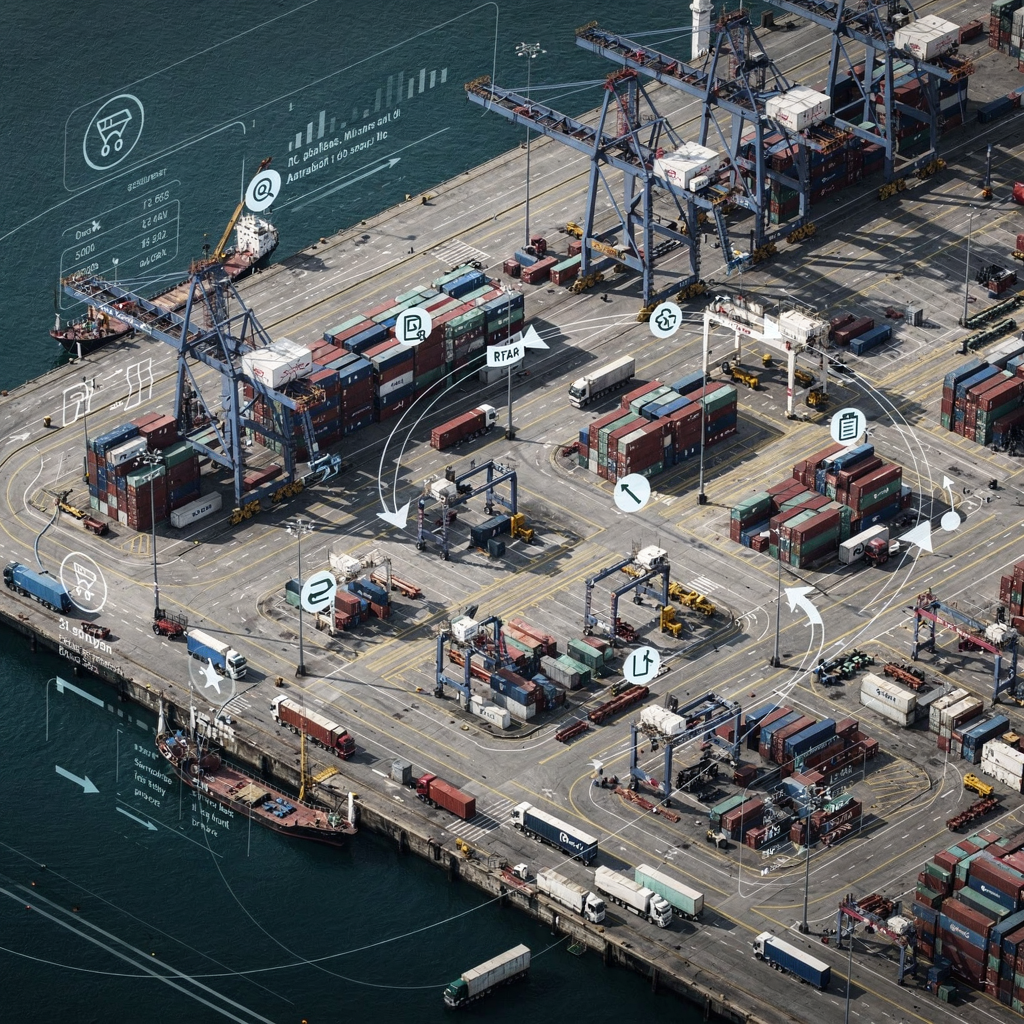
Simulation helps ports and terminals plan, test, and improve complex workflows. In this chapter, I define what container terminal simulation software does and why it matters for maritime logistics. First, simulation models the flow of boxes between berth, quay, yard, and gate. Next, it recreates crane moves, truck trips, and yard handling so planners can test ideas without disrupting live operations. The software uses discrete-event and agent-based approaches plus 3D visualization to mirror real-world activity. For example, discrete-event tracks events like container moves, while agent-based or multi-agent components represent independent decision-makers such as a quay crane, a truck, or a yard RTG. Then, 3D models add clarity for stakeholders and training staff.
Leading tools include AnyLogic, Simio, and PTV Vissim. AnyLogic is widely adopted as a versatile platform; readers can find more on AnyLogic’s capabilities and use cases at the AnyLogic site AnyLogic: Simulation Modeling Software Tools & Solutions. Simio markets discrete event strengths and real-world templates Simio DES. PTV Vissim supports multimodal traffic needs at the gate and road access PTV Vissim. Together, these simulation tools serve terminal planning, training, and risk-free scenario testing. In fact, simulation provides measurable gains in productivity and decision speed; research points to up to a 20–30% improvement in crane productivity when simulation-based methods are applied simulation-based training solutions for port terminals.
Terminal planning relies on accurate inputs, clear performance measures, and iterative refinement. Therefore, a robust simulation model must capture berth schedules, quay crane cycles, yard stacks, and truck queues. For terminals planning a greenfield or an expansion, port simulation software offers a safe place to trial layouts and equipment mixes. Loadmaster.ai uses simulation to train RL agents inside a digital twin, which helps planners move from firefighting to proactive control. Finally, this chapter sets the stage for building a working simulation model, calibrating it, and using it for optimisation and operational decisions.
simulation model: Building a robust container terminal simulation model
To build a useful simulation model you must identify core components, gather clean data, and validate outcomes. First, list the key elements: quay cranes, yard blocks, trucks, gate operations, TOS messages, and scheduling rules. Then, collect vessel schedules, equipment logs, and yard maps. High-quality inputs reduce calibration time and improve fidelity. For berth and yard studies, include quay crane cycles, quay crane productivity, RTG moves, straddle movements, and worker service times. Use historical service times and idle time records when available.
Next, prepare the data. Clean timestamps, normalize event types, and map container flows to yard blocks. If history is sparse, create a digital twin and generate scenarios. For example, Loadmaster.ai spins up a terminal digital twin and trains policies via reinforcement learning, which removes the need for large historical datasets. The simulation model must then be calibrated against measured KPIs such as crane productivity and dwell times. Calibration links predicted moves to observed moves, and validation confirms model robustness under different load conditions. Run replay tests so the model reflects how terminals operate in the real world. Then, use what-if scenarios to uncover a bottleneck in the gate or a yard stack hot spot. Using simulation, planners can test layout changes, adjust stack allocation logic, and measure impacts on throughput and dwell times.
During model development, pay attention to system requirements, to dispatcher rules, and to TOS integration. Configure the model to represent quay crane reach, trolley speeds, and RTG spacing. Add randomness to vessel delays and service times to avoid deterministic bias. Finally, validate the simulation model developed by comparing predicted and historical service levels. Link the model to a dashboard for decision support and to enable rapid scenario comparison. If you want more technical reading on digital twin integration and terminal planning, see our resources on digital twin integration with container terminal operating systems and on next-generation container terminal planning architecture digital twin integration and next-generation planning architecture.
Drowning in a full terminal with replans, exceptions and last-minute changes?
Discover what AI-driven planning can do for your terminal
discrete event: Terminal operation optimisation with discrete event simulation
Discrete event simulation drives many port and terminal optimisation projects. The method represents operations as a sequence of events: vessel arrival, crane assignment, truck arrival, and container stacking. Each event changes the system state. This approach maps naturally to quay crane dispatching and truck dispatch decisions. For example, discrete-event models allow a planner to test different quay crane sequencing rules and to quantify effects on crane productivity and dwell times. Research highlights that combining discrete event with multi-agent logic supports realistic behaviour modelling a discrete-event multi-agent simulation framework.
Apply optimisation algorithms to reduce container dwell time and to improve throughput. You can use heuristics, integer programming, or reinforcement learning inside the simulation model. For instance, optimisation can sequence quay crane tasks to minimize rehandles, to lower crane idle time, and to increase moves per hour. Empirical studies show simulation-led changes can reduce dwell times by 15–25% and raise throughput by around 12–20% in pilots integrating AI and big data smart container port development.
Discrete event also supports rapid decision-making during peaks. Simulation can replay scenarios and provide a dashboard view of predicted congestion, berth occupancy, and yard utilization. Therefore, terminal operation staff gain decision support when gates surge or when vessel delays propagate. Optimisation runs inside the model help planners find near-optimal crane assignments that balance quay productivity and yard flow. Tools such as Simio advertise unmatched versatility in solving these operational puzzles Simio DES. In practice, discrete event plus optimisation reduces cost and helps ports and terminals meet service levels under stress.
terminal simulation software: Automate container terminal operations with port simulation software
Port simulation software can automate many routine terminal tasks. Firstly, it can automate quay crane sequencing, yard handling, and truck allocation. Automation reduces error and standardizes responses to common situations. Secondly, integration with IoT sensors and Big Data enables real-time control loops. For example, real-time telemetry from quay crane sensors and gate cameras feeds the model, which then triggers reassignments or alerts. This real-time connection helps enable predictive maintenance and faster responses to equipment faults.
Automation does not mean removing human oversight. Instead, it lets the operator focus on exceptions. Loadmaster.ai combines simulation-based digital twins with reinforcement learning agents so automation learns policies that respect operational guardrails. The system coordinates StowAI for QC planning, StackAI for yard placement, and JobAI for dispatcher tasks. These agents learn policies in simulation and deploy with safe constraints, which minimizes rehandles and balances workload across RTGs and straddle carriers.
Port simulation software also feeds predictive maintenance and remote monitoring. Live dashboards display equipment utilization, idle time, and maintenance needs. Operators can configure alerts for abnormal service times or for unusual container flows. This approach helps reduce downtime and lowers operational cost. In automation pilots, terminals reported a 10–18% reduction in annual costs by rescheduling equipment and improving allocation computational logistics study. Finally, port management teams gain visibility into multimodal interactions—rail and road—and can optimise intermodal handoffs. For additional guidance on integrating digital twins with TOS and on optimising TOS configuration, see our posts on digital twin integration and on TOS optimisation optimizing TOS configuration and digital twin integration.
Drowning in a full terminal with replans, exceptions and last-minute changes?
Discover what AI-driven planning can do for your terminal
case studies: Container port efficiency gains in container terminal simulation
Case studies show how targeted simulation projects deliver measurable gains. In one European port case study, simulation-led layout redesign increased throughput by about 15% after reconfiguring yard blocks and shifting quay crane coverage. The study balanced quay productivity with yard flow and reduced truck wait times. In an Asian hub case, optimised crane scheduling cut dwell time by roughly 20% through tighter sequencing, fewer rehandles, and better slot allocation. A research summary states that simulation-based planning can improve quay crane productivity by 20–30% in some implementations simulation-based training solutions.
Operational cost savings also appear in these projects. Terminals that used simulation to reschedule equipment and to alter yard operations saw annual operational cost reductions of 10–18% computational logistics for container terminal handling systems. These savings come from fewer rehandles, shorter travel distances for straddle carriers, and improved equipment utilization. A case study shows how simulation was used to test greenfield layouts and to validate service times before deploying new cranes or RTGs. For readers interested in more detailed vessel planning research, the literature confirms that discrete-event plus optimisation forms an indispensable part of modern planning simulation, analysis and optimization.
Key takeaways are clear. First, simulation tools let planners test many scenarios quickly and cheaply. Second, pilots often reveal hidden bottlenecks at the berth or in stack allocation. Third, integrating AI or optimisation yields consistent gains in throughput and service levels. Case studies also confirm that simulation provides faster decision-making when demand spikes. If you want a practical guide to AI-based restow minimization and vessel planning, see our resource on AI-based restow minimization in deepsea ports AI-based restow minimization. Finally, one case study shows how simulation helped a terminal reduce shifters by balancing stack workloads and protecting quay productivity.
optimisation: Optimising maritime supply chain with simulation model
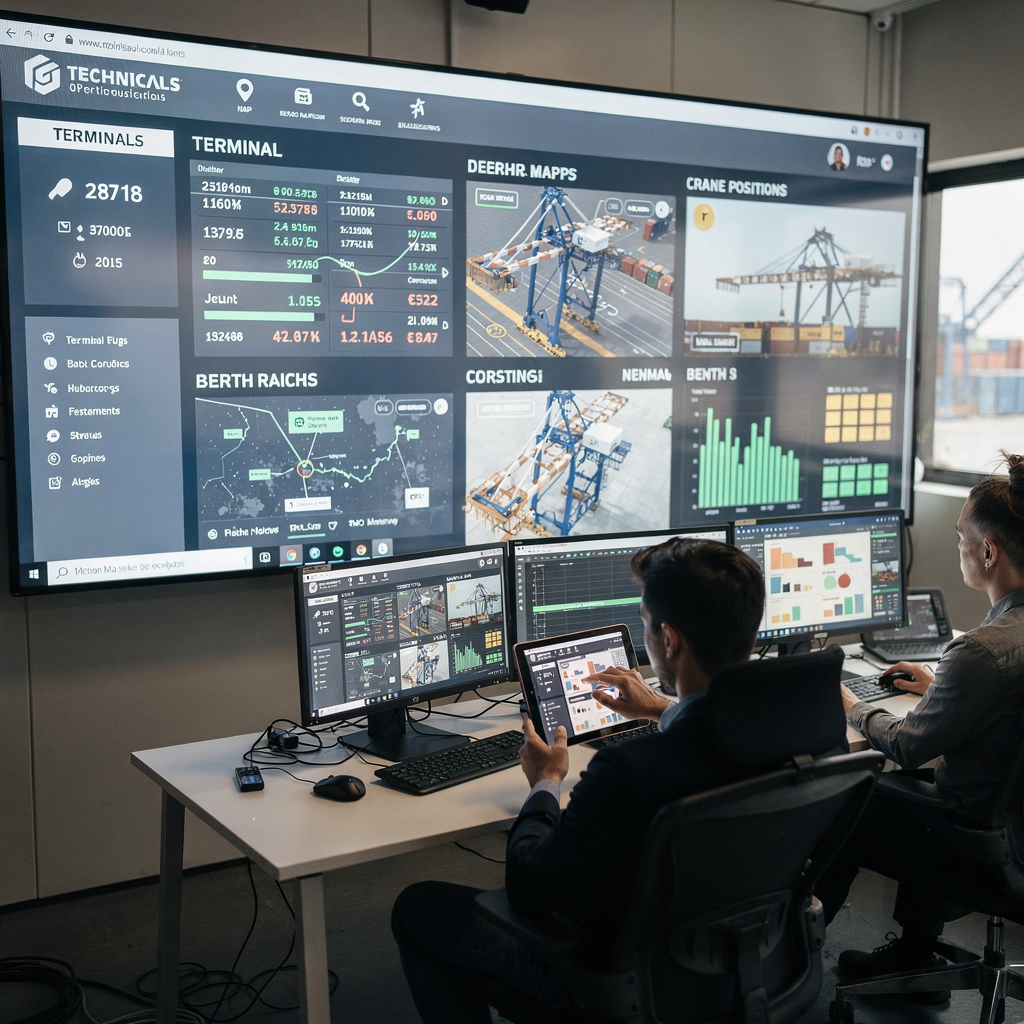
Use simulation to forecast demand and to balance capacity across the supply chain. For example, a simulation model can test what happens when shipping lines change vessel sizes or when a barge schedule shifts. By linking simulation with AI and predictive maintenance, planners improve robustness and reduce unexpected downtime. Digital twin technology lets teams run continuous experiments and to refine policies before implementing operational changes.
Connect simulation outputs to decision support tools and to TOS. This link provides planners with suggested configurations, crane sequences, and stack assignments tailored to current conditions. Additionally, simulation can optimise intermodal handoffs for rail and road, reducing gate congestion and smoothing container flows. Planners can forecast container volumes and then scale staff, equipment, and berth allocations accordingly. The approach helps minimize rehandles and lowers energy use from unnecessary moves.
Looking ahead, digital twin and smart port trends will shape future optimisation. Digital twins let terminals test greenfield layouts, to simulate vessel delays, and to validate dispatcher heuristics. They enable scenario replay and allow teams to evaluate robustness under stress. Loadmaster.ai uses multi-agent RL inside a digital twin so agents learn policies that generalize across conditions. This setup reduces dependence on historical data and preserves tribal knowledge when planners change roles. For operational risk workflows and capacity planning using digital twins, see our guides on capacity planning and operational risk assessment capacity planning using digital twins and operational risk assessment.
Finally, to maintain and update the model as trade patterns evolve, implement a feedback loop that records live performance and adapts parameters. Schedule regular recalibration, add new equipment configurations, and test alternative TOS rules. This continuous cycle of model, test, and deploy helps terminals achieve long-term resilience and measurable optimization of operations.
FAQ
What is container terminal simulation software and why is it used?
Container terminal simulation software models container flows, quay crane cycles, yard operations, and gate activity. It is used to test what-if scenarios, to train staff, and to support terminal planning without disrupting live operations.
Which modelling approaches are most common in port simulation?
Discrete event and agent-based modelling are common because they map well to events and independent actors. 3D visualization often complements these methods for training and stakeholder communication.
How do I build a reliable simulation model for a terminal?
Start by gathering vessel schedules, equipment logs, and yard maps. Calibrate the model against historical KPIs, run replay tests, and validate results under different load profiles.
Can simulation reduce dwell times and improve throughput?
Yes. Studies report dwell time reductions of 15–25% and throughput gains of 12–20% when simulation and optimisation are applied. These results depend on the scenario and on implementation fidelity smart container port development.
What role does AI play in modern terminal simulation?
AI, especially reinforcement learning, can train policies inside a digital twin to coordinate stowage, stack placement, and dispatch. This reduces reliance on historical models and helps terminals adapt to new conditions.
How does simulation integrate with a Terminal Operating System (TOS)?
Simulation can connect to a TOS via APIs or EDI to mirror operational messages and constraints. This integration improves decision support and allows scenario outputs to inform live TOS configuration optimizing TOS configuration.
Is simulation useful for automated terminals?
Yes. Simulation helps configure automated equipment, to test control logic, and to validate safety cases before deployment. It also supports predictive maintenance and remote monitoring for automated terminals.
How do I measure the ROI of a simulation project?
Measure changes in crane productivity, dwell times, equipment utilization, and operational cost. Typical reported savings range from 10–18% in annual operational costs when optimisation and rescheduling are applied computational logistics study.
What is a digital twin and how does it relate to simulation?
A digital twin is a live simulation model that mirrors the terminal’s state and receives real-time inputs. It enables continuous testing, offline training of AI agents, and controlled deployment of policies digital twin integration.
Can simulation help with vessel planning and stowage?
Yes. Simulation supports vessel planning by testing stowage strategies and by minimizing restows. For detailed methods on stow planning and restow minimization, see our resource on AI-based restow minimization in deepsea ports AI-based restow minimization.
our products
 stowAI
 stackAI
 jobAI
jobAI
Innovates vessel planning. Faster rotation time of ships, increased flexibility towards shipping lines and customers.
Build the stack in the most efficient way. Increase moves per hour by reducing shifters and increase crane efficiency.
Get the most out of your equipment. Increase moves per hour by minimising waste and delays.
stowAI
Innovates vessel planning. Faster rotation time of ships, increased flexibility towards shipping lines and customers.
stackAI
Build the stack in the most efficient way. Increase moves per hour by reducing shifters and increase crane efficiency.
jobAI
Get the most out of your equipment. Increase moves per hour by minimising waste and delays.