
terminal and port overview
The terminal sits at the heart of container handling and links ships, rail, and road in a single operational fabric. It coordinates berth calls, storage blocks, and gate movements so that ships can be turned quickly and freight can reach inland networks. For example, major ports report intense use patterns, and equipment needs rise with cargo volumes. The global port equipment market is forecast to grow through 2032 as volumes expand and operators invest in horizontal TRANSPORT solutions (market outlook to 2032). Therefore, planners and suppliers must align fleet choices with throughput goals and sustainability targets.
Terminal tractors carry moves within the site. They haul trailers and chassis between quay cranes, storage stacks, and gates. In high-usage terminals tractors often run long shifts. At major hubs, terminal tractors can operate for extended daily periods, which highlights uptime as a core KPI (20-hour runs reported at busy ports). Next, the layout of the yard and the availability of fifth-wheel interfaces matter for both speed and safety. A compact CHASSIS, low cab profile, and quick coupling improve turn times. As a result, ports can increase moves per hour and reduce rehandles by matching machine characteristics to flow patterns.
In addition, decision-makers must balance quay productivity against yard congestion and transfer times. Loadmaster.ai works with terminals to simulate trade-offs and to test policies that protect quay crane cycles while controlling yard drive distances. Our AI agents create scenarios that compare equipment mixes, and then recommend staffing and vehicle distributions for peak and off-peak windows. Consequently, terminals capture more consistent performance across shifts and shifts become less dependent on single planners’ intuition. For more on how AI augments vessel planning and reduces rehandles, see our work on stowage planning (StowAI planning).
terminal tractor and truck performance
Terminal tractors differ from highway truck designs in several ways. First, the chassis is optimized for short radius turns and repeat tugging. Second, coupling systems include robust fifth-wheel mounts and quick-attach FIFTH-WHEEL interfaces that speed hook-up and drop. Third, the cab sits low for sightlines, and visibility encourages safer spotting and yard moves. In practice, these design choices lower the time spent maneuvering and add to moves per hour. A shunt truck or yard truck performs dozens of short hauls per shift, not long-haul trips. That is why manufacturers tune the ENGINE and gearbox for torque and low-speed control rather than top speed.
Operational metrics show the intensity of use. In busy sites, terminal tractors may work near 20 hours daily on rotational crews (observed long duty cycles). Average moves per hour depend on distance and yard geometry, yet improved machine reliability raises throughput. For example, fleets that reduce downtime and increase availability can boost crane productivity because fewer containers sit waiting in the stack. Maintenance plans, component swaps, and OEM support influence uptime. Kalmar and other suppliers prioritize service agreements that protect availability and lower unplanned MAINTENANCE events (industry considerations).
Because terminal tractors are built to move heavy loads and to spot quickly, they cut yard delays. The right machine reduces travel time per move and saves fuel through lower idling. Consequently, planners see the benefits in fewer rehandles and higher operational efficiency. If you want a deeper look at equipment planning and job allocation, check our analysis on equipment planning (equipment planning explained), which shows how matching machine specs to yard flow yields measurable gains.
Drowning in a full terminal with replans, exceptions and last-minute changes?
Discover what AI-driven planning can do for your terminal
ottawa t2 terminal tractor from ottawa
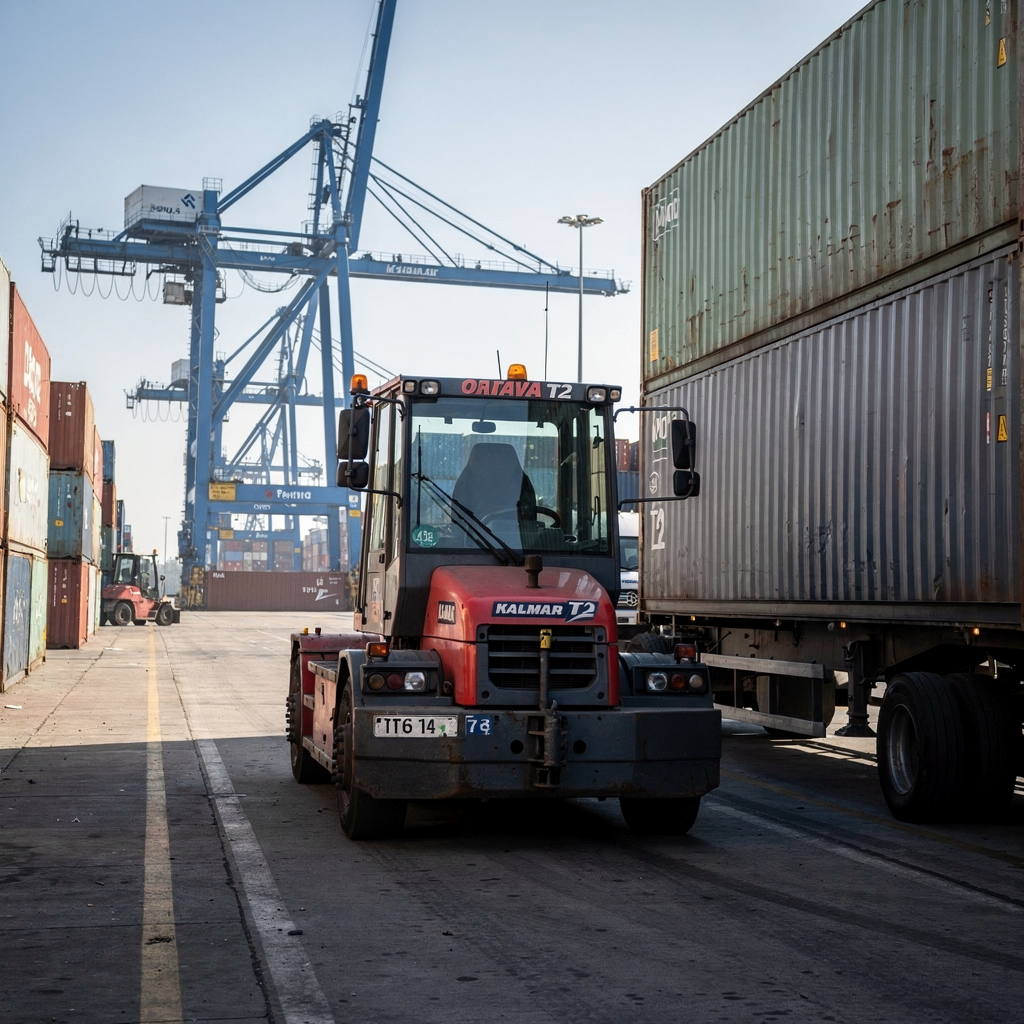
The KALMAR OTTAWA T2 brings a focused design to on-site moves. The ottawa t2 terminal tractor features a robust chassis, ergonomic cabin, and a powertrain tuned for torque and frequent stops. The creator of the terminal tractor legacy at OTTAWA set standards in durability and operator ergonomics. The cab improves sightlines and comfort so the DRIVER can spot quickly and safely. The platform supports a range of ENGINE choices, including diesel and EV options, and the 4×2 configuration balances traction with maneuverability. Kalmar markets the unit for high-throughput applications where consistent uptime matters.
Real-world trials show efficiency gains. In one major container terminal, swapping older yard machines for a mix including the Ottawa T2 reduced dwell time at the quay and raised moves per crane shift. The change came from faster hookups, better fifth-wheel interfaces, and reduced downtime owing to improved SERVICE intervals. OEM support and scheduled MAINTENANCE plans matter here. Kalmar offers planned maintenance windows and component replacement programs that aim to protect availability and uptime. Those contracts can include remote diagnostics and parts pooling, which cut repair turnaround.
In practice, terminal managers cite shorter hook-up times, improved safety, and reduced driver fatigue after switching to the kalmar ottawa t2. The machine’s lift and spot capabilities suit tight storage blocks, and the cabin supports long shifts through ergonomic seating and controls. For terminals that need to certify equipment for high-intensity duty, these features align with workplace safety goals. If you want to read about how digital twins and TOS integration can complement equipment choices, see our article on digital twin integration with terminal operating systems (digital twin integration).
yard offering for distribution efficiency
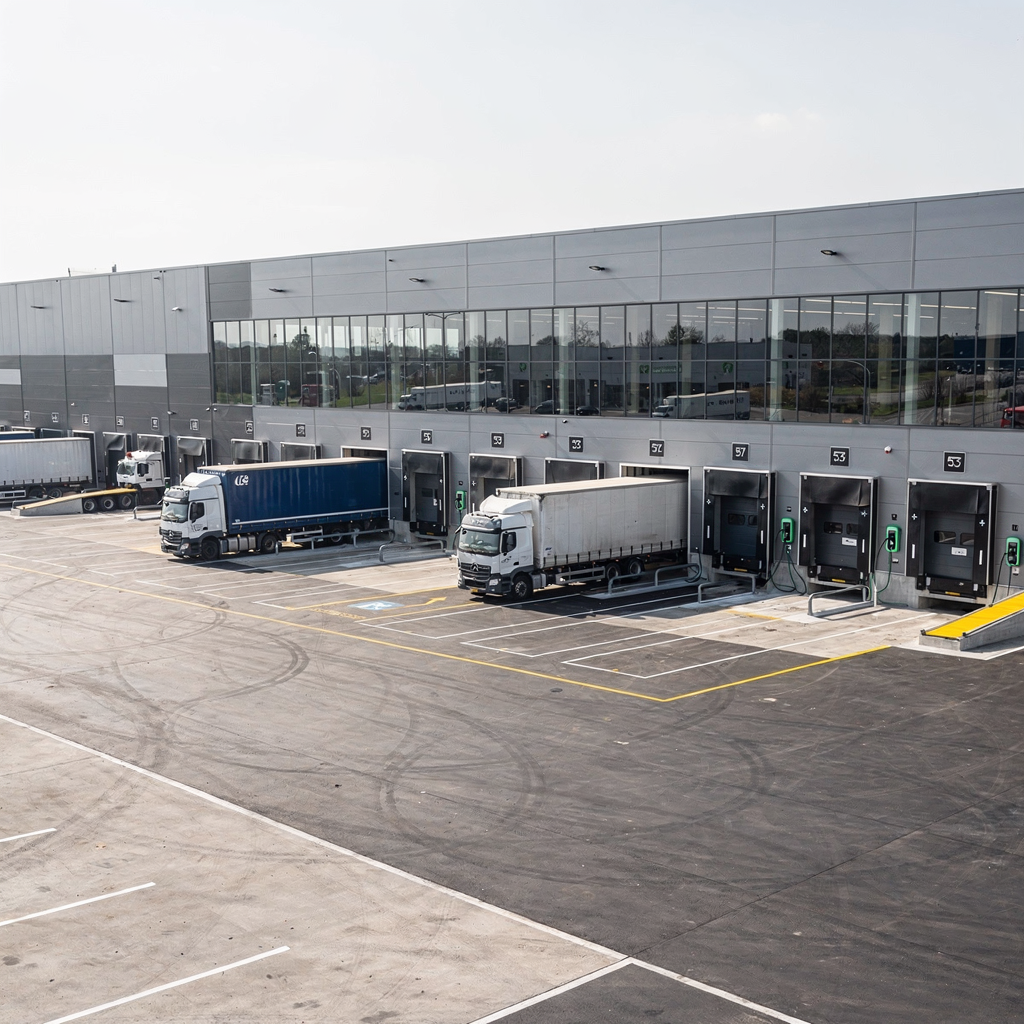
Yard layout influences how machines serve distribution flows. A clear plan separates inbound holding lanes, active stacks, and gate buffers. The Ottawa T2 fits into horizontal TRANSPORT strategies by delivering short, repeatable runs and by handling trailers with precise spotting. For distribution centres and warehouse feeds, terminal trucks must connect quay, railheads, and local depots with minimal intermediate handling. A tight yard plan reduces driving distances, lowers consumption, and speeds gate cycles.
Distribution applications often need custom offering packages. For example, terminals can equip machines with telematics, automated logging, and ergonomic cabins to match distribution centers’ schedules. Such customization reduces idle time and supports steady throughput into warehouse yards and into feeder networks. Our platform, Loadmaster.ai, helps planners simulate these configurations in a sandboxed digital twin. We train RL agents to test how a given yard layout and a specific mix of machine types affect crane efficiency and gate wait times. The result is a schedule that minimizes rehandles and protects quay productivity while maintaining steady feeds to distribution centers.
Integration with scheduling systems is critical. When yard trucks and shunt truck fleets link to the terminal’s TOS and dispatch layers, dispatchers see live availability and can assign jobs optimally. That seamless control and efficiency lowers unload delay and improves on-time delivery into warehouses. For practical tips on job allocation and operational rules, explore our detailed guide on container terminal job allocation optimization (equipment job allocation). By aligning offering, routing, and maintenance plans, operators can deliver more reliable service to distribution centres and reduce unnecessary travel and rehandles across the yard.
Drowning in a full terminal with replans, exceptions and last-minute changes?
Discover what AI-driven planning can do for your terminal
electric terminal trucks and sustainability
Operators are shifting to electric terminal tractors to meet emission targets and to lower lifecycle costs. Electric drivetrains cut local emissions and reduce maintenance by replacing complex diesel systems with simpler ELECTRIC MOTOR components. Fleets that deploy EV models often pair them with automated charging stations to streamline turnarounds and to keep machines available during peak windows. For instance, some terminals fitted 33 terminal tractors with electric drivetrains and automated charging systems to improve efficiency and to lower operating costs (automated charging systems case).
Fleet expansions underscore the trend. ABF Freight moved to 14 battery-electric terminal tractors, which shows growing confidence in battery platforms for heavy-duty yard work (fleet electrification example). The move also reduced fuel use and helped meet corporate ENVIRONMENT goals. Total cost of ownership calculations factor in lower maintenance, lower consumption, and the expected lifespan of the battery and CHASSIS. However, charging infrastructure and duty cycle planning must be carefully matched to shift patterns. That is where operational planning and tools like our JobAI agent add value by scheduling charging slots and by adjusting job assignments to protect crane productivity.
When planning an electric terminal rollout, consider battery sizing, automated charging, and depot layout. EV models typically need overnight charging and opportunistic top-ups. A well-designed charging plan reduces downtime and lets terminals run a mix of diesel and electric machines during transition periods. The electric yard approach can support zero-emission goals for final-mile delivery and for intermodal hubs. To see how AI can help balance charging, dispatch, and crane protection, read about our multi-agent planning architecture (multi-agent planning).
intermodal cargo supplier redesign at distribution centres
Intermodal flows link ship, rail, and road through coordinated handoffs at the terminal. Suppliers must deliver containers to gates, to rail ramps, or to nearby distribution centres with predictable timing. Redesign begins by mapping flows, by identifying pinch points, and by simulating alternatives. For example, shifting some moves from peak quay windows to staged transfers in holding lanes can smooth demand. Then, electric terminal trucks and yard automation can move containers to the right lane for onward shipment, so warehouses receive loads on time.
Suppliers play several roles: they schedule drayage, they coordinate chassis exchange, and they update the yard state for dispatch. Better supplier coordination reduces idle time and lowers rehandles. For scheduling, automated notifications and TOS integrations help drivers and spotters align pickup times. A modern redesign also uses AI to plan moves proactively. Loadmaster.ai’s StackAI and JobAI train in a digital twin to place blocks and to assign moves so that future bottlenecks get prevented, not just reacted to. This reduces overall driving distance and supports a seamless flow into distribution centres.
Finally, look ahead to trends. AI-driven yard management, EV fleets, and automation will converge in zero-emission intermodal hubs. Predictive planning tools will sequence moves to protect quay cranes and to avoid congestion. As a result, distribution centers will see more reliable delivery windows and lower dwell. If you want to explore capacity planning and digital twins, visit our article on capacity planning using digital twins (capacity planning with digital twins). With a redesign that combines EV traction, improved machine selection, and RL-based planning, terminals can meet sustainability goals while improving throughput.
FAQ
What is a terminal tractor and why does it matter?
A terminal tractor is a vehicle designed for short-haul moves inside a terminal or yard and it features a strong chassis and fast coupling systems. It matters because it speeds spotting, reduces drive time, and protects quay crane productivity.
How does the Ottawa T2 compare with standard trucks?
The Ottawa T2 has a low cab, a torque-focused engine option, and a reinforced chassis for heavy spotting. Compared with highway truck designs, it offers quicker hook-up, better maneuverability, and features tailored for repetitive yard cycles.
Can electric terminal trucks meet heavy-duty duty cycles?
Yes, with correct battery sizing and automated charging, EV terminal trucks can handle intense cycles typical at busy terminals. Fleet pilots, including battery-electric deployments, show promising TCO and emission benefits when charging and duty are planned together (fleet electrification example).
What maintenance support should operators require?
Operators should request scheduled maintenance, remote diagnostics, and parts pooling from the manufacturer to protect availability. OEM support agreements lower unplanned downtime and improve component replacement turnarounds.
How do yard layouts affect distribution efficiency?
Clear lanes for inbound, active, and outbound flows reduce travel time and rehandles. A well-mapped yard lets terminal tractors and yard truck fleets move trailers efficiently to dock doors and to rail ramps.
What role does AI play in terminal planning?
AI, especially RL agents, can optimize vessel stow, yard placement, and job allocation simultaneously to balance quay productivity and yard congestion. Loadmaster.ai’s tools simulate millions of decisions and then deploy policies that adapt in real time.
How do terminals integrate electric charging infrastructure?
Terminals install depot chargers and automated charging stations at staging points to support EV rotation and opportunistic top-ups. Automated systems can coordinate charging with dispatch to keep machines available during peaks (automated charging systems).
Are there measurable benefits to replacing old equipment with Ottawa T2 units?
Yes. Operators report lower hook-up times, improved safety, and higher moves per crane shift after updating fleets with modern terminal tractors. These gains stem from design improvements and better maintenance programs.
How can suppliers and terminals redesign intermodal flows?
Redesign starts by mapping current flows, then simulating alternative staging and transfer patterns, and finally by coordinating supplier schedules to reduce idle time. AI-driven sequencing helps protect quay operations while smoothing deliveries to distribution centres.
Where can I learn more about equipment planning and digital twins for terminals?
Explore Loadmaster.ai resources on equipment planning and digital twin integration to see practical use cases and deployment strategies. For example, our guides on equipment job allocation and digital twin integration offer detailed frameworks for planners (job allocation) and (digital twin integration).
our products
 stowAI
 stackAI
 jobAI
jobAI
Innovates vessel planning. Faster rotation time of ships, increased flexibility towards shipping lines and customers.
Build the stack in the most efficient way. Increase moves per hour by reducing shifters and increase crane efficiency.
Get the most out of your equipment. Increase moves per hour by minimising waste and delays.
stowAI
Innovates vessel planning. Faster rotation time of ships, increased flexibility towards shipping lines and customers.
stackAI
Build the stack in the most efficient way. Increase moves per hour by reducing shifters and increase crane efficiency.
jobAI
Get the most out of your equipment. Increase moves per hour by minimising waste and delays.