
port and container port: The role in global trade and emerging demands
Ports move the goods that keep modern supply chains running. A port is the physical gateway where ships, trucks and trains meet. A container port focuses on standardized boxes and fast transfers. As a result, they shape global trade patterns and influence how goods flow from factory to shelf. For context, ports that handle millions of TEUs face rising pressure to increase throughput while cutting delay time at the port. For example, studies note that better prediction of vessel schedules and the vessel’s stay in port can reduce waiting times and costs “accurate estimation of the total (stay) time of the vessel and any delays at the port are imperative for effective planning and scheduling in port operations”. This quote highlights why forecasting and planning matter.
Traffic growth has varied by region. Some container ports report annual growth that strains quay and yard capacity. Therefore, port authorities must balance investment with operational efficiency. For example, demand surges raise operating costs and lengthen the total time at port. In practice, planners track TEUs handled, average vessel turnaround, and hours of operations. They also track the effectiveness of port operations and the efficiency of port operations against service targets. These metrics feed into terminal planning and decision-making in port management.
Ports must respond to new types of cargo and changing schedules. For instance, maritime cargo transportation and port demands shift with e-commerce, seasonal peaks and geopolitical shifts. Consequently, port facilities need flexible design and resilient port operations. In addition, port and terminal stakeholders require clear port analysis to invest wisely. For those looking to explore how digital twins and system design help, see our guide on digital twin integration with terminal systems for deeper context and technical detail digital twin integration with container terminal operating systems.
container terminal optimization: Key metrics and bottlenecks
Container terminal managers watch a short list of KPIs. Chief among them are berth utilisation, crane moves per hour, and gate throughput. They also measure container dwell time, equipment utilisation, and yard occupancy. These indicators reveal where the terminal loses time and where to optimize. For example, poor berth planning creates seaside delays. In turn, ships wait longer, and costs rise. Terminal operators must also manage landside congestion. Gate peaks can quickly produce truck queues and longer truck turn times.
Common bottlenecks include landside congestion, seaside delays, and unnecessary equipment idling. Equipment idling also leads to wasted fuel and higher operating costs. As planners balance objectives, they face trade-offs between lower operational costs and higher service levels. For instance, pushing quay productivity can cause yard congestion. Alternatively, protecting yard flow can reduce crane moves per hour. That trade-off is central to optimizing complex objective functions. Operations research and algorithmic approaches help. In practice, teams compare heuristics and prescriptive models to choose the right balance; readers can learn more in our comparison of predictive analytics and heuristics in vessel stowage planning comparing predictive analytics and heuristics.
Key factors influencing port operations include container mix, equipment reliability, staffing, and weather. For example, a rush of imports can overwhelm gate staff and extend delay time at the port. Therefore, planners use optimization and automated rules to reduce bottlenecks and to optimize container flow. Also, terminal operators must invest in performance management systems for ports to track cause-and-effect and to improve decision-making. For more on equipment-level improvements, explore our piece on container terminal equipment job allocation optimization equipment job allocation optimization.
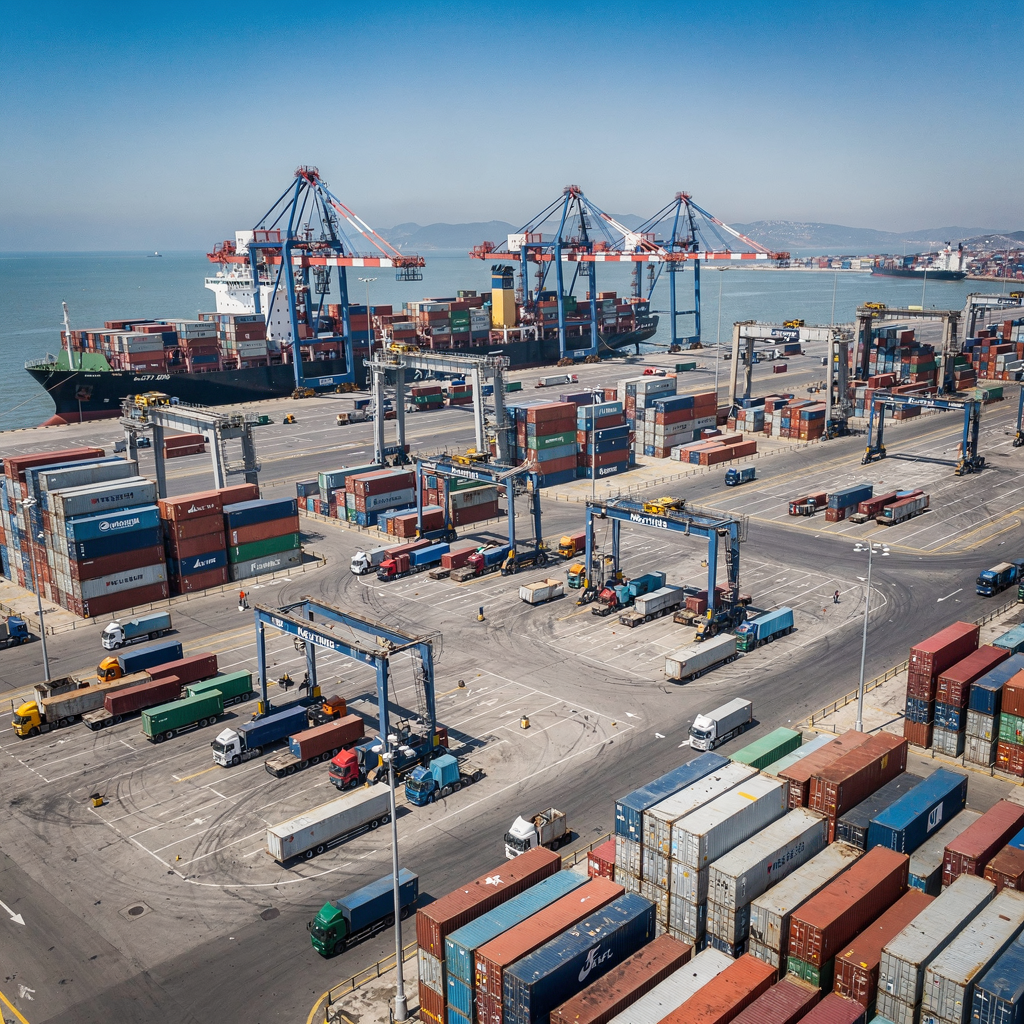
Drowning in a full terminal with replans, exceptions and last-minute changes?
Discover what AI-driven planning can do for your terminal
simulation, predictive models and terminal operations: Analytical approaches
Analytical methods let teams test decisions without disrupting real work. Discrete-event simulation helps planners model terminal layout and flow. That simulation can represent quay, yard, gate, and vehicle interactions in one model. Next, predictive models estimate arrival time, cargo handling durations, and berth occupancy. These models draw on AIS feeds, terminal operating systems logs and weather reports to refine short-term forecasts. For instance, combining AIS with TOS data improves arrival time windows and the scheduling horizon. Researchers show that integrating multiple data streams improves accuracy and supports proactive planning predictive port analytics to optimize terminal operations.
Real-time data supports adaptive responses. Live AIS updates indicate vessel position. Simultaneously, TOS events show gate throughput and equipment status. Together, these inputs power predictive models and alert systems. For example, when a vessel slows offshore, the model updates expected quay workload. Then, planners reassign cranes or shift yard moves. This approach reduces wasted resources and improves the efficiency and effectiveness of port decisions.
Analysts also use port analysis to test scenarios for berth allocation and yard strategy. Additionally, feature analysis is used and analysis is used to understand which inputs most affect handling times. Methods vary from regression to machine learning. However, the goal stays the same: better terminal planning and reduced uncertainty. For readers curious about digital twins and their role in planning and capacity, our material on building a digital twin of an inland container terminal offers practical steps and lessons learned building a digital twin of an inland container terminal.
machine learning for forecast: Enhancing predictive scheduling
Machine learning has matured enough to support many forecasting tasks in ports. Common models include regression, random forests, and neural networks. Each technique brings strengths. Regression models are interpretable. Random forests handle nonlinear interactions. Neural networks capture complex temporal patterns. Teams choose approaches by considering data volume, noise and operational constraints. Importantly, feature analysis and the incorporation of feature analysis improve model robustness and interpretability. In practice, teams also sort candidate models using RMSE and sorted using accuracy metrics to rank performance and select trustworthy models.
Model validation matters. Practitioners split data, test on holdout sets and track performance over time. They measure predictive capabilities with error metrics and with operational KPIs, for example reduced waiting time or increased berth planning accuracy. Studies show that predictive analytics can significantly reduce vessel waiting times and improve berth utilisation. For instance, machine learning-driven forecasts often lower uncertainty in cargo handling durations and help optimize berth allocation. A recent review demonstrates that ML-assisted planning can meaningfully change outcomes in seaside management and gate scheduling Machine Learning Models for Efficient Port Terminal Operations.
Data needs are significant. Models require labeled history, but alternatives exist. Loadmaster.ai uses simulation-trained reinforcement learning to avoid full dependence on historical data, which helps in cold-start scenarios. Still, many terminals benefit from combining simulation, digital twins and ML to refine forecasts for operational efficiency. For technical readers, our article on AI in port operations and stowage planning explores how learned policies improve vessel stow sequences and reduce rehandles AI in port operations: stowage planning.
Drowning in a full terminal with replans, exceptions and last-minute changes?
Discover what AI-driven planning can do for your terminal
integrate predictive within operational strategies: Improving resource allocation
Forecasts must feed decisions to create value. Predictive scheduling lets operators time crane allocation, yard slotting and gate staffing. For example, a short-term prediction of berth occupancy guides dynamic crane assignments. Also, predictive model scheduling ties arrival windows to equipment rosters. These links let operators prefer robust schedules that tolerate delays and prioritize critical vessels. As a result, the terminal reduces costly rehandles and minimizes excessive travel distances.
Dynamic scheduling beats static plans when conditions change. Static planning locks resources to a fixed horizon. Dynamic planning reoptimizes as real-time data arrives. That shift improves resilience and supports resilient port operations. When teams combine operations research with prescriptive analytics, the result is more effective planning than either approach alone. Indeed, operations research excels in optimizing complex objective functions while prescriptive tools help execute multi-objective control. For readers interested in implementing multi-agent planning, our guide on AI-native architectures explains how agents coordinate quay, yard and gate actions AI-native multi-agent planning.
Risk management matters as well. Data uncertainty and anomalies must not break the plan. Therefore, terminals add anomaly detection and safety constraints. Predictive scheduling in container terminals must include guardrails. That way, planners keep control while automation suggests optimized moves. As a result, terminal operators preserve decision-making in port management and maintain governance. Also, the approach supports consistent outcomes across shifts and enhances the overall port performance and optimize supply.
implementing predictive: Rolling out predictive scheduling in port operations
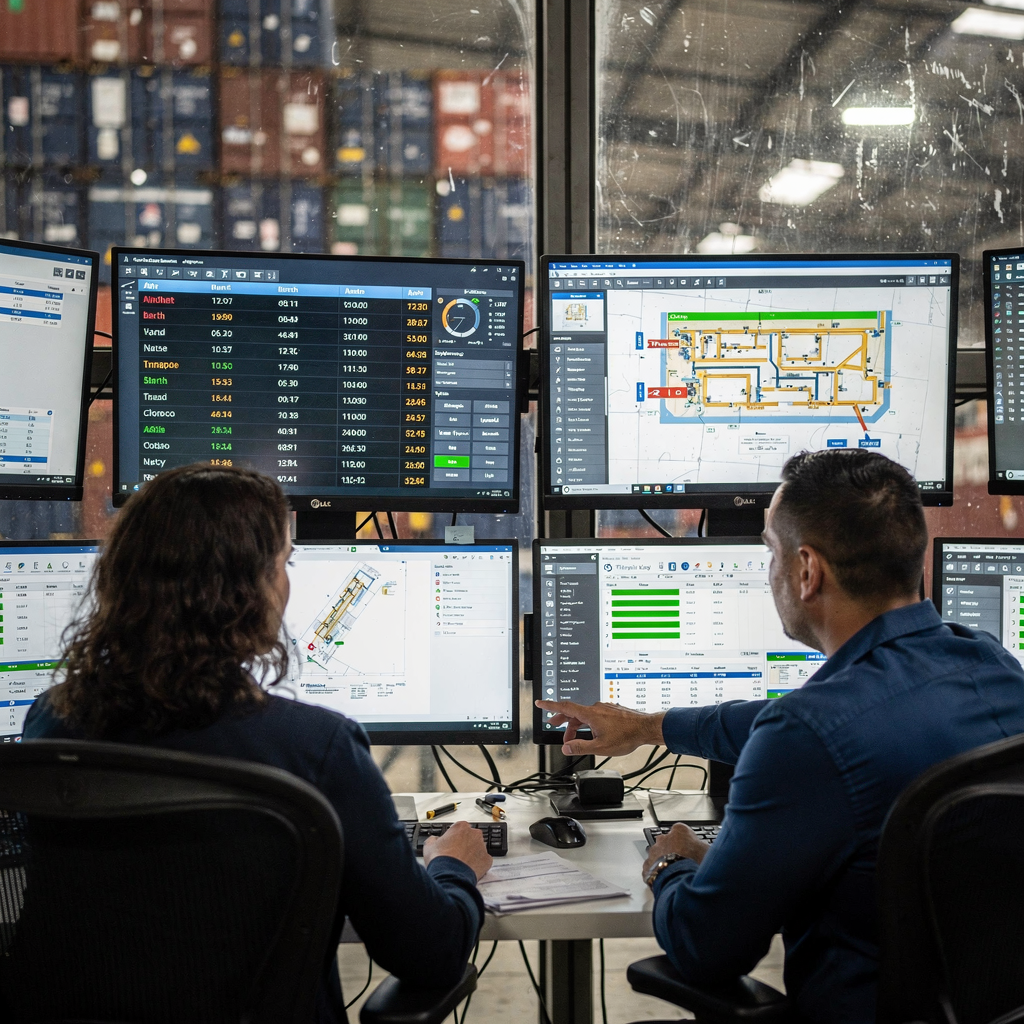
Implementing predictive systems requires a clear plan. Start with infrastructure: data pipelines, digital twin models and control dashboards. You need APIs to pull AIS, TOS and equipment telemetry. Then, build a sandbox digital twin to test policies. Loadmaster.ai, for example, trains agents in a simulated environment so terminals get cold-start ready strategies without teaching the system past mistakes. That method reduces the risk of repeating historical inefficiencies and shortens time to benefit.
Change management is crucial. Staff training, stakeholder alignment and governance make or break adoption. Planners must trust outputs. Therefore, systems must show explainable KPIs and audit trails. Performance management systems for ports track KPIs such as container dwell time and equipment utilisation. Post-implementation KPIs also include throughput rates and the efficiency and effectiveness of port procedures. Teams should measure whether the solution improves effective planning and if it addresses the complexities of port operations.
Finally, operational strategies should scale. Integrate predictive across the terminal and link to TOS and other enterprise systems. That way, terminal planning becomes part of everyday workflows. To reduce rollout friction, deploy in pilot blocks and then expand to full yard operations. Also, ensure systems comply with regulation and align with port facilities governance and port management goals. If you want technical guidance on integrating digital twins with your TOS, see our practical steps for digital-twin integration with container terminal operating systems digital-twin integration with container terminal operating systems. In sum, implementing predictive planning yields benefits of predictive insights, consistent execution and lower costs when combined with robust governance and continuous validation.
FAQ
What is predictive scheduling in container terminals?
Predictive scheduling uses forecasts of arrival time, handling durations and berth occupancy to arrange equipment and staff ahead of time. It reduces waiting times and helps terminal operators optimize resource allocation.
How does machine learning improve berth planning?
Machine learning models analyze historical and real-time signals to predict handling durations and berth occupancy. They then guide planners to assign cranes and yard slots more effectively, which can increase quay productivity and reduce rehandles.
What data sources are essential for predictive analytics at a port?
Key inputs include AIS feeds, terminal operating systems logs, equipment telemetry and weather reports. Combining these sources produces more accurate forecasts and supports proactive decisions.
Can predictive systems work without historical data?
Yes. Simulation and reinforcement learning approaches can train policies in a digital twin, so terminals get useful strategies before long historical records exist. This cold-start method avoids repeating past inefficiencies.
How do you measure success after rolling out predictive scheduling?
Measure container dwell time, throughput rates, moves per hour, and equipment utilisation. Also monitor the effectiveness of port operations and track whether the system reduces variability across shifts.
What role do port authorities play in adopting predictive tools?
Port authorities set standards, invest in infrastructure and align stakeholders. Their support ensures that data sharing, governance and compliance enable predictive systems to scale across the facility.
How do predictive models handle unexpected disruptions?
Robust systems include anomaly detection and safety constraints. When an event occurs, predictive schedules reoptimize dynamically to protect critical KPIs and to maintain resilient port operations.
Is a digital twin necessary for predictive scheduling?
A digital twin is not mandatory, but it speeds testing and validation. It also supports scenario planning, capacity studies and safe trials before live deployment.
Which teams should be involved in a predictive rollout?
Include terminal operators, IT, planners, gate staff and port management. Cross-functional teams help ensure data quality, operational fit and that decision-making processes in port management accept the new workflows.
Where can I learn practical steps for integration with TOS?
Our resources cover integration patterns and best practices for TOS connections, APIs and sandbox testing. See the article on digital-twin integration with container terminal operating systems for technical guidance and examples digital-twin integration with container terminal operating systems.
our products
 stowAI
 stackAI
 jobAI
jobAI
Innovates vessel planning. Faster rotation time of ships, increased flexibility towards shipping lines and customers.
Build the stack in the most efficient way. Increase moves per hour by reducing shifters and increase crane efficiency.
Get the most out of your equipment. Increase moves per hour by minimising waste and delays.
stowAI
Innovates vessel planning. Faster rotation time of ships, increased flexibility towards shipping lines and customers.
stackAI
Build the stack in the most efficient way. Increase moves per hour by reducing shifters and increase crane efficiency.
jobAI
Get the most out of your equipment. Increase moves per hour by minimising waste and delays.