
Understanding Terminal Automation: Balancing Efficiency and Human Oversight
Terminal automation refers to the use of advanced technologies to automate routine tasks inside an inland container terminal and to streamline vessel planning. Automation can include software planning engines, automated container handling equipment, and sensors that feed digital systems. Also, such tools speed decision cycles and reduce repetitive work, and they often improve port efficiency by removing manual bottlenecks.
However, adoption has varied. For instance, the U.S. Government Accountability Office reports that “all of the 10 largest U.S. container ports have adopted automation technology to varying degrees,” and that several ports deploy automated stacking cranes and automated guided vehicles to boost turnover times and throughput GAO report. Additionally, the GAO note helps set expectations. It shows that adoption of automation brings clear hardware and software changes across major ports.
Human oversight remains crucial. Humans catch exceptions, apply judgement, and reduce the chance of human error when systems face novel circumstances. For example, vessel arrival times vary, and yard congestion can evolve within minutes. Therefore, a planner must weigh trade-offs between quay productivity and yard congestion, and must protect terminal productivity during peaks. In practice, a planning team reviews algorithmic suggestions, and then accepts, refines, or rejects them. This mix prevents brittle full automation and helps the terminal maintain resilience.
Also, real-world systems must account for safety, regulations, and local labour rules. For safety-critical decisions, terminal operators keep final authority. Likewise, port authorities set limits and safety expectations, and they often require audit trails for any automated decisions. In short, the benefits of automation are strong, but only when matched with clear human roles and operational guardrails. For readers who want technical detail on vessel planning and AI-integration, see our coverage of vessel planning with AI systems vessel planning and stowage planning.
Port Context in Port Terminals: Ensuring Human Expertise in Automated Systems
Container terminals face unique constraints that differ from warehouse floors or distribution centres. For example, weather affects quay crane performance, traffic outside the gate changes gate throughput, and local labour agreements influence shift patterns. Also, port areas often host mixed cargo types that require distinct handling sequences. As a result, automated recommendations must adapt to a wider and more volatile set of inputs than many inland logistics systems.
Local factors shape how terminals introduce automation. Smaller ports and large hubs both weigh costs, but they face different risk profiles. For instance, a global container terminal with deepwater access will plan for large container vessels, whereas a smaller port focuses on shorter feeder calls and frequent truck peaks. Thus, policies and management must be local, even when the automation technology comes from global vendors.
One major U.S. port case illustrates integration of AI with operators. The port implemented automated stacking cranes and AGVs at a terminal block to lower dwell time. Its operators then used live dashboards to monitor and to override schedules during unplanned events, which maintained throughput while they tuned automation projects GAO report. This hybrid approach prevented costly missteps when arrival patterns shifted suddenly.
Also, traffic management systems and gate procedures influence how terminals sequence trucks and vessels. To coordinate across functions, many terminals create cross-functional teams that meet daily. They focus on incident response and on adapting automation rules. For more on integrating digital twins and TOS for safe automation rollout, see our resource on digital twin integration with terminal operating systems digital twin integration.
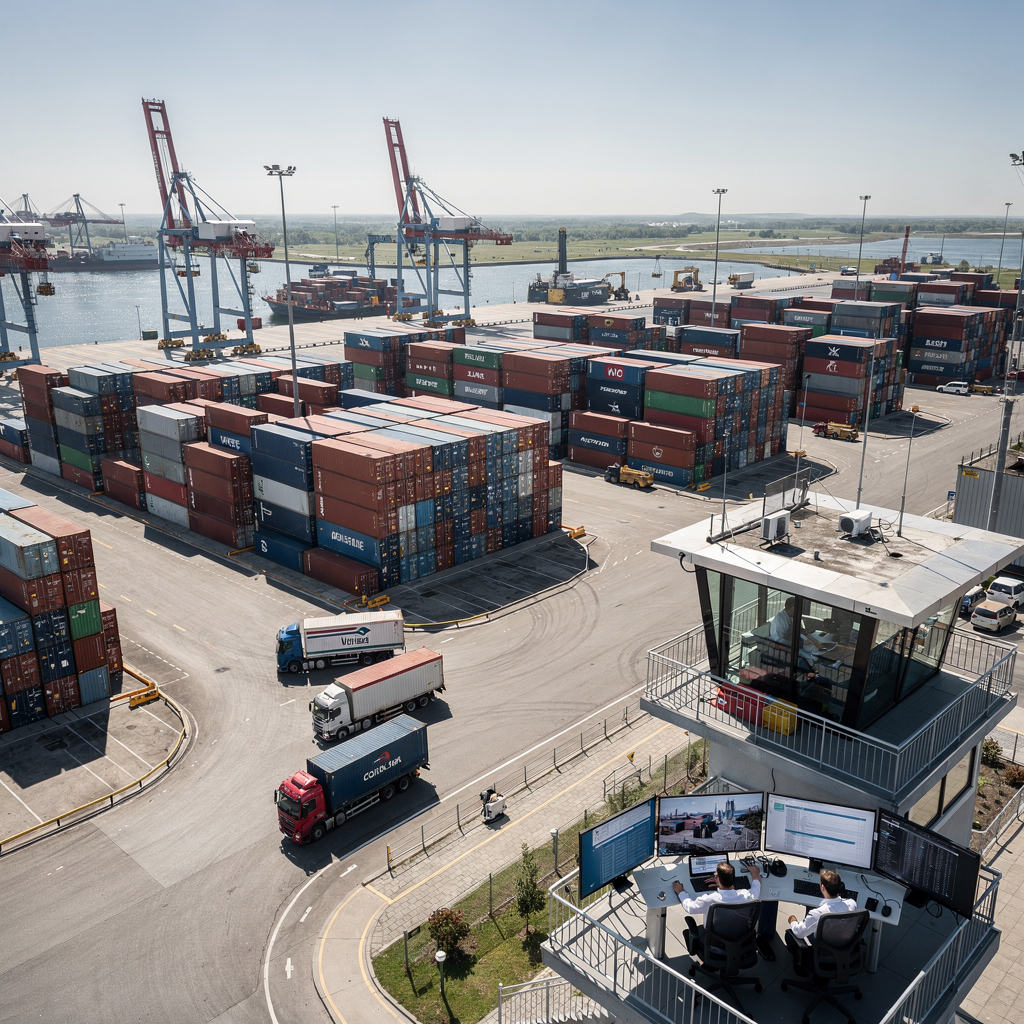
Drowning in a full terminal with replans, exceptions and last-minute changes?
Discover what AI-driven planning can do for your terminal
Semi-Automated Terminal Operations: Human-AI Collaboration in Vessel Planning
Semi-automated terminal workflows blend machine speed with human judgment. For vessel planning, an AI systems module can propose berth allocation, stowage sequences, and crane assignments. Then, human planners review those recommendations, apply soft constraints, and adjust for local intelligence. In many terminals, the planner accepts the AI sequence and refines targeting goals like fewer rehandles and balanced crane workload.
That hybrid model produces measurable gains. Research in cross-industry logistics shows that mixed human-robot teams can boost efficiency by up to 30% compared with automation or humans alone HBR study. Likewise, McKinsey found that full automation can reduce vessel turnaround times by up to 20%, but that facilities keeping human operators for exception handling gain adaptability during disruptions McKinsey.
Operators fill roles that machines cannot. They exercise ethical judgement when sensitive cargo arrives. They handle labour negotiations and communicate with port authorities and carriers. Also, they provide on-the-ground situational awareness. For example, an operator may see that a quay crane has a hydraulic issue and then temporarily reroute moves to avoid cascading delays. That judgement prevents schedule churn and reduces inefficiency per container.
In practice, semi-automated terminal and semi-automated container terminals use guardrails. The systems flag unsafe choices and they surface recommended alternates. Loadmaster.ai uses reinforcement learning agents that train in a digital twin and then present explainable KPIs. This approach helps planners evaluate AI-driven sequences before committing them. For readers curious about job allocation and dispatcher automation, see our guide on container terminal equipment job allocation optimization equipment job allocation.
Automation and Logistics Integration: Optimising Throughput with Human Oversight
Vessel planning does not operate in isolation. It links to yard logistics, gate throughput, and hinterland connections. A change in quay sequence affects yard space and truck wait times. Thus, planning requires a system view that spans berth allocation, stacking policies, and gate labour. Also, terminals must coordinate with carriers and the port community to avoid misaligned expectations.
Algorithmic scheduling tools use constraints and optimization objectives to propose plans. These algorithms can be heuristic, rule-based, or use advanced machine learning. However, algorithmic outputs have limits under uncertainty. For example, sudden berth delays, equipment breakdowns, or tug availability can invalidate an optimal plan. In such cases, humans must interpret root causes and decide trade-offs between immediate throughput and long-term yard balance.
Therefore, a healthy workflow preserves human-in-the-loop control. Operators validate AI suggestions, they run sensitivity checks, and they reweight KPIs when conditions change. Also, human teams handle carrier negotiations and emergency repairs. For terminals that want to reduce crane idle time due to handling constraints, see our article on reducing crane idle time reducing crane idle time. That piece gives practical examples of how coordination across quay and yard reduces waste.
Also, some scenarios quickly show the value of human judgment. If a large container vessel shifts ETA by several hours, a planner might delay a berth move to reduce rehandles and to protect quay productivity. Without human checks, a fully automated system might aggressively reshuffle containers and cause extra moves per container. Humans thus prevent cascading inefficiency and preserve port performance. For further reading on predictive maintenance and equipment availability, explore our use of data to predict maintenance in inland container terminals predictive maintenance.
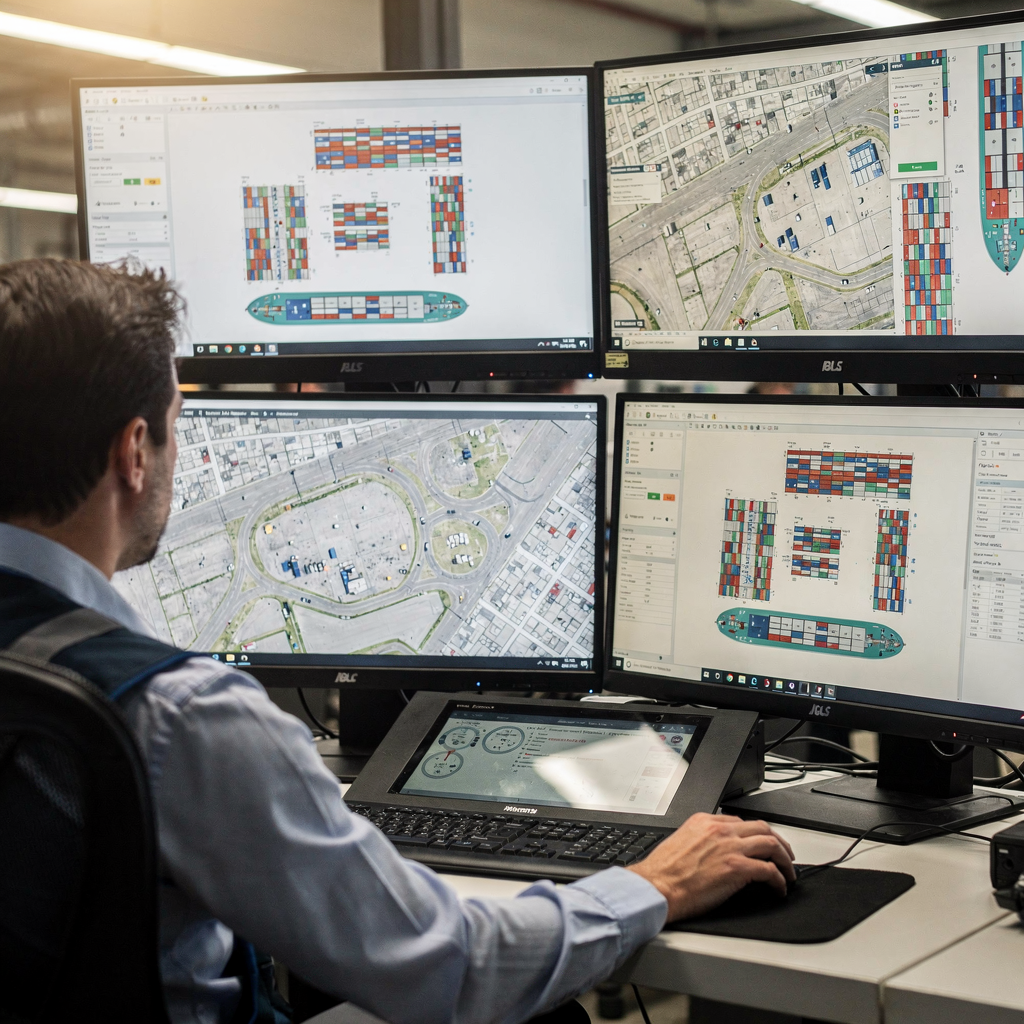
Drowning in a full terminal with replans, exceptions and last-minute changes?
Discover what AI-driven planning can do for your terminal
Green Ports and Modern Ports: Sustainable Automation Strategies
Environmental performance increasingly shapes port investments. Terminals aim to cut emissions and to lower energy costs. Thus, green ports invest in electric AGVs, shore-power enabled quays, and solar-assisted cranes. These technologies reduce fuel use and pollution in port areas. Also, they align with regional regulations and corporate sustainability goals.
Automated guided vehicles can operate on batteries with optimized routing to reduce per container driving distance. Automated stacking cranes can minimize empty moves and thereby lower energy consumption. Also, solar arrays on warehouse roofs can power control systems during daylight hours. Such choices improve terminal efficiency and reduce operating costs.
Human teams remain essential to manage and maintain green automation systems. Technicians perform battery swaps, they conduct preventative checks, and they tune software for energy-aware scheduling. Port management also shapes policies to prioritise low-emission operations during specific hours. In practice, automation decisions include environmental KPIs so the system optimises for energy as well as for moves per hour.
Green automation requires cross-disciplinary training. Electric equipment needs different maintenance schedules than diesel fleets. Also, operators monitor state-of-charge and charging schedules to avoid downtime. For terminals that want to prototype sustainability in a sandbox, our digital twin resources and RL agents allow simulation of energy-aware policies without risking live operations building a digital twin.
Finally, sustainable strategies help ports invest in long-term resilience. They reduce fuel price exposure, they improve local air quality, and they strengthen community relations. Also, sustainable investments often unlock new funding sources and support smart port development across regions.
Future Directions in Automation: Preparing the Workforce for Advanced Technologies
The future directions for terminals include AI-driven predictive planning, digital twins, and multi-agent coordination. Many terminals will experiment with AI systems that anticipate arrival disruptions and that simulate trade-offs across KPIs. Also, research points to a continued shift from supervised models toward reinforcement learning agents that can learn policies without heavy historical data.
Workforce readiness matters. Terminals must invest in upskilling programmes, and they must build feedback loops that let operators correct AI behaviour. Training covers both technical skills and new decision roles. For instance, a planner learns to read probabilistic schedules, and a dispatcher uses an explainable interface to override an RL agent when needed. Loadmaster.ai’s approach of simulation-trained agents highlights how training in a sandbox can ease adoption and reduce risk.
Also, port governance and policy and management must evolve. Port authorities will need frameworks for audit trails, human oversight rules, and safe deployment of automation projects. Such governance ensures operators keep control of critical decisions and that terminals remain compliant with regulations like the EU AI Act where relevant.
Terminal operating companies should adopt continuous feedback loops that gather operator corrections and feed them back into system refinements. That loop ensures automation systems improve with live experience. Finally, ongoing future research should measure how mixed teams reduce human error and increase terminal productivity. For technical readers, compare predictive analytics and heuristics in terminal operations to understand trade-offs in model design predictive analytics vs heuristics.
FAQ
What is the difference between terminal automation and full automation?
Terminal automation covers systems and equipment that automate specific tasks at a terminal, such as automated stacking cranes or scheduling software. Full automation implies end-to-end operations with minimal human intervention, which many operators avoid because humans still handle exceptions and safety-critical decisions.
How do semi-automated terminal workflows improve vessel planning?
Semi-automated workflows let AI propose optimal berth and stowage plans while humans validate and adjust them. This blend speeds planning, cuts unnecessary moves, and preserves adaptability during disruptions.
Are automated stacking cranes and automated guided vehicles widely adopted?
Yes, several major ports have adopted them. The GAO reports that the largest U.S. container ports use such equipment to varying degrees to improve throughput GAO report.
How can terminals avoid increased rehandles from automation?
Terminals must include yard balance and future-state constraints in their automation rules. Also, human planners should review suggested stows and the AI should optimise for fewer rehandles per container to protect overall port performance.
What role do green ports play in automation strategy?
Green ports prioritise low-emission technologies like electric AGVs and energy-aware scheduling. Human teams manage charging and maintenance, which ensures sustainability goals support rather than disrupt operations.
How does Loadmaster.ai approach human-AI collaboration?
Loadmaster.ai trains reinforcement learning agents in a digital twin, then deploys them with operational guardrails and explainable KPIs so operators can accept or override suggested policies. This reduces firefighting and improves consistency.
Do automated systems reduce human error?
Automated systems can reduce routine human errors by standardising processes, but they can also introduce new risks if designed without human oversight. Therefore, keeping humans in review roles prevents costly mistakes and maintains safety.
What training do terminal staff need for advanced automation?
Staff need upskilling in digital tools, interpretation of probabilistic plans, and procedures for overriding AI recommendations. Continuous training and feedback loops help the workforce adapt as systems evolve.
How can ports test automation safely before full rollout?
Terminals can use digital twins and sandbox simulations to test automation policies. This approach lets teams measure impacts on KPIs without risking live operations, and it supports safe phased adoption.
Where can I read more about vessel planning and terminal optimization?
Our site hosts practical guides, such as the piece on vessel planning with AI systems and other technical resources about digital twins, predictive maintenance, and job allocation optimization vessel planning, predictive maintenance, and job allocation optimization.
our products
 stowAI
 stackAI
 jobAI
jobAI
Innovates vessel planning. Faster rotation time of ships, increased flexibility towards shipping lines and customers.
Build the stack in the most efficient way. Increase moves per hour by reducing shifters and increase crane efficiency.
Get the most out of your equipment. Increase moves per hour by minimising waste and delays.
stowAI
Innovates vessel planning. Faster rotation time of ships, increased flexibility towards shipping lines and customers.
stackAI
Build the stack in the most efficient way. Increase moves per hour by reducing shifters and increase crane efficiency.
jobAI
Get the most out of your equipment. Increase moves per hour by minimising waste and delays.