
port and container port: Key Roles in Global Trade
Ports act as essential nodes in global trade and they connect ships, trucks, and rail to move goods fast. A major container port can process millions of TEU each year, with the largest terminals handling roughly 20–30 million TEU annually. This scale places the port at the centre of the port industry and makes operational choices consequential for the broader logistics sector. Cargo owners, shipping lines, and freight forwarders depend on predictable schedules and efficient handling to keep downstream business models working. For example, a delayed port call creates knock-on effects that slow supply chains and raise operational costs for many partners.
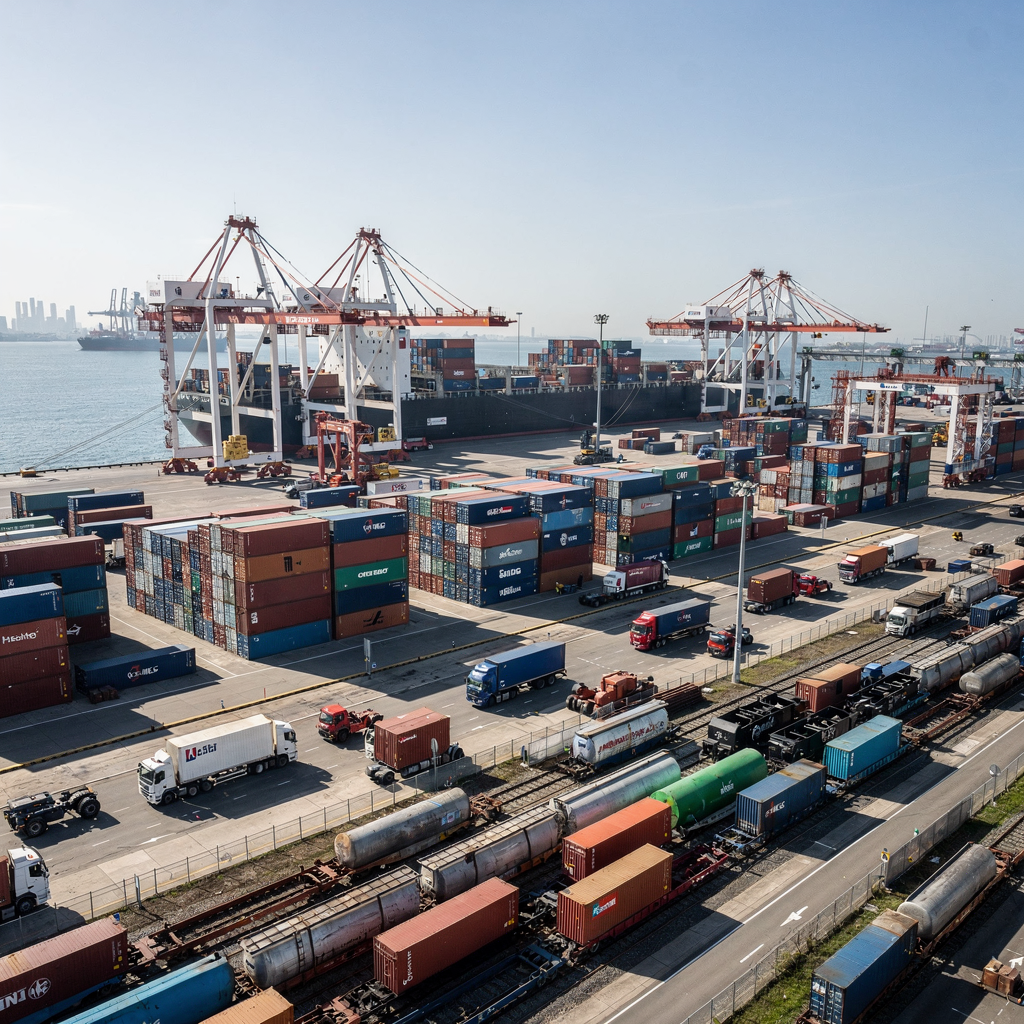
At a local level, container port activity concentrates in yards, at the quay, and across gates. Peak-hour congestion and yard space limits often force managers to triage moves and to prioritise vessel turnaround over yard balance. These trade-offs can reduce throughput and raise rehandles. Port authorities and terminal operators face pressure to cut dwell times and to improve customer satisfaction while also meeting environmental targets.
To manage these pressures, terminals must transform their management systems and adopt levels of digital tools that support quick decisions. Container shipping trends and changes in vessel calls mean planners must forecast arrivals and shifts in cargo mix. Port operators that invest in simulation software and inshore planning cut the uncertainty that drives firefighting. For practical guidance on modelling inland interactions and on creating realistic scenarios, see our inland terminal simulation overview at inland container terminal simulation software.
Ports also compete on competitive advantage, so improved port efficiency becomes a market differentiator. Operators that streamline booking systems and that improve the tracking of cargo reduce friction for cargo owners and for the movement of goods. This focus of digital initiatives helps maintain resilience across maritime transport and across the logistics industry. The chapter that follows shows how terminal operating systems provide the foundation for that transform.
digital transformation and terminal: Foundations with Terminal Operating Systems
Digital transformation in container terminals means replacing ad hoc rules with coherent digital tools and management systems. At its core, terminal operating systems coordinate yard slots, assign quay tasks, and schedule gate movements. A robust terminal operating system supports yard management, quay crane scheduling, and gate automation together. Terminal operating systems reduce guesswork and help teams automate routine choices while they retain human oversight for exceptions.
Commercial TOS development has laid the groundwork for data-driven planning and for terminal automation. As one analysis puts it, “The development of commercial TOS has built the foundation for data-driven planning and automation in container terminals” (source). Terminals that pair a modern TOS with digital solutions see measurable gains. Studies report up to a 30% rise in handling efficiency and roughly a 20% cut in vessel turnaround times when scheduling and routing are optimised.
Terminal operators should treat the TOS as a platform and not as an island. Integrations with port equipment telemetry, job allocation tools, and with analytics engines let the TOS coordinate moves end to end. For example, synchronising fleet management with TOS execution layers reduces idle equipment and improves throughput; teams can learn more in our article on synchronizing fleet management. The right TOS also enables automated terminals to run predictable cycles, to reduce human intervention, and to scale routines across shifts.
To deploy a terminal operating system well, start by auditing data quality and by defining KPIs. Measure quay productivity, yard utilisation, and operational costs. Then pilot the TOS in a constrained block and tune rules before scaling. This staged approach reduces disruption and supports organizational adoption as the transformation process advances. Teams that follow these steps are better prepared to integrate digital twins and to use analytics for operational planning.
Drowning in a full terminal with replans, exceptions and last-minute changes?
Discover what AI-driven planning can do for your terminal
iot and internet of things: Real-Time Tracking and Analytics
Internet of Things sensors attach to containers, to cranes, and to yard equipment to provide continuous telemetry. Each sensor reports location, temperature, and equipment health. The stream of real-time data feeds analytics platforms that track cargo and predict failures. With real-time tracking in place, teams gain visibility into vessel arrivals and container tracking without manual checks. This visibility supports better scheduling and smoother handoffs between shipping lines and terminal staff.
Real-time analytics reduce operational disruptions by up to 25% and they improve decision quality. Terminals that combine sensors with analytics can forecast gate queues, spot slow-moving cargo, and identify equipment that needs maintenance. Predictive maintenance reduces unexpected breakdowns and lowers operational costs. For techniques on using data for equipment upkeep, review our piece on predictive equipment maintenance.
IoT also benefits cargo owners who want clear tracking of cargo. Real-time information on temperature or shock protects sensitive freight and reduces insurance disputes. By combining IoT telemetry with booking systems and with container tracking platforms, terminals can offer seamless handoffs to carriers and to inland partners. Real-time data supports more accurate forecasts and a tighter feedback loop between planners and execution teams. In short, IoT plus analytics create a single source of truth for decisions that affect throughput and customer satisfaction.
automation and crane: Enhancing port operations Efficiency
Terminal automation brings AGVs, remote operations, and cranes and automated platforms into coordinated flows. Automated guided vehicles (agvs) shuttle containers between quay and yard, while automated stacking cranes place units with precision. Remote-controlled crane operators can steer lifts from safe control rooms, and fully autonomous systems can run continuous cycles during predictable windows. Automation also incorporates collision-avoidance systems and automated stacking cranes that cut rehandles and speed up moves.
When terminals automate crane and yard tasks, they often see reductions in handling times and in labour costs. A common outcome from AGV deployment is a 10–15% reduction in handling time and in labour spend in the blocks where AGVs operate. These gains come from shorter driving distances and from fewer unnecessary shifters. Automation also supports improved operational safety, since machines follow constrained rules and avoid risky manoeuvres during busy periods.
Automation also helps terminals balance the quay and the yard. For instance, automated job allocation systems coordinate moves to protect quay productivity during peaks and to shift to yard flow when gates spike. Terminal operators must tune the balance between human oversight and automatic control. Our platform, Loadmaster.ai, uses reinforcement learning agents to coordinate stowage, stacking, and dispatch. These agents learn in a digital twin and then operate with guardrails, so teams get stable performance without relying on a single planner’s experience. For details on autonomous architectures, see our exploration of the future of autonomous container terminals.
Drowning in a full terminal with replans, exceptions and last-minute changes?
Discover what AI-driven planning can do for your terminal
analytics and digital twins: Predictive Tools for Container Terminals
Big data analytics help terminals forecast demand, reduce dwell-time, and plan resources. Terminals collect move history, arrival patterns, and gate throughput to build models that forecast vessel calls and yard pressure. These analytics support scheduling and routing decisions that keep the quay flowing and that optimise yard utilisation. By applying predictive models, teams can allocate labour and equipment before queues form. Predictive analytics also reduce costly rehandles that increase operational costs.
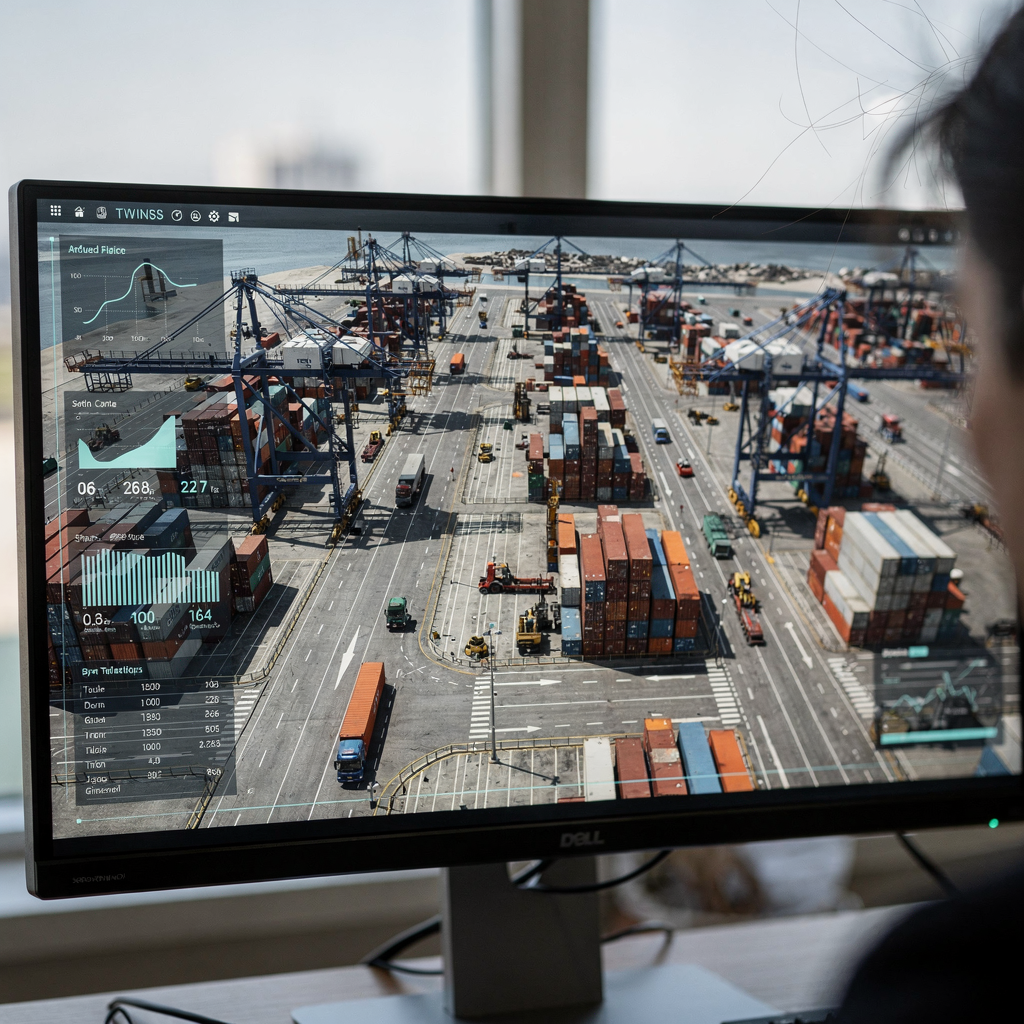
Digital twins mirror the real yard and the quay in software. Operators run scenario testing on a digital twin to evaluate schedules and to measure the impact of different stack policies. Simulation software lets teams try aggressive stow plans and then measure how those choices affect future rehandles. Digital twins also support training and safe pilot runs, so changes go live with fewer surprises. We discuss integration patterns in our article about digital twin integration with terminal systems.
The outcomes from analytics and from digital twins include lower maintenance bills, better utilisation, and fewer surprises during peaks. Some terminals report around a 15% reduction in maintenance costs when predictive programmes detect wear early. Analytics that forecast yard congestion can improve utilization and can shorten vessel turnaround. Combining digital twins with AI agents helps teams test policies at scale before they deploy them in live operations. This approach moves terminals from reactive firefighting to strategic planning and to improved operational resilience.
operator and terminal operators: Leading Digital Transformation
Operator leadership determines whether a terminal succeeds in its digital transformation. Terminal operators must build skills, define KPIs, and create processes that support steady change. Change management covers training for shore staff and for remote operators, and it addresses the loss of tribal knowledge as experienced planners retire. The operator role also includes defining acceptable risk and setting the guardrails that AI and automation must follow.
Partnerships with technology providers and with stakeholders speed innovation. For instance, co-developing pilots with vendors lets terminals test digital solutions without exposing operations to undue risk. Terminal operators can pilot closed-loop optimisation agents in a sandbox digital twin before live deployment. At Loadmaster.ai we train reinforcement learning agents in simulation and then integrate them with the live TOS, which reduces reliance on historical data and on single-person expertise. Our approach helps terminals automate execution and to stabilise performance across shifts.
A practical roadmap helps the operator and the team move from small experiments to full rollouts. Start by assessing digital readiness and maturity levels, then set KPIs for port efficiency, for quay productivity, and for reduced operational costs. Next, pilot a narrow use case such as job allocation or stack planning and measure improvements. After successful pilots, scale the solution across blocks and across shifts. Throughout, keep stakeholders informed and align with port authorities and with shipping lines on data sharing. For technical patterns and job allocation examples, read our article on equipment job allocation optimisation.
As the transformation process progresses, operators will harness digitalization and digital technologies to automate repetitive work and to free human teams for higher-value tasks. The end goal is an efficient port that balances throughput, sustainability, and improved customer outcomes while keeping teams safe and productive.
FAQ
What is the role of a terminal operating system in a container terminal?
A terminal operating system centralises scheduling, yard management, and gate operations. It provides the platform that orchestrates moves and that enables analytics and digital twins to connect to live execution.
How does IoT improve container tracking and visibility?
IoT sensors deliver location and condition data for containers and equipment. This real-time information feeds analytics that reduce disruptions and improve cargo tracking across the terminal.
Can automation reduce labour costs without harming safety?
Yes. Automated systems take on repetitive tasks and enforce safety rules, while human teams handle exceptions and oversight. The combination tends to lower labour costs and to raise safety standards.
What are digital twins and how do terminals use them?
Digital twins are virtual replicas of yards and of equipment. Terminals use them to test schedules, to train staff, and to validate AI policies before going live.
How quickly do ports see benefits from digital transformation?
Some benefits appear during pilots, such as reduced idle time and clearer KPIs. Larger gains, like improved port efficiency and lower operational costs, usually emerge as systems scale and teams adopt new processes.
Are AI-driven agents safe to deploy in live operations?
AI can be safe when deployed with guardrails, explainable KPIs, and audit trails. Simulation-trained agents that are tested in a sandbox reduce the risk of unexpected behaviour.
What is the impact of automation on vessel turnaround?
Automation and improved scheduling can shorten vessel turnaround by streamlining quay moves and by reducing rehandles. Studies show notable reductions when terminals synchronise quay and yard activities.
How should a terminal start its digital transformation journey?
Begin with a readiness assessment and define clear KPIs. Then pilot specific digital solutions, measure results, and scale successful pilots while training staff and aligning stakeholders.
Which stakeholders should be involved in port digital projects?
Include terminal operators, port authorities, shipping lines, and cargo owners. Early involvement helps align data sharing, operational rules, and business processes.
What resources help terminals optimise job allocation and reduce rehandles?
Simulation, digital twins, and reinforcement learning agents help optimise stowage and job allocation. For hands-on examples, see resources on equipment job allocation optimisation and on AI-based stowage planning available on our site.
our products
 stowAI
 stackAI
 jobAI
jobAI
Innovates vessel planning. Faster rotation time of ships, increased flexibility towards shipping lines and customers.
Build the stack in the most efficient way. Increase moves per hour by reducing shifters and increase crane efficiency.
Get the most out of your equipment. Increase moves per hour by minimising waste and delays.
stowAI
Innovates vessel planning. Faster rotation time of ships, increased flexibility towards shipping lines and customers.
stackAI
Build the stack in the most efficient way. Increase moves per hour by reducing shifters and increase crane efficiency.
jobAI
Get the most out of your equipment. Increase moves per hour by minimising waste and delays.