
AI, Port Operations and Vessel Planning
Restow describes the extra moves required to access blocked containers when a vessel is in port. Restow raises handling counts and extends vessel turnaround. As a result, berth utilisation falls and schedules slip. Ship planners face a complex scheduling puzzle every call. They must manage weight, lashing, safety and container sequences while avoiding extra moves. AI helps by evaluating vessel characteristics, container attributes and port constraints to propose executable stowage plans. For example, reinforcement learning can test millions of strategies in simulation, then suggest plans that reduce rehandles and improve crane productivity. Studies report a 20–40% reduction in restow moves and up to a 15% cut in turnaround time, which directly increases berth availability and lowers queuing.
AI evaluates container characteristics like size, weight and destination stack, while checking vessel stability and lashing limits. Next, AI balances trade-offs between quay moves and yard workload. Also, planners can use digital replicas to validate options before execution. This approach improves predictability and reduces manual firefighting that plagues many operations. Loadmaster.ai trains reinforcement learning agents inside a digital twin to deliver StowAI policies that minimize shifters while respecting operational rules. As a result, a vessel planner gains a QC-quality plan quickly. For further context on how digital replicas support vessel stowage, see the research on digital twins in the marine industry.
AI works with sensor feeds and historical patterns to respond to delays and short-notice changes. For example, when a late-arriving container changes stack priority, AI rapidly re-evaluates sequences and updates crane jobs to reduce needless moves. In practice, integration of AI with real-time data reduces idle crane time, smooths yard traffic and lowers fuel consumption. Also, lower idle time and fewer rehandles cut CO2 per call; studies suggest around a 10% emission reduction for an optimized call. Finally, operators who implement AI planning often report steadier performance across shifts and less dependence on individual experience, which improves resilience during disruptions.
Optimization and Automation in Container Terminal Operations
Multi-objective OPTIMIZATION algorithms lie at the heart of modern vessel stowage planning. These methods balance restow minimisation, stability and safety while capturing crane productivity and yard throughput. For example, pareto-based searches and RL agents can trade slight increases in yard moves for large decreases in quay rehandles. In practice, such choices reduce total handling time and raise moves per hour on the quay. Automation complements optimization. Automated crane scheduling and yard allocation systems run continuously to align quay sequences with yard pick-up slots. As a result, container flow improves and idle equipment falls.
Reinforcement learning models have been used to optimize loading and unloading sequences directly. For example, RL neural policies learn which stacks to access and when to reshuffle, then synchronise with crane job queues. These machine learning approaches outperform static rule engines because they can look ahead, estimate future congestion and adapt to disruptions. Loadmaster.ai uses this closed-loop control method to train StowAI, StackAI and JobAI agents. The agents simulate millions of scenarios inside a digital twin, which reduces the need for large historical data sets. Consequently, terminals get robust policies from day one without copying past mistakes.
Automation also includes scheduling software that automates crane job lists and assigns stack movers to reduce driving distances. Terminal Operating Systems and TOS integrations are common, but the best solutions combine a real-time optimization layer on top of the TOS. For guidance on integrating digital models with existing systems, see our write-up on digital twin integration with container terminal operating systems. Finally, when scheduled automation aligns with predictive maintenance and sensor alerts, a terminal sees fewer unexpected stoppages. Together, optimization and automation support safer operations, improved throughput and lower unit costs for each move.
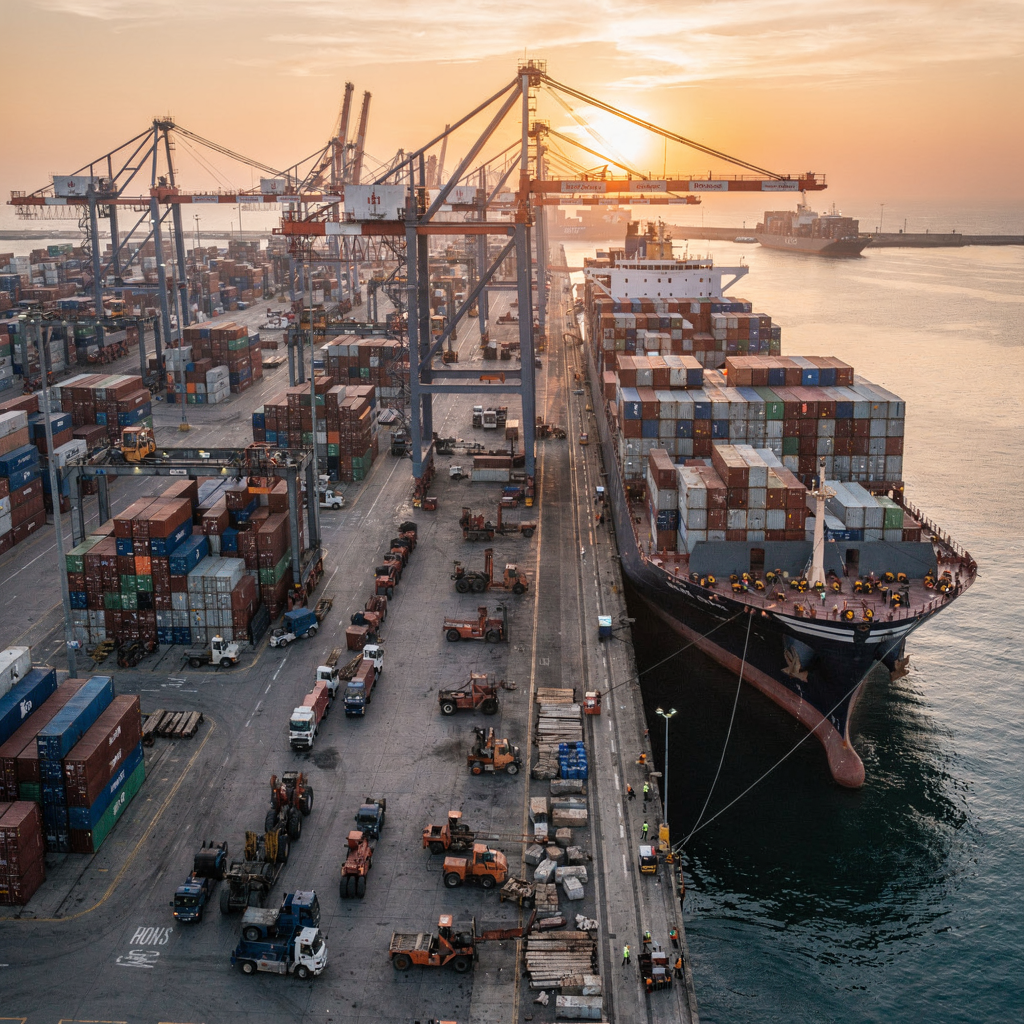
Drowning in a full terminal with replans, exceptions and last-minute changes?
Discover what AI-driven planning can do for your terminal
AI-driven Smart Port Logistics and Container Handling
The SMART PORT idea links IoT, cloud analytics and AI-driven decision engines to create adaptive workflows. Sensors on cranes, quay and yard vehicles stream condition and position data. Then ai systems analyse that feed to prioritise moves, route guided vehicles, and predict pick-up timing. In practice, node-level decisions cascade into smoother port logistics across the quay and yard. For example, when a crane reports slower cycles, the system shifts upcoming tasks to other equipment and reorders the load plan so that a late container causes minimal disruption.
AI-driven analytics also adapt container handling to live demand. When vessel arrivals change, predictive models update schedules and allocate yard space to avoid bottlenecks. This dynamic approach reduces port congestion and shortens container dwell time. In addition, smart sequencing lowers crane idle time and increases quay moves per hour. Operators who use ai planning see a measurable reduction in unnecessary shifter moves, which cuts energy use and labour costs. To learn more about ai in stowage planning, check our article on AI in port operations stowage planning.
Smart port workflows rely on accurate forecasting. For instance, models can predict container volumes, gate peaks and peak labour demand. These forecasts enable resource scheduling and can automate dispatch for guided vehicles and cranes. The result is improved vessel turnaround and steadier throughput for the terminal. Also, integrating predictive maintenance signals ensures equipment stays available when needed. The combination of analytics, automation and scheduling forms a resilient logistics backbone that keeps a port functioning as global trade demands rise.
Digital Twin and Predictive Maintenance for Crane and Fleet
Digital twin technology lets planners test stowage strategies and yard policies before they reach the quay. A digital twin recreates vessel stowage, crane cycles and yard movements in simulation. Planners can then evaluate the effect of loading sequences on quay productivity and yard congestion. Loadmaster.ai trains RL agents inside a digital twin until policies meet explainable KPIs. This reduces risk and speeds rollout because the AI is validated in a sandbox first. For practical guidance on digital twin use with TOS, read our resource on digital twin integration with container terminal operating systems.
Predictive maintenance models run in parallel. These models combine sensor telemetry and historical failure patterns to predict downtime and equipment failure. As a result, terminals can schedule interventions before a breakdown occurs. This lowers unexpected downtime and increases fleet availability. For example, a predictive maintenance alert for an RTG motor might trigger a planned swap during a low-intensity window. Then, the terminal avoids a full stoppage during a high-intensity vessel call. Predictive maintenance also reduces spare parts inventory and repair costs.
Together, digital twin and predictive maintenance support better fleet and crane utilisation. The twin shows how maintenance fits into live schedules. Meanwhile, predictive maintenance protects execution by keeping cranes and vehicles ready. This integration is essential for modern fleet management and helps terminals maintain consistent service levels. To explore how predictive tools can reduce deepsea port equipment idle time, see our analysis on reducing deepsea container port equipment idle time. Ultimately, the combined approach reduces rehandles, supports faster vessel berthing and strengthens operational resilience.
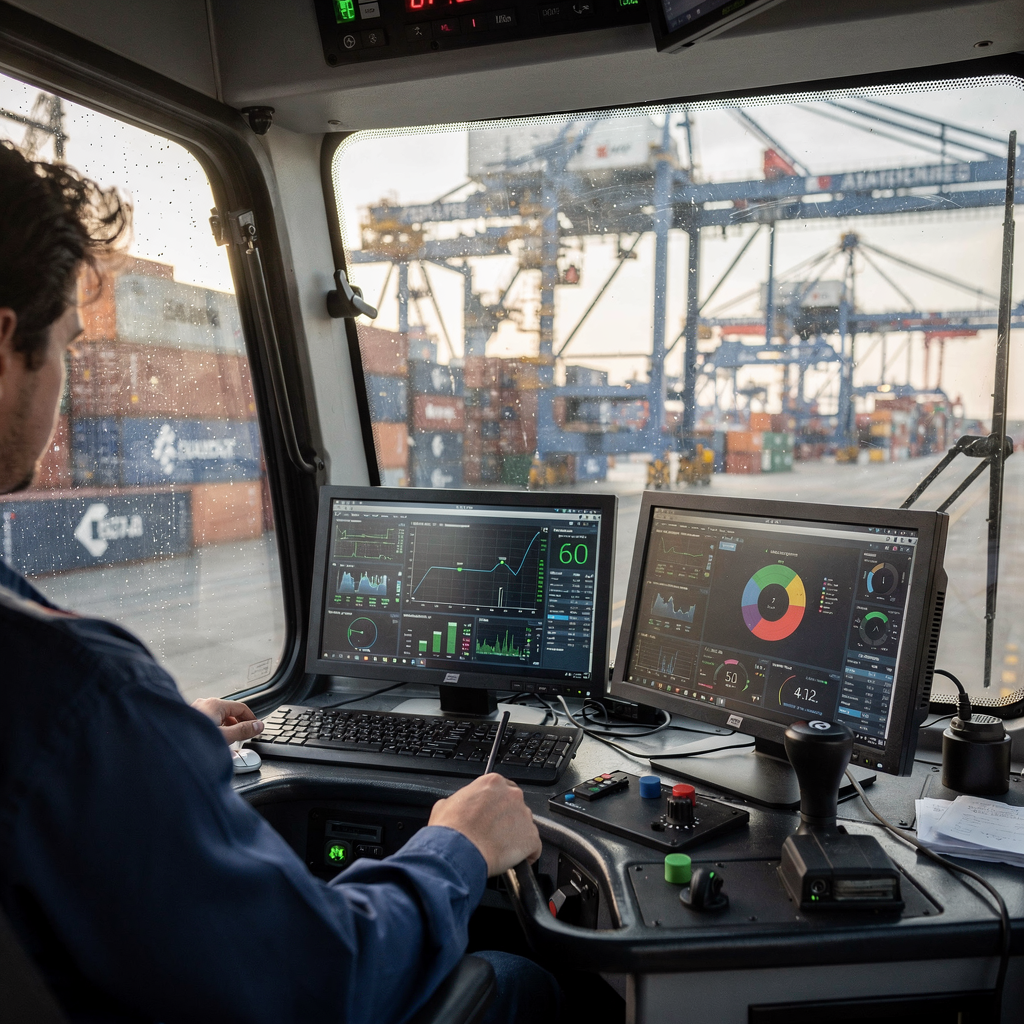
Drowning in a full terminal with replans, exceptions and last-minute changes?
Discover what AI-driven planning can do for your terminal
Application of ai in container terminal operations, Port Traffic and Vessel Arrivals
The application of AI IN CONTAINER space covers yard resource scheduling, berth planning, gate management and vessel arrival forecasts. AI tools forecast port traffic and synchronise vessel arrivals to reduce peak congestion and queue times. For example, predictive models can adjust berth assignments to smooth demand across the day. This reduces waiting and improves berth utilisation. A major terminal used predictive analytics to lower queue time, enabling faster vessel turnaround and better slot reliability. For details on dynamic berth and crane allocation, see our guide on dynamic berth and crane allocation in deepsea container terminals.
At the gate, AI predicts peak flows and allocates staffing and equipment to reduce container dwell time. Inside the yard, AI recommends placement rules that balance travel distances and future access needs. This reduces reshuffles and increases crane productivity. In addition, AI can coordinate with berth planning to ensure trucks pick up containers with minimal waiting. When vessel arrivals shift, an updated plan propagates through the terminal to keep operations stable and predictable.
Another application is synchronising fleet management systems with the TOS and execution layers. Coordinated control improves equipment scheduling and lowers driving distances. For more on synchronising fleet and TOS execution, see our piece on synchronizing fleet management and TOS execution layers in port operations. Together, these technologies streamline container routing, cut fuel use and reduce idle equipment. As a result, terminals that adopt these AI approaches see better KPIs, fewer rehandles and steadier throughput for vessel calls.
Benefits of ai technologies for Maritime Operational Efficiency
AI delivers measurable benefits across labour, equipment and energy. Quantitatively, AI-driven vessel planning reduces restows by 20–40% and can cut vessel turnaround by up to 15% when combined with operational improvements. That yields millions in annual savings for a large terminal when labour and equipment usage are counted. In addition, optimised moves reduce fuel burn and idle time, lowering emissions by roughly 10% per call according to industry research on green technology in shipping.
Beyond economics, AI strengthens resilience. For instance, reinforcement learning agents adapt to disruptions such as late vessel arrivals or abnormal cargo mixes. This reduces dependence on single planners and preserves institutional performance across shifts. AI adoption also supports predictive maintenance, which cuts equipment failure and downtime. Together, these effects boost operational efficiencies and contribute to greener maritime operations.
Challenges remain. Data integration is often complex and variable across ports. Models must generalise across heterogeneous layouts and workflows. Also, regulatory frameworks demand explainability and safety for AI decisions, which requires guardrails and audit trails. Future work must focus on climate-focused AI and regulatory resilience. The UNFCCC and climate research organisations are already mapping AI uses for climate action and supply chain impact mitigation. Finally, implementation of AI benefits from sandbox testing, digital transformation and close cooperation with port authorities and vessel operators to ensure smooth rollout. If you want practical steps, our article on container terminal operations optimization under EU AI Act explains governance and deployment considerations.
FAQ
What does restow mean and why does it matter?
Restow refers to the rearrangement of containers on a vessel to access those that are blocked. It matters because each restow is an extra handling move that adds labour, equipment usage and time to a vessel call, which increases berth occupancy and can ripple across schedules.
How can AI reduce restow moves?
AI analyses container attributes, vessel characteristics and yard constraints to create stowage plans that minimise blocked containers. In addition, AI can re-sequence crane jobs in real-time so that fewer rehandles occur during loading and unloading.
Which AI techniques are used in vessel planning?
Reinforcement learning, multi-objective optimization and digital twin simulation are common. Machine learning models also predict arrival patterns and equipment availability, while RL agents generate executable stowage policies.
What are the environmental benefits of AI in ports?
AI reduces unnecessary moves and idle time, which lowers fuel use and emission per call. Studies indicate around a 10% reduction in CO2 for optimized calls, depending on the terminal and vessel mix.
Can AI work without large historical data sets?
Yes. Simulation-based training inside a digital twin allows RL agents to learn policies without relying solely on historical data. This makes AI robust even for terminals with limited past records.
How does predictive maintenance fit into port operations?
Predictive maintenance uses sensor data and models to forecast equipment issues before they cause failure. This reduces unplanned downtime and keeps cranes and vehicles available for scheduled vessel calls.
Will AI replace human planners?
No. AI augments planners by handling complex trade-offs and offering validated options quickly. Humans retain final decision authority and oversee safety, rules and exceptions.
How does a digital twin improve implementation of AI?
A digital twin recreates terminal and vessel performance in a sandbox where policies can be tested. This reduces risk by validating AI strategies before they reach live operations.
What operational KPIs improve with AI?
Key indicators include reduced rehandles, higher crane utilisation, shorter vessel turnaround and lower idle time for equipment. Improved consistency across shifts is another common outcome.
How do I start integrating AI at my terminal?
Begin with a pilot that uses a digital twin and clear KPIs. Work with stakeholders to set guardrails and integrate AI outputs into your TOS and execution layers. For practical resources on deployment and governance, consult industry guides and vendor case studies.
our products
 stowAI
 stackAI
 jobAI
jobAI
Innovates vessel planning. Faster rotation time of ships, increased flexibility towards shipping lines and customers.
Build the stack in the most efficient way. Increase moves per hour by reducing shifters and increase crane efficiency.
Get the most out of your equipment. Increase moves per hour by minimising waste and delays.
stowAI
Innovates vessel planning. Faster rotation time of ships, increased flexibility towards shipping lines and customers.
stackAI
Build the stack in the most efficient way. Increase moves per hour by reducing shifters and increase crane efficiency.
jobAI
Get the most out of your equipment. Increase moves per hour by minimising waste and delays.