
smart ports: The automate revolution in modern ports and maritime logistics
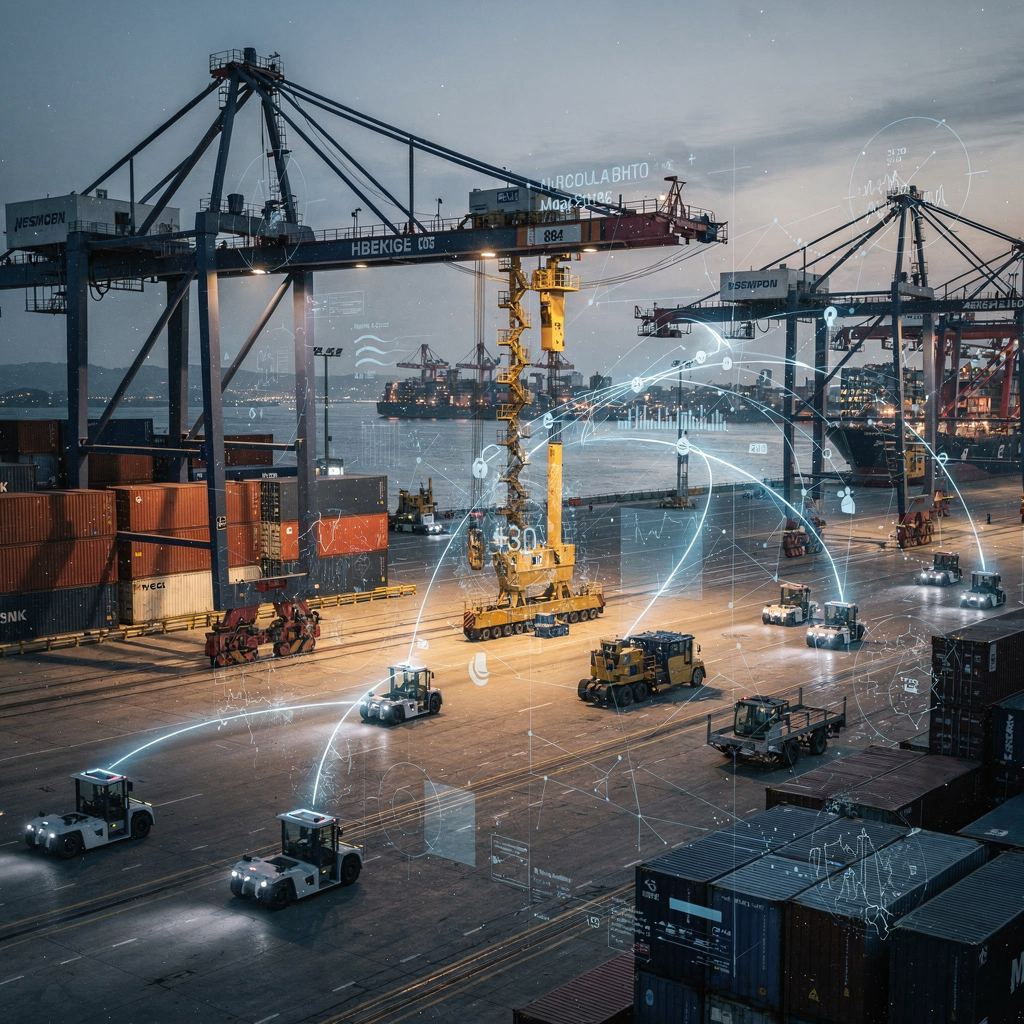
Smart ports describe the next generation of port operations that combine IoT sensors, AI analytics, robotic cranes, and automated guided equipment. These smart port technologies connect cranes, gates, yards, and vessel systems and unify data flows. As a result, operators can plan more accurately, move containers faster, and reduce idle time. Also, smart ports use digital twins and optimisation engines to simulate and optimise terminal behaviour before changes reach the quay.
The smart port segment is poised for rapid expansion. For example, market research forecasts strong growth in the smart port market through 2025 as terminals adopt more automation and data-driven control systems (Smart Port Market: Revolutionary Growth & Future Insights 2025). Therefore, more ports worldwide are investing in sensors, automation, and software to improve throughput.
The benefits for maritime logistics are clear. First, throughput increases through better berth and crane planning. Second, labour costs fall when automated cranes and AGVs handle predictable tasks. Third, tracking improves because systems provide real-time container and equipment telemetry. For example, AI-driven vessel planning and berth allocation reduce quay congestion and optimise moves per hour; readers can learn more about berth and crane planning best practices in our guide on container-terminal berth and crane planning. Moreover, automated approaches help terminals handle mixed vessel calls and variable cargo types without losing performance.
Automation also supports resilience. Loadmaster.ai uses reinforcement learning agents in a digital twin to train StowAI, StackAI and JobAI so they adapt to changing vessel mixes and yard states. This closed-loop optimisation approach makes planning robust and reduces firefighting during peaks. For further context on AGV priorities and execution, see our analysis of automated guided vehicles AGV job prioritization.
However, smart ports do not remove risk. As terminals adopt connected devices and cloud services, they increase their exposure to cyber threats. Therefore, port managers must design technical controls and governance to protect critical maritime infrastructure while they chase efficiency and scale.
cybersecurity challenges in port automation
Automation increases connectivity and data exchange across the entire port. Connected cranes, AGVs, terminal operating systems, and gate controllers create an expanded attack surface. As a result, cyber vulnerabilities appear where systems intersect. For instance, autonomous cranes and vehicle guidance systems expose control planes that attackers can target. Also, many ports must connect older OT systems to new IT platforms. This IT/OT convergence creates integration complexity and legacy interfaces that often lack modern protections.
Executive concern reflects the reality. A 2022 survey of senior US port and maritime terminal executives found that over 70% of respondents identified cybersecurity threats as a top concern. This data shows that port leaders see cyber risk as a critical barrier to automation. Therefore, port authorities and port operators must prioritise cybersecurity and embed it into project design.
Regulation adds another layer of change. National and regional rules such as EU NIS2 and IMO guidance push ports to formalise controls, report incidents, and improve resilience. Consequently, ports must update policies to remain compliant. Also, standards encourage the adoption of frameworks and procedures that cover both IT and OT.
The human factor complicates the picture. Many terminals face a shortage of specialised talent for maritime cybersecurity. Ports need multidisciplinary teams that combine IT security, operational technology expertise, and port operations knowledge. Therefore, training and staffing become as important as technical measures. Port community systems, TOS vendors, and equipment manufacturers must all align on security protocols so the entire ecosystem can raise its security posture.
To address these challenges, ports should adopt a layered cybersecurity framework that includes continuous monitoring, segmented networks, and vendor risk controls. For example, integrating automated cranes with a SIEM and applying strict authentication reduces the chance that an exploited device will spread an attack across the entire terminal. Also, our TOS-agnostic plugins and sandbox testing approach at Loadmaster.ai show how safe-by-design deployment reduces operational risk during integration with a terminal operating system (TOS-agnostic software plugins).
Drowning in a full terminal with replans, exceptions and last-minute changes?
Discover what AI-driven planning can do for your terminal
Quantifying cyber risk in maritime automated systems
Understanding numbers clarifies urgency. The frequency of cyberattacks against maritime transportation systems has risen sharply. In fact, attacks have grown by over 50% in the past three years. Therefore, ports become more attractive targets as they expose more automated controls and data stores.
Automated systems show a measurable increase in risk. Research indicates that automation in ports correlates with approximately a 30% increase in detected vulnerabilities versus traditional manual operations. This pattern reflects both new code paths in software and misconfigurations in connected devices. Consequently, terminals must plan for extra testing and validation when they deploy automated cranes and AGVs.
The operational impact of cyber incidents can be severe. Reported port downtime after a major cyber incident often lasts between 12 and 24 hours, and the economic losses run into the millions per incident due to halted cargo movement and supply chain ripple effects (SHIFTING TIDES, RISING RANSOMS AND CRITICAL DECISIONS). As an example, a ransomware incident at a major container terminal stopped gate processing and berth exchanges for a full day. The terminal lost handling capacity, carriers rerouted vessels, and shippers faced delays and added demurrage costs. This case underlines how ransomware attacks can hit operational decisions as much as data confidentiality.
Therefore, ports must run rigorous risk assessments and continuous vulnerability scanning to keep pace with threats. Risk management should quantify probable downtime and financial exposure, and then prioritise controls that reduce those outcomes. Also, collaboration across the maritime sector accelerates detection and shared learning. For instance, threat intelligence sharing between terminals and national CERTs shortens detection windows and helps prevent similar breaches at other facilities.
Enhancing cybersecurity: AI-driven cyber defense for cyber resilience
AI and ML techniques provide new ways to detect and respond to attacks in real time. AI-powered systems analyse network telemetry, device logs, and sensor data to spot anomalies that humans can miss. For example, models trained to see deviations in crane control traffic or AGV route patterns can flag suspicious behaviour before it causes operational disruption. As one technical analysis notes, “The urgency of adopting automated cybersecurity solutions is underscored by the increasing sophistication and frequency of cyber attacks” (The Role of Automation in Enhancing Cybersecurity).
Automated response reduces mean time to contain. Studies show AI-enhanced security can cut incident response times by up to 40% through faster detection and guided remediation (Artificial Intelligence in Cybersecurity: A Comprehensive Review). Therefore, ports that deploy behavioural analytics and automated containment can limit lateral spread and shrink outage windows.
Practical measures help build cyber resilience. First, deploy continuous monitoring with security information and event management and ML-based correlation. Second, enable automated response workflows that isolate affected segments and preserve core operations. Third, share threat intelligence across the port community and with national and international partners. Pilot deployments at several European terminals show that integrated analytics paired with operational guardrails improve detection without producing excessive false positives.
Loadmaster.ai’s reinforcement learning approach ties into this model by training control agents inside a digital twin and ensuring safe, explainable actions at deployment. This reduces the operational surprises that might otherwise produce security incidents during live changes. For teams seeking to reduce equipment idle time, linking predictive maintenance with anomaly detection provides both operational and security benefits; see our guide on predictive maintenance to reduce crane downtime. Therefore, combining AI for operations with AI for cyber defense yields measurable gains in resilience.
Drowning in a full terminal with replans, exceptions and last-minute changes?
Discover what AI-driven planning can do for your terminal
Building a security operations center for port risk management
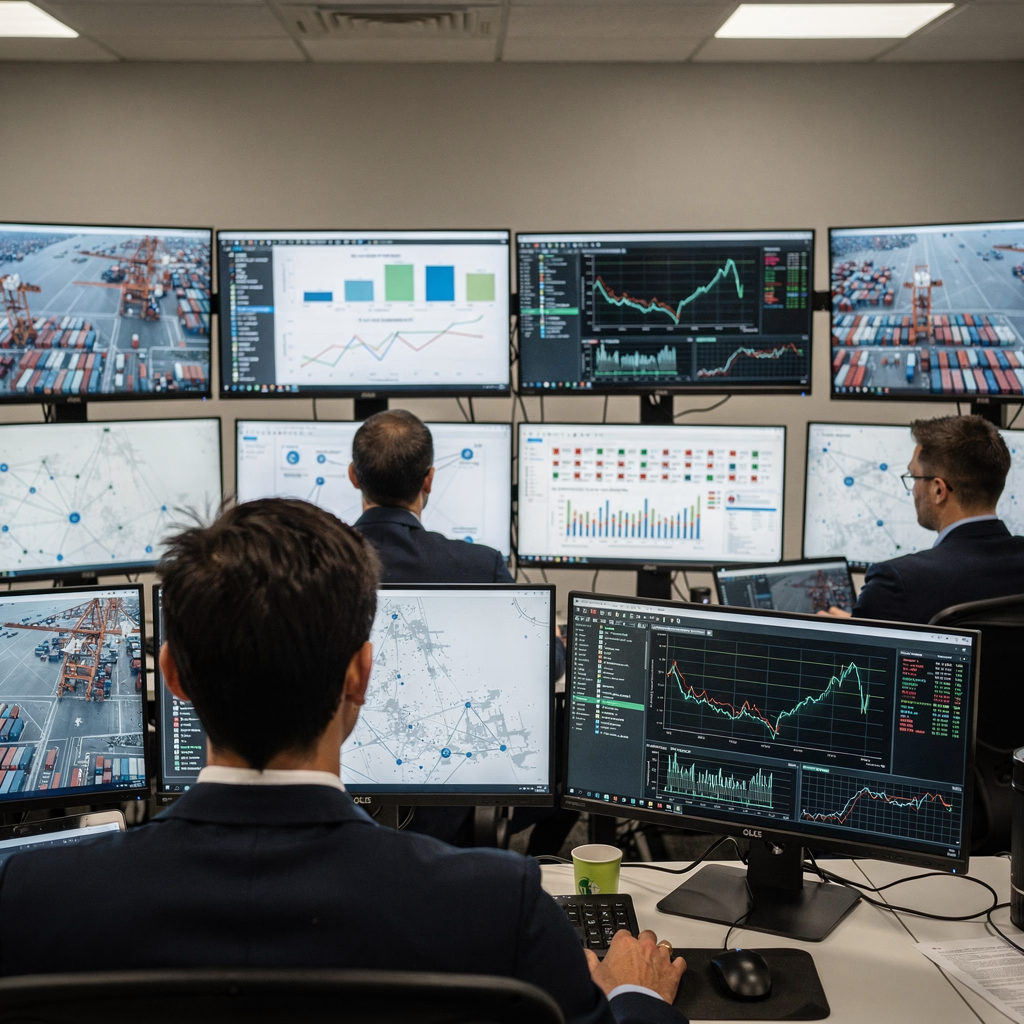
A dedicated security operations center helps centralise detection, triage, and incident response for modern port environments. The SOC brings together SIEM platforms, threat hunting teams, and documented incident response playbooks under one roof. Also, the SOC coordinates between IT, OT, and port operations so that security actions do not unintentionally disrupt terminal workflows. A robust SOC uses logging and correlation to identify suspicious patterns across cranes, gate systems, and vessel integrations.
Core components include security information and event management for log aggregation, trained cybersecurity teams for threat hunting, and clear incident response workflows that include both operational and legal steps. Also, the SOC must maintain updated asset management and an inventory of critical port infrastructure to support rapid containment. For smaller ports, shared or regional SOC models can provide 24/7 coverage while spreading costs.
Staffing remains a challenge. Many ports lack experienced maritime cybersecurity staff who understand both network security and terminal equipment behaviour. Therefore, training and cross-disciplinary recruitment are essential. Ports should consider rotating operations staff through SOC shifts so teams build mutual understanding. Additionally, appointing a chief information security officer or similar leader clarifies accountability and drives continuous improvement in cybersecurity management.
The SOC must also integrate with national and international maritime emergency response. For example, reporting channels to national CERTs and maritime sector partners ensure coordinated action during large-scale cyber incidents. This linkage speeds threat intelligence sharing and supports regulatory compliance under evolving frameworks. Also, linking SOC operations with operational planning tools, such as berth and crane allocation systems, helps maintain throughput during containment efforts. See our work on dynamic berth and crane allocation for how operational planning can adapt under stress (dynamic berth and crane allocation).
Finally, the SOC should run regular exercises and tabletop scenarios. These drills test incident response, communication plans, and integration with port authorities and law enforcement. They also surface gaps in tooling, procedures, and third-party dependencies. As a result, a well-run SOC becomes the central engine that drives cyber resilience for the entire terminal ecosystem.
Port-level cyber risk management for modern ports
Effective cyber risk management starts with a clear inventory of assets and continuous risk assessments. Ports must map devices, software, and network paths that support critical maritime operations. Next, run vulnerability scans and penetration tests to find exploitable weaknesses before attackers do. Regular security assessments and supplier audits limit third-party risk and keep vendor integrations under control. Also, ports should adopt a comprehensive OT cybersecurity program that covers PLCs, RTUs, and industrial control systems used by cranes and yard equipment.
Best practices include routine penetration testing, tabletop exercises, and red-team engagements that simulate ransomware attacks or supply chain compromise. Also, ports must maintain backup and recovery plans that prioritise operational continuity for the quay and gate functions. For example, keeping isolated, air-gapped recovery images allows an entire port to resume core operations while teams restore affected systems.
Collaboration matters. Port authorities, technology vendors, and regulators must coordinate on standards and incident sharing. Open communication reduces duplicated effort and accelerates remediation across ports. For instance, national cybersecurity programmes that include maritime infrastructure can provide guidance and centralised threat feeds for the sector. Also, terminals should publish clear expectations for vendors and contractors so security requirements are contractual and audited.
Looking ahead, zero-trust architectures, digital twins, and continuous improvement will shape the future of maritime logistics. Zero trust reduces the impact of compromised credentials. Digital twins allow teams to test security changes in a sandbox before roll-out. Continuous risk management practices ensure that security keeps pace with new smart port technologies and integrated vessel systems and port operations. Finally, combining technical controls with people-centric training and governance will produce effective cybersecurity for ports. Strengthening port security requires both technology and culture change, and it will determine how well the global maritime industry protects critical port infrastructure and international trade.
FAQ
What are smart ports and why do they matter?
Smart ports combine sensors, automation, AI, and integration to optimise terminal flows and vessel handling. They matter because they increase throughput, reduce costs, and provide better visibility across maritime logistics.
How does automation increase cybersecurity risk at a port?
Automation connects many devices and systems, which increases the attack surface and potential cyber vulnerabilities. Also, linking legacy OT with modern IT without proper controls creates misconfigurations and gaps that attackers can exploit.
How common are cyberattacks against maritime systems?
Attacks against maritime transportation systems have risen significantly, with studies showing over a 50% increase in the past three years (Atlantic Council report). Therefore, ports must assume they will face targeted cyber threats.
Can AI help with port cybersecurity?
Yes. AI and ML can detect anomalies across network and device telemetry and automate containment actions to reduce impact. For example, AI-enhanced solutions have cut incident response times by up to 40% in some deployments (research on AI in cybersecurity).
What is a security operations center for a port?
A security operations center centralises threat detection, threat hunting, and incident response for the terminal. The SOC integrates SIEM platforms, trained cybersecurity teams, and documented incident response playbooks to protect the port and its assets.
How should ports prioritise risk management activities?
Ports should begin with asset management and risk assessments, then run vulnerability scans and penetration tests. Also, they should prioritise controls that reduce probable downtime and financial exposure, such as network segmentation, backups, and incident response planning.
Are there regulations ports must follow for cybersecurity?
Yes. Regional and international frameworks such as EU NIS2 and IMO guidance require ports to formalise cybersecurity practices and reporting. These rules push ports to strengthen governance, reporting, and resilience for critical maritime infrastructure.
How can smaller ports get access to SOC capabilities?
Smaller ports can adopt regional or shared SOC models that provide 24/7 monitoring while spreading costs. Also, they can use managed detection and response providers that understand maritime operations.
What role do vendors play in port cybersecurity?
Vendors supply equipment, software, and integration points that can introduce vulnerabilities if not secured. Therefore, ports should enforce supplier audits, contractual security requirements, and ongoing validation of vendor updates.
How does Loadmaster.ai fit into port cybersecurity and operations?
Loadmaster.ai provides reinforcement learning agents that optimise vessel planning, yard strategy, and job execution inside a digital twin, reducing unexpected operational changes. This safe-by-design approach and sandbox testing lower integration risk and help ports deploy automation with stronger controls and operational governance.
our products
 stowAI
 stackAI
 jobAI
jobAI
Innovates vessel planning. Faster rotation time of ships, increased flexibility towards shipping lines and customers.
Build the stack in the most efficient way. Increase moves per hour by reducing shifters and increase crane efficiency.
Get the most out of your equipment. Increase moves per hour by minimising waste and delays.
stowAI
Innovates vessel planning. Faster rotation time of ships, increased flexibility towards shipping lines and customers.
stackAI
Build the stack in the most efficient way. Increase moves per hour by reducing shifters and increase crane efficiency.
jobAI
Get the most out of your equipment. Increase moves per hour by minimising waste and delays.